Consensus-Contrarian Matrix
In order to produce outsized returns in any given area, you have to both bet against the convention and be right.
”You can’t take the same actions as everyone else and expect to outperform.”
—Howard Marks
Curse of Knowledge
Once we know something, we assume everyone else knows it, too.
It's why some experts can't explain their field in simple terms and people don't share knowledge that could benefit others.
Lesson: There are always people to teach and people to learn from.
Perfect Solution Fallacy
We reject something because it compares poorly to an ideal that in reality is unattainable.
We assume there is a perfect solution to every problem.
Reality is more complicated and trade-offs exist.
Take the option with the most bearable trade-offs.
Pessimism Bias
We overestimate the likelihood of negative outcomes.
Evolutionary speaking this developed as a defence mechanism and served us well.
We heard a noise in the bushes and ran.
This doesn't apply anymore: we've never lived in a safer world.
Be an optimist.
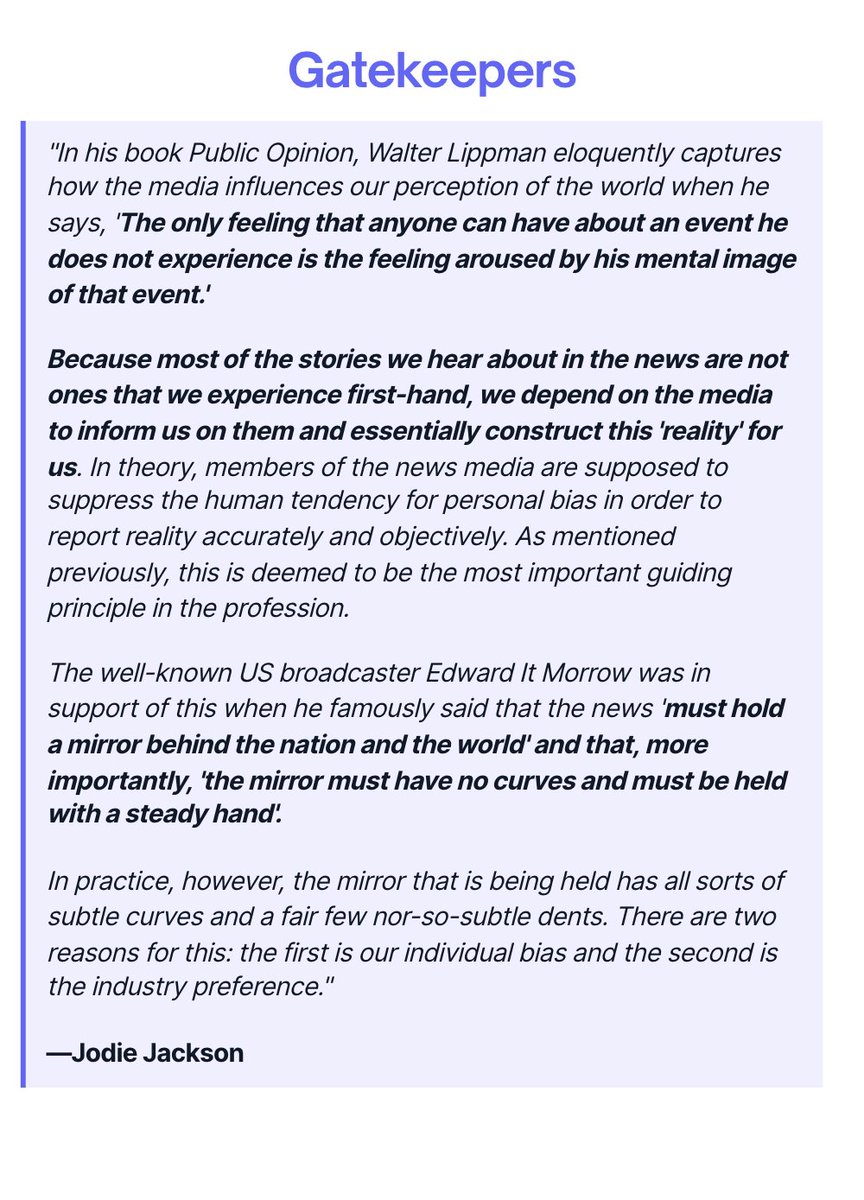
The Gatekeepers
There are points along communication channels where decisions are made about what’s included and what gets left out.
The people who have the power to operate these gates heavily influence the flow of information.
Where possible, seek information first-hand.
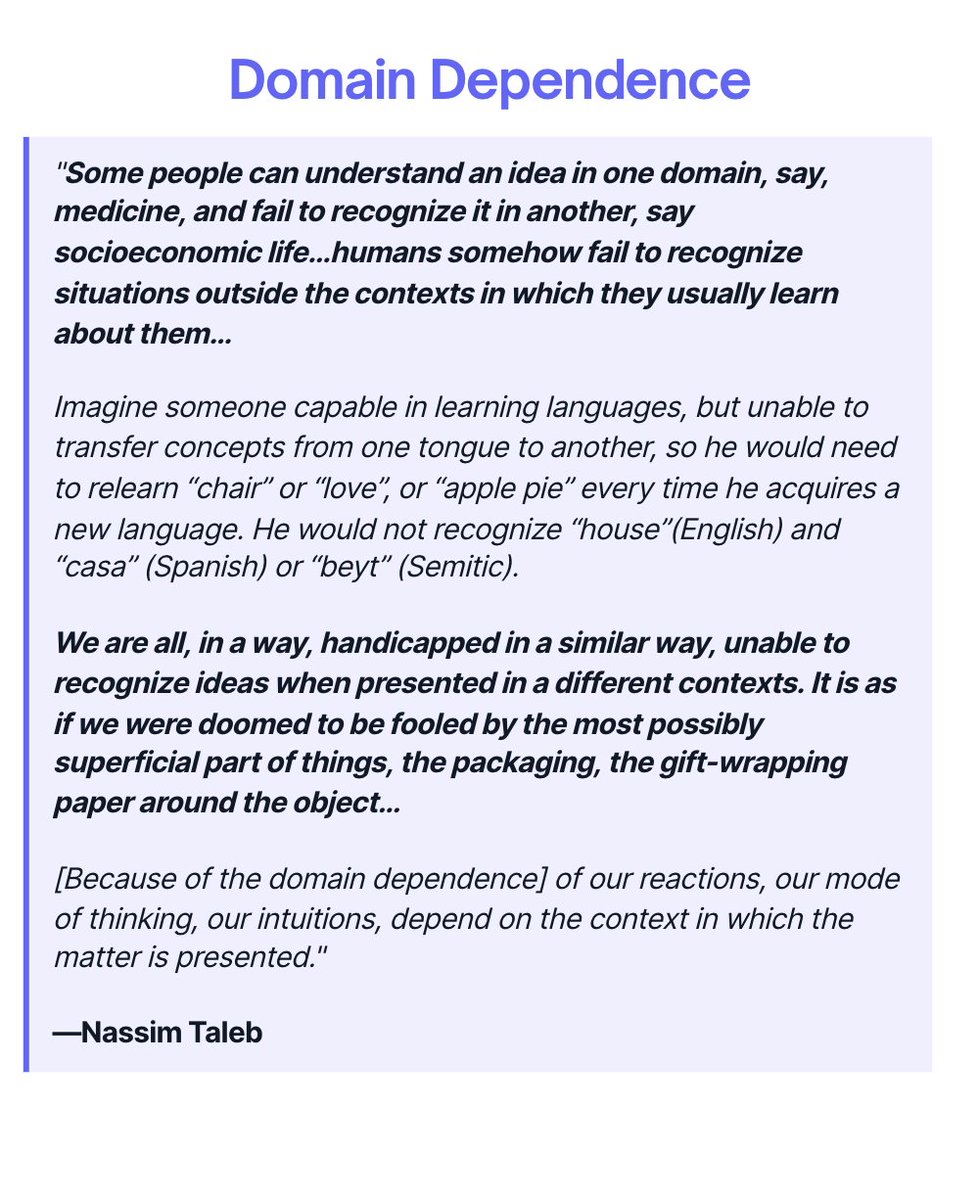
Domain Dependence
What you master in one domain (area) is difficult to transfer to another.
“In theory, there is no difference between theory and practice, but in practice there is.”
—Yogi Berra
Expand your areas of learning and don’t become trapped by single domains.
Status Syndrome
”Your social standing directly affects your health and life expectancy.
Autonomy, your sense of control over your life and social connectedness, rather than financial resources, have the greatest impact on your longevity.”
—Michael Marmot
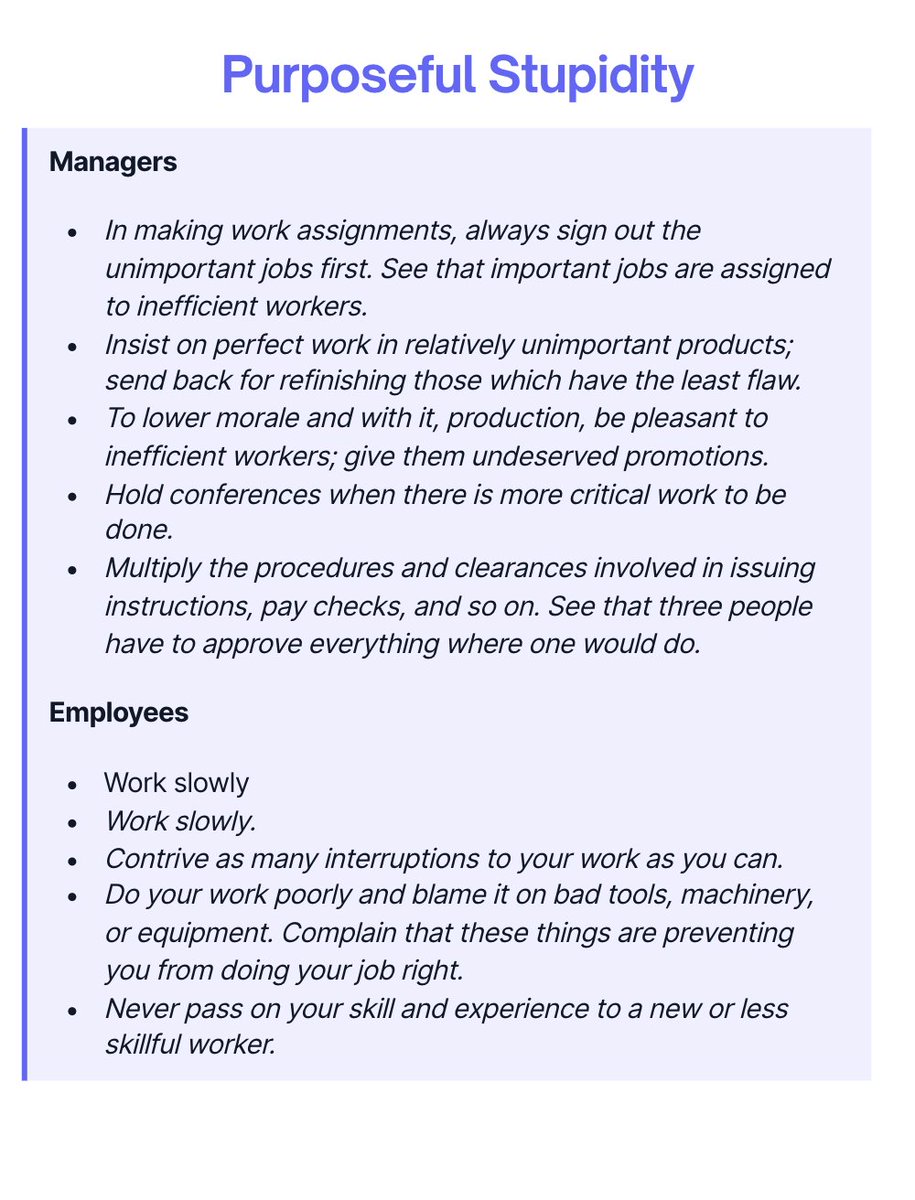
Purposeful Stupidity
The inner workings of most organisations make more sense when viewed through the lense of the “Purposeful Stupidity” instructions.
Namely, the Simple Sabotage Field Manual, by the Office of Strategic Services (Now CIA).
Source:
https://t.co/i7rruD3Nvt
Addition by Subtraction
Sometimes, to make something better, you must take something away.
Over-engineering leads to more ‘breakpoints’: sources of potential problems.
Reducing components or complexity can add value by making something:
• Simpler
• More reliable
• Faster
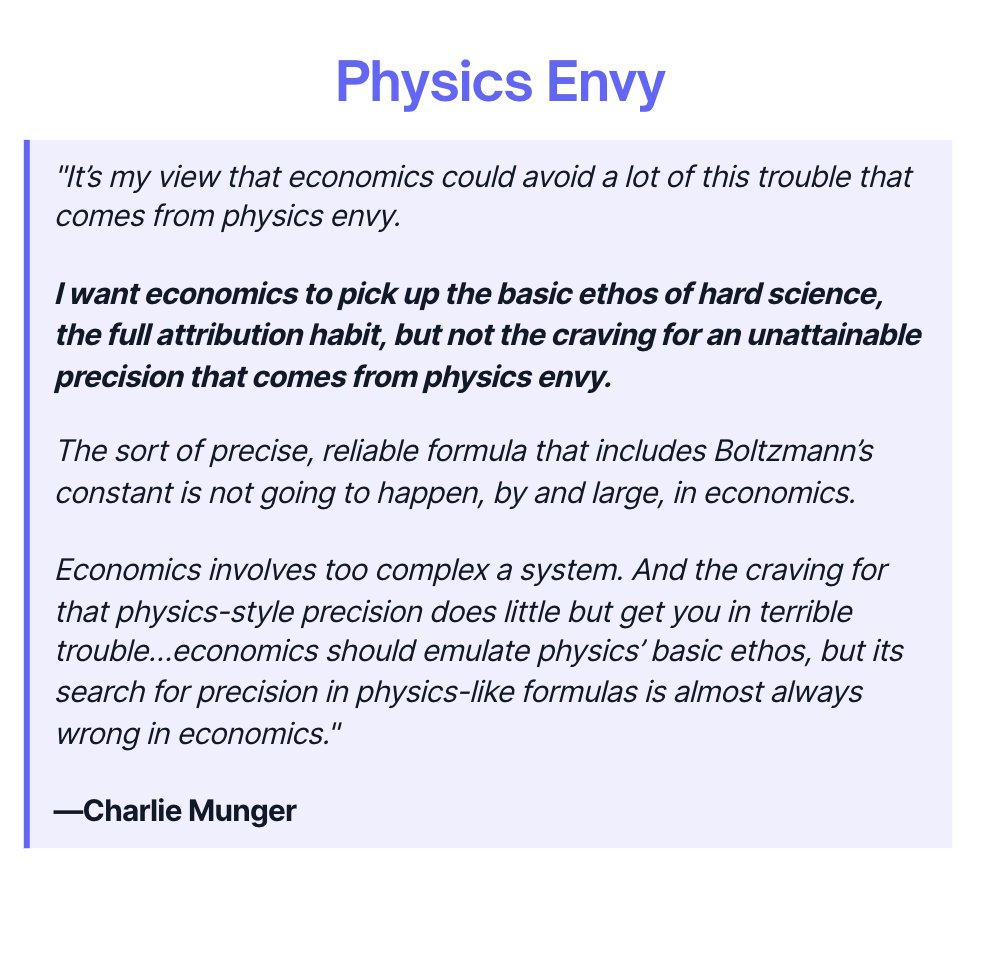
Physics Envy
The common human craving to reduce extremely complex systems—such as Economics—to one-size-fits-all Newtonian formulas.
In complex systems, everything is interacting with everything else.
This makes it nearly impossible to predict the final outcome accurately.
That’s 10 mental models for better thinking.
If you enjoyed this thread:
1. Follow me
@_alexbrogan for more thought-provoking content to help you get better at the game of life
2. RT the tweet below to share this with others who might enjoy it :)
https://t.co/0sfiyEvnrT