Mollyycolllinss Categories Economy
7 days
30 days
All time
Recent
Popular


One of the hardest problems post-pandemic will be how to revive so-called "left behind" places.
Post-industrial towns, run-down suburbs, coastal communities - these places were already struggling before the crisis and have fared worst in the last year.
What should we do?
Today, @ukonward sets out the beginning of a plan to repair our social fabric. It follows our extensive research over the last year, expertly chaired by @jamesosh, and funded by @jrf_uk, @Shelter and @peoplesbiz.
https://t.co/d3T5uPwG9N

Before I get into recommendations, some findings from previous Onward research.
In 2018, we found 71% of people believe "community has declined in my lifetime"
In 2019, we found 65% would rather live in “a society that focuses on giving people more security” vs 35% for freedom

This was the basis for our identification of 'Workington Man' as the archetypal swing voter in 2019, and led us to predict (correctly) that large numbers of Red Wall seats could fall. A key driver was a desire for security, belonging and pride in place.

There is also a key regional dimension to this. We also tested people's affinity with the UK's direction of travel, across both cultural and economic dimensions - revealing the extraordinary spread below: London vs. the Rest.
https://t.co/HrorW4xaLp

Post-industrial towns, run-down suburbs, coastal communities - these places were already struggling before the crisis and have fared worst in the last year.
What should we do?
Today, @ukonward sets out the beginning of a plan to repair our social fabric. It follows our extensive research over the last year, expertly chaired by @jamesosh, and funded by @jrf_uk, @Shelter and @peoplesbiz.
https://t.co/d3T5uPwG9N
Before I get into recommendations, some findings from previous Onward research.
In 2018, we found 71% of people believe "community has declined in my lifetime"
In 2019, we found 65% would rather live in “a society that focuses on giving people more security” vs 35% for freedom
This was the basis for our identification of 'Workington Man' as the archetypal swing voter in 2019, and led us to predict (correctly) that large numbers of Red Wall seats could fall. A key driver was a desire for security, belonging and pride in place.
There is also a key regional dimension to this. We also tested people's affinity with the UK's direction of travel, across both cultural and economic dimensions - revealing the extraordinary spread below: London vs. the Rest.
https://t.co/HrorW4xaLp


1/9. There are many problems with this rule. Pruitt/Wheeler threw out EPA's own established procedures to short-circuit the science review: changes to the review process since 2017 undermined its quality, credibility, and integrity.
2/9. Pruitt/Wheeler kicked all 7 members off the Clean Air Scientific Advisory Committee, and replaced them under a policy found to be arbitrary and capricious by the U.S. district court of SDNY. The repopulated CASAC has the appearance of lack of impartiality.
3/9. Wheeler refused to form a CASAC Ozone Review Panel 3 months after EPA issued a call for nominations for such a panel, thereby depriving CASAC of the breadth, depth, and diversity of expertise, experience and perspectives needed for ozone NAAQS Review.
4/9. The Ozone review process was truncated and accelerated, leading to inadequate scientific review, and inappropriate commingling of science and policy reviews. Fewer opportunities for public comment created a less transparent NAAQS scientific review process
5/9. As professional malpractice, the stripped down and reconstituted CASAC offered advice outside of its expertise, particularly with regard to epidemiology (there were zero epidemiologists on CASAC). The CASAC chair imposed a burden of proof contrary to that of the CAA.
#EPA's status quo rule to leave its current ground-level ozone standard in place cleared #OIRA review yesterday after just two weeks. An agency announcement is coming this afternoon. #AirPollution pic.twitter.com/lIGAQBBgkL
— Sean Reilly (@SeanatGreenwire) December 23, 2020
2/9. Pruitt/Wheeler kicked all 7 members off the Clean Air Scientific Advisory Committee, and replaced them under a policy found to be arbitrary and capricious by the U.S. district court of SDNY. The repopulated CASAC has the appearance of lack of impartiality.
3/9. Wheeler refused to form a CASAC Ozone Review Panel 3 months after EPA issued a call for nominations for such a panel, thereby depriving CASAC of the breadth, depth, and diversity of expertise, experience and perspectives needed for ozone NAAQS Review.
4/9. The Ozone review process was truncated and accelerated, leading to inadequate scientific review, and inappropriate commingling of science and policy reviews. Fewer opportunities for public comment created a less transparent NAAQS scientific review process
5/9. As professional malpractice, the stripped down and reconstituted CASAC offered advice outside of its expertise, particularly with regard to epidemiology (there were zero epidemiologists on CASAC). The CASAC chair imposed a burden of proof contrary to that of the CAA.

Yesterday, I published my #Festivus waste report, which highlighted $54 billion in truly outlandish waste in government.
Remember this the next time they tell you there’s “nothing to cut.”
I’ll give you some examples of it here:
Researchers used federal funds from grants worth $1,327,781.72 to see if you’ll eat ground-up bugs. Read more here: https://t.co/BU1CjiZdgS

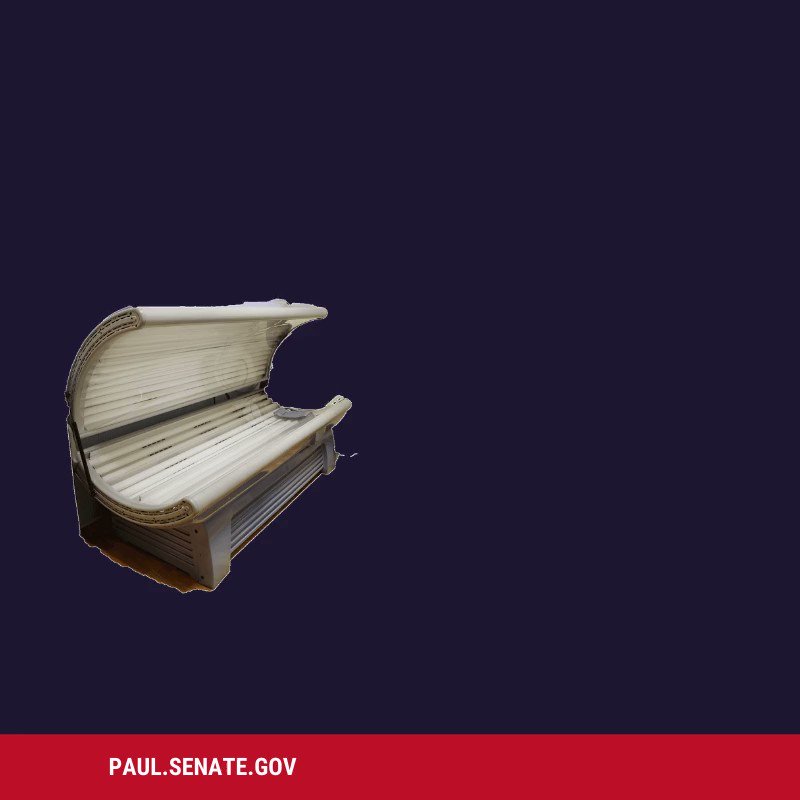
The National Institutes of Health is spending $3,452,234.00 to test if social media messages will get moms to stop their adolescent daughters from using indoor tanning salons. Read more here: https://t.co/BU1CjiZdgS
Remember this the next time they tell you there’s “nothing to cut.”
I’ll give you some examples of it here:
Researchers used federal funds from grants worth $1,327,781.72 to see if you’ll eat ground-up bugs. Read more here: https://t.co/BU1CjiZdgS
The National Institutes of Health is spending $3,452,234.00 to test if social media messages will get moms to stop their adolescent daughters from using indoor tanning salons. Read more here: https://t.co/BU1CjiZdgS