One of the hardest problems post-pandemic will be how to revive so-called "left behind" places.

Post-industrial towns, run-down suburbs, coastal communities - these places were already struggling before the crisis and have fared worst in the last year.

What should we do?

Today, @ukonward sets out the beginning of a plan to repair our social fabric. It follows our extensive research over the last year, expertly chaired by @jamesosh, and funded by @jrf_uk, @Shelter and @peoplesbiz.

https://t.co/d3T5uPwG9N
Before I get into recommendations, some findings from previous Onward research.

In 2018, we found 71% of people believe "community has declined in my lifetime"

In 2019, we found 65% would rather live in “a society that focuses on giving people more security” vs 35% for freedom
This was the basis for our identification of 'Workington Man' as the archetypal swing voter in 2019, and led us to predict (correctly) that large numbers of Red Wall seats could fall. A key driver was a desire for security, belonging and pride in place.
There is also a key regional dimension to this. We also tested people's affinity with the UK's direction of travel, across both cultural and economic dimensions - revealing the extraordinary spread below: London vs. the Rest.
https://t.co/HrorW4xaLp
Building on this research, last year we attempted to measure what has been going on with our social fabric.

We discovered an unarguable and long term decline in the institutions and networks that bind communities together at a local level.
https://t.co/c1J7vn2cn7
We created a composite index of dozens of statistical indicators to understand how social fabric varies by geography.

The pattern correlated strongly with political volatility and economic decline. Coastal and post-industrial towns hardest hit.
https://t.co/c1J7vn2cn7
If ministers want to "level up" and satisfy their new voters, they need a plan to revive communities and give people back a sense of belonging.

We argue that means two things: giving communities more powers for social action, and more capital to use them https://t.co/3hcT3Re8AA
We recommend empowering:
1. Town/parish councils (which shd be universal) to take control of green spaces and community sports facilities.
2. Local people to take over long-term vacant shops for community use.
3. Community Land Trusts to demand land to build affordable housing.
We argue for capitalising communities by:
1. Allow workers to access a yr of their pension early to volunteer/retrain
2. Allow working partners to transfer their full tax allowance to a stay-at-home spouse
3. Create "Year to Serve" to pay jobless young ppl to do civic service
And many more. You can read the full report, The Policies of Belonging, here: https://t.co/3hcT3Re8AA

Last night, @danny__kruger and @JonCruddas_1 led an Adjournment Debate in the House of Commons on this subject. Watch it here. https://t.co/6SwLEq9bgh

More from Economy

1/ Trend Factor: Any Economic Gains from Using Information over Investment Horizons? (Han, Zhou, Zhu)

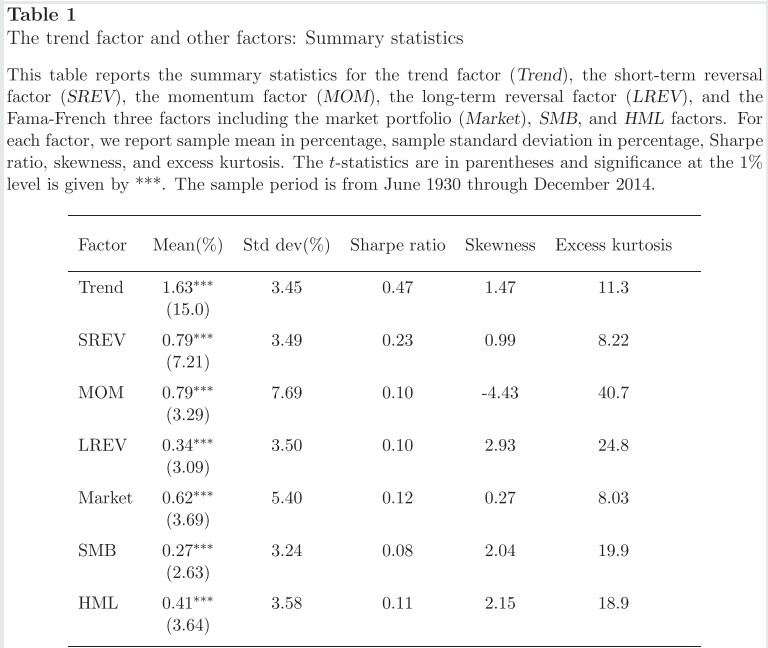
"A trend factor using multiple time lengths outperforms ST reversal, momentum, and LT reversal, which are based on the three price trends separately."

https://t.co/udkvsdw2Lz


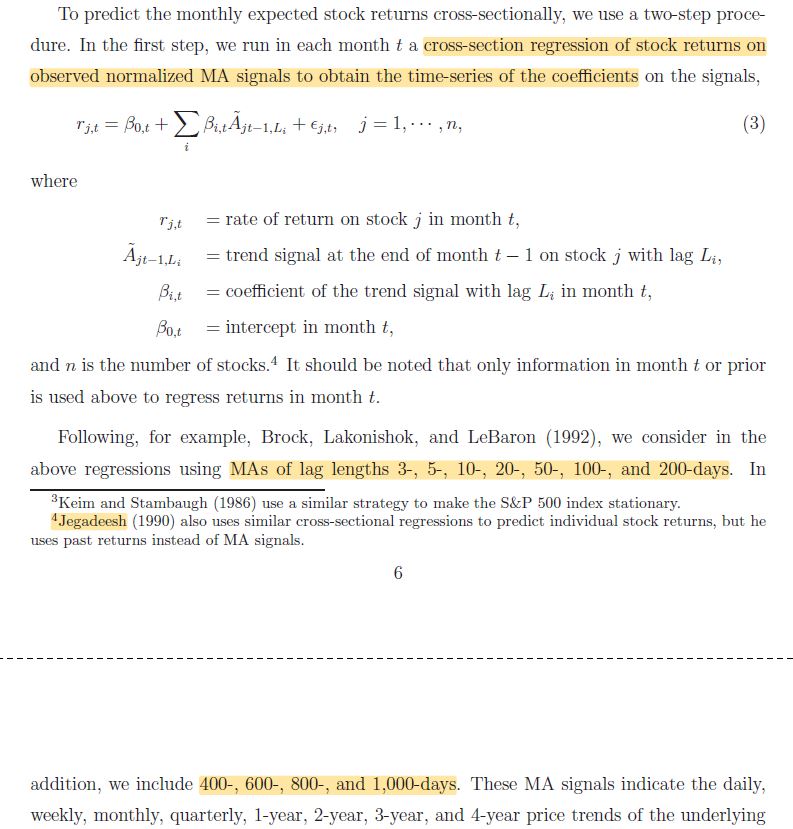
2/ This resembles combining multiple measures of ST reversal, momentum, and LT reversal (forecasts determined by walking forward rather than using signs from the full sample).

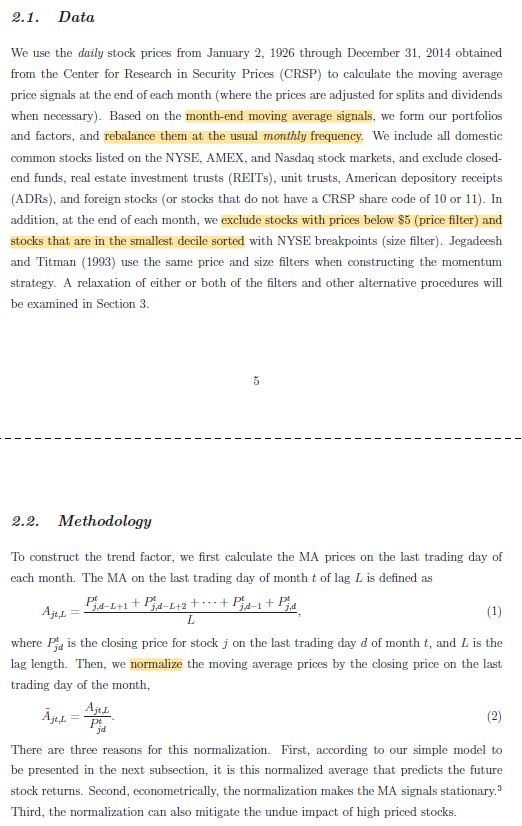
Unlike normal moving average signals, these are *cross-sectional.* More below:
https://t.co/wkIFLg9jtK


3/ Unsurprisingly, the Trend factor formed by this approach outperforms benchmarks in terms of both Sharpe ratio and tail metrics. It's combining momentum with two factors that are negatively correlated to it AND using multiple specifications.

More here:
https://t.co/x8Tloz3iyL


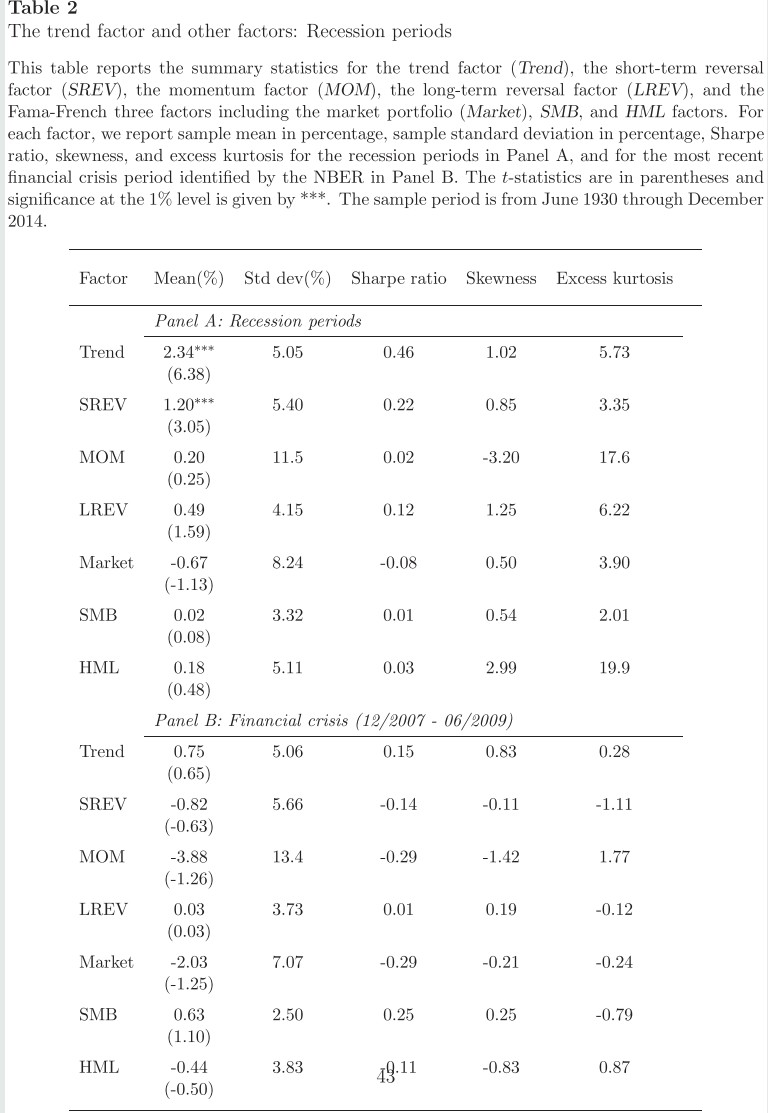
4/ "Average return and volatility of the trend factor are both higher in recession periods. However, the Sharpe ratio is virtually the same.

"Interestingly, all of the factors still have positive average returns.

"Momentum experiences the greatest increase in volatility."


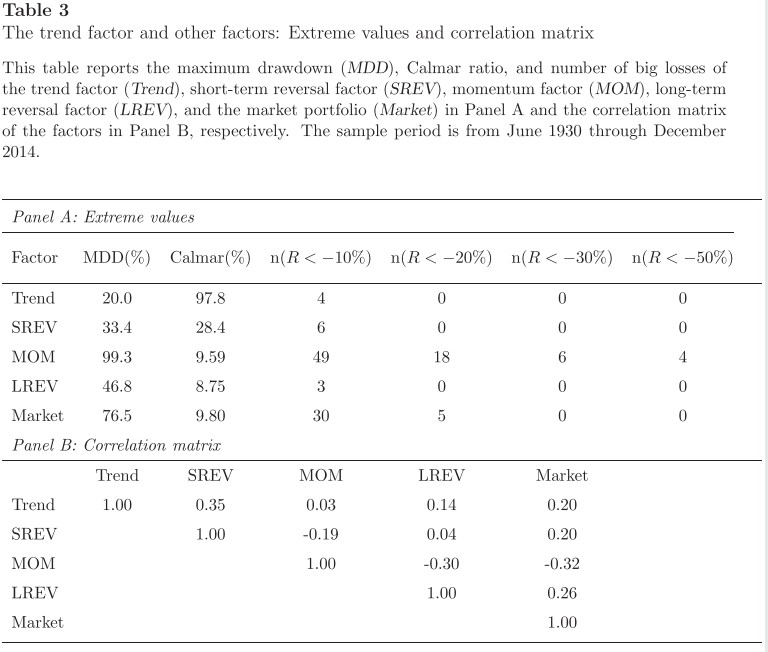
5/ "In terms of maximum drawdown and the Calmar ratio, the trend factor performs the best.

"The trend factor is correlated with the short-term reversal factor (35%), long-term reversal factor (14%), and the market (20%) but is virtually uncorrelated with the momentum factor."

You May Also Like