The right have attacked the Green New Deal on the grounds that it will hurt economic growth. In response, the left have defended it by saying it will *increase* growth. And maybe it will. But taking this approach is a bad strategy for a number of reasons:
More from Economy

1/ Trend Factor: Any Economic Gains from Using Information over Investment Horizons? (Han, Zhou, Zhu)
"A trend factor using multiple time lengths outperforms ST reversal, momentum, and LT reversal, which are based on the three price trends separately."
https://t.co/udkvsdw2Lz
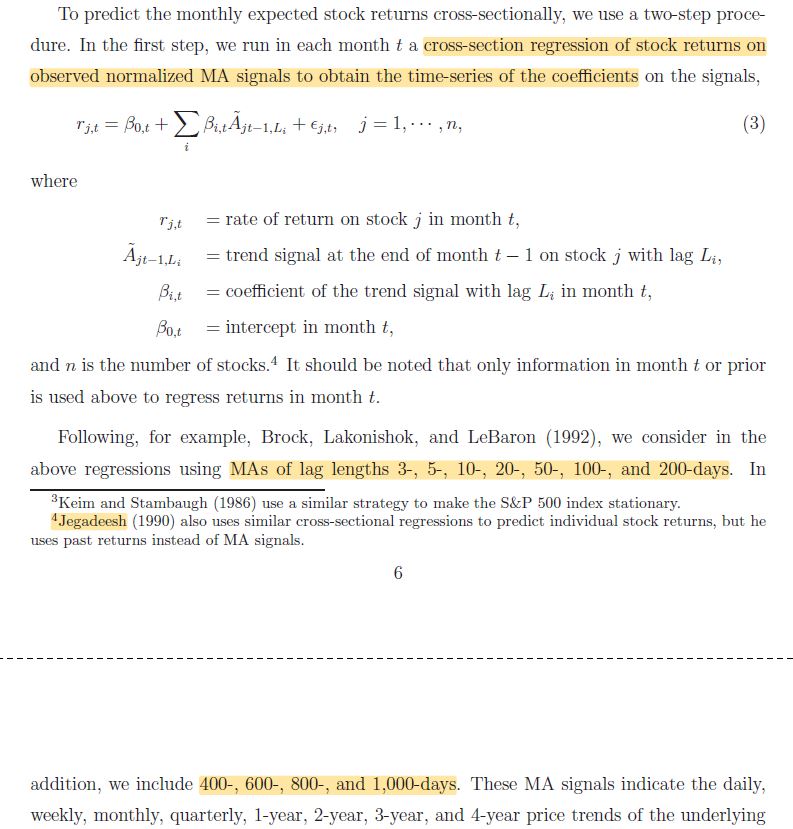
2/ This resembles combining multiple measures of ST reversal, momentum, and LT reversal (forecasts determined by walking forward rather than using signs from the full sample).
Unlike normal moving average signals, these are *cross-sectional.* More below:
https://t.co/wkIFLg9jtK
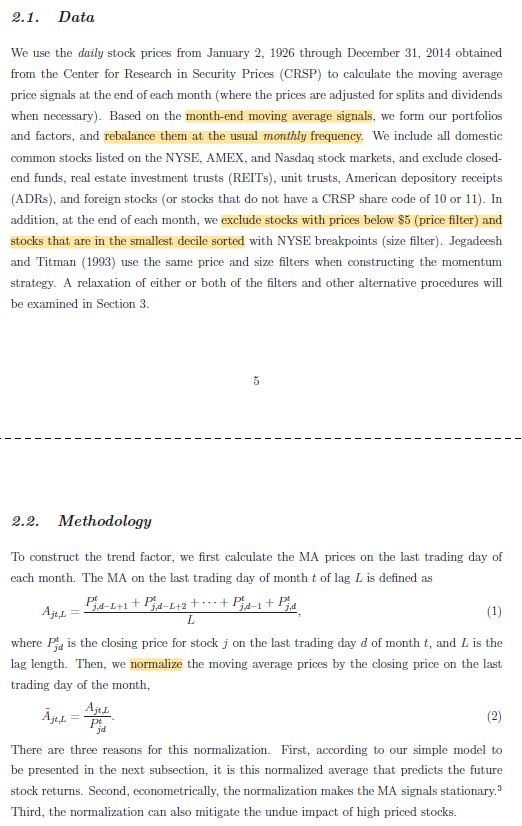
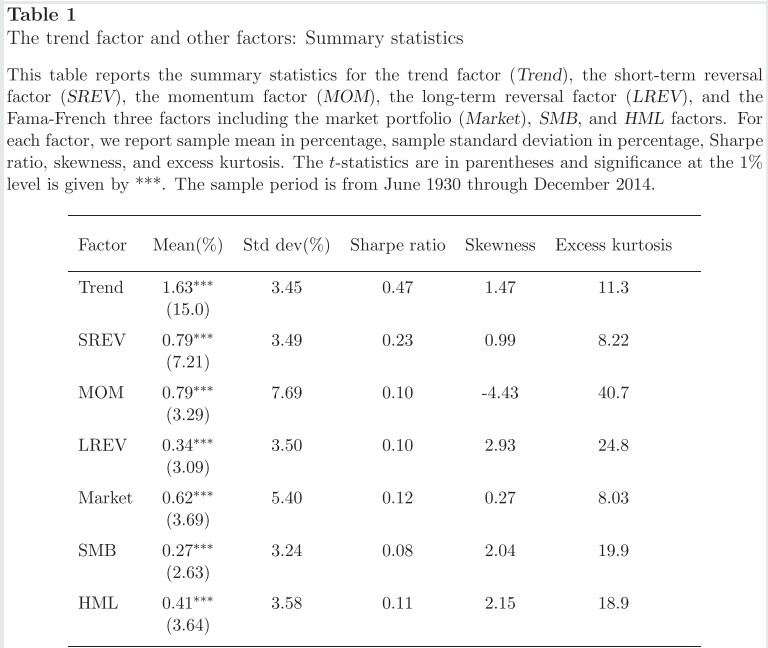
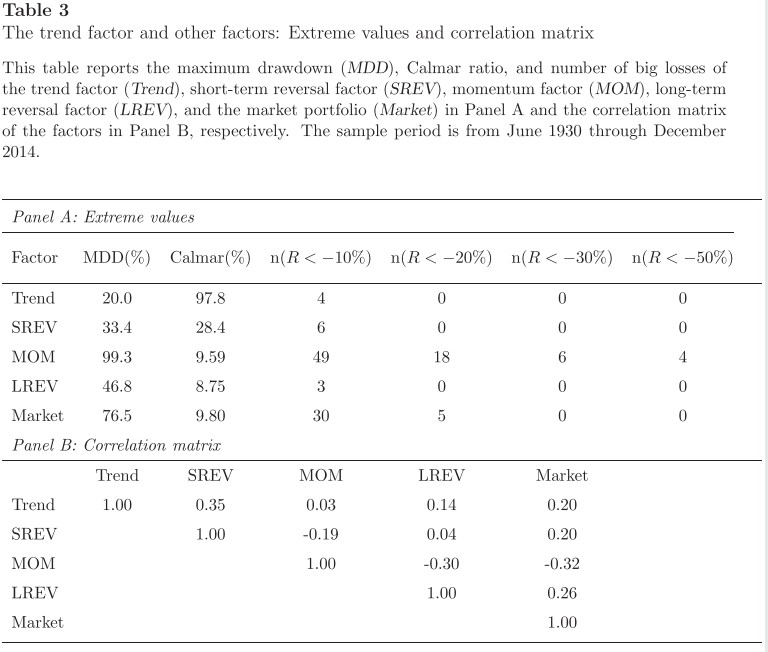
3/ Unsurprisingly, the Trend factor formed by this approach outperforms benchmarks in terms of both Sharpe ratio and tail metrics. It's combining momentum with two factors that are negatively correlated to it AND using multiple specifications.
More here:
https://t.co/x8Tloz3iyL
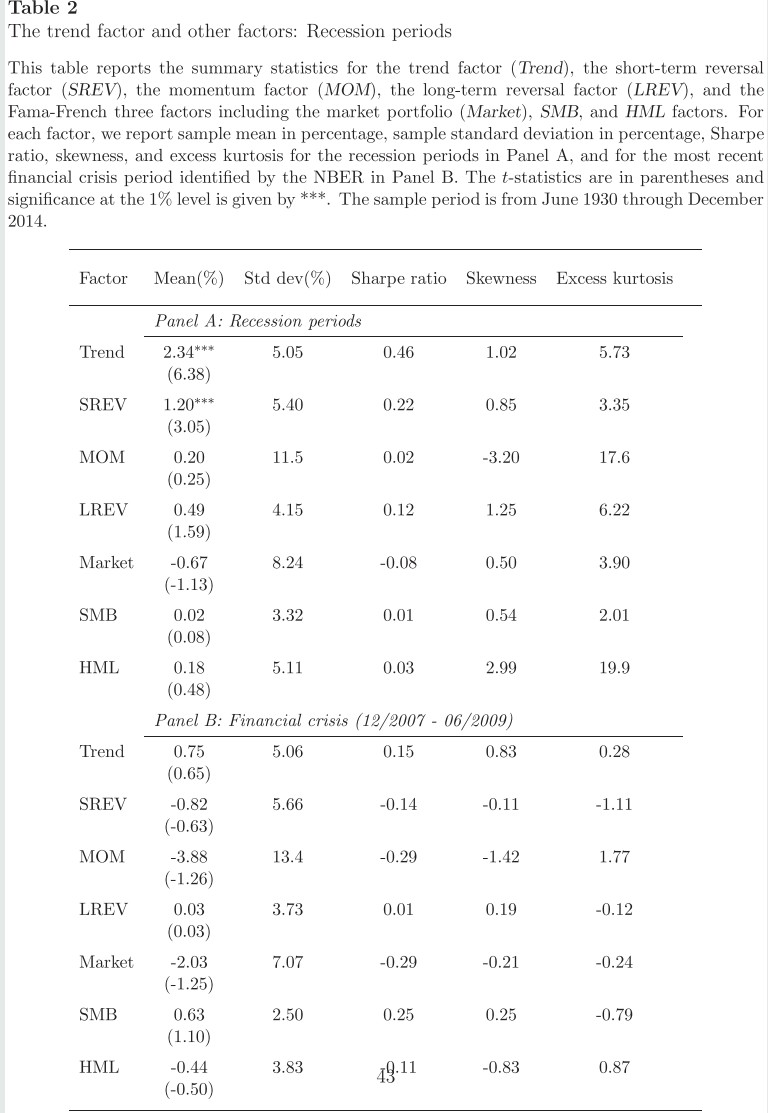
4/ "Average return and volatility of the trend factor are both higher in recession periods. However, the Sharpe ratio is virtually the same.
"Interestingly, all of the factors still have positive average returns.
"Momentum experiences the greatest increase in volatility."
5/ "In terms of maximum drawdown and the Calmar ratio, the trend factor performs the best.
"The trend factor is correlated with the short-term reversal factor (35%), long-term reversal factor (14%), and the market (20%) but is virtually uncorrelated with the momentum factor."
"A trend factor using multiple time lengths outperforms ST reversal, momentum, and LT reversal, which are based on the three price trends separately."
https://t.co/udkvsdw2Lz
2/ This resembles combining multiple measures of ST reversal, momentum, and LT reversal (forecasts determined by walking forward rather than using signs from the full sample).
Unlike normal moving average signals, these are *cross-sectional.* More below:
https://t.co/wkIFLg9jtK
1/ Cross-Sectional and Time-Series Tests of Return Predictability: What Is the Difference? (Goyal, Jegadeesh)
— Darren \U0001f95a (@ReformedTrader) June 18, 2019
"The difference between the performances of TS and CS strategies is largely due to a time-varying net-long investment in risky assets."https://t.co/CSIn3ujN2R pic.twitter.com/XHnVmIart4
3/ Unsurprisingly, the Trend factor formed by this approach outperforms benchmarks in terms of both Sharpe ratio and tail metrics. It's combining momentum with two factors that are negatively correlated to it AND using multiple specifications.
More here:
https://t.co/x8Tloz3iyL
1/ An Executive Summary (in Tweet form) of our new paper
— Adam Butler (@GestaltU) March 27, 2019
Dual Momentum \u2013 A Craftsman\u2019s Perspective
Download here: https://t.co/Y9GlGNohBg
Everything that follows in this thread is based on HYPOTHETICAL AND SIMULATED RESULTS. pic.twitter.com/9m5YJnTdtq
4/ "Average return and volatility of the trend factor are both higher in recession periods. However, the Sharpe ratio is virtually the same.
"Interestingly, all of the factors still have positive average returns.
"Momentum experiences the greatest increase in volatility."
5/ "In terms of maximum drawdown and the Calmar ratio, the trend factor performs the best.
"The trend factor is correlated with the short-term reversal factor (35%), long-term reversal factor (14%), and the market (20%) but is virtually uncorrelated with the momentum factor."


True that all the people cherishing the support of IMF or WTO for farm reforms need to cool it down a bit, because that is a model we do not want to emulate to the t in India here.
But here are some issues that deserve to be better discussed by all:
1. People who say we are emulating the Western model of agriculture are way off with this assumption. The process of primitive accumulation, the alienation of their people from their land and the way these 'first-world' countries have pushed their people into Industrial sector +
+ was a merciless phase.
But the same assumption won't work for India, because we have always had a large workforce in agriculture, agri subsidies have always run high, protection has been the hallmark of agriculture and rural representation in the parliament has always been+
+ high. Still, it is our utter failure from the beginning that we have not been able to incentivize the movement of our people to other lucrative sectors.
2. This brings us to the another point of providing MSP on all the commodities and the demand side of the issue that we+
+ conveniently ignore. Here's the thing, Food prices in India have about 65-70% weight in calculating the Consumer Price Index and 25-30% of wholesale price index. These indices affect the general price level in the economy i.e. the inflation. If MSP is offered on all the+
But here are some issues that deserve to be better discussed by all:
WTO backed by Western countries have always wanted to dismantle support systems for farmers in developing countries including India while pumping in federal payments to its farmers. Trump gave 46 billion dollars in 2020 alone to US farmers. pic.twitter.com/0V34ZQQq4J
— Ranveer Singh (@ranveersiiingh) February 4, 2021
1. People who say we are emulating the Western model of agriculture are way off with this assumption. The process of primitive accumulation, the alienation of their people from their land and the way these 'first-world' countries have pushed their people into Industrial sector +
+ was a merciless phase.
But the same assumption won't work for India, because we have always had a large workforce in agriculture, agri subsidies have always run high, protection has been the hallmark of agriculture and rural representation in the parliament has always been+
+ high. Still, it is our utter failure from the beginning that we have not been able to incentivize the movement of our people to other lucrative sectors.
2. This brings us to the another point of providing MSP on all the commodities and the demand side of the issue that we+
+ conveniently ignore. Here's the thing, Food prices in India have about 65-70% weight in calculating the Consumer Price Index and 25-30% of wholesale price index. These indices affect the general price level in the economy i.e. the inflation. If MSP is offered on all the+

What a year: 203 essays about degrowth in English since the beginning of March. Here is a selection of some of my favourites. Thank you @fem_degrowth, @beth_stratford, @thedownshifters, @corbinkbarthold, @degrowth_info for these brilliant texts.
THREAD/
https://t.co/1lFaJM52RX
https://t.co/i5HOfZ19r7
https://t.co/DuPSrrqnzz
https://t.co/0ANveWdvFO
THREAD/
https://t.co/1lFaJM52RX
https://t.co/i5HOfZ19r7
https://t.co/DuPSrrqnzz
https://t.co/0ANveWdvFO
You May Also Like





Margatha Natarajar murthi - Uthirakosamangai temple near Ramanathapuram,TN
#ArudraDarisanam
Unique Natarajar made of emerlad is abt 6 feet tall.
It is always covered with sandal paste.Only on Thriuvadhirai Star in month Margazhi-Nataraja can be worshipped without sandal paste.

After removing the sandal paste,day long rituals & various abhishekam will be https://t.co/e1Ye8DrNWb day Maragatha Nataraja sannandhi will be closed after anointing the murthi with fresh sandal paste.Maragatha Natarajar is covered with sandal paste throughout the year

as Emerald has scientific property of its molecules getting disturbed when exposed to light/water/sound.This is an ancient Shiva temple considered to be 3000 years old -believed to be where Bhagwan Shiva gave Veda gyaana to Parvati Devi.This temple has some stunning sculptures.

#ArudraDarisanam
Unique Natarajar made of emerlad is abt 6 feet tall.
It is always covered with sandal paste.Only on Thriuvadhirai Star in month Margazhi-Nataraja can be worshipped without sandal paste.
After removing the sandal paste,day long rituals & various abhishekam will be https://t.co/e1Ye8DrNWb day Maragatha Nataraja sannandhi will be closed after anointing the murthi with fresh sandal paste.Maragatha Natarajar is covered with sandal paste throughout the year
as Emerald has scientific property of its molecules getting disturbed when exposed to light/water/sound.This is an ancient Shiva temple considered to be 3000 years old -believed to be where Bhagwan Shiva gave Veda gyaana to Parvati Devi.This temple has some stunning sculptures.