I want to talk about the editorial support you should expect from an agent who says they work editorially, &what you should not expect, too. (As always these are my opinions; others will think differently; you can take any opinion you encounter or burn it in a trash can.) #Thread
Line edits/sidebar comments by your agent. I always stress these are suggestions to achieve a goal. How author arrives at that goal is up to to them, but
I DO put foot down abt blatant "rookie mistakes." Or major arc problems,sensitivity issues. I don't do this to be obstinate;but you should stay flexible too.
We may do 1 round edits. 3 rev & 4 edits. 1 rev & 2 edits.
And if I like your book but do NOT have any vision for fixing problems I find, I am doing you a favor by NOT offering rep, so you can seek an agent who sees how to make it shine and soar against all it's competition.
I am not the person you send your 1st/2nd draft to. My editing rounds are all fine tuning, tweaking, polishing, or taking advantage of opportunity to amp up stakes tension emotion etc. I am not going to teach you how to write.
More from Writing


The world's most valuable skill:
Writing effectively.
But colleges charge you 120k and still do a terrible job teaching it.
Instead, here are 9 writing frameworks that cost you nothing and will save you hundreds of hours:
1. Start with building your writing habit by leveraging @jamesclear's Four Laws of Behavior
2. With your writing habit down, study these 10 tips from the world's most legendary marketer: David Ogilvy.
3. Then, immerse yourself in the takeaways from the bible on business
4. Like to learn on the go?
Dive into the creative process of the world's best writers in these 10 episodes of the @timferriss show.
Writing effectively.
But colleges charge you 120k and still do a terrible job teaching it.
Instead, here are 9 writing frameworks that cost you nothing and will save you hundreds of hours:
1. Start with building your writing habit by leveraging @jamesclear's Four Laws of Behavior
Atomic Habits from @jamesclear changed my life.
— Dickie Bush \U0001f6a2 (@dickiebush) March 10, 2021
In Atomic Habits, James lays out the Four Laws of Behavior Change.
1. Make it obvious
2. Make it attractive
3. Make it easy
4. Make it satisfying
Here's how to leverage them to build a daily writing habit (\U0001f9f5\u270d\U0001f3fc):
2. With your writing habit down, study these 10 tips from the world's most legendary marketer: David Ogilvy.
One of the most legendary marketers of all time: David Ogilvy
— Dickie Bush \U0001f6a2 (@dickiebush) June 2, 2021
In 1982, David wrote an internal memo to the employees of his advertising agency titled "How to write."
And in just 10 bullets he put together a masterclass in effective writing.
Here's a breakdown of each one: pic.twitter.com/MxRYuQRLyA
3. Then, immerse yourself in the takeaways from the bible on business
Business writing is a superpower.
— Dickie Bush \U0001f6a2 (@dickiebush) June 8, 2021
But schools and employers do a horrible job teaching people to write.
In 1981, two advertising executives wrote a timeless guide for how to write in the business world.
And here are 12 of their tips you should staple to your desktop: pic.twitter.com/w0hh0qBOG4
4. Like to learn on the go?
Dive into the creative process of the world's best writers in these 10 episodes of the @timferriss show.
I've listened to every episode of the @tferriss show.
— Dickie Bush \U0001f6a2 (@dickiebush) March 3, 2021
And some of my favorites are when Tim interviews prolific writers, diving into their creative process to improve his own.
If you are looking to build a writing habit, these 10 episodes are a must-listen:
\u270d\U0001f3fc\U0001f3a7\U0001f447\U0001f3fc


You May Also Like


1/ Some initial thoughts on personal moats:
Like company moats, your personal moat should be a competitive advantage that is not only durable—it should also compound over time.
Characteristics of a personal moat below:
2/ Like a company moat, you want to build career capital while you sleep.
As Andrew Chen noted:
3/ You don’t want to build a competitive advantage that is fleeting or that will get commoditized
Things that might get commoditized over time (some longer than
4/ Before the arrival of recorded music, what used to be scarce was the actual music itself — required an in-person artist.
After recorded music, the music itself became abundant and what became scarce was curation, distribution, and self space.
5/ Similarly, in careers, what used to be (more) scarce were things like ideas, money, and exclusive relationships.
In the internet economy, what has become scarce are things like specific knowledge, rare & valuable skills, and great reputations.
Like company moats, your personal moat should be a competitive advantage that is not only durable—it should also compound over time.
Characteristics of a personal moat below:
I'm increasingly interested in the idea of "personal moats" in the context of careers.
— Erik Torenberg (@eriktorenberg) November 22, 2018
Moats should be:
- Hard to learn and hard to do (but perhaps easier for you)
- Skills that are rare and valuable
- Legible
- Compounding over time
- Unique to your own talents & interests https://t.co/bB3k1YcH5b
2/ Like a company moat, you want to build career capital while you sleep.
As Andrew Chen noted:
People talk about \u201cpassive income\u201d a lot but not about \u201cpassive social capital\u201d or \u201cpassive networking\u201d or \u201cpassive knowledge gaining\u201d but that\u2019s what you can architect if you have a thing and it grows over time without intensive constant effort to sustain it
— Andrew Chen (@andrewchen) November 22, 2018
3/ You don’t want to build a competitive advantage that is fleeting or that will get commoditized
Things that might get commoditized over time (some longer than
Things that look like moats but likely aren\u2019t or may fade:
— Erik Torenberg (@eriktorenberg) November 22, 2018
- Proprietary networks
- Being something other than one of the best at any tournament style-game
- Many "awards"
- Twitter followers or general reach without "respect"
- Anything that depends on information asymmetry https://t.co/abjxesVIh9
4/ Before the arrival of recorded music, what used to be scarce was the actual music itself — required an in-person artist.
After recorded music, the music itself became abundant and what became scarce was curation, distribution, and self space.
5/ Similarly, in careers, what used to be (more) scarce were things like ideas, money, and exclusive relationships.
In the internet economy, what has become scarce are things like specific knowledge, rare & valuable skills, and great reputations.


Keep dwelling on this:
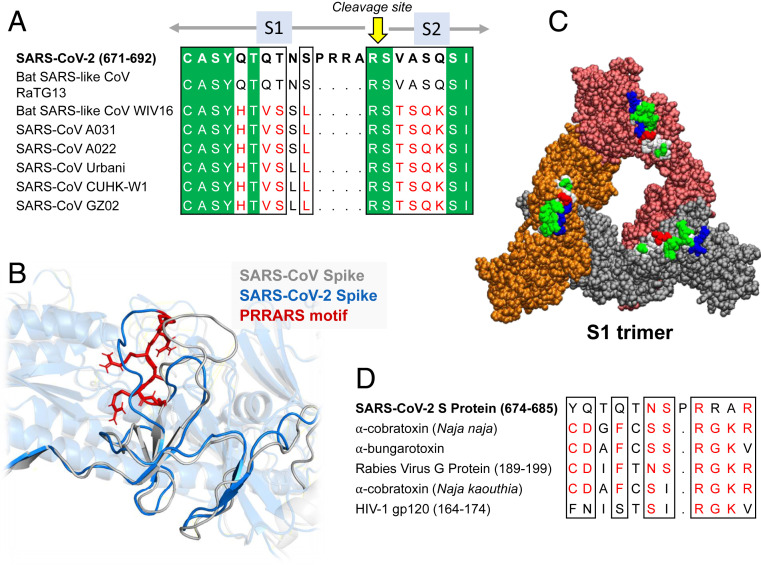
Further Examination of the Motif near PRRA Reveals Close Structural Similarity to the SEB Superantigen as well as Sequence Similarities to Neurotoxins and a Viral SAg.
The insertion PRRA together with 7 sequentially preceding residues & succeeding R685 (conserved in β-CoVs) form a motif, Y674QTQTNSPRRAR685, homologous to those of neurotoxins from Ophiophagus (cobra) and Bungarus genera, as well as neurotoxin-like regions from three RABV strains
(20) (Fig. 2D). We further noticed that the same segment bears close similarity to the HIV-1 glycoprotein gp120 SAg motif F164 to V174.
https://t.co/EwwJOSa8RK
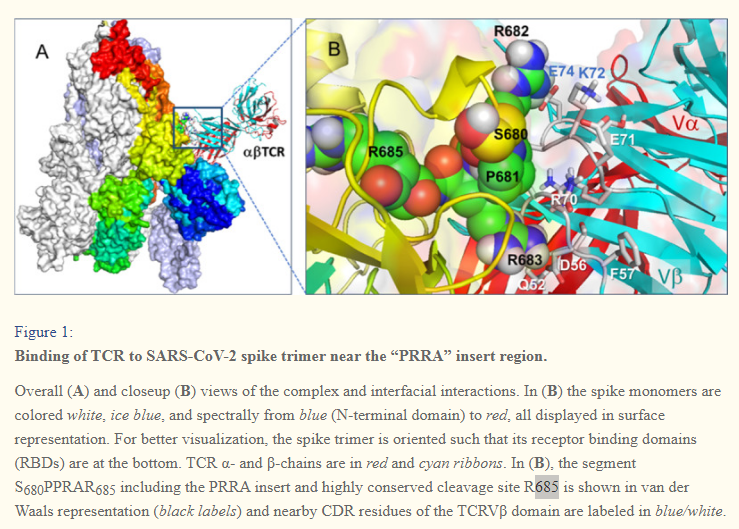
In (B), the segment S680PPRAR685 including the PRRA insert and highly conserved cleavage site *R685* is shown in van der Waals representation (black labels) and nearby CDR residues of the TCRVβ domain are labeled in blue/white
https://t.co/BsY8BAIzDa
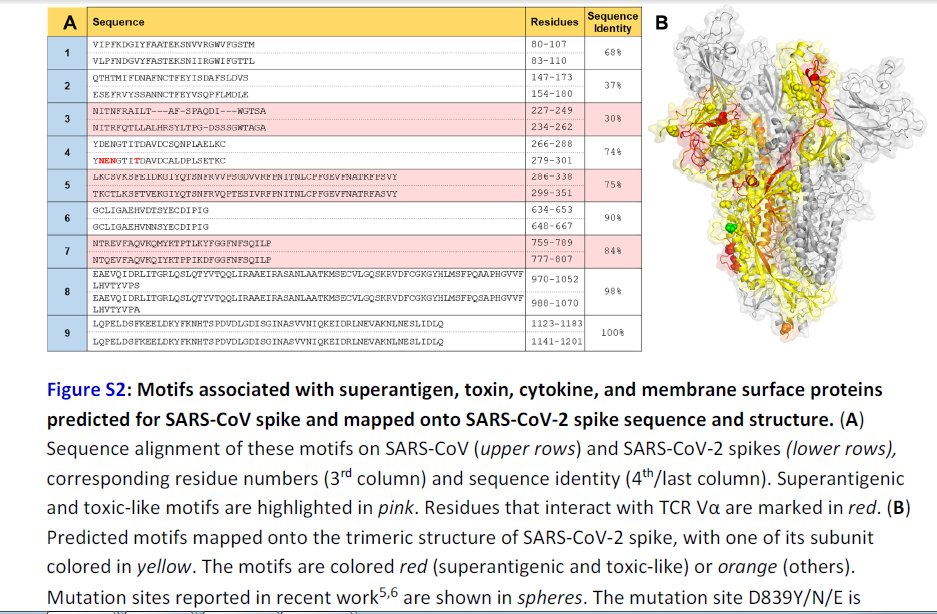
Sequence Identity %
https://t.co/BsY8BAIzDa
Y674 - QTQTNSPRRA - R685
Similar to neurotoxins from Ophiophagus (cobra) & Bungarus genera & neurotoxin-like regions from three RABV strains
T678 - NSPRRA- R685
Superantigenic core, consistently aligned against bacterial or viral SAgs
Further Examination of the Motif near PRRA Reveals Close Structural Similarity to the SEB Superantigen as well as Sequence Similarities to Neurotoxins and a Viral SAg.
The insertion PRRA together with 7 sequentially preceding residues & succeeding R685 (conserved in β-CoVs) form a motif, Y674QTQTNSPRRAR685, homologous to those of neurotoxins from Ophiophagus (cobra) and Bungarus genera, as well as neurotoxin-like regions from three RABV strains
(20) (Fig. 2D). We further noticed that the same segment bears close similarity to the HIV-1 glycoprotein gp120 SAg motif F164 to V174.
https://t.co/EwwJOSa8RK
In (B), the segment S680PPRAR685 including the PRRA insert and highly conserved cleavage site *R685* is shown in van der Waals representation (black labels) and nearby CDR residues of the TCRVβ domain are labeled in blue/white
https://t.co/BsY8BAIzDa
Sequence Identity %
https://t.co/BsY8BAIzDa
Y674 - QTQTNSPRRA - R685
Similar to neurotoxins from Ophiophagus (cobra) & Bungarus genera & neurotoxin-like regions from three RABV strains
T678 - NSPRRA- R685
Superantigenic core, consistently aligned against bacterial or viral SAgs