King Shark, One Of The Greatest Afrikan Rulers Who Fought European Invasion In Afrika.
Thread!!!
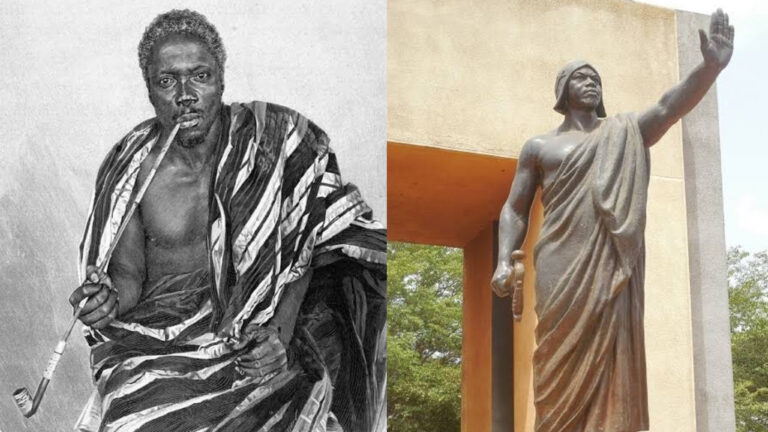
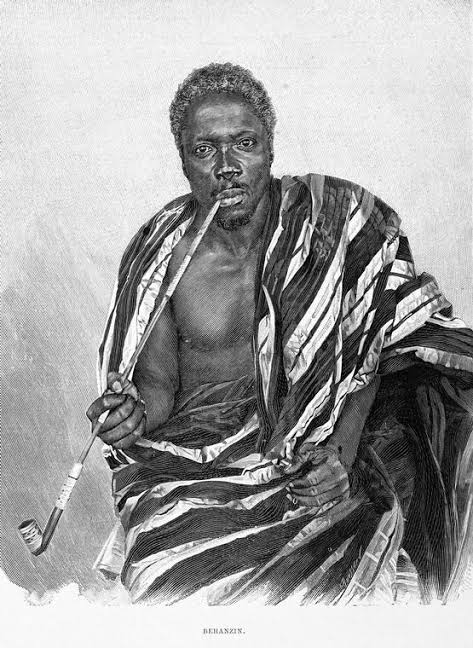
Statue of King Shark

What is popularity called "YOGA" today is actually rooted in West Central Afrika. The Yoruba refers to it as "R\xcdR\xd3". This means " ELASTICITY ". Also called " Lati Ro(To be elastic).
— Seleeah_Writes\xa9 #EndSarsBrutality# (@Asipita6) December 26, 2020
(West Afrikan Yoga by the Dan Ethnicity in C\xf4te D'Ivoire).
Thread 1/3 pic.twitter.com/iFkvWzyPZx
The Ancient Egyptians Were Writing Around 3100BC....
— Seleeah_Writes\xa9 #EndSarsBrutality# (@Asipita6) December 23, 2020
Thread!!! pic.twitter.com/YAUpigEFIB
SHORT THREAD!!!
— Seleeah_Writes\xa9 #EndSarsBrutality# (@Asipita6) December 18, 2020
We were told that before the Oyinbos came, our ancestors were barbaric, didn't wear clothes, and hopped trees like monkeys, unfortunately, many of us believed.
A lot Of Our Own Beautiful And Great Historical Events And Persons The System Has Failed To Teach Us.
— Seleeah_Writes\xa9 #EndSarsBrutality# (@Asipita6) December 16, 2020
Thread!!!
Idubor, Giant Prince Of Benin Who Could Uproot Palm Trees With His Bare Hands. pic.twitter.com/KJkk9xYGib
OHUN TOHUN BE LEYIN OFFA O JU OJE LO!!
— Seleeah_Writes\xa9 #EndSarsBrutality# (@Asipita6) December 13, 2020
THREAD!! pic.twitter.com/EBiheg2IaV
The Kru Tribe, Tough People That Refused To Be Captured And Taken Away For Slavery.
— Seleeah_Writes\xa9 #EndSarsBrutality# (@Asipita6) December 13, 2020
THREAD!!! pic.twitter.com/ibcX8PXCLZ
More from World






All the leftists in the comments like oh no prageru made a good point lol
Polls consistently show conservative support for nuclear energy. It also has high support among elites. The myth that it is unpopular in general isn’t true—although it is unpopular in almost every specific case where they need to site it
Article is old but yeah
This study finds that risk & benefit predict individual opinion the most, followed by the share of nuclear energy already extant, followed by ideology (conservatives support more)
This one finds that journalists attitude affect public perceptions, but that energy consultants, nuclear engineers, bureaucrats, and the military show the highest support for nuclear energy
Nuclear energy:
— PragerU (@prageru) February 17, 2021
Safe? \u2705
Clean? \u2705
Efficient? \u2705
Scalable? \u2705
Why is it not receiving more political support?
Polls consistently show conservative support for nuclear energy. It also has high support among elites. The myth that it is unpopular in general isn’t true—although it is unpopular in almost every specific case where they need to site it
Article is old but yeah
This study finds that risk & benefit predict individual opinion the most, followed by the share of nuclear energy already extant, followed by ideology (conservatives support more)
This one finds that journalists attitude affect public perceptions, but that energy consultants, nuclear engineers, bureaucrats, and the military show the highest support for nuclear energy
You May Also Like

A brief analysis and comparison of the CSS for Twitter's PWA vs Twitter's legacy desktop website. The difference is dramatic and I'll touch on some reasons why.
Legacy site *downloads* ~630 KB CSS per theme and writing direction.
6,769 rules
9,252 selectors
16.7k declarations
3,370 unique declarations
44 media queries
36 unique colors
50 unique background colors
46 unique font sizes
39 unique z-indices
https://t.co/qyl4Bt1i5x

PWA *incrementally generates* ~30 KB CSS that handles all themes and writing directions.
735 rules
740 selectors
757 declarations
730 unique declarations
0 media queries
11 unique colors
32 unique background colors
15 unique font sizes
7 unique z-indices
https://t.co/w7oNG5KUkJ

The legacy site's CSS is what happens when hundreds of people directly write CSS over many years. Specificity wars, redundancy, a house of cards that can't be fixed. The result is extremely inefficient and error-prone styling that punishes users and developers.
The PWA's CSS is generated on-demand by a JS framework that manages styles and outputs "atomic CSS". The framework can enforce strict constraints and perform optimisations, which is why the CSS is so much smaller and safer. Style conflicts and unbounded CSS growth are avoided.
Legacy site *downloads* ~630 KB CSS per theme and writing direction.
6,769 rules
9,252 selectors
16.7k declarations
3,370 unique declarations
44 media queries
36 unique colors
50 unique background colors
46 unique font sizes
39 unique z-indices
https://t.co/qyl4Bt1i5x
PWA *incrementally generates* ~30 KB CSS that handles all themes and writing directions.
735 rules
740 selectors
757 declarations
730 unique declarations
0 media queries
11 unique colors
32 unique background colors
15 unique font sizes
7 unique z-indices
https://t.co/w7oNG5KUkJ
The legacy site's CSS is what happens when hundreds of people directly write CSS over many years. Specificity wars, redundancy, a house of cards that can't be fixed. The result is extremely inefficient and error-prone styling that punishes users and developers.
The PWA's CSS is generated on-demand by a JS framework that manages styles and outputs "atomic CSS". The framework can enforce strict constraints and perform optimisations, which is why the CSS is so much smaller and safer. Style conflicts and unbounded CSS growth are avoided.