2. Many Afghanistan policy proposals require some action by Pakistan. But as usual there is a disconnect where Washington believes it can demand Pakistan "do more" without providing much in return and Islamabad thinks half-measures will suffice. It is a destructive dance.
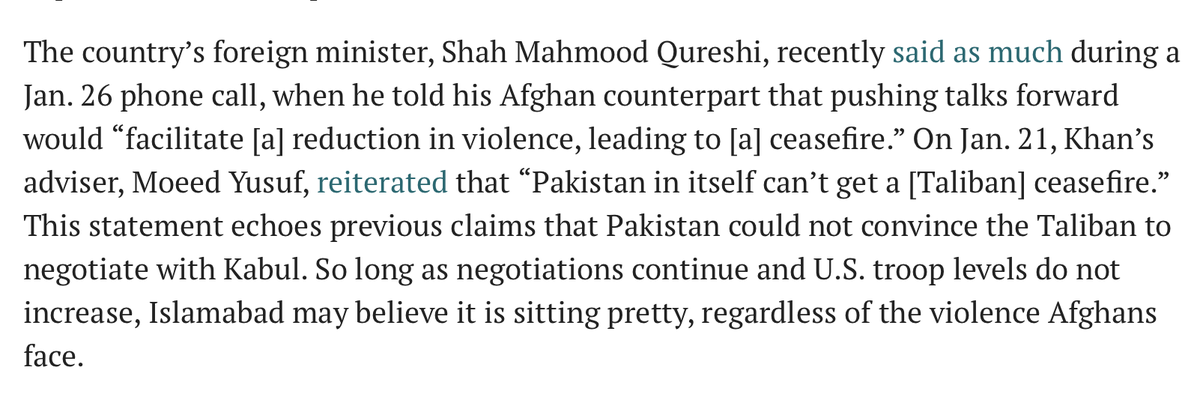
3. Pakistan helped bring the Taliban to the negotiating table in Doha but stopped there & instead opted to tacitly support the Taliban’s bargaining position to enter into a ceasefire only after further concessions from Kabul & US troops leave.
4. The Taliban are overplaying their hand by delaying talks & escalating violence, while Pakistan is underplaying its hand by refusing to add pressure.
5. Why won’t Pakistan further pressure the Taliban?
- What’s in it for me? (sensitive to "do more")
- Less influence over current TB leadership.
- Scared of blowback from sectarian groups, TTP (so they say).
- Some sympathy for group.
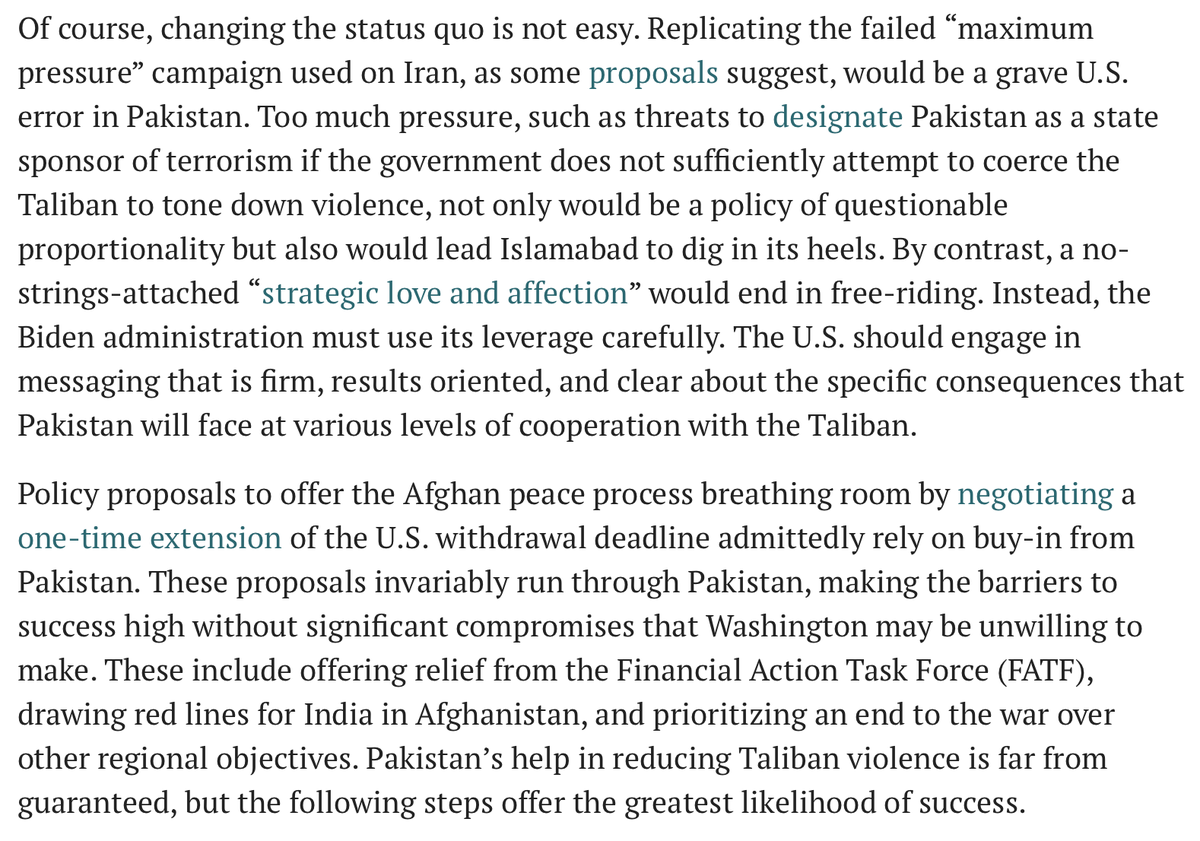
6. Any policy proposal that prioritizes a political settlement to the war in Afghanistan requires Pakistan’s help. Neither “maximum pressure” nor “strategic love and affection” will work. In fact, nothing may work. But the Biden team can start with the FATF.
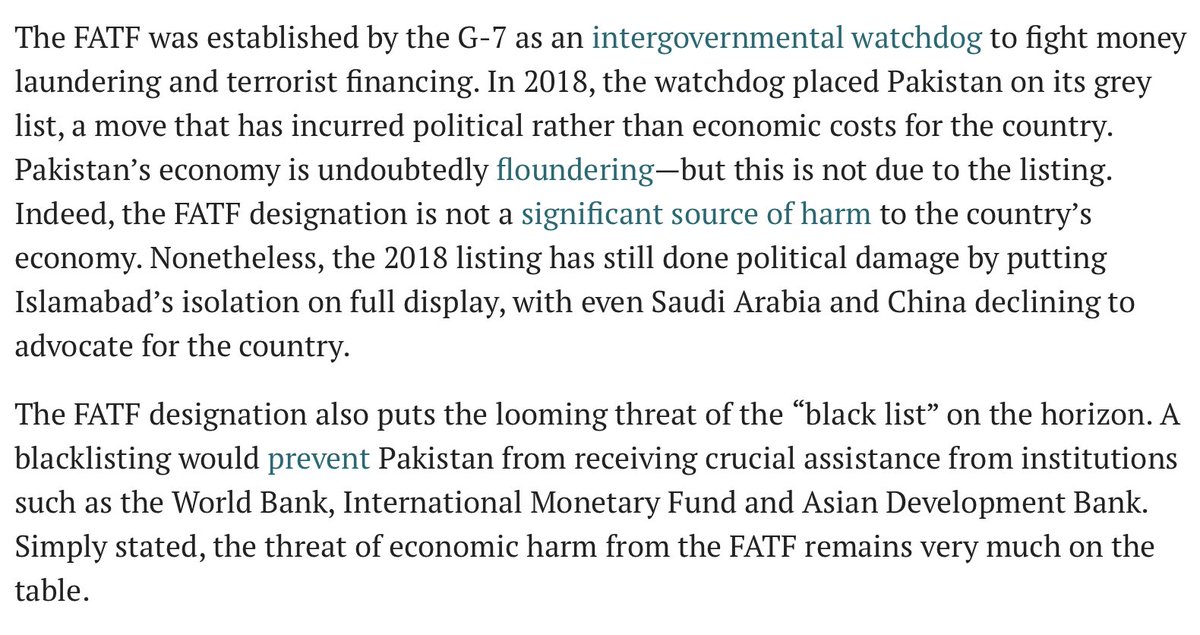
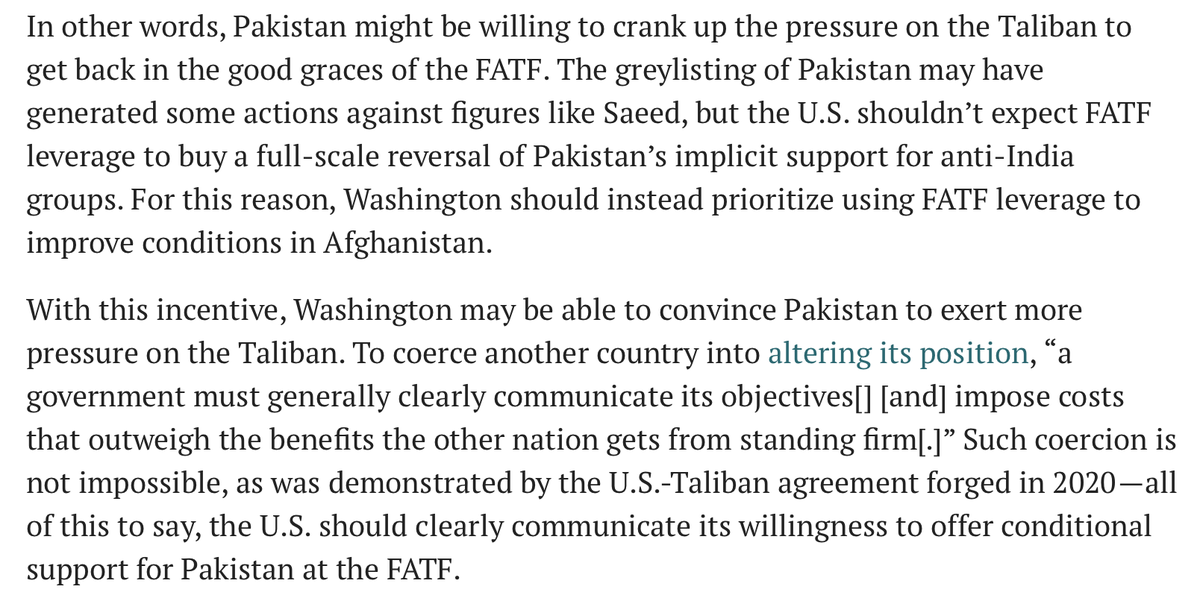
7. Escaping the FATF “grey list” would be a big political win for PM Imran Khan & the military, which makes it a source of leverage. Its effect is more political than economic.
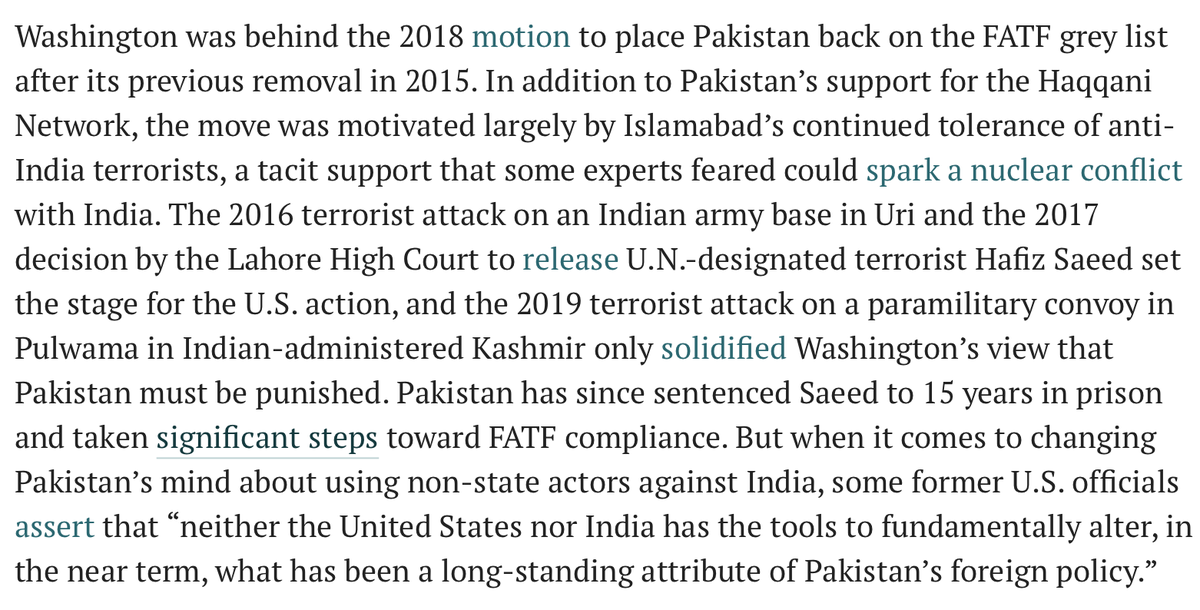
8. Pakistan is on the FATF “grey list” due to support for anti-India terrorists & the Haqqani Network. The US can’t fundamentally alter Pakistan’s calculation on the anti-India groups using the list. But it may be able to improve the situation in Afghanistan. Time to prioritize.
9. The U.S. should clearly communicate its willingness to offer support for Pakistan at the FATF, in exchange for specific results-oriented actions to lower violence in Afghanistan. If progress is made, then options like releasing Coalition Support Fund $$ may also be considered
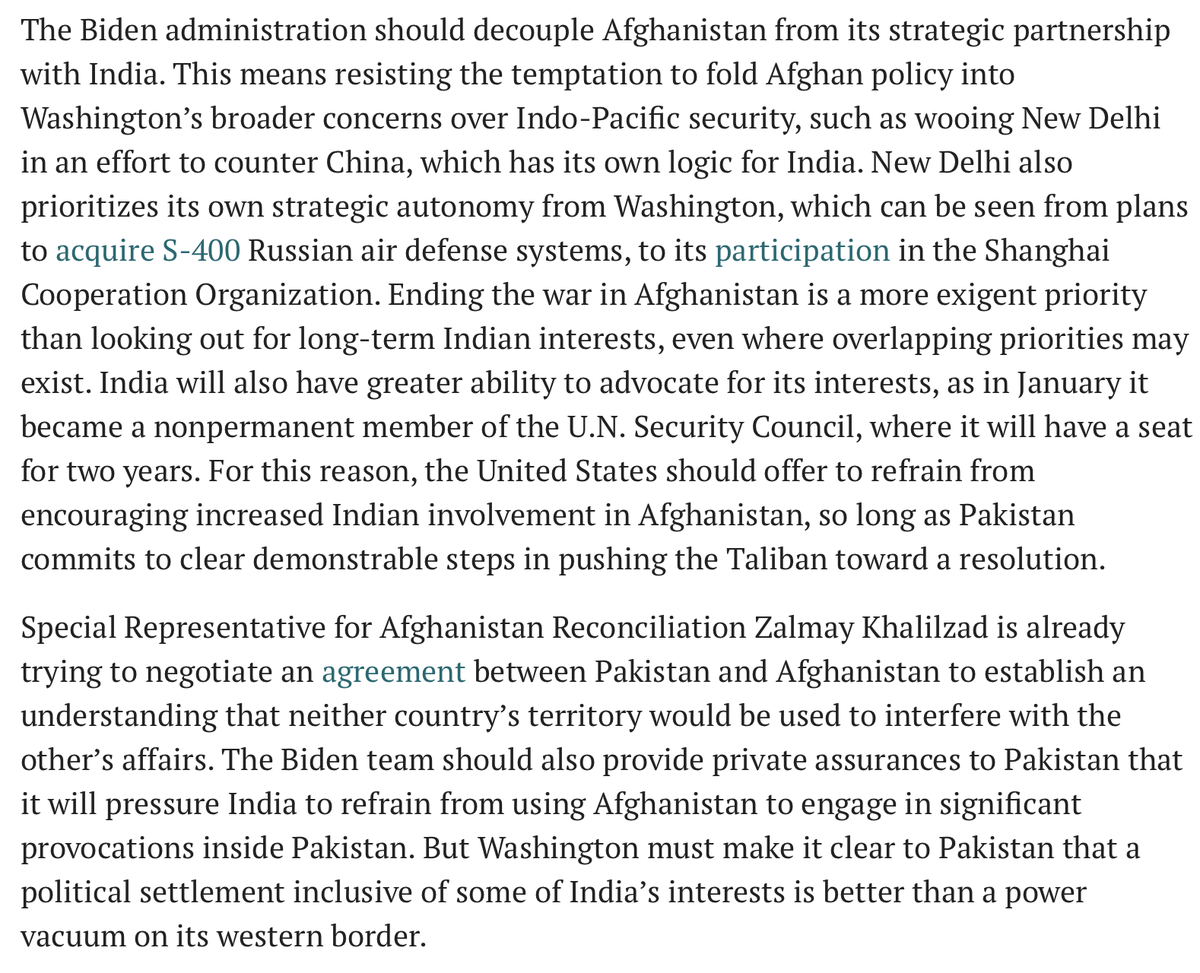
10. Next is India. The Biden admin must accept that Pakistan--not India--is key to ending the conflict in Afghanistan. US calls for India to play a bigger role in Afghanistan’s peace process, politics, & economy only fuel paranoia in Pakistan, however irrational.
11. If Washington wants Pakistan’s cooperation on Afghanistan, then it will have to take its India anxieties seriously, decouple Afghanistan from the broader Indo-Pacific strategy, & provide assurances in exchange for actions.
12. ACCEPT THEM LIMITS OF WASHINGTON’S OWN INFLUENCE
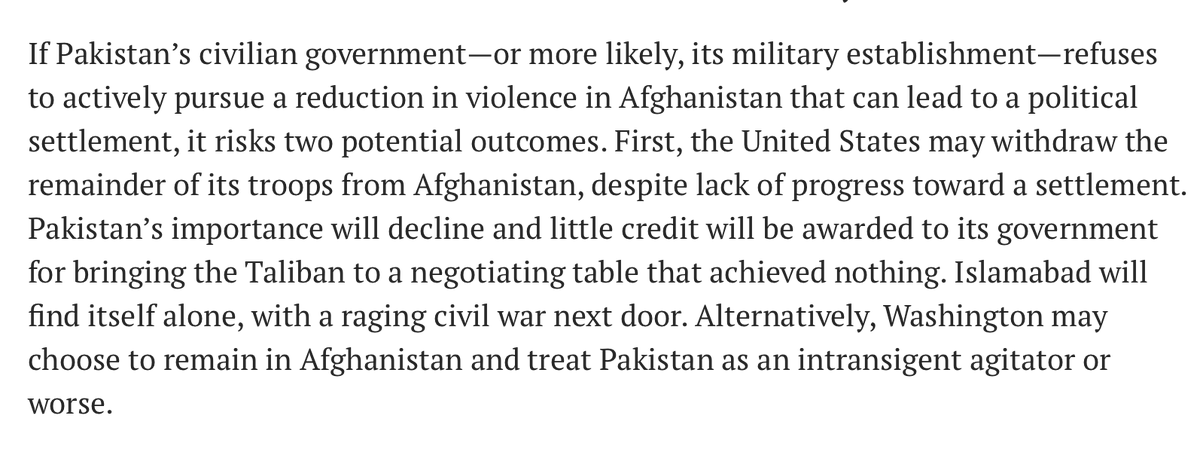
13. WAKE UP ISLAMABAD: Feigning inability to motivate the Taliban falls on deaf ears when much of the leadership & their families reside in Pakistan. Rising violence in Afghanistan ends one of two ways & neither is good for Pakistan↓
14. Pakistan's leadership must face reality: If things implode in Afghanistan & the above scenarios unfold, then Islamabad could face a coordinated campaign in DC to label it a state sponsor of terrorism. This would be a mistake, but one w/ dire consequences for Pakistan.
15. But the Biden admin must walk a tightrope. It should not allow this effort to consume other regional interests such as long-term CT cooperation, nuclear security, or trade & climate change. It must also acknowledge Pakistan’s real sacrifices in the GWOT.
16. Every time Pakistan faces a decision on Afghanistan, the Biden admin should offer Pakistan’s leadership a clear choice between positive & negative outcomes. But ultimately, the US should not tie a withdrawal to benchmarks that rely on cooperation that may never materialize.
17. Why does the article leave out the "K word"? Simple. Attempts to link the dispute in Kashmir to outcomes in Afghanistan failed in the past. Richard Holbrooke reportedly was threatened with an Indian visa denial over attempts to connect Pakistan-India disputes to Afghanistan.