@K_G_Andersen @stgoldst @RozSofia @Ayjchan @K_G_Andersen please note that there were 11 infections in the Beijing 2004 leaks, not 8.

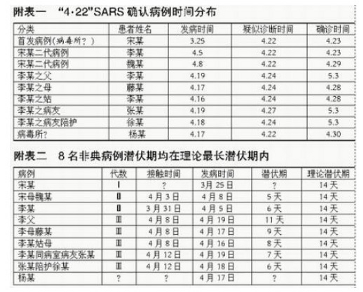
The 8 you are mentioning are for the main chain of infection with 3 levels from one primary case in April.
But there were 3 more primary cases for a total of 11 cases.

@Ayjchan @K_G_Andersen @stgoldst @RozSofia All were linked to the heavily contaminated CDC P3 lab (the top P3 in China at the time).

The cases are typically separated between:

- The February ones (Cui and Ren) which seem to have been covered up by the CDC Institute of Virology. Also we only have pseudonyms for these 2.
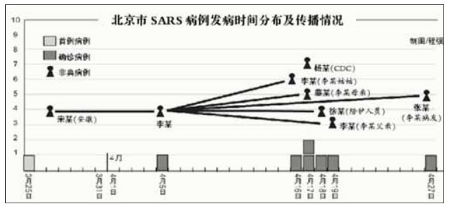
@Ayjchan @K_G_Andersen @stgoldst @RozSofia - The April ones-9 infections (1+8, officially the 'Beijing-Anhui Apr-2004 breakout'.

The official Chinese report only focussed on the April infections - keeping very quiet about the February ones. Here is the main April chain of infection.

Here is are the 9 from Apr 2004:
@Ayjchan @K_G_Andersen @stgoldst @RozSofia And here are the 9 people infected in Apr 2004:
(4-22 in the title -> April chain with alarm raised on the 22nd):
@Ayjchan @K_G_Andersen @stgoldst @RozSofia The WHO eventually correctly mentioned 11 cases:
https://t.co/a1HvuT0C8z
@Ayjchan @K_G_Andersen @stgoldst @RozSofia We know about the initial 2 Feb 2004 simply because of a report in the Chinese press at the time (Caijing).

Otherwise China kept very quiet about them, and on purpose did not include them in its investigation with the WHO (never fully released).

See https://t.co/4uK6xnWu9G
@Ayjchan @K_G_Andersen @stgoldst @RozSofia Nor did China ever SARS mention that the sample fridge had been moved *outside* of the lab as it was at 2 or 3 times capacity being full on students unqualified in biosafety.
We learnt that via Caijin and other mainland newspapers citing witnesses.
@Ayjchan @K_G_Andersen @stgoldst @RozSofia Some Chinese paper also mentioned 11 cases (paper impossible to access, I asked the authors in vain):
@Ayjchan @K_G_Andersen @stgoldst @RozSofia Anyway going back to the silence about the 2 primary cases in Feb 2004, this was due to the fact that the Chinese authorities had visited that lab in January 2004 (following the Singapore/Taiwan SARS leak) and ordered a strengthening of biosafety measures.

Nothing happened.
@Ayjchan @K_G_Andersen @stgoldst @RozSofia The CDC P3 management team (Hong Tao, Dong Xioping, Wong Jianwei) just ignored them.

So the government would have looked very bad if the Feb 2004 cases had been publicised, since they were ignored and they did not follow up.
@Ayjchan @K_G_Andersen @stgoldst @RozSofia Anyway, the best part of all is that Dong Xioaping - who was officially sanctioned at the time for his role in the Beijing lab leaks - was #2 on the Chinese side of the Feb 2020 WHO mission. Only in China...

@K_G_Andersen @PeterDaszak prove me wrong on any of the points I made..
@Ayjchan @K_G_Andersen @stgoldst @RozSofia @PeterDaszak Even the recent @StateDept factsheet about the WIV got it wrong and mentioned only 9 cases during the leak.

A good example of the value for China of obfuscating the truth.

ttps://2017-2021.state.gov/fact-sheet-activity-at-the-wuhan-institute-of-virology//index.html

More from World

You May Also Like

I just finished Eric Adler's The Battle of the Classics, and wanted to say something about Joel Christiansen's review linked below. I am not sure what motivates the review (I speculate a bit below), but it gives a very misleading impression of the book. 1/x


The meat of the criticism is that the history Adler gives is insufficiently critical. Adler describes a few figures who had a great influence on how the modern US university was formed. It's certainly critical: it focuses on the social Darwinism of these figures. 2/x

Other insinuations and suggestions in the review seem wildly off the mark, distorted, or inappropriate-- for example, that the book is clickbaity (it is scholarly) or conservative (hardly) or connected to the events at the Capitol (give me a break). 3/x

The core question: in what sense is classics inherently racist? Classics is old. On Adler's account, it begins in ancient Rome and is revived in the Renaissance. Slavery (Christiansen's primary concern) is also very old. Let's say classics is an education for slaveowners. 4/x

It's worth remembering that literacy itself is elite throughout most of this history. Literacy is, then, also the education of slaveowners. We can honor oral and musical traditions without denying that literacy is, generally, good. 5/x
The YouTube algorithm that I helped build in 2011 still recommends the flat earth theory by the *hundreds of millions*. This investigation by @RawStory shows some of the real-life consequences of this badly designed AI.


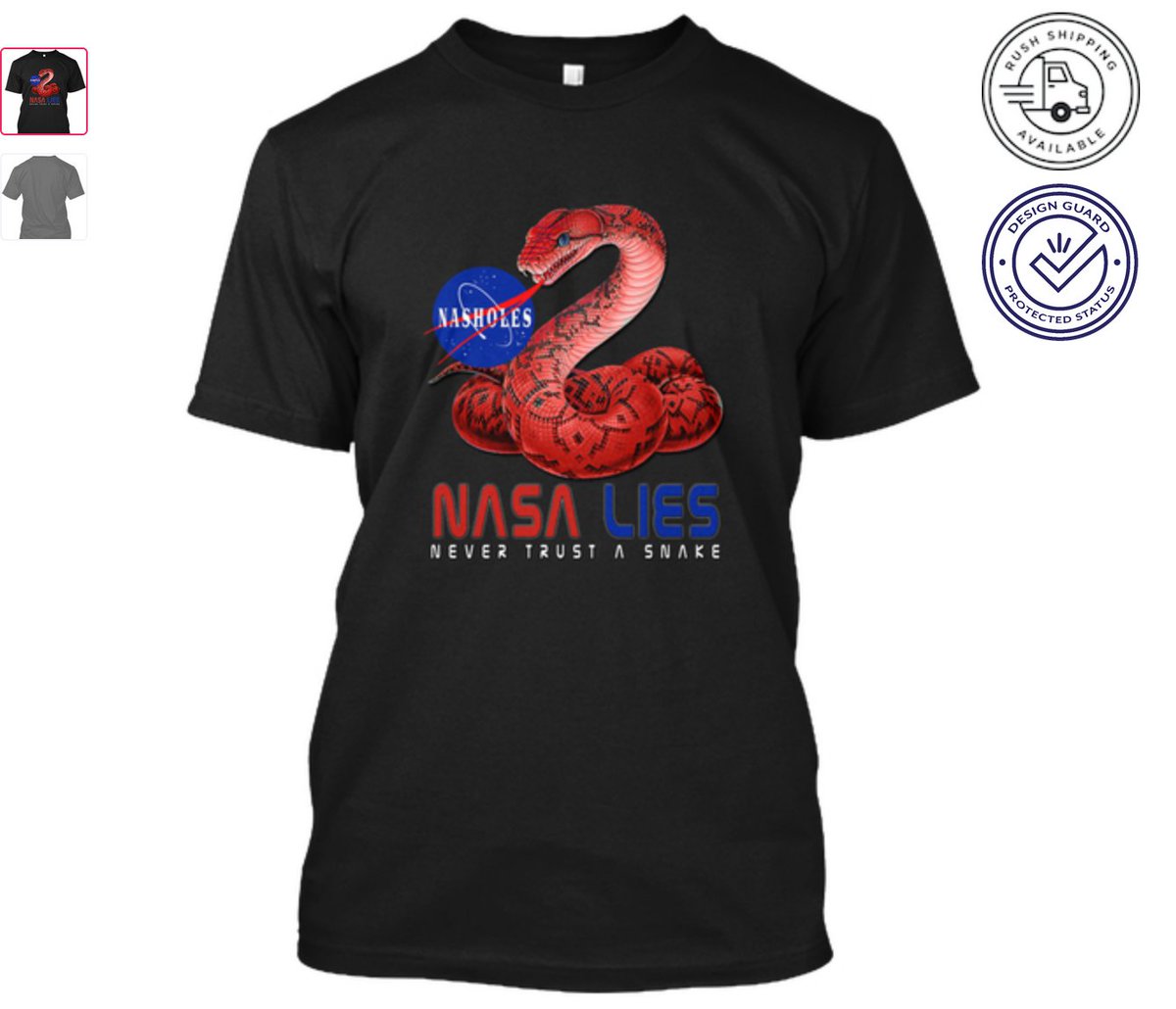
This spring at SxSW, @SusanWojcicki promised "Wikipedia snippets" on debated videos. But they didn't put them on flat earth videos, and instead @YouTube is promoting merchandising such as "NASA lies - Never Trust a Snake". 2/


A few example of flat earth videos that were promoted by YouTube #today:
https://t.co/TumQiX2tlj 3/

https://t.co/uAORIJ5BYX 4/

https://t.co/yOGZ0pLfHG 5/