
What are CROs, CDMOs, CMOs and CRAMS? How are they different from each other and what value do they add to the Pharma Value Chain? To understand these concepts, we took a look at the drug discovery process.
Thread on Drug Development process 🧵
Hit like & Retweet for more learnings ! 💊🧪🩺💉
@unseenvalue
Topics Covered :
1.Introduction to CRO,CDMO,CMO & CRAMS
2.Discovery
3.Clinical Trials
4.Commercialization and Surveillance
5.Success Rates
6.CRO
7.CMO
8.CDMO
9.CRAMS
What are CROs, CDMOs, CMOs and CRAMS? How are they different from each other and what value do they add to the Pharma Value Chain? To understand these concepts, we took a look at the drug discovery process.
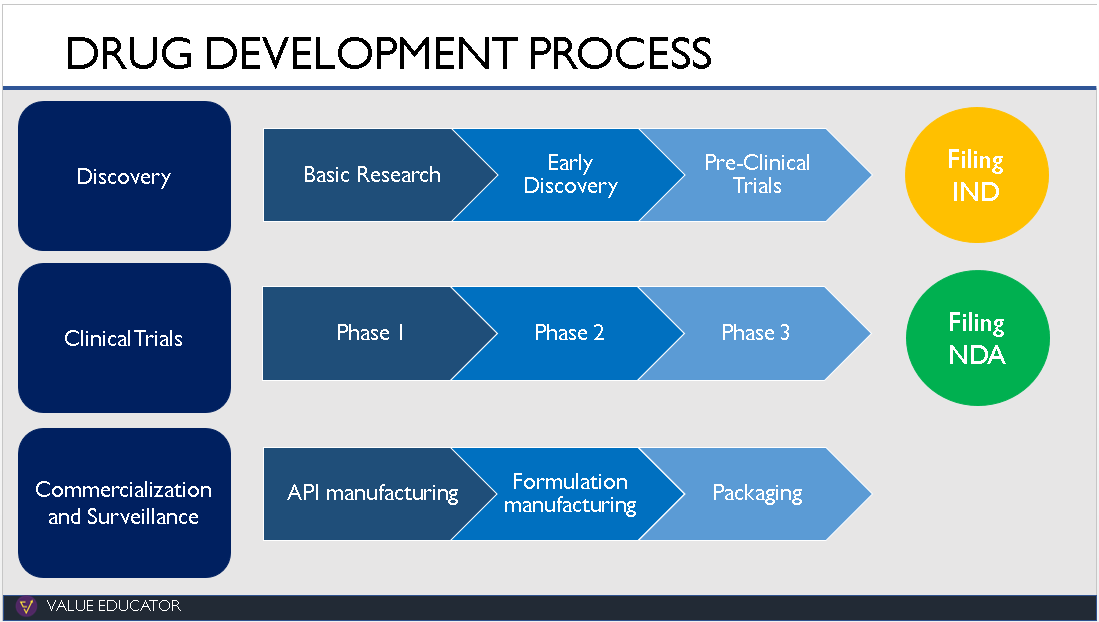
The discovery of a new drug starts in the research lab where researchers study hundreds of diseases. They analyse what part of the body a disease affects and what reaction the body has to these diseases.
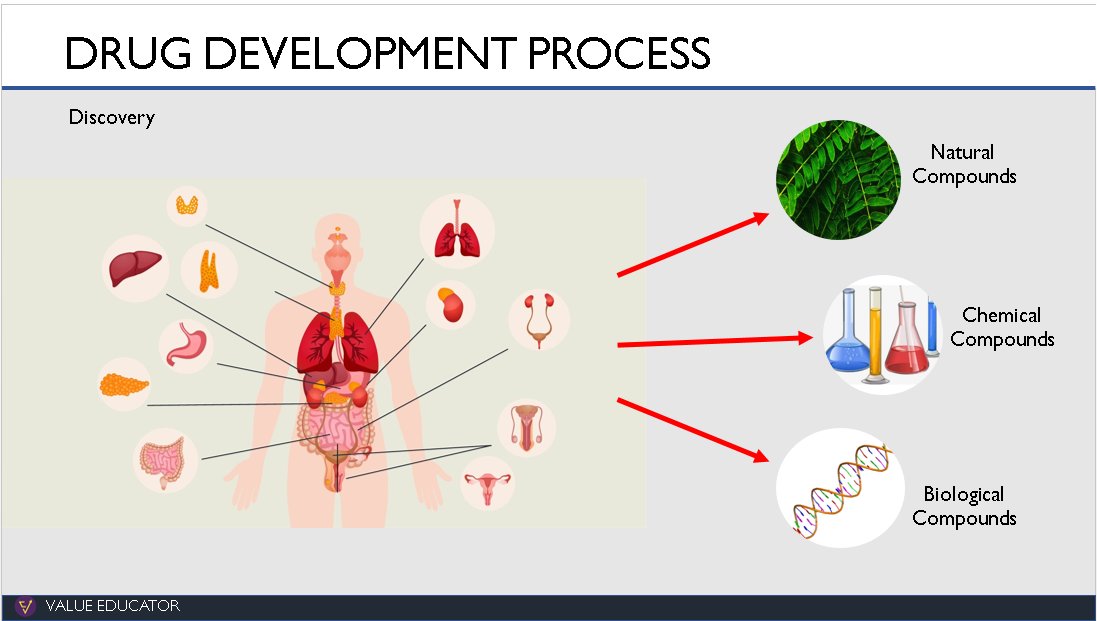
Once all this data has been collected, they file an Investigational New Drug (IND) Application with the US FDA. The US FDA reviews the IND within 6 months of filing. Once the IND is approved,
3. Clinical Trials:
The drug now moves to the Clinical Trials phase. It will be the first time a novel drug will be given to human beings. The clinical trials itself take place in 3 phases.
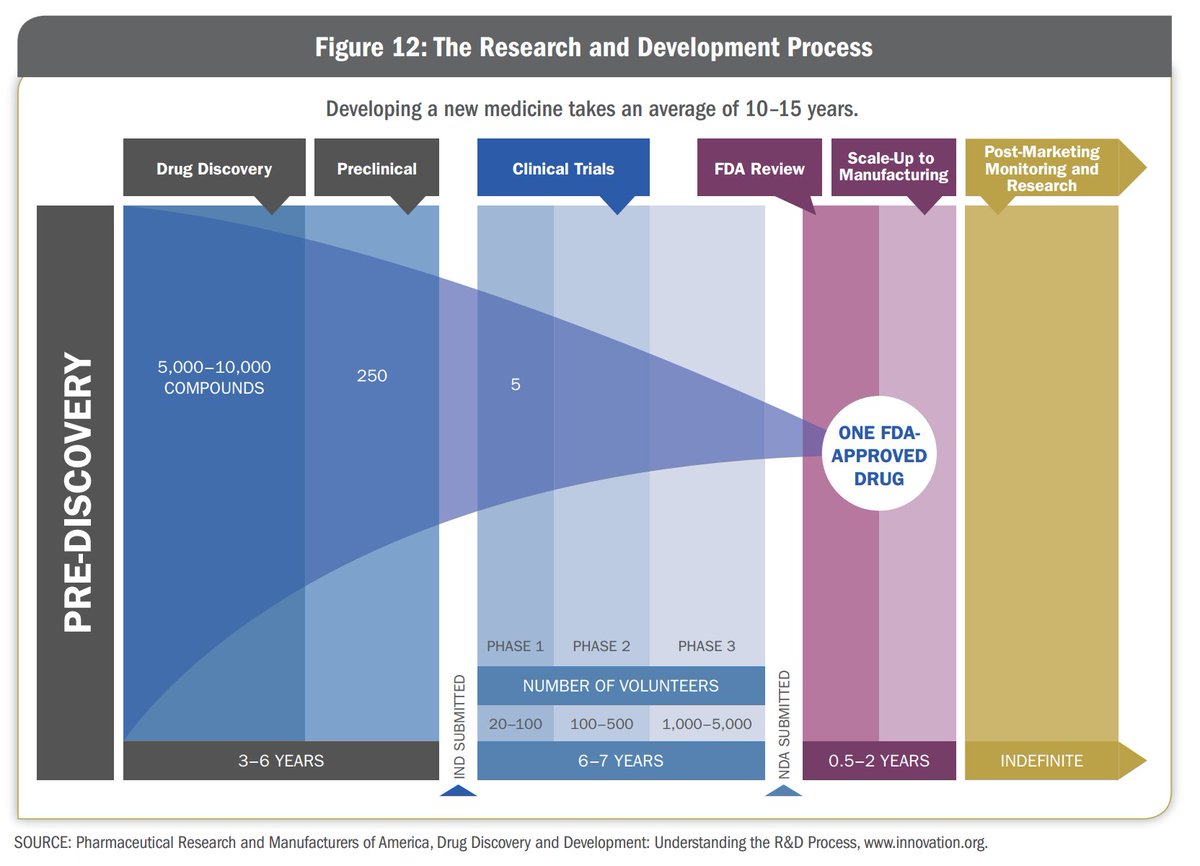
If the FDA approves the NDA, the company can manufacture and market the drugs to the public. But the testing does not end here. The drug now moves into Phase 4 testing.
Approximately 70% of the drugs move from Phase 1 to Phase 2, 33% move from Phase 2 to Phase 3, 25-30% move from Phase 3 to Phase 4. About 70-90% of drugs in Phase 4 are successful in staying in the market.
So where do the CROs and CDMOs come in? Contract research organizations help with the first 2 phases whereas Contract development and manufacturing organizations help with the last 2 phases
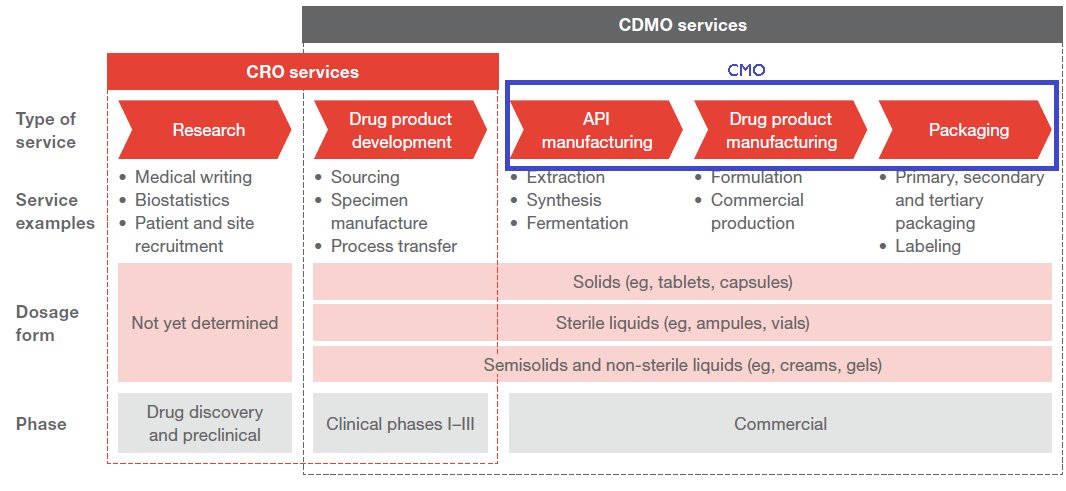
CROs support the innovators by providing services from drug discovery right up to commercialization. They provide services like target discovery, pre clinical trials, management of clinical trials, help with regulatory filings and pharmacovigilance(Phase 4).
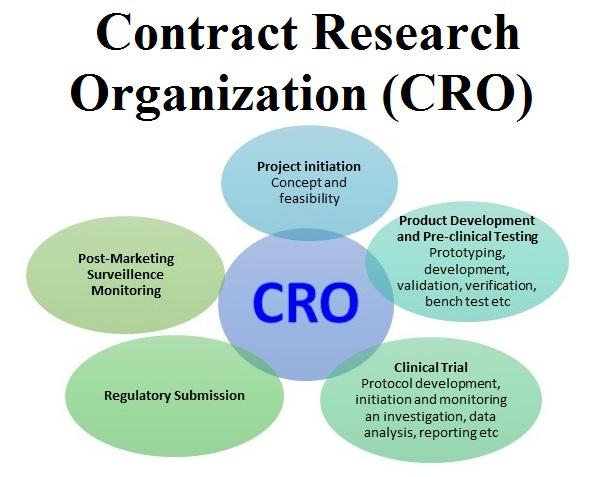
Contract manufacturing organizations (CMO) on the other hand provide outsourced manufacturing solutions to the innovator. They are involved with the manufacturing of APIs and Formulations and oftentimes even involved with the final packaging of the product.

More from Value Educator





More from Uvlearnings



You May Also Like






"I lied about my basic beliefs in order to keep a prestigious job. Now that it will be zero-cost to me, I have a few things to say."
We know that elite institutions like the one Flier was in (partial) charge of rely on irrelevant status markers like private school education, whiteness, legacy, and ability to charm an old white guy at an interview.
Harvard's discriminatory policies are becoming increasingly well known, across the political spectrum (see, e.g., the recent lawsuit on discrimination against East Asian applications.)
It's refreshing to hear a senior administrator admits to personally opposing policies that attempt to remedy these basic flaws. These are flaws that harm his institution's ability to do cutting-edge research and to serve the public.
Harvard is being eclipsed by institutions that have different ideas about how to run a 21st Century institution. Stanford, for one; the UC system; the "public Ivys".
As a dean of a major academic institution, I could not have said this. But I will now. Requiring such statements in applications for appointments and promotions is an affront to academic freedom, and diminishes the true value of diversity, equity of inclusion by trivializing it. https://t.co/NfcI5VLODi
— Jeffrey Flier (@jflier) November 10, 2018
We know that elite institutions like the one Flier was in (partial) charge of rely on irrelevant status markers like private school education, whiteness, legacy, and ability to charm an old white guy at an interview.
Harvard's discriminatory policies are becoming increasingly well known, across the political spectrum (see, e.g., the recent lawsuit on discrimination against East Asian applications.)
It's refreshing to hear a senior administrator admits to personally opposing policies that attempt to remedy these basic flaws. These are flaws that harm his institution's ability to do cutting-edge research and to serve the public.
Harvard is being eclipsed by institutions that have different ideas about how to run a 21st Century institution. Stanford, for one; the UC system; the "public Ivys".


