Paraphrasing @tusharbohra on @IIC_Conference today ::
"If 10 commodity companies are doing capex at the same time, it signals a peak. If 10 companies in Chemicals/API/Pharma are doing capex in different products at the same time - it probably signals the start of a New Era" 🇮🇳🇮🇳
More from Conviction | Patience
Go 🇮🇳 Go 👏👏
Watch the journey of\xa0Insulin Glargine's landmark USFDA approval for first interchangeable #biosimilar for the treatment of diabetes, a testament to #BioconBiologics' scientific excellence & robust quality comparibility data. https://t.co/JSM4LPqYdh
— Biocon (@Bioconlimited) August 1, 2021
More from Uvlearnings
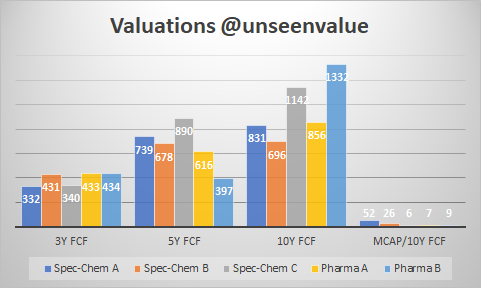
Waiting for business to perform before i share more as too much talking is deemed 'pump and dump' by the elite Twitter activists (who have to pay their advisory staff's salary and bills - so free knowledge sharing hurts their interests)
#Biotechnology
@unseenvalue mentioned this in his seminar https://t.co/kGS9jHuBYx
— Sishya of Highly Respected Sunaka (@JpackJack) June 19, 2021

You May Also Like

A thread 👇
https://t.co/xj4js6shhy
Entrepreneur\u2019s mind.
— James Clear (@JamesClear) August 22, 2020
Athlete\u2019s body.
Artist\u2019s soul.
https://t.co/b81zoW6u1d
When you choose who to follow on Twitter, you are choosing your future thoughts.
— James Clear (@JamesClear) October 3, 2020
https://t.co/1147it02zs
Working on a problem reduces the fear of it.
— James Clear (@JamesClear) August 30, 2020
It\u2019s hard to fear a problem when you are making progress on it\u2014even if progress is imperfect and slow.
Action relieves anxiety.
https://t.co/A7XCU5fC2m
We often avoid taking action because we think "I need to learn more," but the best way to learn is often by taking action.
— James Clear (@JamesClear) September 23, 2020