1/ Some EU frustration at UK griping over trade problems and suggestions Brussels needs to improve its attitude to make the relationship work better. There's a feeling of déjà vu, that the UK never really accepted the practical reality of the deal it wanted and still doesn't.
More from Uk

Yesterday, of course, Jeremy Corbyn launched his Peace and Justice Project, to much excitement on here. Laudable goals too:
Take on Murdoch ✅
Green New Deal ✅
Support for food banks ✅
Speed up vaccine delivery in developing countries ✅
That's all excellent.
I'm not sure if anyone can argue with those four aims: they're irrefutable and all massively important. You bet I'd like to see Labour doing likewise; you bet I'm frustrated that it's so quiet on all of it.
HOWEVER...
Contained within the announcement was exactly the same selective blindness which makes the entire thing all too easy to shoot down - and again, means Corbyn is pretty unlikely to persuade anyone who's not already persuaded.
The sort of blindness which makes me tear my hair out.
Peace and Justice - sounds great, doesn't it? So why did the Peace and Justice project proudly announce the support of a corrupt criminal not remotely interested in either of those
Rafael Correa, former President of Ecuador. Let's run through his record, starting with the positives.
Slashed poverty from 36.7% to 22.5% ✅
Reduced inequality from 0.55 to 0.47 on the Gini index ✅
So far, so good. Except, um...
Take on Murdoch ✅
Green New Deal ✅
Support for food banks ✅
Speed up vaccine delivery in developing countries ✅
That's all excellent.
I'm not sure if anyone can argue with those four aims: they're irrefutable and all massively important. You bet I'd like to see Labour doing likewise; you bet I'm frustrated that it's so quiet on all of it.
HOWEVER...
Contained within the announcement was exactly the same selective blindness which makes the entire thing all too easy to shoot down - and again, means Corbyn is pretty unlikely to persuade anyone who's not already persuaded.
The sort of blindness which makes me tear my hair out.
Peace and Justice - sounds great, doesn't it? So why did the Peace and Justice project proudly announce the support of a corrupt criminal not remotely interested in either of those
We\u2019re delighted to have the backing of Rafael Correa, who cut poverty and inequality by record levels as president of Ecuador.
— Peace and Justice Project (@corbyn_project) January 8, 2021
There is no limit to what we can achieve when we bring people together to take on injustice.
Join us https://t.co/w6QOdSqkeC pic.twitter.com/aT8atxSYvy
Rafael Correa, former President of Ecuador. Let's run through his record, starting with the positives.
Slashed poverty from 36.7% to 22.5% ✅
Reduced inequality from 0.55 to 0.47 on the Gini index ✅
So far, so good. Except, um...


A short thread on why I am dubious that the government can lawfully impose charges on travellers entering the UK for quarantine and testing (proposed at £1,750 and £210)
1/
The UK has signed up to the International Health Regulations (IHA) 2005. These therefore create binding international legal obligations on the UK.
The IHA explicitly prevent charging for travellers' quarantine or medical examinations.
https://t.co/n4oWE8x5Vg /2
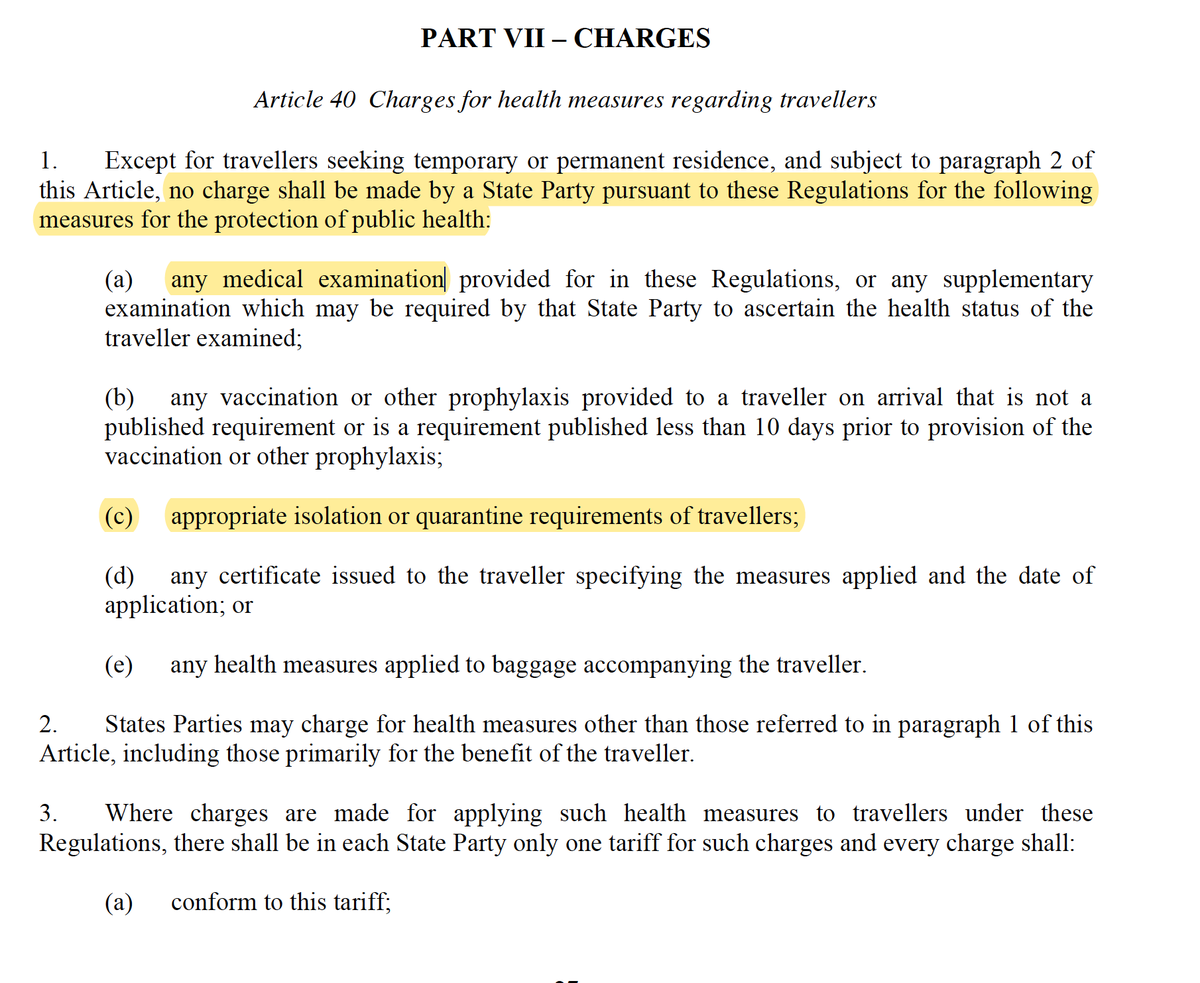
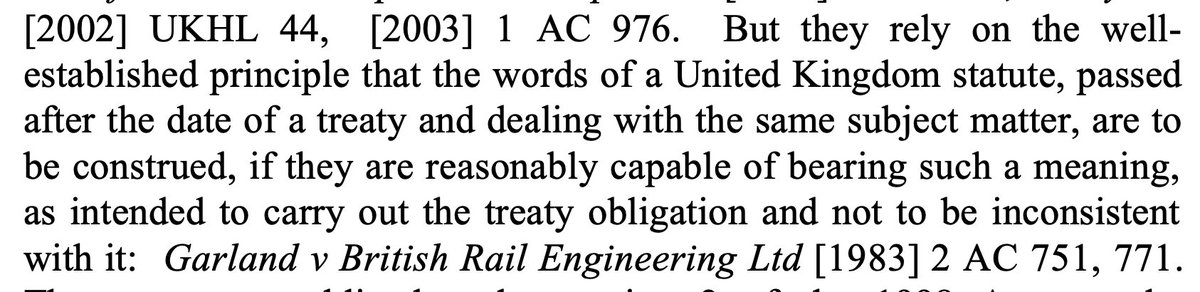
International law is not actionable in a UK court unless it has been implemented in law.
But it can be used as an aide to interpretation where a statute isn't clear as to what powers it grants.
See e.g. Lord Bingham in A v SSHD https://t.co/RXmib1qGYD
/3
The Quarantine regulations will, I assume, be made under section 45B of the Public Health (Control of Disease) Act 1984
https://t.co/54L4lHGMEr
/4
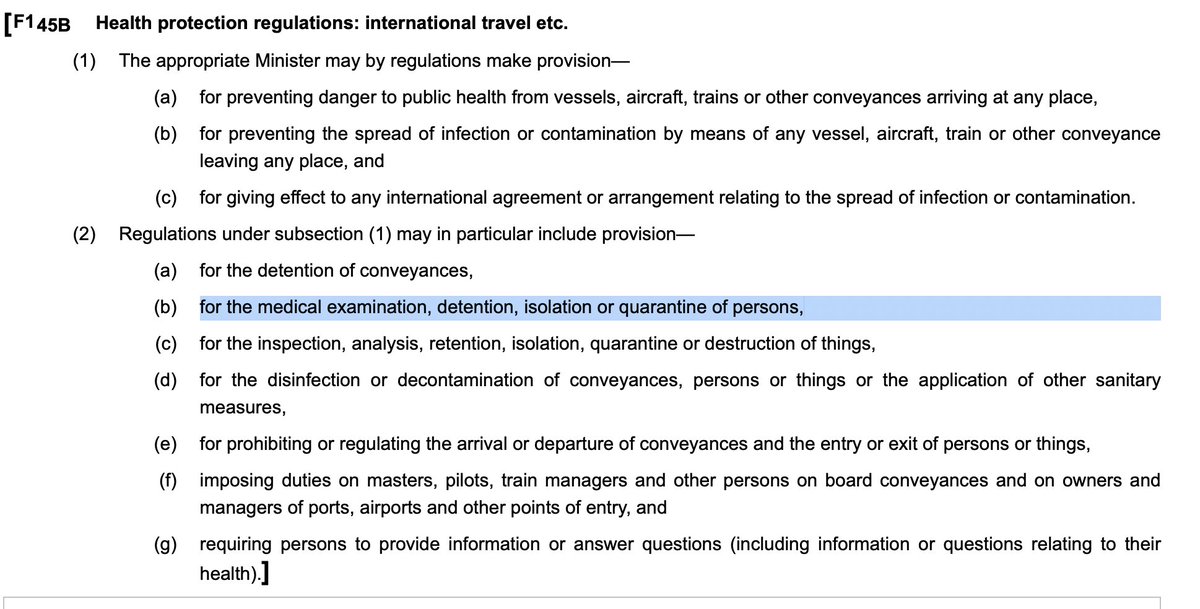
That gives pretty broad powers but I can't see any power to charge for quarantine. Perhaps it will be inferred from somewhere else in Part 2A?
But...
1/
The UK has signed up to the International Health Regulations (IHA) 2005. These therefore create binding international legal obligations on the UK.
The IHA explicitly prevent charging for travellers' quarantine or medical examinations.
https://t.co/n4oWE8x5Vg /2
International law is not actionable in a UK court unless it has been implemented in law.
But it can be used as an aide to interpretation where a statute isn't clear as to what powers it grants.
See e.g. Lord Bingham in A v SSHD https://t.co/RXmib1qGYD
/3
The Quarantine regulations will, I assume, be made under section 45B of the Public Health (Control of Disease) Act 1984
https://t.co/54L4lHGMEr
/4
That gives pretty broad powers but I can't see any power to charge for quarantine. Perhaps it will be inferred from somewhere else in Part 2A?
But...

Better late than never. Here we go. What does this deal mean for borders, border formalities, customs & trade facilitation?
Long one. TL:DR very little at the moment but has potential
/1
Borders
When compared to no deal the deal changes very little in terms of border procedures. All formalities and checks will still be required.
Reminder - we're not starting from 0 here – both our container ports and our ro-ro ports are already congested
/2
On top of that, all the issues related to border readiness: lack of capacity and space, IT systems not ready, shortages of customs agents, treader readiness – have not been solved.
The deal doesn’t help with that.
/3
Here is where we are:
☑️The UK will phase-in border formalities over 6 months (customs and SPS)
☑️The EU will introduce full formalities in 3 days (customs + SPS)
☑️Irish Sea border also fully operational in 3 days with some short-term SPS easements
/4
Pre-notifications (safety & security declarations) not initially required on the UK side, needed for imports into the EU.
So what's in the deal?
/5
Long one. TL:DR very little at the moment but has potential
/1
Lots of stuff on technical barriers and customs cooperation. See @AnnaJerzewska for more on the latter. pic.twitter.com/3sC5xHD3Z8
— Steve Peers (@StevePeers) December 26, 2020
Borders
When compared to no deal the deal changes very little in terms of border procedures. All formalities and checks will still be required.
Reminder - we're not starting from 0 here – both our container ports and our ro-ro ports are already congested
/2
On top of that, all the issues related to border readiness: lack of capacity and space, IT systems not ready, shortages of customs agents, treader readiness – have not been solved.
The deal doesn’t help with that.
/3
Here is where we are:
☑️The UK will phase-in border formalities over 6 months (customs and SPS)
☑️The EU will introduce full formalities in 3 days (customs + SPS)
☑️Irish Sea border also fully operational in 3 days with some short-term SPS easements
/4
Pre-notifications (safety & security declarations) not initially required on the UK side, needed for imports into the EU.
So what's in the deal?
/5