
And by & large, I’ve taken to call it “DevOps”, because the DevOps community have taken up much of the mantle @KentBeck & the XP community started with. & Kent has independently focused on safe small changes deployed to production. Which is DevOps.
1/
Thinking about this tweetstorm, one of the issues I’ve run into as an engineering leader is what to call the software engineering stuff that’s “agile” given that the Agile Community(tm) has killed the brand.
I might do an \u201cagile\u201d tweet storm to the effect that all the attention is to the least leveraged portions of the value stream. Interest?
— Arien Malec (@amalec) October 26, 2019
And by & large, I’ve taken to call it “DevOps”, because the DevOps community have taken up much of the mantle @KentBeck & the XP community started with. & Kent has independently focused on safe small changes deployed to production. Which is DevOps.
Much of the art here is making changes safe enough to deploy to production continuously. And to do that, we need to design incrementally, test obsessively, take architecture seriously so we decompose dependencies. & we need to automate everything & do it all the time.
It turns out that this is what Kent & @RonJeffries @GeePawHill & many other folks have been nattering on about & being broadly misunderstood. @KentBeck has some brilliant essays (scattered across FB & his site alas) & @GeePawHill has amazing twitter threads on the topic
When you look at *what it takes* to get to the DORA measures that @nicolefv & team write about in Accelerate, the input metrics for the DORA outputs, it’s making small changes safe.
As an engineering leader, I provide training, tools, mentorship, leadership development, vision, etc. to help people learn the skills needed to achieve those output metrics. And most of those skills are what @GeePawHill might call the skills of making.
Unfortunately many of those skills are deeply counterintuitive & much of the work is as much unlearning as learning. For example, there’s an implicit definition of work as writing new code, or even writing code.
Because that’s what engineers love to do, and because there are emotional and sometimes financial incentives to make customer visible functionality, we need to overcorrect sometimes on focusing on the tools of making.
Providing visibility & reward for the people who build the CI/CD tooling or build a deployment pipeline that automates acceptance testing, or figure out how to do AppMesh with Terraform as a module or automates linters & code coverage tools in the pipelines.
Great teams end up spending most of their time building user facing functionality because they build the tools of making and sweat automation, IoT, design, architecture, code quality & test automation. Less successful teams try to write lots of code & get stuck.
More from Twitter







You May Also Like


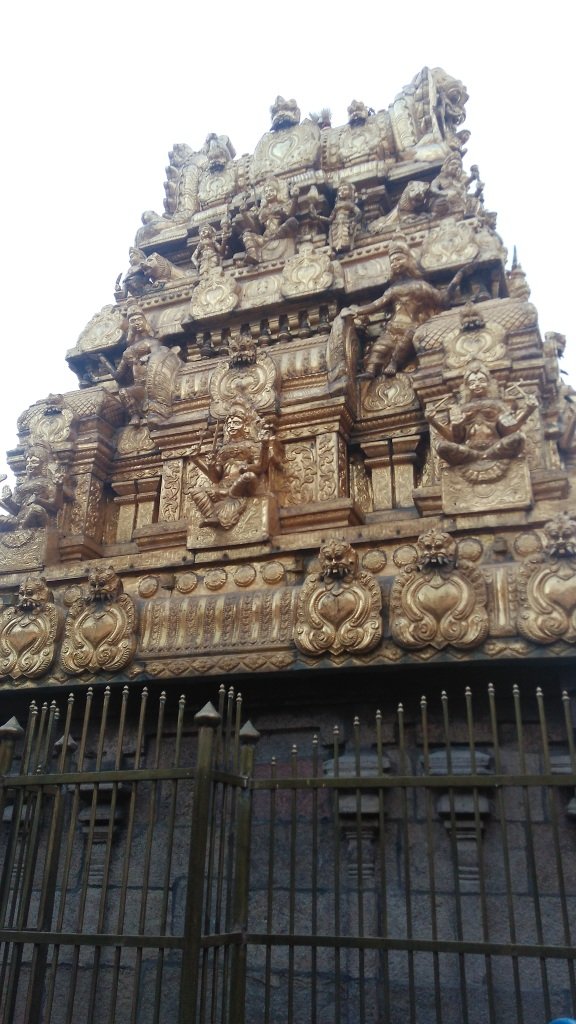



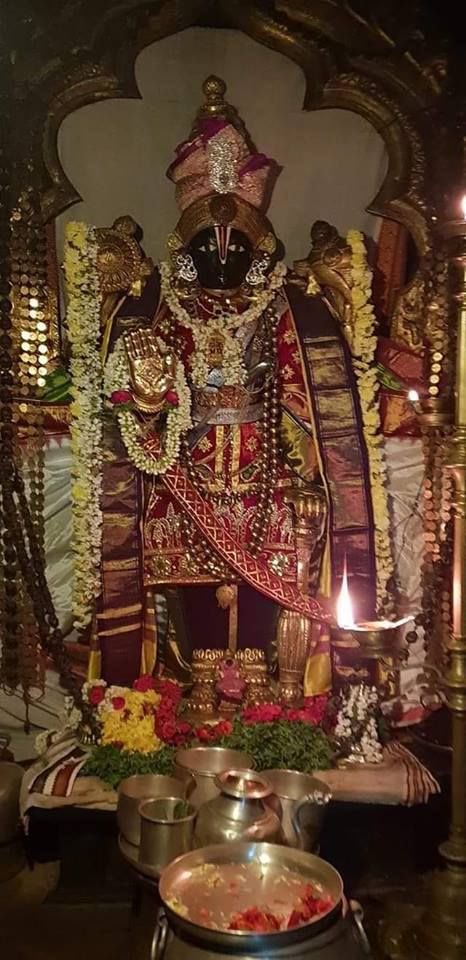


Margatha Natarajar murthi - Uthirakosamangai temple near Ramanathapuram,TN
#ArudraDarisanam
Unique Natarajar made of emerlad is abt 6 feet tall.
It is always covered with sandal paste.Only on Thriuvadhirai Star in month Margazhi-Nataraja can be worshipped without sandal paste.
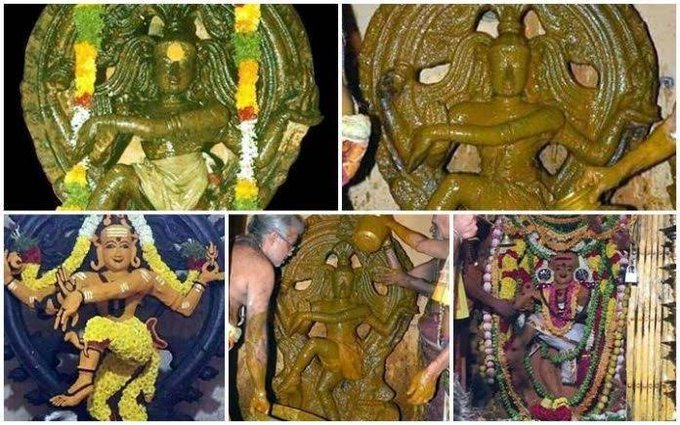
After removing the sandal paste,day long rituals & various abhishekam will be https://t.co/e1Ye8DrNWb day Maragatha Nataraja sannandhi will be closed after anointing the murthi with fresh sandal paste.Maragatha Natarajar is covered with sandal paste throughout the year
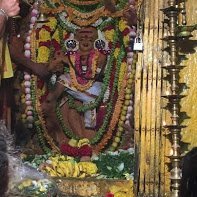
as Emerald has scientific property of its molecules getting disturbed when exposed to light/water/sound.This is an ancient Shiva temple considered to be 3000 years old -believed to be where Bhagwan Shiva gave Veda gyaana to Parvati Devi.This temple has some stunning sculptures.
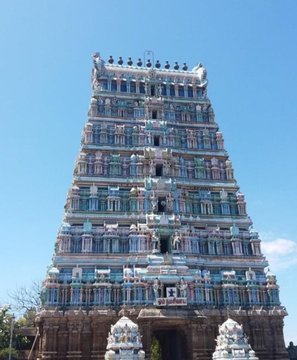
#ArudraDarisanam
Unique Natarajar made of emerlad is abt 6 feet tall.
It is always covered with sandal paste.Only on Thriuvadhirai Star in month Margazhi-Nataraja can be worshipped without sandal paste.
After removing the sandal paste,day long rituals & various abhishekam will be https://t.co/e1Ye8DrNWb day Maragatha Nataraja sannandhi will be closed after anointing the murthi with fresh sandal paste.Maragatha Natarajar is covered with sandal paste throughout the year
as Emerald has scientific property of its molecules getting disturbed when exposed to light/water/sound.This is an ancient Shiva temple considered to be 3000 years old -believed to be where Bhagwan Shiva gave Veda gyaana to Parvati Devi.This temple has some stunning sculptures.

The entire discussion around Facebook’s disclosures of what happened in 2016 is very frustrating. No exec stopped any investigations, but there were a lot of heated discussions about what to publish and when.
In the spring and summer of 2016, as reported by the Times, activity we traced to GRU was reported to the FBI. This was the standard model of interaction companies used for nation-state attacks against likely US targeted.
In the Spring of 2017, after a deep dive into the Fake News phenomena, the security team wanted to publish an update that covered what we had learned. At this point, we didn’t have any advertising content or the big IRA cluster, but we did know about the GRU model.
This report when through dozens of edits as different equities were represented. I did not have any meetings with Sheryl on the paper, but I can’t speak to whether she was in the loop with my higher-ups.
In the end, the difficult question of attribution was settled by us pointing to the DNI report instead of saying Russia or GRU directly. In my pre-briefs with members of Congress, I made it clear that we believed this action was GRU.
The story doesn\u2019t say you were told not to... it says you did so without approval and they tried to obfuscate what you found. Is that true?
— Sarah Frier (@sarahfrier) November 15, 2018
In the spring and summer of 2016, as reported by the Times, activity we traced to GRU was reported to the FBI. This was the standard model of interaction companies used for nation-state attacks against likely US targeted.
In the Spring of 2017, after a deep dive into the Fake News phenomena, the security team wanted to publish an update that covered what we had learned. At this point, we didn’t have any advertising content or the big IRA cluster, but we did know about the GRU model.
This report when through dozens of edits as different equities were represented. I did not have any meetings with Sheryl on the paper, but I can’t speak to whether she was in the loop with my higher-ups.
In the end, the difficult question of attribution was settled by us pointing to the DNI report instead of saying Russia or GRU directly. In my pre-briefs with members of Congress, I made it clear that we believed this action was GRU.