There are certain indicators, levels, or other ways you can increase your odds of being right >50%, but you'll never get significantly higher
You always hear people let your winners ride or cut your losers early. Easier said than done, right?
Well, it's a mathematical fact that implementing this will improve your trading profits
The math behind leaving runners on and cutting losers early 👇👇👇
There are certain indicators, levels, or other ways you can increase your odds of being right >50%, but you'll never get significantly higher
You HAVE to let your winners run and cut your losers early.
Example: you take 100 trades for $100. Winners win $10, losers lose $10. To profit, you need 51 winners (+$510) and 49 losers (-$490)
Example: you take 100 trades for $100. Winners win $20, losers lose $5. To profit, you need 21 winners (+$420) and 79 losers (-$395)
You can essentially lose 4 out of every 5 trades and still make money if you simply let your winners run and cut your losers
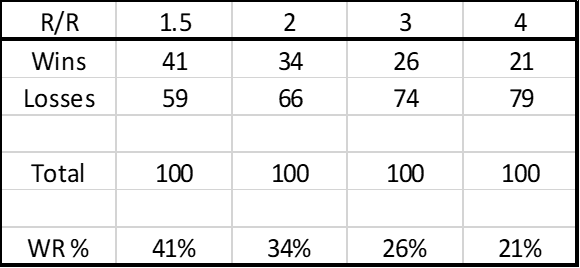
2:1 (winners run 20%, losers stopped out at 10%), you only need to win 34%
3:1, 26%
4:1, 21%
You decrease the # of trades you need to hit by having your winners outweigh your losers
1) Have a rule on your stop losses. Personally, every trade I enter I immediately set a STOP order for -10%
2) Have a target profit level for winners. For me, I like the 2:1 risk/reward so once a trade hits 20% profits, I start to scale out
So when my trade hits 20%, I scale out part of my position and move my stop order for the rest to 10% profits
Remember, YOU CAN ALWAYS RE-ENTER.
1) Your thesis of it breaking the level is no longer valid
2) If it breaks above the level again, you can just re-enter
Special thanks to @AdamSliverTrade , @notmrmanziel , @TradingWarz , and the rest of the #LDL crew for getting me on this path and helping inform threads like this
More from Tradingthread


A thread of my threads!

1. https://t.co/cWGjheFrdL
2. https://t.co/tgJO7riEYH
3. OFFERINGS
4. OPTIONS and WARRANTS
1. https://t.co/cWGjheFrdL
I\u2019m going to do a thread on \u201cDD\u201d. Due diligence is everything about investing. There\u2019s no wrong way to do DD, but I\u2019m going to show a few things I do in order to finding a company that I believe in. Also mix in what others do as well!
— Yates Investing (@yatesinvesting) May 16, 2020
2. https://t.co/tgJO7riEYH
Tonight I want to discuss \u201cGap Fills\u201d I was asked the other day what I meant, so I decided to do this thread.
— Yates Investing (@yatesinvesting) May 14, 2020
3. OFFERINGS
Alright, so tonight i\u2019m going to discuss offerings. I\u2019m also going to discuss why I think offerings are easy money makers. It\u2019s one of my trading strategies, but don\u2019t think that means you need to go buy every stock that has an offering. This might be long. Let\u2019s get started....
— Yates Investing (@yatesinvesting) May 12, 2020
4. OPTIONS and WARRANTS
Let\u2019s learn the difference between stock options and stock warrants real quick.
— Yates Investing (@yatesinvesting) May 12, 2020
Also want to go over option trading more.

It's time for a mega-thread (Updated).
This contains some of the best threads and articles on various topics related to trading, that I have posted till now.
Enjoy!😊
A thread on closing basis Stop
A thread on
Position
Trading
This contains some of the best threads and articles on various topics related to trading, that I have posted till now.
Enjoy!😊
A thread on closing basis Stop
I have been asked many times about my views on Closing basis Stop loss.
— Trader knight (@Traderknight007) November 5, 2021
So here's a thread on the same. pic.twitter.com/qFgujKAFqS
A thread on
Experience don't count in trading IMO, i can show you people who are trading from last 20 years and still losing money and i can also show you people who are in market since 3-4 years and are Profitable.
— Trader knight (@Traderknight007) June 25, 2021
What matters is how much time do you take to learn from a mistake,
Position
90% of the difference between the performance of a super trader and a normal joe is due to the position sizing.
— Trader knight (@Traderknight007) July 3, 2021
In this article, we will learn why position sizing is important and how we can implement it by learning 3 effective position sizing techniques.https://t.co/gWS4Ifi4OJ
Trading
The biggest trading mistakes that cost me lakhs of Rupees.
— Trader knight (@Traderknight007) July 17, 2021
And the lessons that I learned from them. \U0001f447https://t.co/NCwMM8SVYz


You May Also Like




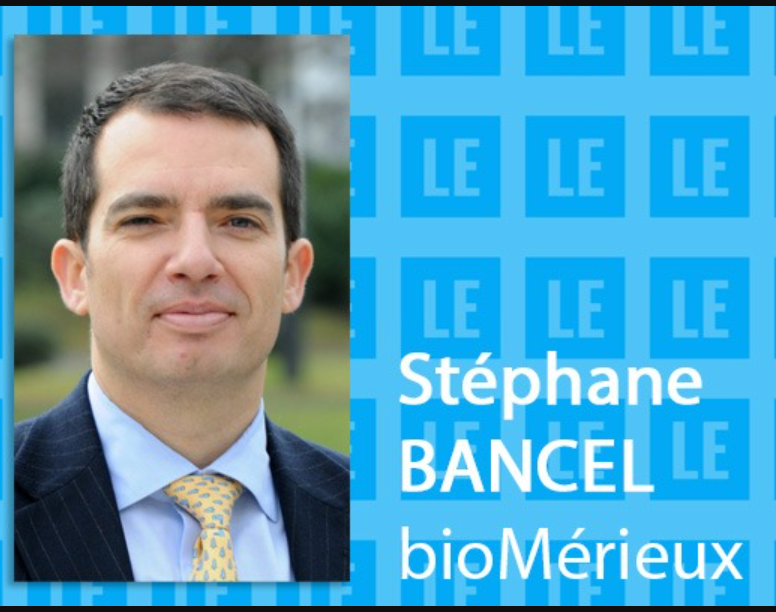
Moderna CEO Stephane Bancel was previously CEO of bioMerieux in France from 07-10.
Alain Merieux, who owns bioMerieux, was instrumental in the creation of the Wuhan Institute of Virology P4 Lab.
The same people who helped create the virus, also helped to create the vaccines...
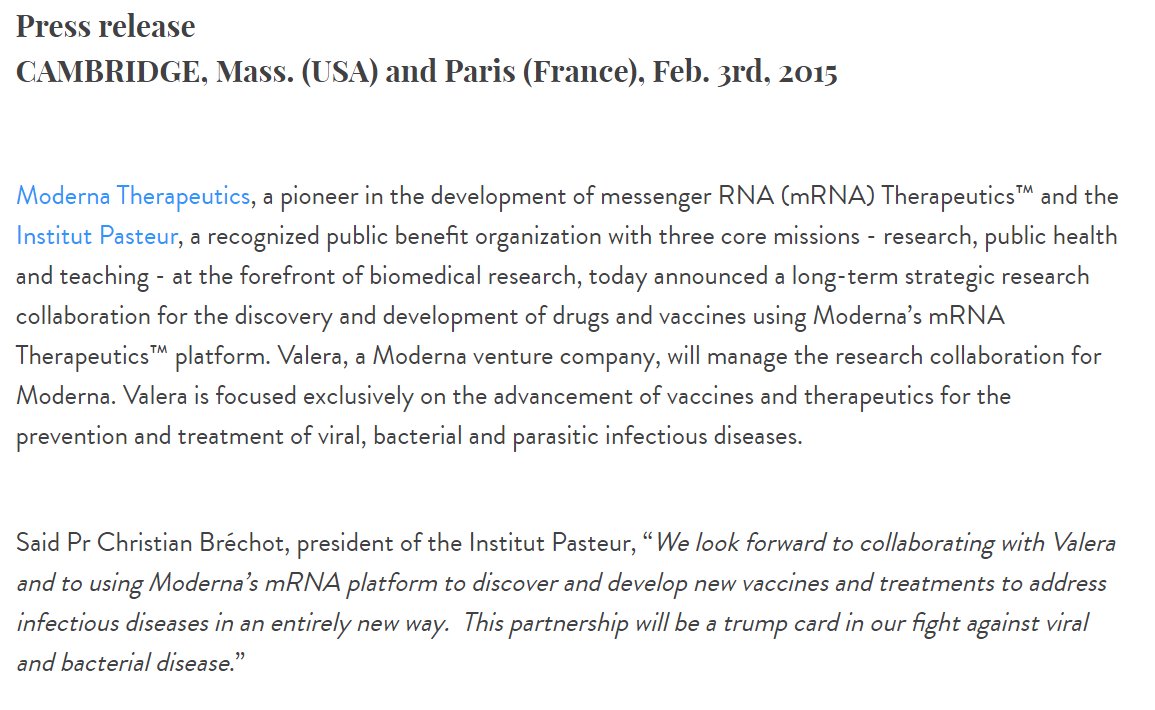
Moderna partnered with French Pasteur Institute in 2015 to develop mRNA vaccine technology.
Pasteur Institute partnered with the Wuhan P4 Laboratory in 2017 along with the Merieux Foundation to study emerging viruses...
https://t.co/yFsHwrNYaK
https://t.co/9M5lydBKhM
Nobel prize winning scientist Luc Montagnier asserts that Sars-Cov-2 is man-made and originated from the Wuhan Institute of Virology.
Montagnier did extensive work with the Pasteur Institute in France which was partnered with the Wuhan P4.
Merieux Foundation & the Chinese government have worked together since 1965, and partnered to study emerging pathogens in Africa in 2015.
Their research included "PATHOGENS CARRIED BY BATS" that provoke respiratory diseases.
🚨🚨🚨
https://t.co/gVwpT0ssqI

Alain Merieux, who owns bioMerieux, was instrumental in the creation of the Wuhan Institute of Virology P4 Lab.
The same people who helped create the virus, also helped to create the vaccines...
Moderna partnered with French Pasteur Institute in 2015 to develop mRNA vaccine technology.
Pasteur Institute partnered with the Wuhan P4 Laboratory in 2017 along with the Merieux Foundation to study emerging viruses...
https://t.co/yFsHwrNYaK
https://t.co/9M5lydBKhM
Nobel prize winning scientist Luc Montagnier asserts that Sars-Cov-2 is man-made and originated from the Wuhan Institute of Virology.
Montagnier did extensive work with the Pasteur Institute in France which was partnered with the Wuhan P4.
Merieux Foundation & the Chinese government have worked together since 1965, and partnered to study emerging pathogens in Africa in 2015.
Their research included "PATHOGENS CARRIED BY BATS" that provoke respiratory diseases.
🚨🚨🚨
https://t.co/gVwpT0ssqI