https://t.co/5EoGIAsKp8
Thread on "Reading the Tape" / Level 2 / Time and Sales
— Ace (@LunarAces) May 29, 2021
Thread on "Reading the Tape" / Level 2 / Time and Sales
— Ace (@LunarAces) May 29, 2021
No one explains EMAs either, so here are my 9/20 EMA rules. I have to give credit to @MullinsMomentum for introducing me to these. I adopted some stuff from him, and the rest I developed my own way of using them. Here's a thread of how I use them:
— Ace (@LunarAces) May 30, 2021
Why and how 90% of retail traders lose and how you can join the 10% that win. This is by far the most important thread I've made. I truly hope this helps change your lives.
— Ace (@LunarAces) June 14, 2021
Position sizing, risk management, and trading around your core thread:
— Ace (@LunarAces) June 28, 2021
After hours and premarket trading/algorithms and institutions - some insight. I shared this on MTA voice the other day.
— Ace (@LunarAces) July 4, 2021
The largest issue from what I've seen for new traders is determining where to enter trades. Most traders get caught chasing or adding in poor areas and then sell for losses. Here's a thread on some areas where you can enter trades for minimal risk and maximum reward:
— Ace (@LunarAces) July 31, 2021
Some tips and stuff that has worked well for me in options so far:
— Ace (@LunarAces) September 14, 2021
- Target fresh zones - I have a high conviction in these to work in my favor
- Never try to guess the top on a stock running on low volume. These go through zones
- Always scale into zones
Use supply and demand to enter trades and support and resistances as profit targets. You don't have to obsess over daily levels. I like to use the 1h chart and less with recent price action to look for support and resistances to determine where I'll scale profits from my entry pic.twitter.com/Jr0jehUiJ3
— Ace (@LunarAces) September 17, 2021
Thread on support and resistance. Been working on this system for a little while now and decided to share my secret sauce.
— Ace (@LunarAces) October 8, 2021
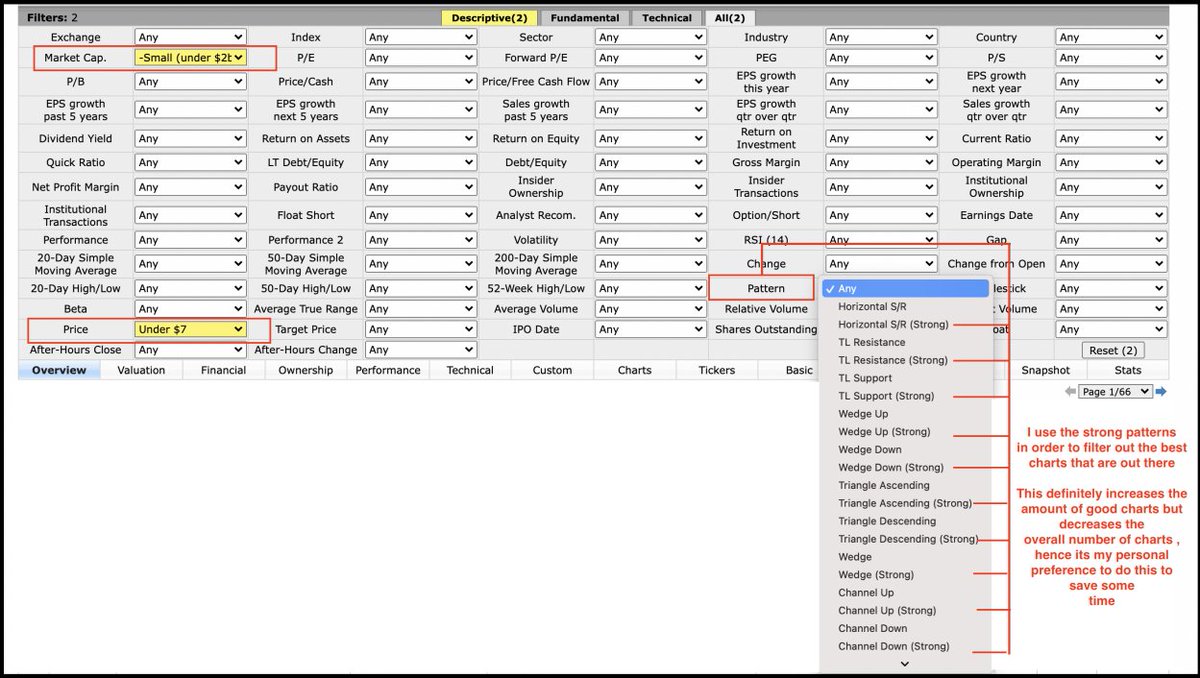
**16 Must Read Stock Market Books**
— Chris Perruna (@cperruna) November 20, 2019
Gifts for the Holidays!
Reminiscences of a Stock Operator
by Edwin Lef\xe8vrehttps://t.co/DozMNFmvZI pic.twitter.com/b6wEhzMp8n
A thread on Pyramiding- pic.twitter.com/8EOSSFMZ2w
— Trader knight (@Traderknight007) December 27, 2020
"Don't change the trading rules after every trade."
— Trader knight (@Traderknight007) November 29, 2020
If you do change them frequently then this thread is for you.
Let's talk about the law of large numbers and how it benefits traders to be profitable.
[Thread]\U0001f447\U0001f447\U0001f447 pic.twitter.com/pEUr0wH354
A thread on Trend-lines pic.twitter.com/GsLGzl8A3c
— Trader knight (@Traderknight007) January 2, 2021
A thread on SCALING IN - OUT METHOD - pic.twitter.com/bJ1N5ZjAiK
— Trader knight (@Traderknight007) January 9, 2021
I'm increasingly interested in the idea of "personal moats" in the context of careers.
— Erik Torenberg (@eriktorenberg) November 22, 2018
Moats should be:
- Hard to learn and hard to do (but perhaps easier for you)
- Skills that are rare and valuable
- Legible
- Compounding over time
- Unique to your own talents & interests https://t.co/bB3k1YcH5b
People talk about \u201cpassive income\u201d a lot but not about \u201cpassive social capital\u201d or \u201cpassive networking\u201d or \u201cpassive knowledge gaining\u201d but that\u2019s what you can architect if you have a thing and it grows over time without intensive constant effort to sustain it
— Andrew Chen (@andrewchen) November 22, 2018
Things that look like moats but likely aren\u2019t or may fade:
— Erik Torenberg (@eriktorenberg) November 22, 2018
- Proprietary networks
- Being something other than one of the best at any tournament style-game
- Many "awards"
- Twitter followers or general reach without "respect"
- Anything that depends on information asymmetry https://t.co/abjxesVIh9
I interviewed 5 billionaires this week
— GREG ISENBERG (@gregisenberg) January 23, 2021
I asked them to share their lessons learned on startups, life and entrepreneurship:
Here's what they told me:
To outperform, you need serious competitive advantages.
— Sahil Bloom (@SahilBloom) March 20, 2021
But contrary to what you have been told, most of them don't require talent.
10 competitive advantages that you can start developing today:
I\u2019ve gotten a lot of bad advice in my career and I see even more of it here on Twitter.
— Nick Huber (@sweatystartup) January 3, 2021
Time for a stiff drink and some truth you probably dont want to hear.
\U0001f447\U0001f447
THREAD: 10 significant lies you're told about the world.
— Julian Shapiro (@Julian) January 9, 2021
On startups, writing, and your career: