https://t.co/LjpdlHa0C7 is getting a good face-lift.
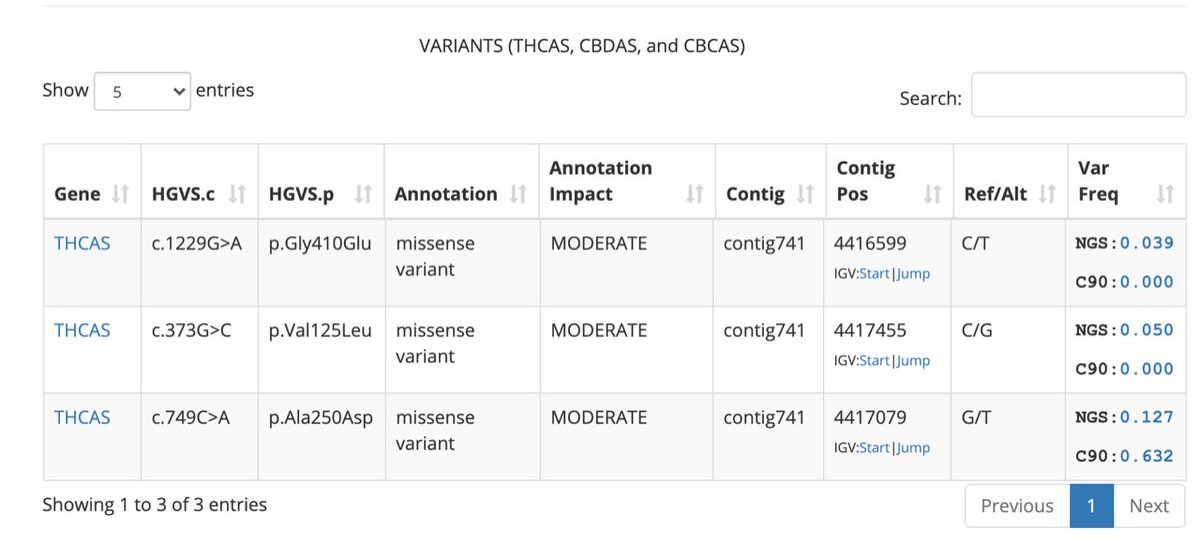
Samples now have variant tables with annotation on their impact to the gene.
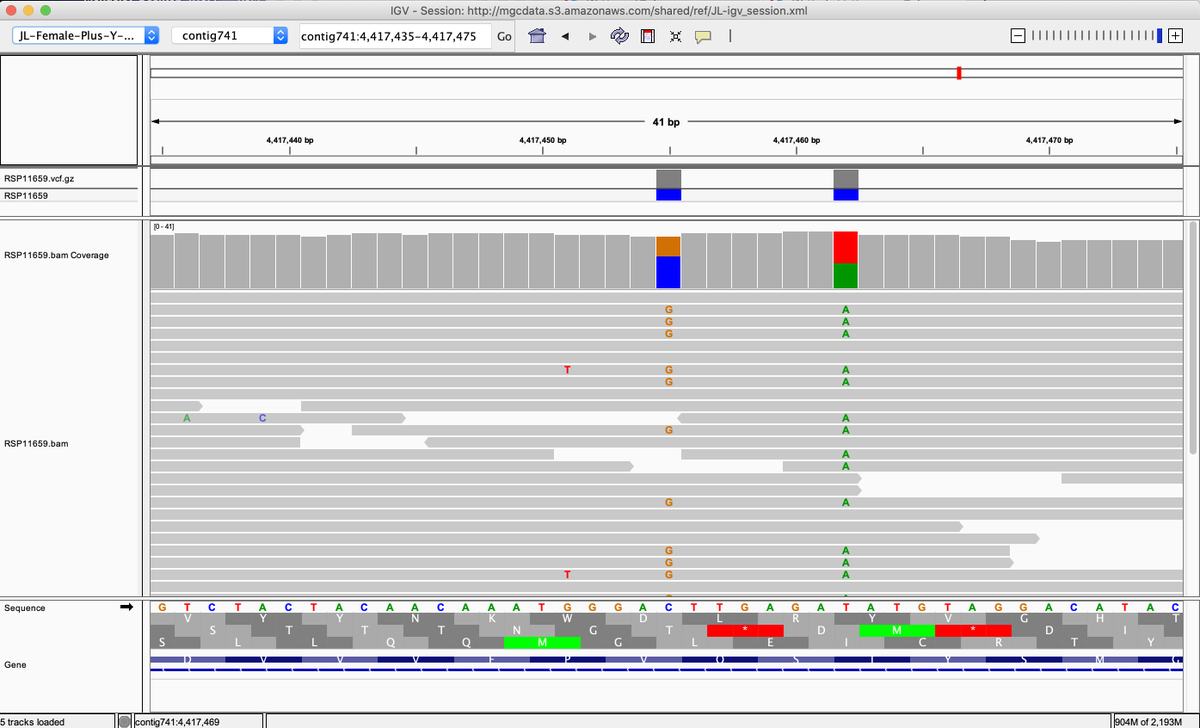
There is also an IGV integration. You need IGV installed locally but the Start|Jump links will open up you BAM file in IGV.

You must have IGV open and then click the start link.
The sample's BAM will show up for viewing in IGV.
Once open, you can use the jump link to move swiftly around to each variant. This is a variant in THCAS.
You can jump to other variants in the same gene. In this case we have one non-synonymous variant in phase with a synonymous variant in THCAS.
Cannabinoid synthase genes are cute but some folks can answer those questions with HPLC.
How about flowering genes?

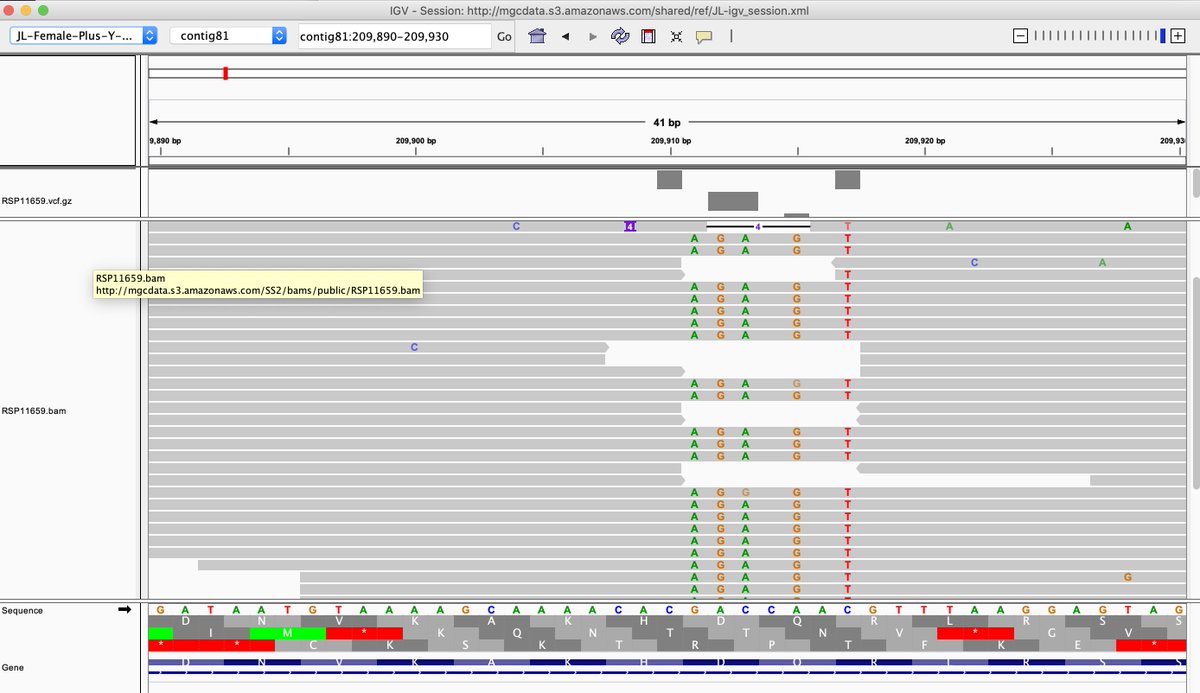
This sample has a disruptive in frame deletion on a late flowering gene. And it's very rare in the population.
Looks to be heterozygous....
But its never this simple in cannabis.

Let's look at what other damaging variations it has.
7 Damaging inframe deletions or insertions (indels) in Early and Late flowering genes.
When it comes to Indels, IGV can be very helpful to inspect the read frequency and if there appears to be any read mismapping with short reads. They all look real and diploid.
Here is another one in AAE1-2. This gene is involved in making the pre-cursors to cannabinoid synthesis.

It is not just a simple presence or absence of the cannabinoid synthase genes. One has to pay close attention to variants up stream in the pathway as well.
@threadreaderapp unroll

More from Tech

The YouTube algorithm that I helped build in 2011 still recommends the flat earth theory by the *hundreds of millions*. This investigation by @RawStory shows some of the real-life consequences of this badly designed AI.


This spring at SxSW, @SusanWojcicki promised "Wikipedia snippets" on debated videos. But they didn't put them on flat earth videos, and instead @YouTube is promoting merchandising such as "NASA lies - Never Trust a Snake". 2/


A few example of flat earth videos that were promoted by YouTube #today:
https://t.co/TumQiX2tlj 3/

https://t.co/uAORIJ5BYX 4/

https://t.co/yOGZ0pLfHG 5/

You May Also Like

कुंडली में 12 भाव होते हैं। कैसे ज्योतिष द्वारा रोग के आंकलन करते समय कुंडली के विभिन्न भावों से गणना करते हैं आज इस पर चर्चा करेंगे।
कुण्डली को कालपुरुष की संज्ञा देकर इसमें शरीर के अंगों को स्थापित कर उनसे रोग, रोगेश, रोग को बढ़ाने घटाने वाले ग्रह


रोग की स्थिति में उत्प्रेरक का कार्य करने वाले ग्रह, आयुर्वेदिक/ऐलोपैथी/होमियोपैथी में से कौन कारगर होगा इसका आँकलन, रक्त विकार, रक्त और आपरेशन की स्थिति, कौन सा आंतरिक या बाहरी अंग प्रभावित होगा इत्यादि गणना करने में कुंडली का प्रयोग किया जाता है।


मेडिकल ज्योतिष में आज के समय में Dr. K. S. Charak का नाम निर्विवाद रूप से प्रथम स्थान रखता है। उनकी लिखी कई पुस्तकें आज इस क्षेत्र में नए ज्योतिषों का मार्गदर्शन कर रही हैं।
प्रथम भाव -
इस भाव से हम व्यक्ति की रोगप्रतिरोधक क्षमता, सिर, मष्तिस्क का विचार करते हैं।


द्वितीय भाव-
दाहिना नेत्र, मुख, वाणी, नाक, गर्दन व गले के ऊपरी भाग का विचार होता है।
तृतीय भाव-
अस्थि, गला,कान, हाथ, कंधे व छाती के आंतरिक अंगों का शुरुआती भाग इत्यादि।

चतुर्थ भाव- छाती व इसके आंतरिक अंग, जातक की मानसिक स्थिति/प्रकृति, स्तन आदि की गणना की जाती है


पंचम भाव-
जातक की बुद्धि व उसकी तीव्रता,पीठ, पसलियां,पेट, हृदय की स्थिति आंकलन में प्रयोग होता है।

षष्ठ भाव-
रोग भाव कहा जाता है। कुंडली मे इसके तत्कालिक भाव स्वामी, कालपुरुष कुंडली के स्वामी, दृष्टि संबंध, रोगेश की स्थिति, रोगेश के नक्षत्र औऱ रोगेश व भाव की डिग्री इत्यादि।