The Elon Musk BS about indentured servitude on Mars, this was bothering me the other day before I read that quote and I didn’t tweet about it, but yeah I have thoughts about capitalists planning to “save humanity” by leaving earth...
It’s not about saving humanity, it’s about being acknowledged as a “saviour”
More from Tech


"I really want to break into Product Management"
make products.
"If only someone would tell me how I can get a startup to notice me."
Make Products.
"I guess it's impossible and I'll never break into the industry."
MAKE PRODUCTS.
Courtesy of @edbrisson's wonderful thread on breaking into comics – https://t.co/TgNblNSCBj – here is why the same applies to Product Management, too.
There is no better way of learning the craft of product, or proving your potential to employers, than just doing it.
You do not need anybody's permission. We don't have diplomas, nor doctorates. We can barely agree on a single standard of what a Product Manager is supposed to do.
But – there is at least one blindingly obvious industry consensus – a Product Manager makes Products.
And they don't need to be kept at the exact right temperature, given endless resource, or carefully protected in order to do this.
They find their own way.
make products.
"If only someone would tell me how I can get a startup to notice me."
Make Products.
"I guess it's impossible and I'll never break into the industry."
MAKE PRODUCTS.
Courtesy of @edbrisson's wonderful thread on breaking into comics – https://t.co/TgNblNSCBj – here is why the same applies to Product Management, too.
"I really want to break into comics"
— Ed Brisson (@edbrisson) December 4, 2018
make comics.
"If only someone would tell me how I can get an editor to notice me."
Make Comics.
"I guess it's impossible and I'll never break into the industry."
MAKE COMICS.
There is no better way of learning the craft of product, or proving your potential to employers, than just doing it.
You do not need anybody's permission. We don't have diplomas, nor doctorates. We can barely agree on a single standard of what a Product Manager is supposed to do.
But – there is at least one blindingly obvious industry consensus – a Product Manager makes Products.
And they don't need to be kept at the exact right temperature, given endless resource, or carefully protected in order to do this.
They find their own way.


Next.js has taken the web dev world by storm
It’s the @reactjs framework devs rave about praising its power, flexibility, and dev experience
Don't feel like you're missing out!
Here's everything you need to know in 10 tweets
Let’s dive in 🧵

Next.js is a @reactjs framework from @vercel
It couples a great dev experience with an opinionated feature set to make it easy to spin up new performant, dynamic web apps
It's used by many high-profile teams like @hulu, @apple, @Nike, & more
https://t.co/whCdm5ytuk
@vercel @hulu @Apple @Nike The team at @vercel, formerly Zeit, originally and launched v1 of the framework on Oct 26, 2016 in the pursuit of universal JavaScript apps
Since then, the team & community has grown expotentially, including contributions from giants like @Google
https://t.co/xPPTOtHoKW
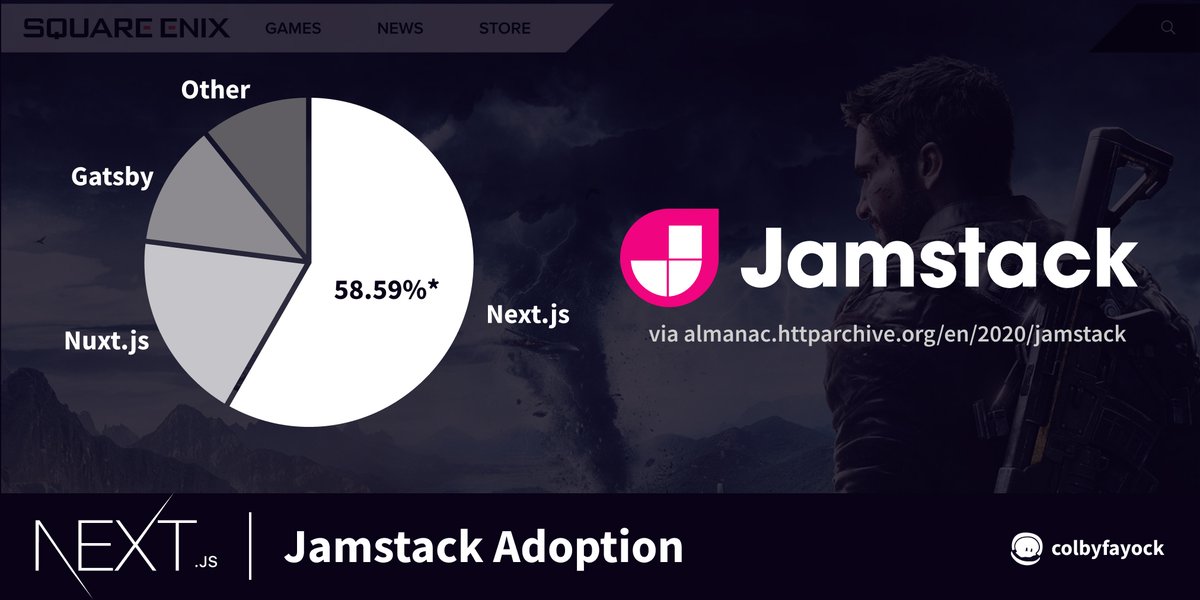
@vercel @hulu @Apple @Nike @Google In the #jamstack world, Next.js pulled a hefty 58.6% share of framework adoption in 2020
Compared to other popular @reactjs frameworks like Gatsby, which pulled in 12%
*The Next.js stats likely include some SSR, arguably not Jamstack
https://t.co/acNawfcM4z
@vercel @hulu @Apple @Nike @Google The easiest way to get started with a new Next.js app is with Create Next App
Simply run:
yarn create next-app
or
npx create-next-app
You can even start from a git-based template with the -e flag
yarn create next-app -e https://t.co/JMQ87gi1ue
https://t.co/rwKhp7zlys
It’s the @reactjs framework devs rave about praising its power, flexibility, and dev experience
Don't feel like you're missing out!
Here's everything you need to know in 10 tweets
Let’s dive in 🧵
Next.js is a @reactjs framework from @vercel
It couples a great dev experience with an opinionated feature set to make it easy to spin up new performant, dynamic web apps
It's used by many high-profile teams like @hulu, @apple, @Nike, & more
https://t.co/whCdm5ytuk
@vercel @hulu @Apple @Nike The team at @vercel, formerly Zeit, originally and launched v1 of the framework on Oct 26, 2016 in the pursuit of universal JavaScript apps
Since then, the team & community has grown expotentially, including contributions from giants like @Google
https://t.co/xPPTOtHoKW
@vercel @hulu @Apple @Nike @Google In the #jamstack world, Next.js pulled a hefty 58.6% share of framework adoption in 2020
Compared to other popular @reactjs frameworks like Gatsby, which pulled in 12%
*The Next.js stats likely include some SSR, arguably not Jamstack
https://t.co/acNawfcM4z
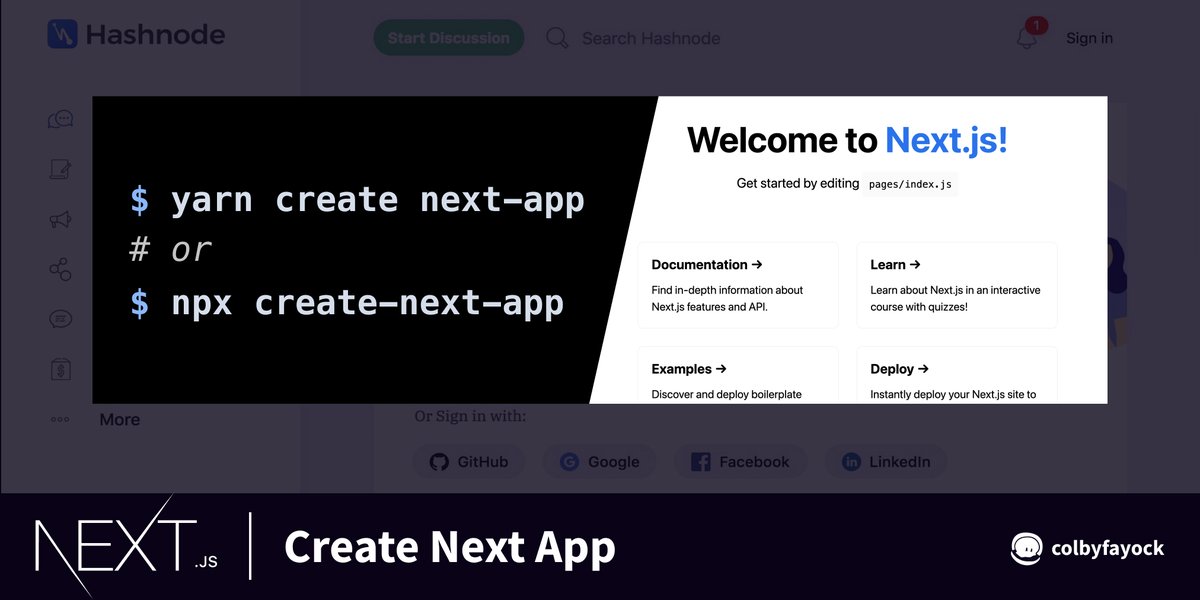
@vercel @hulu @Apple @Nike @Google The easiest way to get started with a new Next.js app is with Create Next App
Simply run:
yarn create next-app
or
npx create-next-app
You can even start from a git-based template with the -e flag
yarn create next-app -e https://t.co/JMQ87gi1ue
https://t.co/rwKhp7zlys
You May Also Like



🌿𝑻𝒉𝒆 𝒔𝒕𝒐𝒓𝒚 𝒐𝒇 𝒂 𝑺𝒕𝒂𝒓 : 𝑫𝒉𝒓𝒖𝒗𝒂 & 𝑽𝒊𝒔𝒉𝒏𝒖
Once upon a time there was a Raja named Uttānapāda born of Svayambhuva Manu,1st man on earth.He had 2 beautiful wives - Suniti & Suruchi & two sons were born of them Dhruva & Uttama respectively.
#talesofkrishna https://t.co/E85MTPkF9W
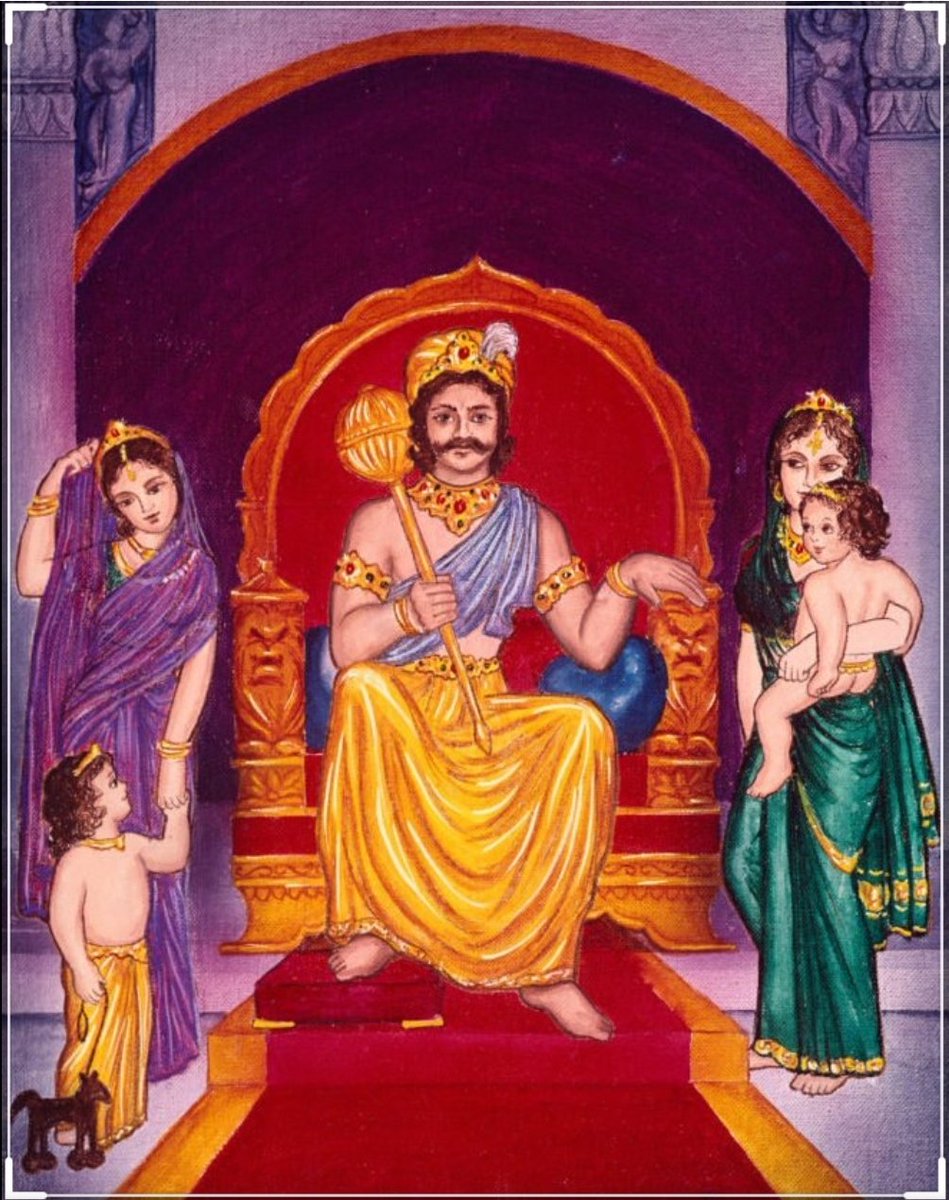
Now Suniti was the daughter of a tribal chief while Suruchi was the daughter of a rich king. Hence Suruchi was always favored the most by Raja while Suniti was ignored. But while Suniti was gentle & kind hearted by nature Suruchi was venomous inside.
#KrishnaLeela
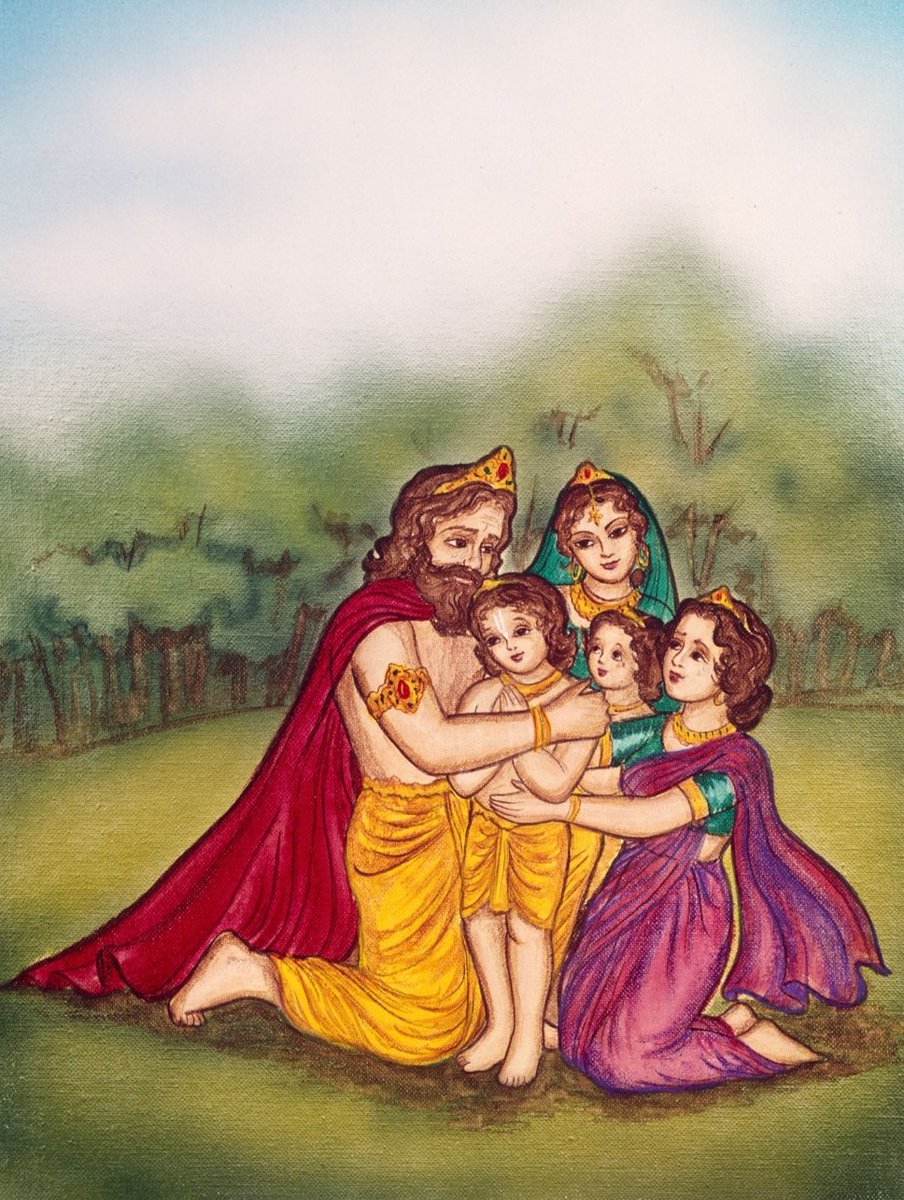
The story is of a time when ideally the eldest son of the king becomes the heir to the throne. Hence the sinhasan of the Raja belonged to Dhruva.This is why Suruchi who was the 2nd wife nourished poison in her heart for Dhruva as she knew her son will never get the throne.
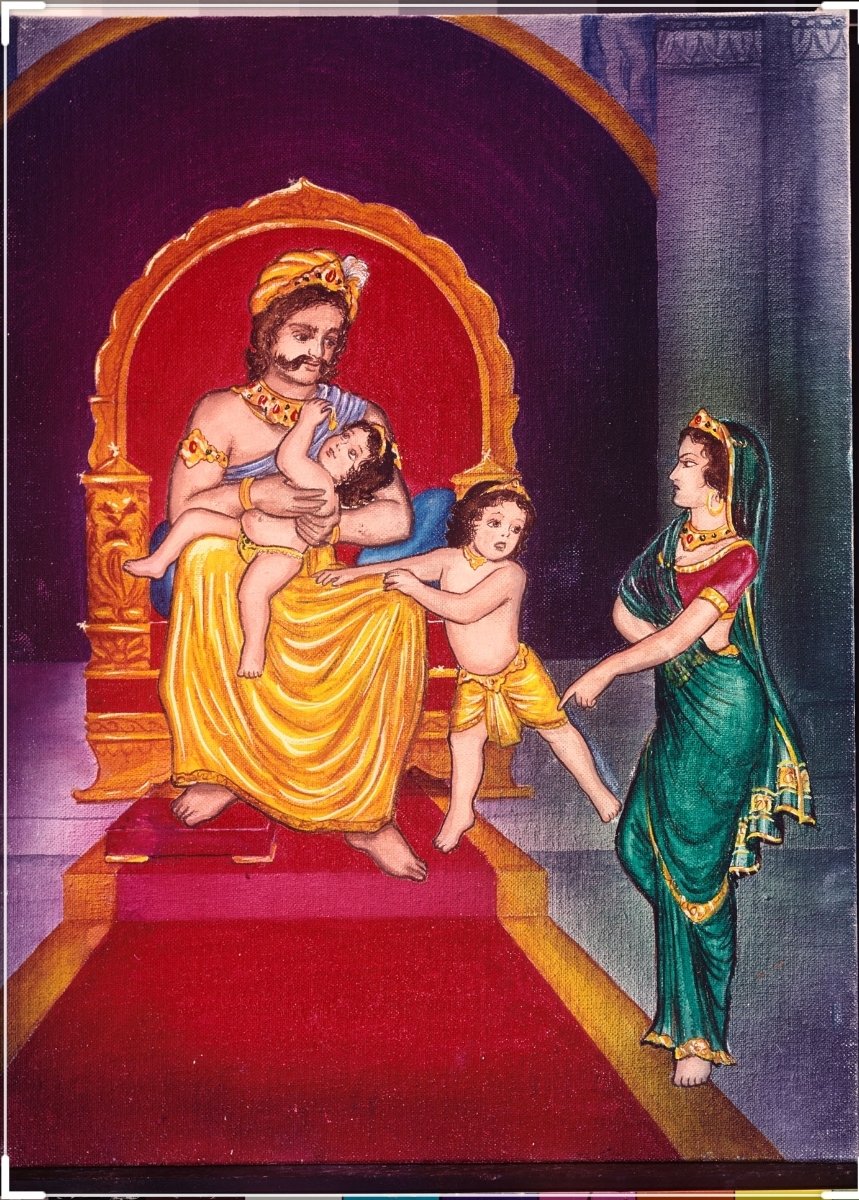
One day when Dhruva was just 5 years old he went on to sit on his father's lap. Suruchi, the jealous queen, got enraged and shoved him away from Raja as she never wanted Raja to shower Dhruva with his fatherly affection.
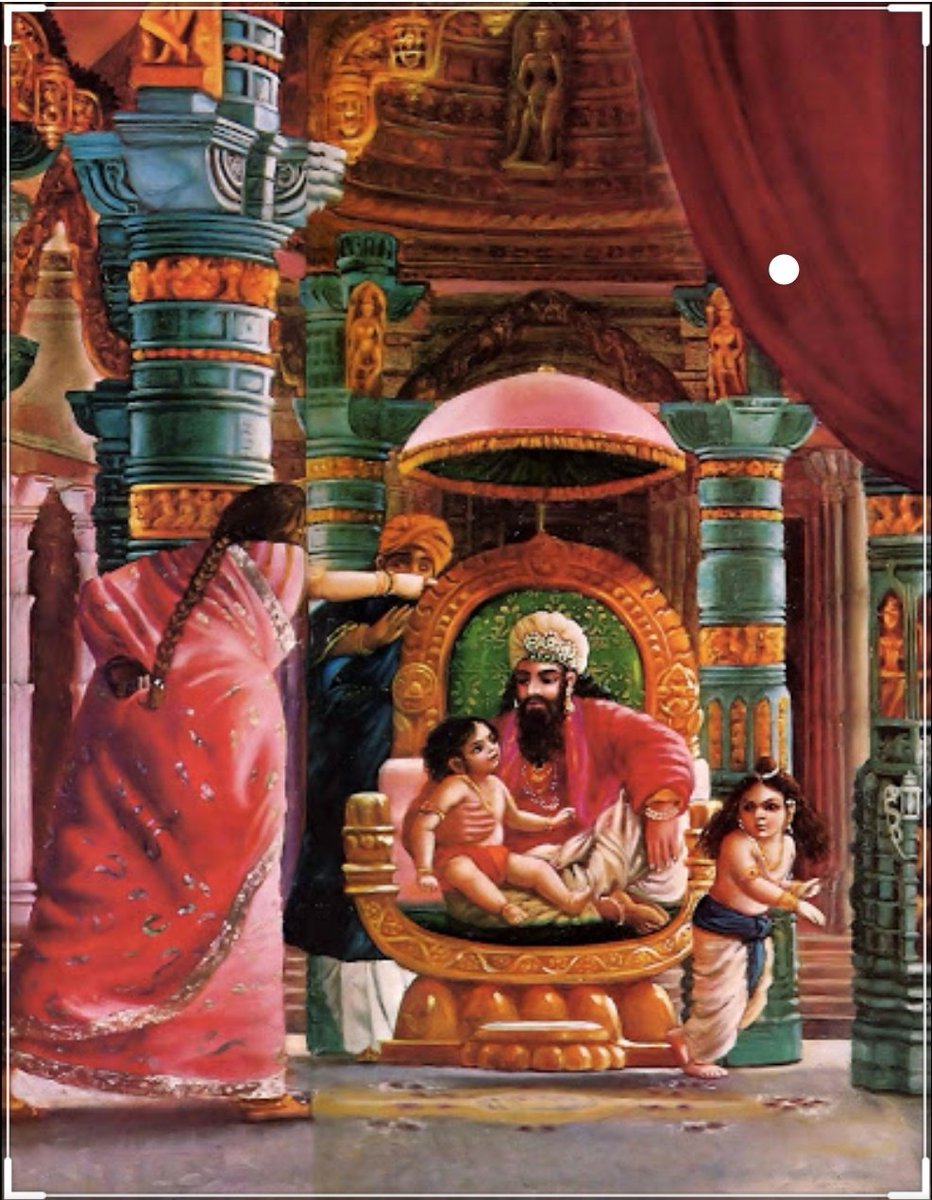
Dhruva protested questioning his step mother "why can't i sit on my own father's lap?" A furious Suruchi berated him saying "only God can allow him that privilege. Go ask him"
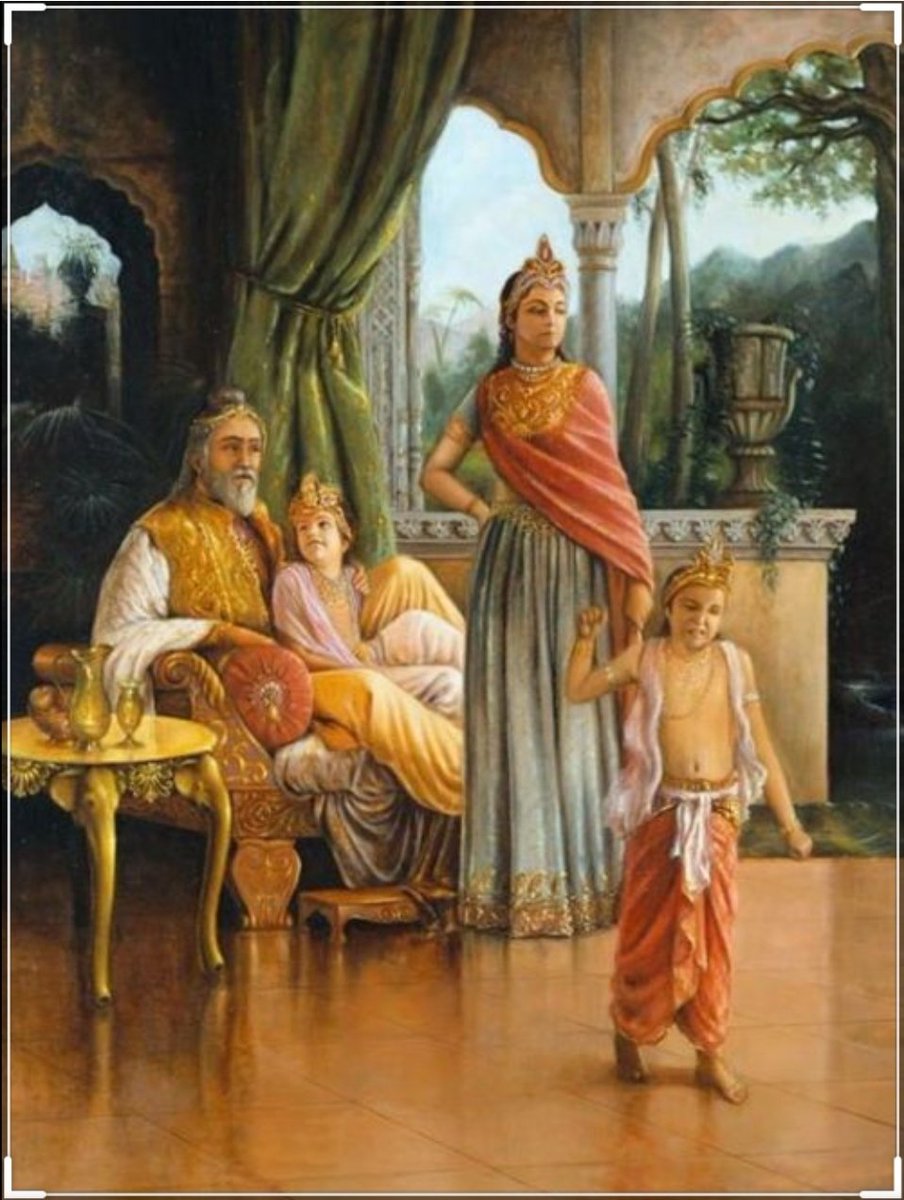
Once upon a time there was a Raja named Uttānapāda born of Svayambhuva Manu,1st man on earth.He had 2 beautiful wives - Suniti & Suruchi & two sons were born of them Dhruva & Uttama respectively.
#talesofkrishna https://t.co/E85MTPkF9W
Prabhu says i reside in the heart of my bhakt.
— Right Singh (@rightwingchora) December 21, 2020
Guess the event. pic.twitter.com/yFUmbfe5KL
Now Suniti was the daughter of a tribal chief while Suruchi was the daughter of a rich king. Hence Suruchi was always favored the most by Raja while Suniti was ignored. But while Suniti was gentle & kind hearted by nature Suruchi was venomous inside.
#KrishnaLeela
The story is of a time when ideally the eldest son of the king becomes the heir to the throne. Hence the sinhasan of the Raja belonged to Dhruva.This is why Suruchi who was the 2nd wife nourished poison in her heart for Dhruva as she knew her son will never get the throne.
One day when Dhruva was just 5 years old he went on to sit on his father's lap. Suruchi, the jealous queen, got enraged and shoved him away from Raja as she never wanted Raja to shower Dhruva with his fatherly affection.
Dhruva protested questioning his step mother "why can't i sit on my own father's lap?" A furious Suruchi berated him saying "only God can allow him that privilege. Go ask him"