
And both @Uber & @Postmates use the “Break it till you Make It” approach to the law.
The @Uber-@Postmates merger will ONLY benefit monopolistic pandemic profiteers focused on growing their power at the expense of restaurants, workers, and consumers.
And both @Uber & @Postmates use the “Break it till you Make It” approach to the law.
@Postmates pioneered the predatory practice of stealing menus and offering unauthorized delivery service from restaurants without their knowledge.
When COVID-19 shut down dining rooms & dozens of cities capped fees to help restaurants, both @Uber & @Postmates lobbied hard to stop them.
And @Postmates lost $105 million in Q1 & Q2 of 2020.
Obviously, their business models have been successful…🙃
As @moetkacik explains in “Rescuing Restaurants,” now more than ever, we must #ProtectOurRestaurants👇https://t.co/AjDGkiJqEE
More from Tech




THREAD: How is it possible to train a well-performing, advanced Computer Vision model 𝗼𝗻 𝘁𝗵𝗲 𝗖𝗣𝗨? 🤔
At the heart of this lies the most important technique in modern deep learning - transfer learning.
Let's analyze how it
2/ For starters, let's look at what a neural network (NN for short) does.
An NN is like a stack of pancakes, with computation flowing up when we make predictions.
How does it all work?
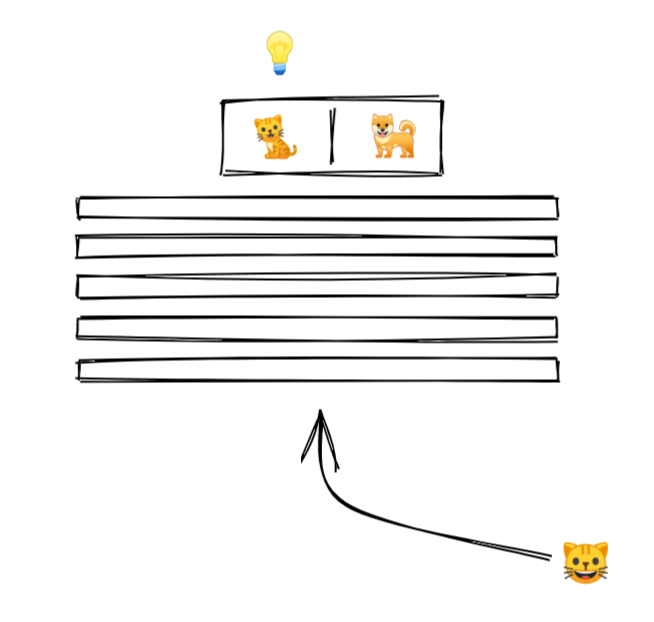
3/ We show an image to our model.
An image is a collection of pixels. Each pixel is just a bunch of numbers describing its color.
Here is what it might look like for a black and white image

4/ The picture goes into the layer at the bottom.
Each layer performs computation on the image, transforming it and passing it upwards.
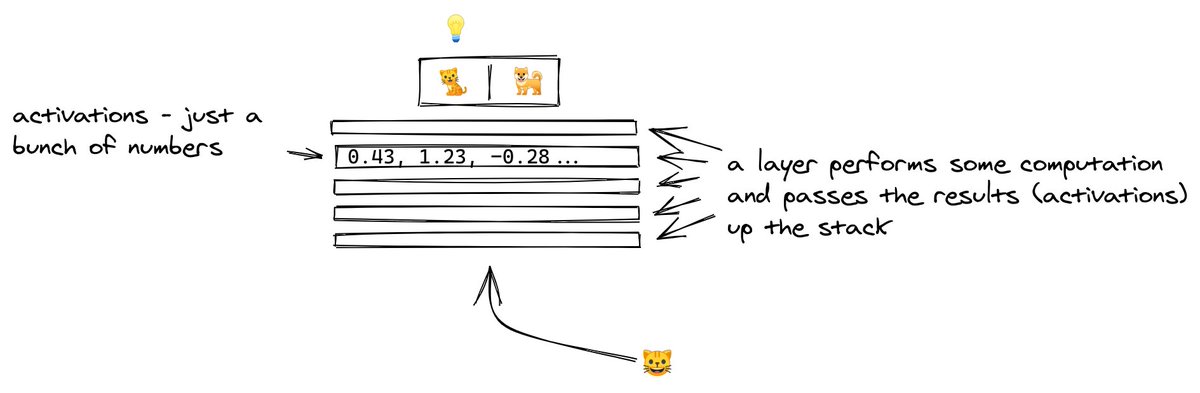
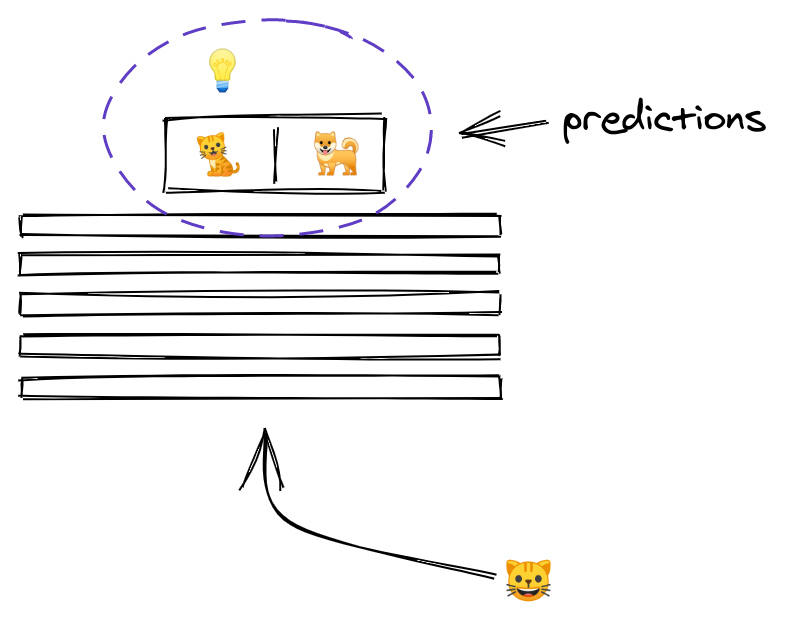
5/ By the time the image reaches the uppermost layer, it has been transformed to the point that it now consists of two numbers only.
The outputs of a layer are called activations, and the outputs of the last layer have a special meaning... they are the predictions!
At the heart of this lies the most important technique in modern deep learning - transfer learning.
Let's analyze how it
THREAD: Can you start learning cutting-edge deep learning without specialized hardware? \U0001f916
— Radek Osmulski (@radekosmulski) February 11, 2021
In this thread, we will train an advanced Computer Vision model on a challenging dataset. \U0001f415\U0001f408 Training completes in 25 minutes on my 3yrs old Ryzen 5 CPU.
Let me show you how...
2/ For starters, let's look at what a neural network (NN for short) does.
An NN is like a stack of pancakes, with computation flowing up when we make predictions.
How does it all work?
3/ We show an image to our model.
An image is a collection of pixels. Each pixel is just a bunch of numbers describing its color.
Here is what it might look like for a black and white image
4/ The picture goes into the layer at the bottom.
Each layer performs computation on the image, transforming it and passing it upwards.
5/ By the time the image reaches the uppermost layer, it has been transformed to the point that it now consists of two numbers only.
The outputs of a layer are called activations, and the outputs of the last layer have a special meaning... they are the predictions!

1. One of the best changes in recent years is the GOP abandoning libertarianism. Here's GOP Rep. Greg Steube: “I do think there is an appetite amongst Republicans, if the Dems wanted to try to break up Big Tech, I think there is support for that."
2. And @RepKenBuck, who offered a thoughtful Third Way report on antitrust law in 2020, weighed in quite reasonably on Biden antitrust frameworks.
3. I believe this change is sincere because it's so pervasive and beginning to result in real policy changes. Example: The North Dakota GOP is taking on Apple's app store.
4. And yet there's a problem. The GOP establishment is still pro-big tech. Trump, despite some of his instincts, appointed pro-monopoly antitrust enforcers. Antitrust chief Makan Delrahim helped big tech, and the antitrust case happened bc he was recused.
5. At the other sleepy antitrust agency, the Federal Trade Commission, Trump appointed commissioners
@FTCPhillips and @CSWilsonFTC are both pro-monopoly. Both voted *against* the antitrust case on FB. That case was 3-2, with a GOP Chair and 2 Dems teaming up against 2 Rs.
2. And @RepKenBuck, who offered a thoughtful Third Way report on antitrust law in 2020, weighed in quite reasonably on Biden antitrust frameworks.
3. I believe this change is sincere because it's so pervasive and beginning to result in real policy changes. Example: The North Dakota GOP is taking on Apple's app store.
Republican North Dakota legislators have introduced #SB2333, a bill that prohibits large tech companies from locking their users into a single app store or payment processor.https://t.co/PgyhgOhFAl
— Cory Doctorow #BLM (@doctorow) February 11, 2021
1/ pic.twitter.com/KZ8BMFQoPO
4. And yet there's a problem. The GOP establishment is still pro-big tech. Trump, despite some of his instincts, appointed pro-monopoly antitrust enforcers. Antitrust chief Makan Delrahim helped big tech, and the antitrust case happened bc he was recused.
5. At the other sleepy antitrust agency, the Federal Trade Commission, Trump appointed commissioners
@FTCPhillips and @CSWilsonFTC are both pro-monopoly. Both voted *against* the antitrust case on FB. That case was 3-2, with a GOP Chair and 2 Dems teaming up against 2 Rs.
You May Also Like






BREAKING: @CommonsCMS @DamianCollins just released previously sealed #Six4Three @Facebook documents:
Some random interesting tidbits:
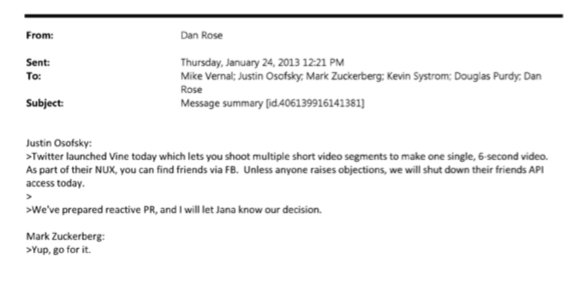
1) Zuck approves shutting down platform API access for Twitter's when Vine is released #competition
2) Facebook engineered ways to access user's call history w/o alerting users:
Team considered access to call history considered 'high PR risk' but 'growth team will charge ahead'. @Facebook created upgrade path to access data w/o subjecting users to Android permissions dialogue.
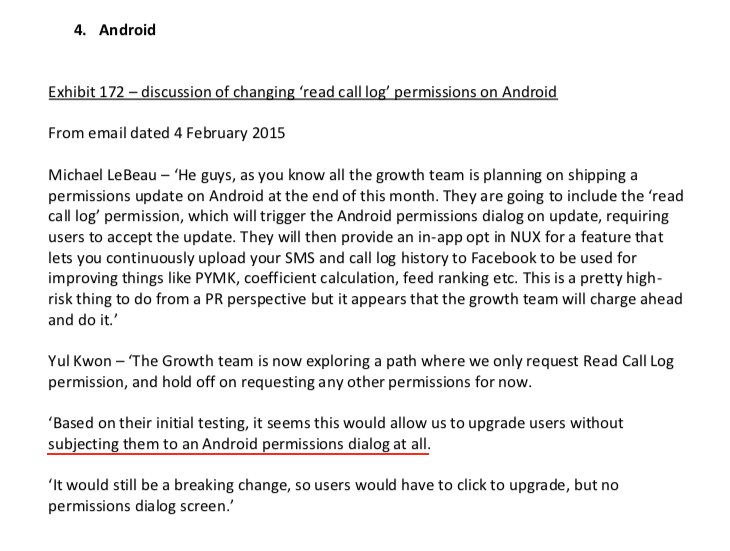
3) The above also confirms @kashhill and other's suspicion that call history was used to improve PYMK (People You May Know) suggestions and newsfeed rankings.
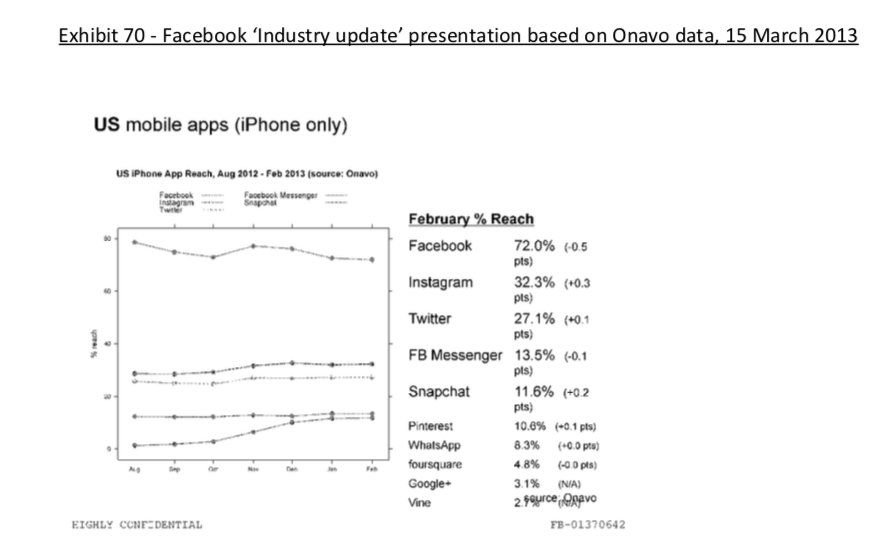
4) Docs also shed more light into @dseetharaman's story on @Facebook monitoring users' @Onavo VPN activity to determine what competitors to mimic or acquire in 2013.
https://t.co/PwiRIL3v9x
Some random interesting tidbits:
1) Zuck approves shutting down platform API access for Twitter's when Vine is released #competition
2) Facebook engineered ways to access user's call history w/o alerting users:
Team considered access to call history considered 'high PR risk' but 'growth team will charge ahead'. @Facebook created upgrade path to access data w/o subjecting users to Android permissions dialogue.
3) The above also confirms @kashhill and other's suspicion that call history was used to improve PYMK (People You May Know) suggestions and newsfeed rankings.
4) Docs also shed more light into @dseetharaman's story on @Facebook monitoring users' @Onavo VPN activity to determine what competitors to mimic or acquire in 2013.
https://t.co/PwiRIL3v9x




1/ Here’s a list of conversational frameworks I’ve picked up that have been helpful.
Please add your own.
2/ The Magic Question: "What would need to be true for you
3/ On evaluating where someone’s head is at regarding a topic they are being wishy-washy about or delaying.
“Gun to the head—what would you decide now?”
“Fast forward 6 months after your sabbatical--how would you decide: what criteria is most important to you?”
4/ Other Q’s re: decisions:
“Putting aside a list of pros/cons, what’s the *one* reason you’re doing this?” “Why is that the most important reason?”
“What’s end-game here?”
“What does success look like in a world where you pick that path?”
5/ When listening, after empathizing, and wanting to help them make their own decisions without imposing your world view:
“What would the best version of yourself do”?
Please add your own.
2/ The Magic Question: "What would need to be true for you
1/\u201cWhat would need to be true for you to\u2026.X\u201d
— Erik Torenberg (@eriktorenberg) December 4, 2018
Why is this the most powerful question you can ask when attempting to reach an agreement with another human being or organization?
A thread, co-written by @deanmbrody: https://t.co/Yo6jHbSit9
3/ On evaluating where someone’s head is at regarding a topic they are being wishy-washy about or delaying.
“Gun to the head—what would you decide now?”
“Fast forward 6 months after your sabbatical--how would you decide: what criteria is most important to you?”
4/ Other Q’s re: decisions:
“Putting aside a list of pros/cons, what’s the *one* reason you’re doing this?” “Why is that the most important reason?”
“What’s end-game here?”
“What does success look like in a world where you pick that path?”
5/ When listening, after empathizing, and wanting to help them make their own decisions without imposing your world view:
“What would the best version of yourself do”?