The vast majority of images are jpegs, which are internally 420 YUV, but they get converted to 32 bit RGB for use in apps. Using native YUV formats would save half the memory and rendering bandwidth, speed loading, and provide a tiny quality improvement. It would also be \
More from Tech

BREAKING: @CommonsCMS @DamianCollins just released previously sealed #Six4Three @Facebook documents:
Some random interesting tidbits:
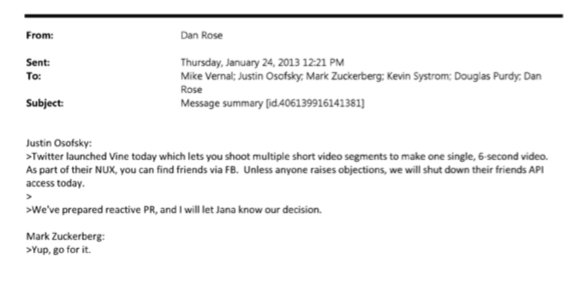
1) Zuck approves shutting down platform API access for Twitter's when Vine is released #competition
2) Facebook engineered ways to access user's call history w/o alerting users:
Team considered access to call history considered 'high PR risk' but 'growth team will charge ahead'. @Facebook created upgrade path to access data w/o subjecting users to Android permissions dialogue.
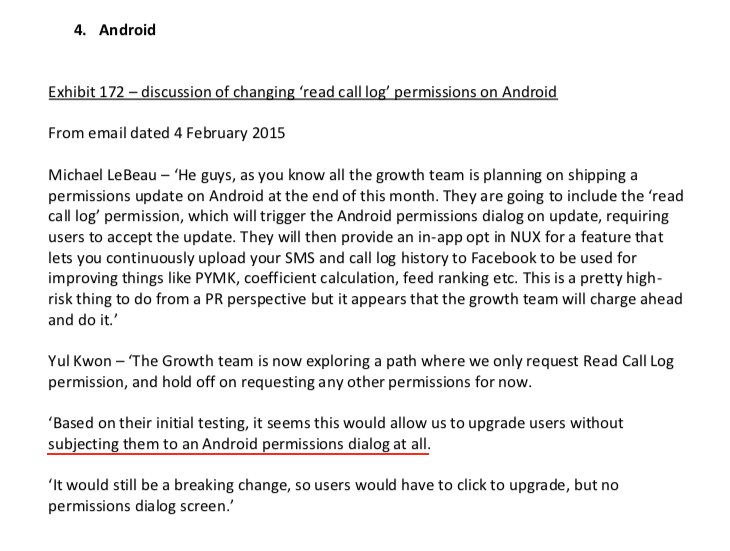
3) The above also confirms @kashhill and other's suspicion that call history was used to improve PYMK (People You May Know) suggestions and newsfeed rankings.
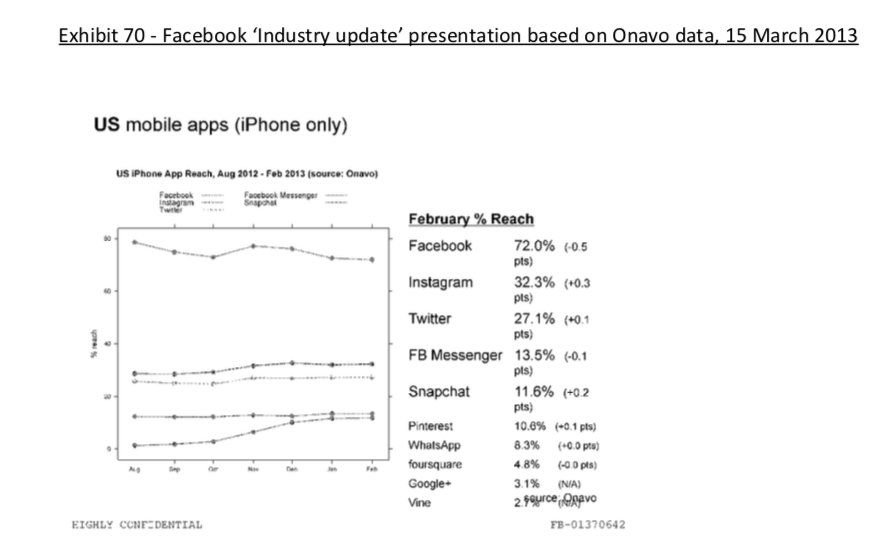
4) Docs also shed more light into @dseetharaman's story on @Facebook monitoring users' @Onavo VPN activity to determine what competitors to mimic or acquire in 2013.
https://t.co/PwiRIL3v9x
Some random interesting tidbits:
1) Zuck approves shutting down platform API access for Twitter's when Vine is released #competition
2) Facebook engineered ways to access user's call history w/o alerting users:
Team considered access to call history considered 'high PR risk' but 'growth team will charge ahead'. @Facebook created upgrade path to access data w/o subjecting users to Android permissions dialogue.
3) The above also confirms @kashhill and other's suspicion that call history was used to improve PYMK (People You May Know) suggestions and newsfeed rankings.
4) Docs also shed more light into @dseetharaman's story on @Facebook monitoring users' @Onavo VPN activity to determine what competitors to mimic or acquire in 2013.
https://t.co/PwiRIL3v9x






Thought I'd put a thread together of some resources & people I consider really valuable & insightful for anyone considering or just starting out on their @SorareHQ journey. It's by no means comprehensive, this community is super helpful so no offence to anyone I've missed off...
1) Get yourself on the official Sorare Discord group https://t.co/1CWeyglJhu, the forum is always full of interesting debate. Got a question? Put it on the relevant thread & it's usually answered in minutes. This is also a great place to engage directly with the @SorareHQ team.
2) Bury your head in @HGLeitch's @SorareData & get to grips with all the collated information you have to hand FOR FREE! IMO it's vital for price-checking, scouting & S05 team building plus they are hosts to the forward thinking SO11 and SorareData Cups 🏆
3) Get on YouTube 📺, subscribe to @Qu_Tang_Clan's channel https://t.co/1ZxMsQR1kq & engross yourself in hours of Sorare tutorials & videos. There's a good crowd that log in to the live Gameweek shows where you get to see Quinny scratching his head/ beard over team selection.
4) Make sure to follow & give a listen to the @Sorare_Podcast on the streaming service of your choice 🔊, weekly shows are always insightful with great guests. Worth listening to the old episodes too as there's loads of information you'll take from them.
1) Get yourself on the official Sorare Discord group https://t.co/1CWeyglJhu, the forum is always full of interesting debate. Got a question? Put it on the relevant thread & it's usually answered in minutes. This is also a great place to engage directly with the @SorareHQ team.
2) Bury your head in @HGLeitch's @SorareData & get to grips with all the collated information you have to hand FOR FREE! IMO it's vital for price-checking, scouting & S05 team building plus they are hosts to the forward thinking SO11 and SorareData Cups 🏆
3) Get on YouTube 📺, subscribe to @Qu_Tang_Clan's channel https://t.co/1ZxMsQR1kq & engross yourself in hours of Sorare tutorials & videos. There's a good crowd that log in to the live Gameweek shows where you get to see Quinny scratching his head/ beard over team selection.
4) Make sure to follow & give a listen to the @Sorare_Podcast on the streaming service of your choice 🔊, weekly shows are always insightful with great guests. Worth listening to the old episodes too as there's loads of information you'll take from them.
You May Also Like

These 10 threads will teach you more than reading 100 books
Five billionaires share their top lessons on startups, life and entrepreneurship (1/10)
10 competitive advantages that will trump talent (2/10)
Some harsh truths you probably don’t want to hear (3/10)
10 significant lies you’re told about the world (4/10)
Five billionaires share their top lessons on startups, life and entrepreneurship (1/10)
I interviewed 5 billionaires this week
— GREG ISENBERG (@gregisenberg) January 23, 2021
I asked them to share their lessons learned on startups, life and entrepreneurship:
Here's what they told me:
10 competitive advantages that will trump talent (2/10)
To outperform, you need serious competitive advantages.
— Sahil Bloom (@SahilBloom) March 20, 2021
But contrary to what you have been told, most of them don't require talent.
10 competitive advantages that you can start developing today:
Some harsh truths you probably don’t want to hear (3/10)
I\u2019ve gotten a lot of bad advice in my career and I see even more of it here on Twitter.
— Nick Huber (@sweatystartup) January 3, 2021
Time for a stiff drink and some truth you probably dont want to hear.
\U0001f447\U0001f447
10 significant lies you’re told about the world (4/10)
THREAD: 10 significant lies you're told about the world.
— Julian Shapiro (@Julian) January 9, 2021
On startups, writing, and your career: