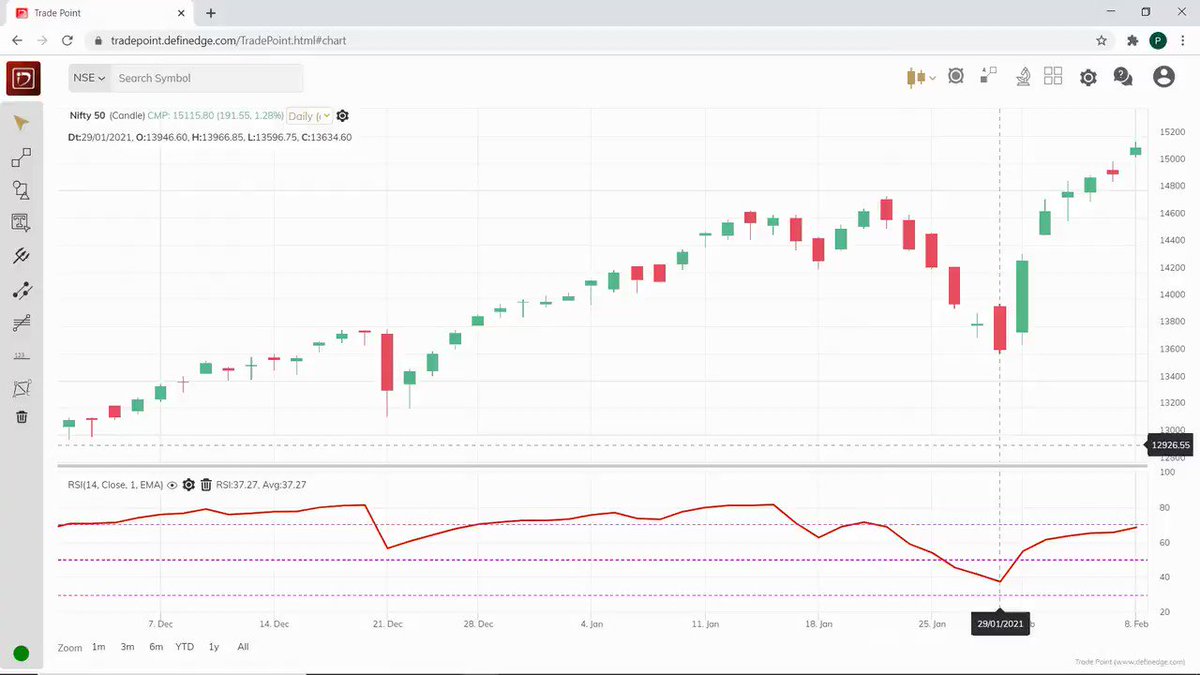
- Inside bar is when current candle high < previous candle high & current candle low > previous candle low.
(2/n)
Keep eye on #RIL
— Pathik (@Pathik_Trader) January 3, 2021
Weekly : IB+OB+IB
Monthly : IB
Upper level 2038
Lower level 1855
Can be one good trade
— Harsh (@HarshAsserts) September 11, 2020
When trading,moods will want to influence ur decisions
— Banknifty Addict (Gaurav) (@BankniftyA) December 29, 2019
How to minimize:
-Have a backtested plan/system
-Know yourself(emotion and panic levels)
So trade size is important to keep ur emotions in check
-dont focus too much on pnl
-have a back up plan ready
& last stay positive!!
Backtest the complete expiry and practice again and again till u develop conviction
— Banknifty Addict (Gaurav) (@BankniftyA) November 5, 2020
Support and resistance levels based on technical charts on various time frames.
— Banknifty Addict (Gaurav) (@BankniftyA) December 19, 2019
Breaking any of the above, leads to a direction
and then only directional play.
#OpenDrive#intradaySetup
— Pathik (@Pathik_Trader) April 16, 2019
Sharing one high probability trending setup for intraday.
Few conditions needs to be met
1. Opening should be above/below previous day high/low for buy/sell setup.
2. Open=low (for buy)
Open=high (for sell)
(1/n)
Already explained strategy of #opendrive
— Pathik (@Pathik_Trader) May 27, 2020
Backtested results in 30 stocks and nifty, banknifty.
Success ratio : approx 40-45%
RR average 1:2
Entry as per strategy
Stoploss = Open level
Exit 3:15 PM Or SL
39 months 14 months -ve, 25 +ve
Yearly all 4 years +ve performance. pic.twitter.com/nGqhzMKGVy
So today we will discuss two more price action setups to get good long side trade for intraday.
— Pathik (@Pathik_Trader) June 20, 2020
1. PDC Acts as Support
2. PDH Acts as Support
#nifty
— Pathik (@Pathik_Trader) June 23, 2020
This is how it created long setup by taking support at PDC.
hopefully shared setup on last weekend helped. pic.twitter.com/2mduSUpMn5
As someone\u2019s who\u2019s read the book, this review strikes me as tremendously unfair. It mostly faults Adler for not writing the book the reviewer wishes he had! https://t.co/pqpt5Ziivj
— Teresa M. Bejan (@tmbejan) January 12, 2021