
I shipped all these apps in 2020. Most of them generated $0.
🎬 https://t.co/JAhXqsuu6h $0
🌍 https://t.co/BrNUAhfiIT $0
💡 https://t.co/ZWcLfOH4aI $0
🐞 https://t.co/aghOxYEcPI $1.99
👍 https://t.co/2JhJLe27pW $3,025 in 10 days.
But that's ok, just keep shipping! My stories👇

More from Startups







20 years ago, I created the Danish gaming site Daily Rush with @mwittrock – inside a startup accelerator called Prey4, complete with fantastical projections of world domination 😂 – but now it's the end, after the proprietor of many years died in 2018.
Daily Rush was the culmination of years of using the web to do gaming journalism. I started Konsollen all the way back in 1995, then ran https://t.co/zsT3ykQcVk for years in anticipation of Id's shooter, then worked at a web portal, then Daily Rush.
This was how I got into web development, project management, organizing, writing, publishing, and how I met lifelong friends. What a wonderful time. But most good things come to an end. We should all be so lucky to see something we help set in the sea brave the waves for 20 yrs!
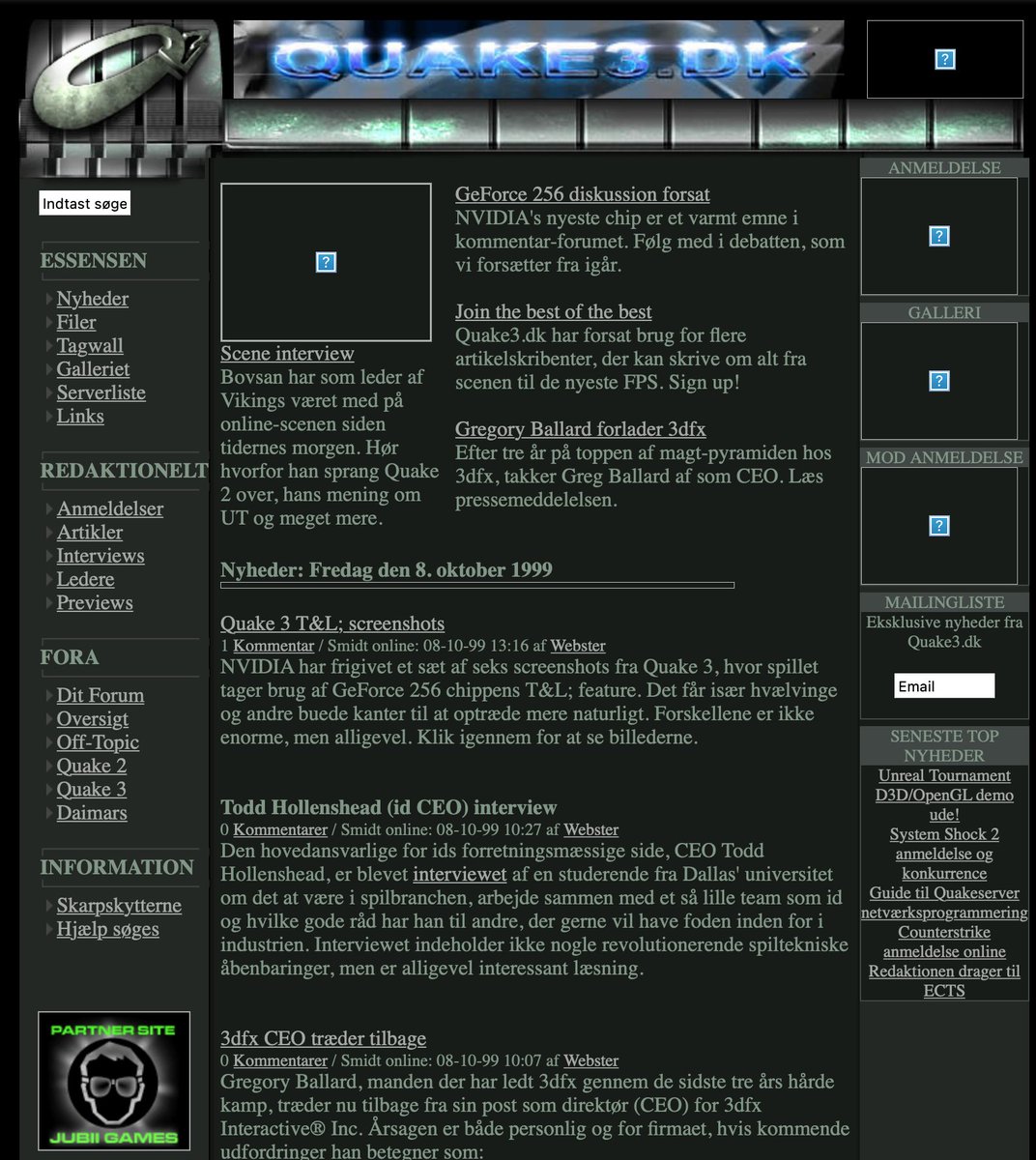
It's awesome to see the Internet Archive snapshots from all the way back to the early months of the site. Web design anno 2000 😍
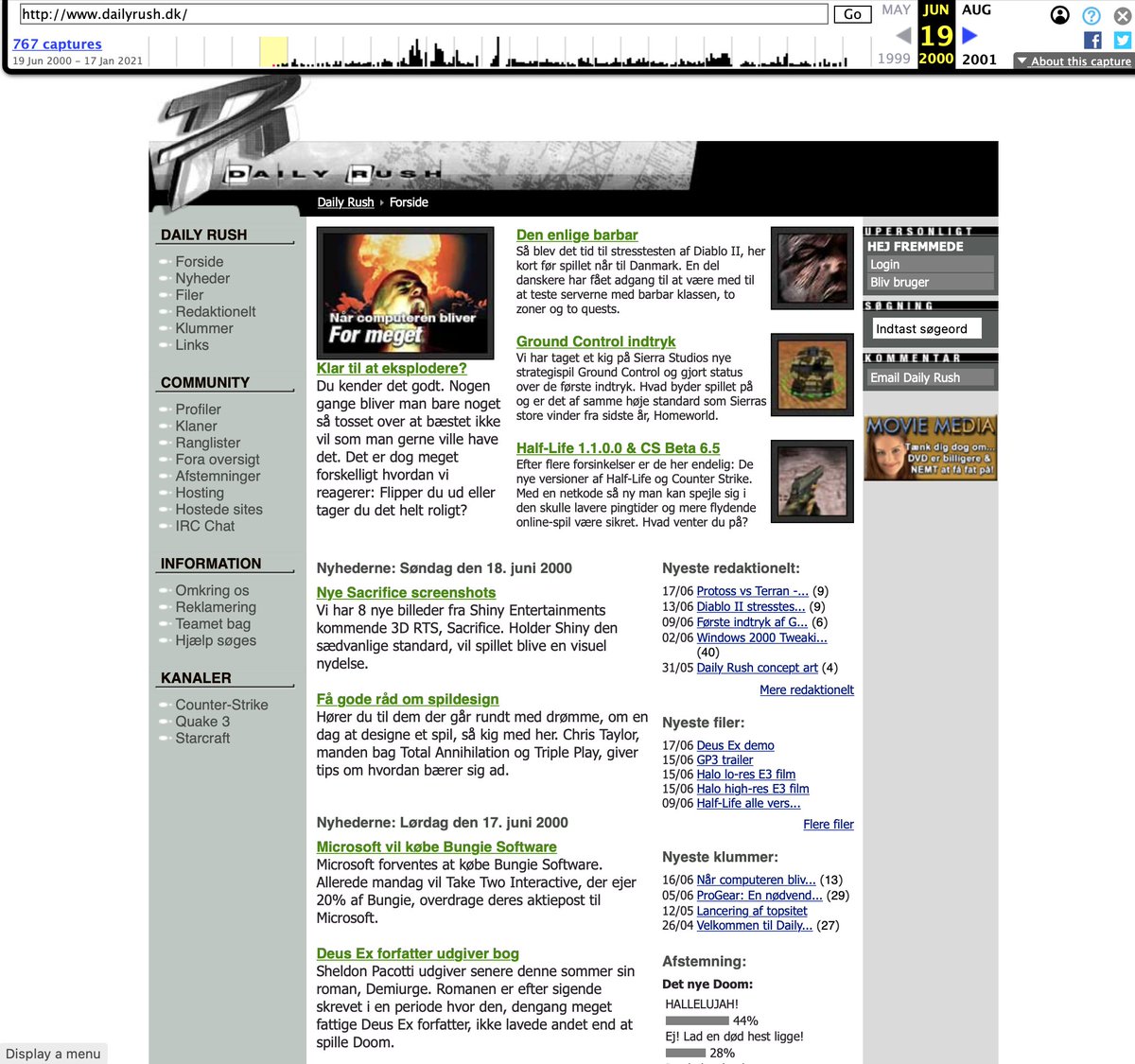
The memory lane trip on the Internet Archive goes all the way back to the precursor to Daily Rush, that https://t.co/zsT3ykQcVk site. Here's a snapshot from 1999! Complete with all the news written by yours truly 😄
Daily Rush was the culmination of years of using the web to do gaming journalism. I started Konsollen all the way back in 1995, then ran https://t.co/zsT3ykQcVk for years in anticipation of Id's shooter, then worked at a web portal, then Daily Rush.
This was how I got into web development, project management, organizing, writing, publishing, and how I met lifelong friends. What a wonderful time. But most good things come to an end. We should all be so lucky to see something we help set in the sea brave the waves for 20 yrs!
It's awesome to see the Internet Archive snapshots from all the way back to the early months of the site. Web design anno 2000 😍
The memory lane trip on the Internet Archive goes all the way back to the precursor to Daily Rush, that https://t.co/zsT3ykQcVk site. Here's a snapshot from 1999! Complete with all the news written by yours truly 😄
You May Also Like











Tip from the Monkey
Pangolins, September 2019 and PLA are the key to this mystery
Stay Tuned!

1. Yang
2. A jacobin capuchin dangling a flagellin pangolin on a javelin while playing a mandolin and strangling a mannequin on a paladin's palanquin, said Saladin
More to come tomorrow!

3. Yigang Tong
https://t.co/CYtqYorhzH
Archived: https://t.co/ncz5ruwE2W

4. YT Interview
Some bats & pangolins carry viruses related with SARS-CoV-2, found in SE Asia and in Yunnan, & the pangolins carrying SARS-CoV-2 related viruses were smuggled from SE Asia, so there is a possibility that SARS-CoV-2 were coming from
Pangolins, September 2019 and PLA are the key to this mystery
Stay Tuned!
1. Yang
Meet Yang Ruifu, CCP's biological weapons expert https://t.co/JjB9TLEO95 via @Gnews202064
— Billy Bostickson \U0001f3f4\U0001f441&\U0001f441 \U0001f193 (@BillyBostickson) October 11, 2020
Interesting expose of China's top bioweapons expert who oversaw fake pangolin research
Paper 1: https://t.co/TrXESKLYmJ
Paper 2:https://t.co/9LSJTNCn3l
Pangolinhttps://t.co/2FUAzWyOcv pic.twitter.com/I2QMXgnkBJ
2. A jacobin capuchin dangling a flagellin pangolin on a javelin while playing a mandolin and strangling a mannequin on a paladin's palanquin, said Saladin
More to come tomorrow!
3. Yigang Tong
https://t.co/CYtqYorhzH
Archived: https://t.co/ncz5ruwE2W
4. YT Interview
Some bats & pangolins carry viruses related with SARS-CoV-2, found in SE Asia and in Yunnan, & the pangolins carrying SARS-CoV-2 related viruses were smuggled from SE Asia, so there is a possibility that SARS-CoV-2 were coming from