Excerpts from the Africa Tech Startups Funding Report 2020. 🧵
°Egypt's Vezeeta - $40,000,000
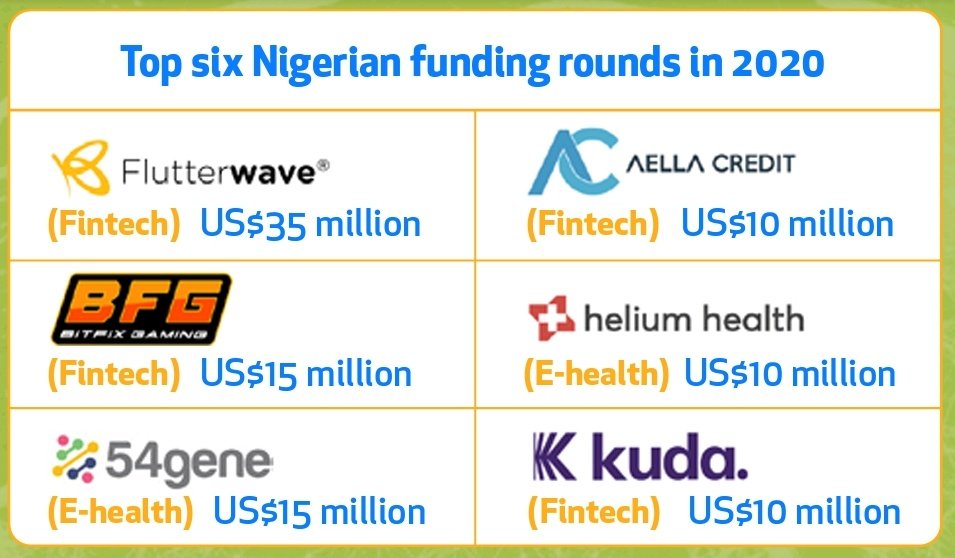
°Nigeria's Flutterwave - $35,000,000
°South Africa's Skynamo - $30,000,000
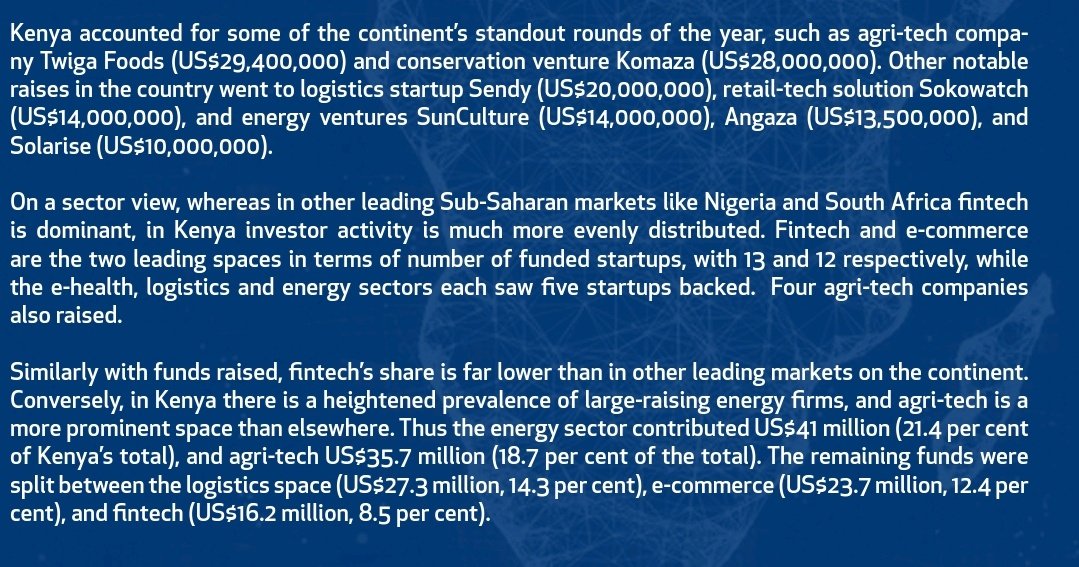
°Kenya's Twiga Foods - $29,400,000
°Kenya's Komaza - $28,000,000
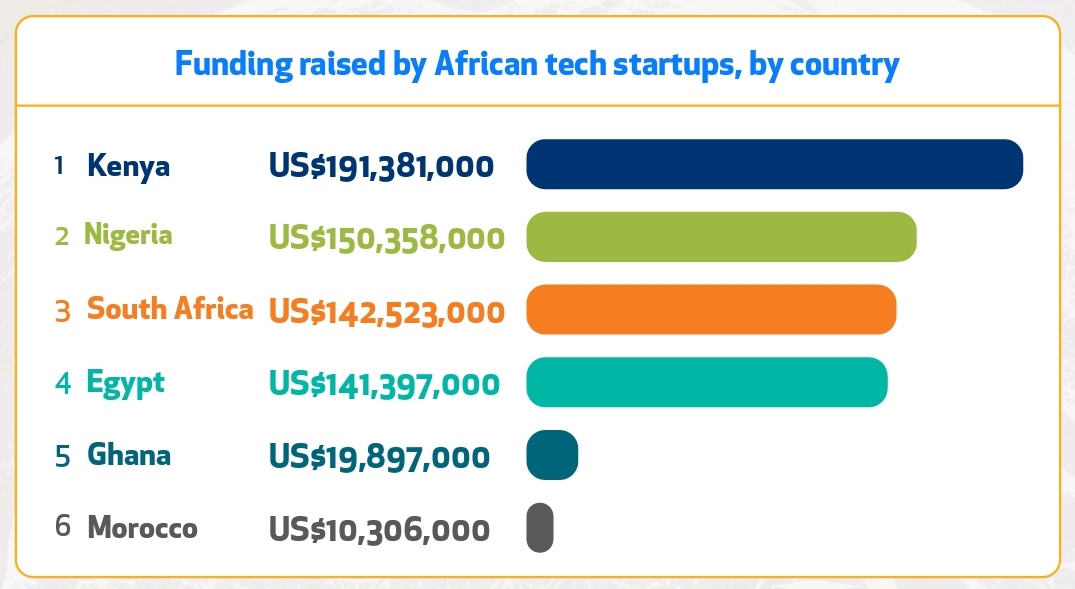

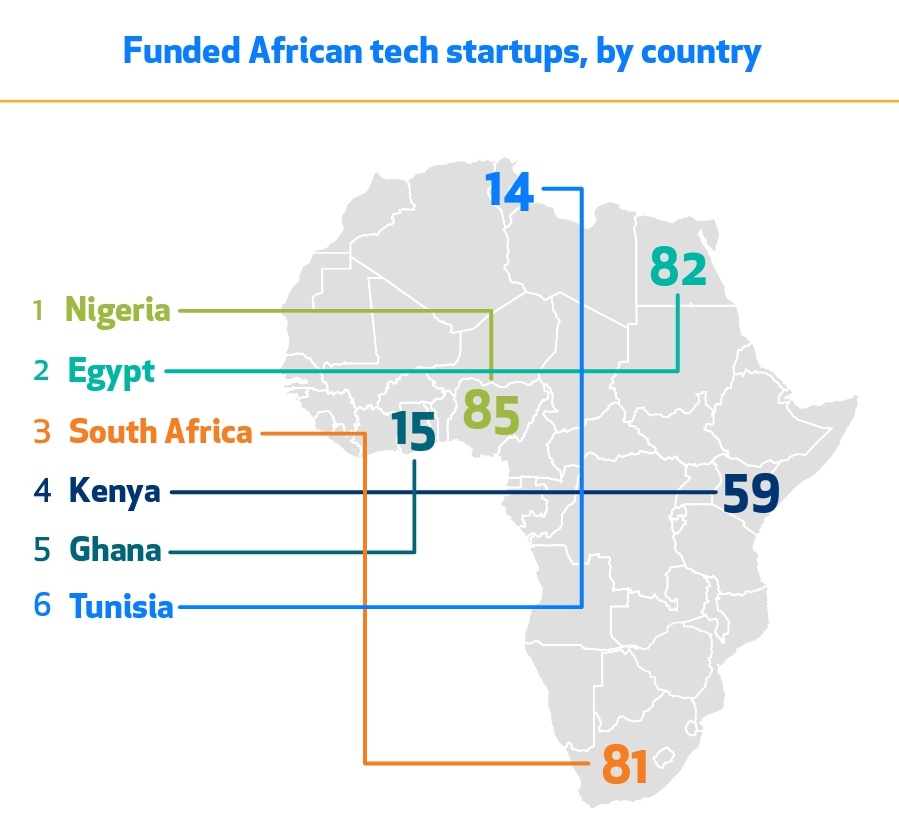
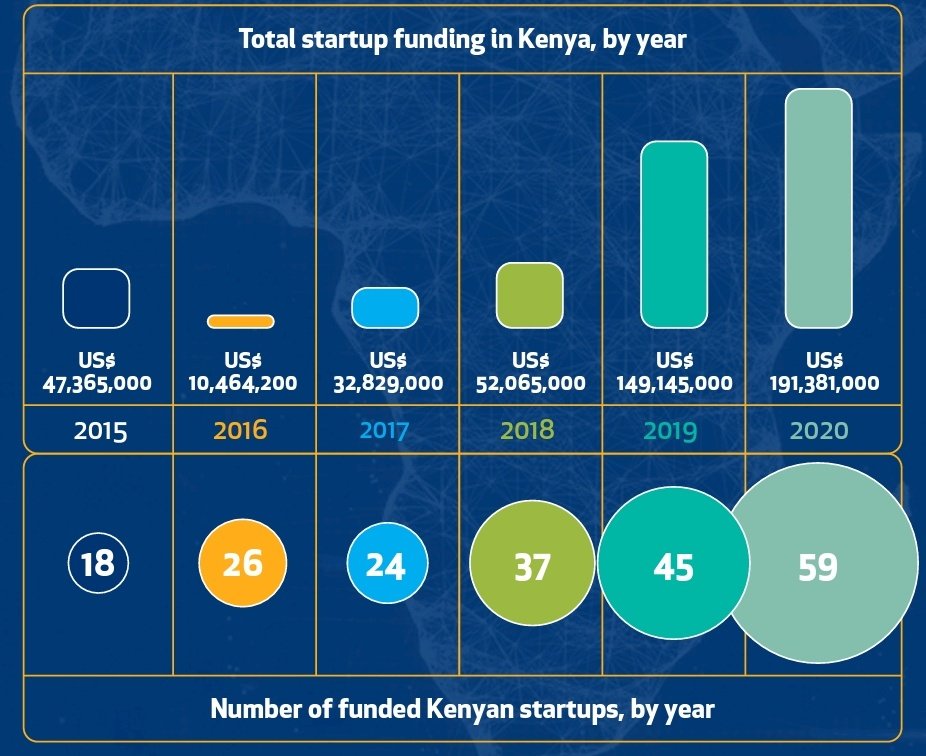
59 Kenyan startups raised a record total of $191,381,000 in funding in 2020.
Twenty two (37%) of Kenya’s funded startups raised a $1 million or more.
But the number of startups & funding is growing.
In 2020, 85 Nigerian startups raised a combined $150,358,000, ranking 2nd in Africa behind Kenya.
23 Nigerian startups raised in excess of the million dollar mark in 2020 - accounting for 27% of the country’s funded ventures.
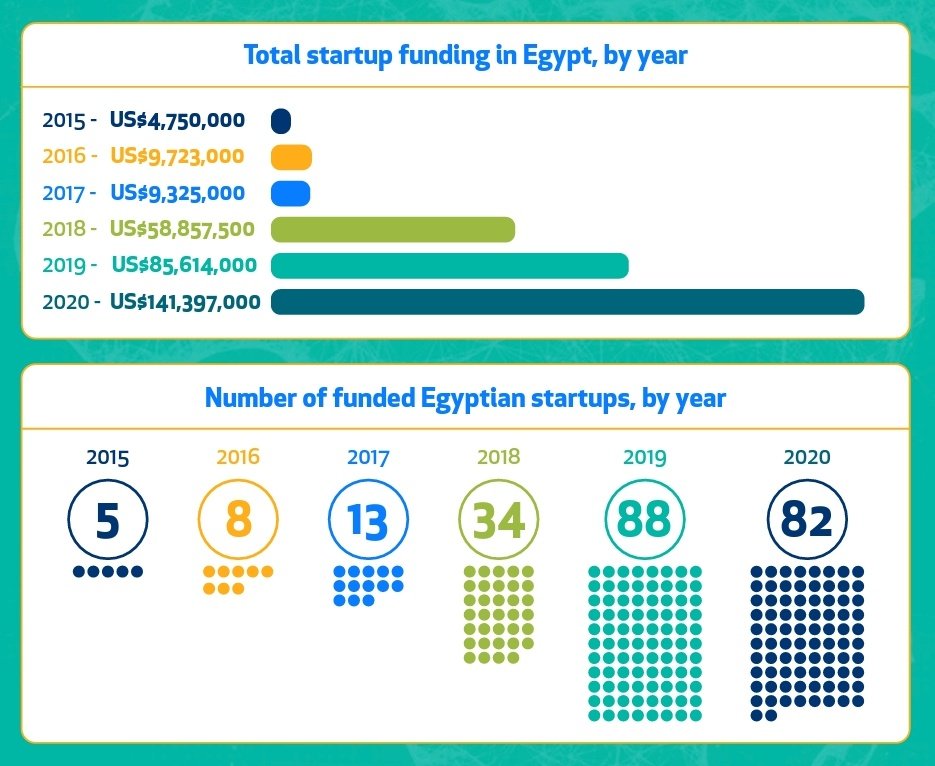
Egyptian startup ecosystem exploded in 2018, disrupting the African startup funding.
Egypt stands out across the continent in that fintech is much less a focus for investors, instead e-commerce and retail-tech are favourites.
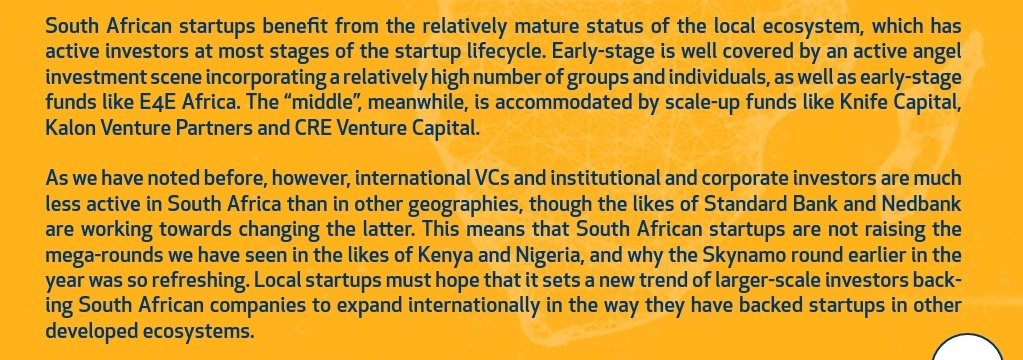
South Africa was the 3rd most attractive investment destination on the African continent in 2020, for both number of startups funded & the total investment raised.
(PS: Key in $0 as your fair price to get a free copy).
More from Startup




https://t.co/l8WgaAnWg7 launch day!
🚨 Problem: You are losing time + money building before making your first sale + validate
💡Solution: A comprehensive #nocode @NotionHQ tool with 27 validation steps with scoring to help you validate and shortcut to your first sale
🧵 👇👇

2/
With 5 validation blocks, https://t.co/ePe7HTa9of will help you understand if your idea is viable:
- Validating The Market
- Validating The Problem
- Validating The Value Proposition
- Validating The GoToMarket
- Validating The Willingness To Pay / demand

3/
Have no idea on how to validate?
Easy: Follow the 27 validation checks into 5 validation blocks. One checklist by validation block.

4/
Not sure if a block is validated?
The validation scoring will help you know if a block is validated.
Check, score, validate and move to next block.

5/
What about the execution of every step?
I've got you. Inside every check, you'll find:
- Hands-on section (action items)
- Examples/cases
- Pro Tips
- Explanations and guides
- Questions to help you think and squeeze your brain!

🚨 Problem: You are losing time + money building before making your first sale + validate
💡Solution: A comprehensive #nocode @NotionHQ tool with 27 validation steps with scoring to help you validate and shortcut to your first sale
🧵 👇👇
2/
With 5 validation blocks, https://t.co/ePe7HTa9of will help you understand if your idea is viable:
- Validating The Market
- Validating The Problem
- Validating The Value Proposition
- Validating The GoToMarket
- Validating The Willingness To Pay / demand
3/
Have no idea on how to validate?
Easy: Follow the 27 validation checks into 5 validation blocks. One checklist by validation block.
4/
Not sure if a block is validated?
The validation scoring will help you know if a block is validated.
Check, score, validate and move to next block.
5/
What about the execution of every step?
I've got you. Inside every check, you'll find:
- Hands-on section (action items)
- Examples/cases
- Pro Tips
- Explanations and guides
- Questions to help you think and squeeze your brain!



>> How To Start a Lead Gen Agency <<
This step-by-step process will help you sign $5K - $20K clients in NO TIME.
Learn how to:
✅ Find Leads
✅ Book Meetings
✅ Sign Clients
✅ Scale Processes
// 𝐓𝐇𝐑𝐄𝐀𝐃 //

1/ Make sure you understand the lead gen process.
You NEED to know your shit before you pitch ANYTHING.
A few services you can offer to generate leads:
> Cold email
> LinkedIn outreach
> Facebook ads
> SEO
The list goes on.
Just perfect one of them & you’re SOLID.
2/ Find a niche to pitch your services to.
NICHE DOWN.
Use this doc to find an “untapped” niche:
https://t.co/aYptSNsZw6
I’d suggest choosing 1-3 to start with.
& focus ONLY on these.
3/ Find leads for outreach:
Sign up for a free @IcyLeads account at https://t.co/mz2kYnEko1 to find key decision-maker contact emails for outreach.
You can find emails from the list of niches provided above & filter out job titles such as:
> CEO
> Founder
> Marketing
Etc.
4/ Once you have a list of leads to pitch your services to:
It’s time to write your cold email outreach sequences.
Your cold emails should speak DIRECTLY to the prospect you’re reaching out to.
You can find some winning cold email templates
This step-by-step process will help you sign $5K - $20K clients in NO TIME.
Learn how to:
✅ Find Leads
✅ Book Meetings
✅ Sign Clients
✅ Scale Processes
// 𝐓𝐇𝐑𝐄𝐀𝐃 //
1/ Make sure you understand the lead gen process.
You NEED to know your shit before you pitch ANYTHING.
A few services you can offer to generate leads:
> Cold email
> LinkedIn outreach
> Facebook ads
> SEO
The list goes on.
Just perfect one of them & you’re SOLID.
2/ Find a niche to pitch your services to.
NICHE DOWN.
Use this doc to find an “untapped” niche:
https://t.co/aYptSNsZw6
I’d suggest choosing 1-3 to start with.
& focus ONLY on these.
3/ Find leads for outreach:
Sign up for a free @IcyLeads account at https://t.co/mz2kYnEko1 to find key decision-maker contact emails for outreach.
You can find emails from the list of niches provided above & filter out job titles such as:
> CEO
> Founder
> Marketing
Etc.
4/ Once you have a list of leads to pitch your services to:
It’s time to write your cold email outreach sequences.
Your cold emails should speak DIRECTLY to the prospect you’re reaching out to.
You can find some winning cold email templates
You May Also Like





I just finished Eric Adler's The Battle of the Classics, and wanted to say something about Joel Christiansen's review linked below. I am not sure what motivates the review (I speculate a bit below), but it gives a very misleading impression of the book. 1/x
The meat of the criticism is that the history Adler gives is insufficiently critical. Adler describes a few figures who had a great influence on how the modern US university was formed. It's certainly critical: it focuses on the social Darwinism of these figures. 2/x
Other insinuations and suggestions in the review seem wildly off the mark, distorted, or inappropriate-- for example, that the book is clickbaity (it is scholarly) or conservative (hardly) or connected to the events at the Capitol (give me a break). 3/x
The core question: in what sense is classics inherently racist? Classics is old. On Adler's account, it begins in ancient Rome and is revived in the Renaissance. Slavery (Christiansen's primary concern) is also very old. Let's say classics is an education for slaveowners. 4/x
It's worth remembering that literacy itself is elite throughout most of this history. Literacy is, then, also the education of slaveowners. We can honor oral and musical traditions without denying that literacy is, generally, good. 5/x
As someone\u2019s who\u2019s read the book, this review strikes me as tremendously unfair. It mostly faults Adler for not writing the book the reviewer wishes he had! https://t.co/pqpt5Ziivj
— Teresa M. Bejan (@tmbejan) January 12, 2021
The meat of the criticism is that the history Adler gives is insufficiently critical. Adler describes a few figures who had a great influence on how the modern US university was formed. It's certainly critical: it focuses on the social Darwinism of these figures. 2/x
Other insinuations and suggestions in the review seem wildly off the mark, distorted, or inappropriate-- for example, that the book is clickbaity (it is scholarly) or conservative (hardly) or connected to the events at the Capitol (give me a break). 3/x
The core question: in what sense is classics inherently racist? Classics is old. On Adler's account, it begins in ancient Rome and is revived in the Renaissance. Slavery (Christiansen's primary concern) is also very old. Let's say classics is an education for slaveowners. 4/x
It's worth remembering that literacy itself is elite throughout most of this history. Literacy is, then, also the education of slaveowners. We can honor oral and musical traditions without denying that literacy is, generally, good. 5/x