14 mental models that helped me build 10 startups and sell (a bunch of them) for millions.

1) Serviceable Obtainable Market (SOM)

Everyone focuses on the Total Addressable Market (TAM), which gives an unrealistic expectation of your market size.

Instead SOM gives you a more practical estimate.
2) Viral Coefficient

Is the number of new users an average customer generates and a strong indicator of how highly your users like your product.

The higher your viral coefficient, the cheaper your acquisition costs.
3) Beta Testing

The process of exposing your users to different versions of the product/ messaging to determine the most effective one.

All top companies do this on a regular basis.
4) Conversion Funnel

The different stages that a buyer goes through before making a purchase.

Understanding what stage they're in helps you strategize your marketing accordingly.
5) Go-To-Market (GTM) Strategy

A comprehensive step-by-step plan that companies deploy to bring a new product/ service into the market.
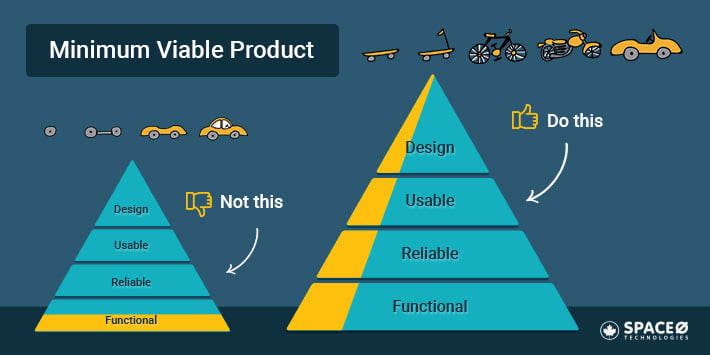
6) Minimum Viable Product (MVP)

The basic version of your product with core functionality that's just enough to launch and gather feedback.
7) Market Penetration

A measure of how much your product/ service is being used relative to the total market.

Eg: Netflix has a 21% share in the streaming services market in the US.
8) Engagement Loop

The activities that a user performs repeatedly while engaging with your app, reinforcing them to use it again, and again.
9) Customer Journey Map

It comprises the different touchpoints that take a person from a complete stranger into a happy customer.
10) LTV:CAC Ratio

It measures how much a customer is worth relative to the cost of acquisition.

If it's less than 1, you're burning your cash by bringing in more customers.
11) Churn Rate

The percentage of customers who cancel/quit your product relative to the total number of customers.

To increase LTV, you need to have a lower churn rate.
12) Value Gap Canvas

The gap that exists between a user's problem and the value delivered by the solution.

The higher the gap, the more you can charge.
13) Moment of Truth

Refers to the interaction that makes the users realize the value of the product or causes them to change their impression of the brand.
14) Exit Strategy

A plan designed to help owners/ shareholders sell their ownership partially/ completely.
Please RT the first tweet if you've found this helpful :) https://t.co/Af3aghLGW5

More from Startup

You May Also Like

"I lied about my basic beliefs in order to keep a prestigious job. Now that it will be zero-cost to me, I have a few things to say."


We know that elite institutions like the one Flier was in (partial) charge of rely on irrelevant status markers like private school education, whiteness, legacy, and ability to charm an old white guy at an interview.

Harvard's discriminatory policies are becoming increasingly well known, across the political spectrum (see, e.g., the recent lawsuit on discrimination against East Asian applications.)

It's refreshing to hear a senior administrator admits to personally opposing policies that attempt to remedy these basic flaws. These are flaws that harm his institution's ability to do cutting-edge research and to serve the public.

Harvard is being eclipsed by institutions that have different ideas about how to run a 21st Century institution. Stanford, for one; the UC system; the "public Ivys".
“We don’t negotiate salaries” is a negotiation tactic.

Always. No, your company is not an exception.

A tactic I don’t appreciate at all because of how unfairly it penalizes low-leverage, junior employees, and those loyal enough not to question it, but that’s negotiation for you after all. Weaponized information asymmetry.

Listen to Aditya


And by the way, you should never be worried that an offer would be withdrawn if you politely negotiate.

I have seen this happen *extremely* rarely, mostly to women, and anyway is a giant red flag. It suggests you probably didn’t want to work there.

You wish there was no negotiating so it would all be more fair? I feel you, but it’s not happening.

Instead, negotiate hard, use your privilege, and then go and share numbers with your underrepresented and underpaid colleagues. […]