

Marseille’s Morgan Sanson is the latest rumoured Villa signing, with a number of respected outlets reporting the signing today, but what can the midfielder bring to Villa Park, and where would he fit into the side?


More from Sport






Watching this play sent me down a memory hole that gave me goosebumps as well as a pang of guilt. Let me explain. A THREAD!
In 2011, I was hosting the ESPYs. Marshawn’s run was nominated for Best Play, an award that was voted on by fans online. It was considered a front runner if not a lock.
Two days before the show, we're all watching the US/Brazil game in the Women’s World Cup. In the 122 minute Abby Wambach scored a header from a brilliant cross via Megan Rapinoe. I asked ESPN’s estimable producer, the late, great Maura Mandt if we could add it to the nominees.
The best thing about the ESPYs is, unlike other award shows that take themselves too seriously, there is a “fuck it, why not” attitude so Maura just made it happen. Maura was great at making things happen. Want another example?
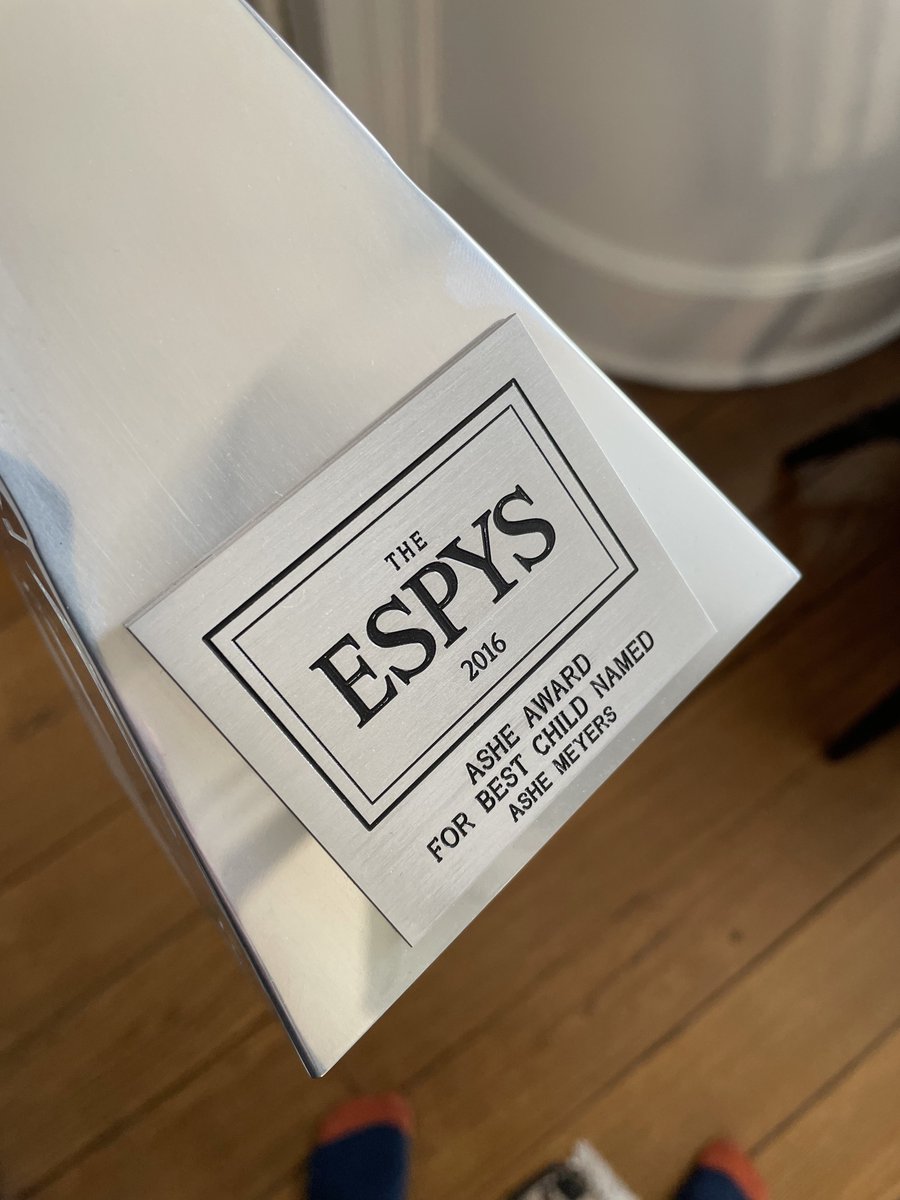
One of the highlights of the ESPYs is the Arthur Ashe Courage Award. When my son Ashe was born Maura gifted him this fake ESPY for BEST CHILD NAMED ASHE. I am confident this is the only ESPY anyone related to me will ever win.
Exactly a decade ago today, Marshawn Lynch caused a Beast Quake.
— Field Yates (@FieldYates) January 8, 2021
One of the most memorable runs in NFL history. pic.twitter.com/VBb8Lc0yGW
In 2011, I was hosting the ESPYs. Marshawn’s run was nominated for Best Play, an award that was voted on by fans online. It was considered a front runner if not a lock.
Two days before the show, we're all watching the US/Brazil game in the Women’s World Cup. In the 122 minute Abby Wambach scored a header from a brilliant cross via Megan Rapinoe. I asked ESPN’s estimable producer, the late, great Maura Mandt if we could add it to the nominees.
The best thing about the ESPYs is, unlike other award shows that take themselves too seriously, there is a “fuck it, why not” attitude so Maura just made it happen. Maura was great at making things happen. Want another example?
One of the highlights of the ESPYs is the Arthur Ashe Courage Award. When my son Ashe was born Maura gifted him this fake ESPY for BEST CHILD NAMED ASHE. I am confident this is the only ESPY anyone related to me will ever win.

It's Sunday, Fed blackout, am recovering from soccer match, sipping on double espresso, so of course a perfect time to take on Tyler Cowen here. 🙂
Like many people, I enjoy reading Tyler's blog. But there are times (alright, many times) I disagree with him. This is no big deal. I also disagree with myself sometimes (especially my past self). But his recent post left me
What is he trying to say here? After thinking about it for a bit, I think he's critiquing the idea that "running the economy hot" leads to employment *and* real wage gains. Perhaps the former, but only at the expense of the latter. At least, this is what a textbook IS-LM model
tells us if one "runs the economy hot" through increased fiscal stimulus (on consumption and transfers, not public infrastructure investment). If this is what he meant, then he should have just said so, instead of labeling this a "Keynesian" proposition.
In fact, this property follows as a *neoclassical* proposition that is embedded in the IS-LM framework. (For non-economists, note that Keynes did not invent IS-LM; the framework was developed later by Hicks as an interpretation of *some* parts of the General Theory.)
It is hardly phony, especially on social media, to refer to IS-LM models and the like as \u201cKeynesian.\u201d Krugman pushing it and, for better or worse, rising in popularity.
— tylercowen (@tylercowen) January 17, 2021
Like many people, I enjoy reading Tyler's blog. But there are times (alright, many times) I disagree with him. This is no big deal. I also disagree with myself sometimes (especially my past self). But his recent post left me
What is he trying to say here? After thinking about it for a bit, I think he's critiquing the idea that "running the economy hot" leads to employment *and* real wage gains. Perhaps the former, but only at the expense of the latter. At least, this is what a textbook IS-LM model
tells us if one "runs the economy hot" through increased fiscal stimulus (on consumption and transfers, not public infrastructure investment). If this is what he meant, then he should have just said so, instead of labeling this a "Keynesian" proposition.
In fact, this property follows as a *neoclassical* proposition that is embedded in the IS-LM framework. (For non-economists, note that Keynes did not invent IS-LM; the framework was developed later by Hicks as an interpretation of *some* parts of the General Theory.)
You May Also Like














A brief analysis and comparison of the CSS for Twitter's PWA vs Twitter's legacy desktop website. The difference is dramatic and I'll touch on some reasons why.
Legacy site *downloads* ~630 KB CSS per theme and writing direction.
6,769 rules
9,252 selectors
16.7k declarations
3,370 unique declarations
44 media queries
36 unique colors
50 unique background colors
46 unique font sizes
39 unique z-indices
https://t.co/qyl4Bt1i5x

PWA *incrementally generates* ~30 KB CSS that handles all themes and writing directions.
735 rules
740 selectors
757 declarations
730 unique declarations
0 media queries
11 unique colors
32 unique background colors
15 unique font sizes
7 unique z-indices
https://t.co/w7oNG5KUkJ

The legacy site's CSS is what happens when hundreds of people directly write CSS over many years. Specificity wars, redundancy, a house of cards that can't be fixed. The result is extremely inefficient and error-prone styling that punishes users and developers.
The PWA's CSS is generated on-demand by a JS framework that manages styles and outputs "atomic CSS". The framework can enforce strict constraints and perform optimisations, which is why the CSS is so much smaller and safer. Style conflicts and unbounded CSS growth are avoided.
Legacy site *downloads* ~630 KB CSS per theme and writing direction.
6,769 rules
9,252 selectors
16.7k declarations
3,370 unique declarations
44 media queries
36 unique colors
50 unique background colors
46 unique font sizes
39 unique z-indices
https://t.co/qyl4Bt1i5x
PWA *incrementally generates* ~30 KB CSS that handles all themes and writing directions.
735 rules
740 selectors
757 declarations
730 unique declarations
0 media queries
11 unique colors
32 unique background colors
15 unique font sizes
7 unique z-indices
https://t.co/w7oNG5KUkJ
The legacy site's CSS is what happens when hundreds of people directly write CSS over many years. Specificity wars, redundancy, a house of cards that can't be fixed. The result is extremely inefficient and error-prone styling that punishes users and developers.
The PWA's CSS is generated on-demand by a JS framework that manages styles and outputs "atomic CSS". The framework can enforce strict constraints and perform optimisations, which is why the CSS is so much smaller and safer. Style conflicts and unbounded CSS growth are avoided.