
Here is a synopsis of a situation outside of our place in DC Saturday night and some things to think about going forward about the limits of policing. (1/?)
I'd imagine description would read something like: B/M, 6'0", 30s, grey hoodie, black pants, pacing & yelling in threatening manner.
Even though his pockets were even bulgy from a distance and he kept putting his hands in his pockets, no officer I saw made any move for their weapon
-People sometimes get out of control (OOC) and someone needs to respond to put others at ease.
-The reasons people get OOC are myriad and often point to systemic social failures.
-Some cops/PDs handle these situations well, while others predictably resort to unnecessary violence. Because of the latter, it's reasonable to think twice before calling for help for OOC folks.
-The cops recognize these issues too and get frustrated that they don't have tools to address underlying issues
So here I am, looking out my window, staring at a situation that I knew someone would call 911 to address sooner or later & hoping right cops responded.
Societally, we're failing our most vulnerable neighbors and generally don't care until they're having breakdowns outside of our homes, when we then call armed men to end it.
There is nothing anti-cop in saying & recognizing this basic truth. Sure, a few people will always get OOC, but we have a lot more OOC folks than we should
1-thank you MPD officers for not escalating an unfortunate situation
2-this is not a long-term solution for the man in question and the countless folks like him around the country.
Many day-to-day policing choices do nothing to improve community well-being, and the defund/abolish folks are right about that too.
More from Society


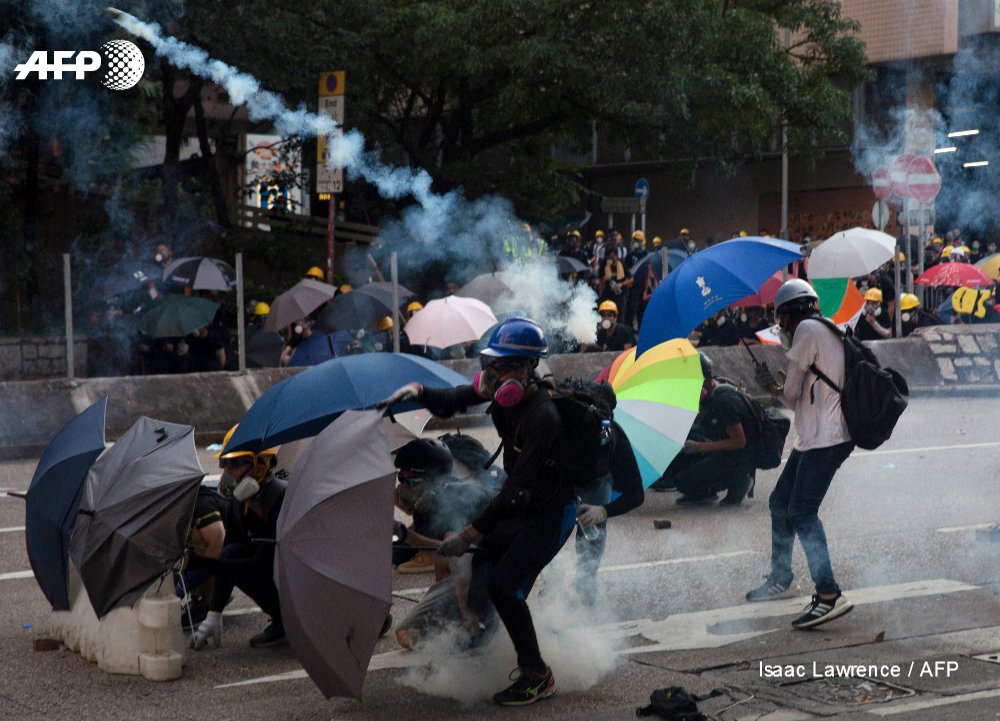
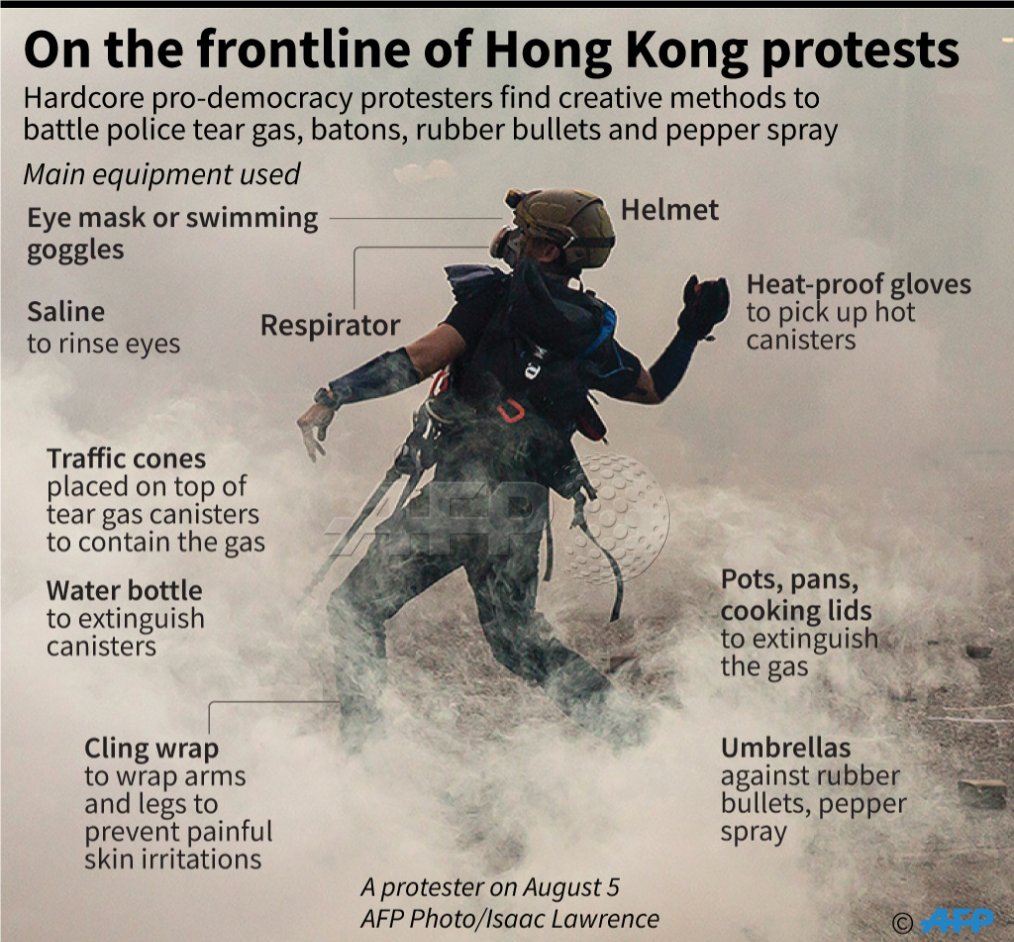
Hong Kong protester equipment list:
- respirator (dubbed "pig snouts" in Cantonese)
- helmet
- eye mask
- heat-proof gloves
- water bottle
- cling wrap
- saline
- traffic cones
- pots and pans
Demonstrators find creative methods to battle police tear gas
https://t.co/kPeUTu9iFh
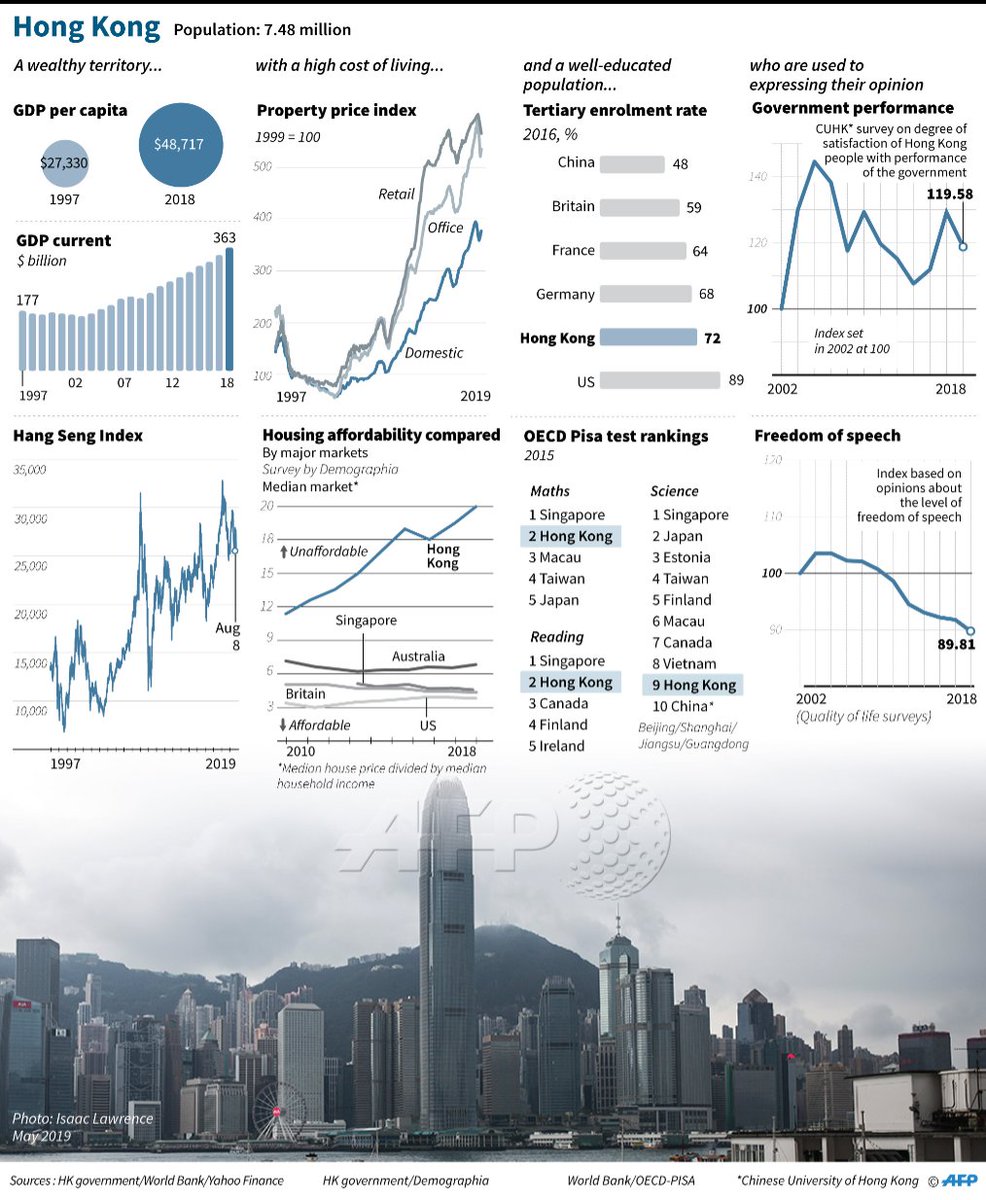
AFP graphic charting Hong Kong's main socio-economic indicators and opinion polls on press freedom and government performance
@AFPgraphics
AFP graphic showing the main equipment used by hardcore pro-democracy protesters in Hong Kong to battle police tear gas, pepper spray and rubber bullets
@AFPgraphics
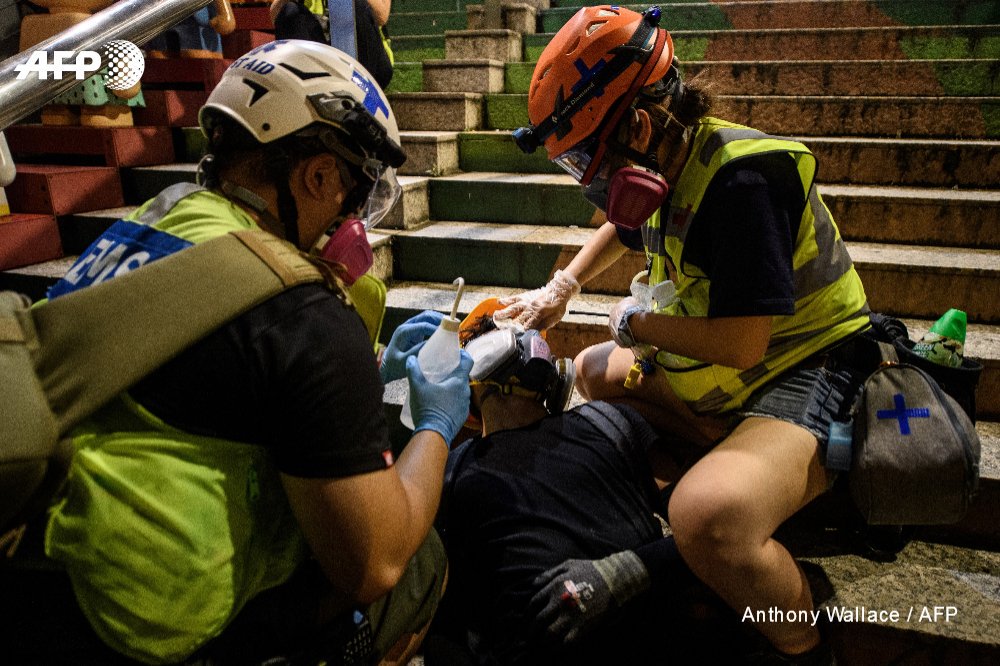
Frontline first aid.
Nurses, doctors, medical students and ordinary citizens with first aid training have clamoured to join a small volunteer corps helping treat people involved in the Hong Kong protests
@AFP's Yan Zhao reports: https://t.co/uDfYkMeZJf
📸 Anthony Wallace
Pro-democracy activists kick off three days of rallies at Hong Kong airport.
Protesters hope to win international support from arriving passengers. The last demonstration at the airport on July 26 passed off peacefully without causing flight disruptions
https://t.co/jmVqtEd4M2

- respirator (dubbed "pig snouts" in Cantonese)
- helmet
- eye mask
- heat-proof gloves
- water bottle
- cling wrap
- saline
- traffic cones
- pots and pans
Demonstrators find creative methods to battle police tear gas
https://t.co/kPeUTu9iFh
AFP graphic charting Hong Kong's main socio-economic indicators and opinion polls on press freedom and government performance
@AFPgraphics
AFP graphic showing the main equipment used by hardcore pro-democracy protesters in Hong Kong to battle police tear gas, pepper spray and rubber bullets
@AFPgraphics
Frontline first aid.
Nurses, doctors, medical students and ordinary citizens with first aid training have clamoured to join a small volunteer corps helping treat people involved in the Hong Kong protests
@AFP's Yan Zhao reports: https://t.co/uDfYkMeZJf
📸 Anthony Wallace
Pro-democracy activists kick off three days of rallies at Hong Kong airport.
Protesters hope to win international support from arriving passengers. The last demonstration at the airport on July 26 passed off peacefully without causing flight disruptions
https://t.co/jmVqtEd4M2


You May Also Like

Oh my Goodness!!!
I might have a panic attack due to excitement!!
Read this thread to the end...I just had an epiphany and my mind is blown. Actually, more than blown. More like OBLITERATED! This is the thing! This is the thing that will blow the entire thing out of the water!
Has this man been concealing his true identity?
Is this man a supposed 'dead' Seal Team Six soldier?
Witness protection to be kept safe until the right moment when all will be revealed?!
Who ELSE is alive that may have faked their death/gone into witness protection?

Were "golden tickets" inside the envelopes??

Are these "golden tickets" going to lead to their ultimate undoing?
Review crumbs on the board re: 'gold'.

#SEALTeam6 Trump re-tweeted this.

I might have a panic attack due to excitement!!
Read this thread to the end...I just had an epiphany and my mind is blown. Actually, more than blown. More like OBLITERATED! This is the thing! This is the thing that will blow the entire thing out of the water!
Tik Tok pic.twitter.com/8X3oMxvncP
— Scotty Mar10 (@Allenma15086871) December 29, 2020
Has this man been concealing his true identity?
Is this man a supposed 'dead' Seal Team Six soldier?
Witness protection to be kept safe until the right moment when all will be revealed?!
Who ELSE is alive that may have faked their death/gone into witness protection?
Were "golden tickets" inside the envelopes??
Are these "golden tickets" going to lead to their ultimate undoing?
Review crumbs on the board re: 'gold'.
#SEALTeam6 Trump re-tweeted this.


Neo-nazi group #PatriotFront held a photo op in #Chicago last weekend & is currently marching around #DC so it's as good time as any to compile a list of their identified members for folks to watch for
Who are these chuds?
Patriot Front broke away from white nationalist org Vanguard America following #unitetheright in #charlottesville after James Alex Fields was seen with a VA shield before driving his car into a crowd, murdering Heather Heyer & injuring dozens of others
Syed Robbie Javid a.k.a. Sayed Robbie Javid or Robbie Javid of Alexandria,
Antoine Bernard Renard (a.k.a. “Charlemagne MD” on Discord) from Rockville, MD.
https://t.co/ykEjdZFDi6
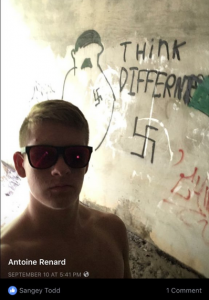
Brandon Troy Higgs, 25, from Reisterstown,
Who are these chuds?
Patriot Front broke away from white nationalist org Vanguard America following #unitetheright in #charlottesville after James Alex Fields was seen with a VA shield before driving his car into a crowd, murdering Heather Heyer & injuring dozens of others
Syed Robbie Javid a.k.a. Sayed Robbie Javid or Robbie Javid of Alexandria,
Happy Monday everyone :-) Let's ring in September by reacquainting ourselves with Virginia neo-Nazi and NSC Dixie affiliate Sayed "Robbie" Javid, now known by "Reform the States". Robbie is an explicitly genocidal neo-Nazi, so lets get to know him a bit better!
— Garfield but Anti-Fascist (@AntifaGarfield) August 31, 2020
CW on this thread pic.twitter.com/3gzxrIo9HD
Antoine Bernard Renard (a.k.a. “Charlemagne MD” on Discord) from Rockville, MD.
https://t.co/ykEjdZFDi6
Brandon Troy Higgs, 25, from Reisterstown,


"I lied about my basic beliefs in order to keep a prestigious job. Now that it will be zero-cost to me, I have a few things to say."
We know that elite institutions like the one Flier was in (partial) charge of rely on irrelevant status markers like private school education, whiteness, legacy, and ability to charm an old white guy at an interview.
Harvard's discriminatory policies are becoming increasingly well known, across the political spectrum (see, e.g., the recent lawsuit on discrimination against East Asian applications.)
It's refreshing to hear a senior administrator admits to personally opposing policies that attempt to remedy these basic flaws. These are flaws that harm his institution's ability to do cutting-edge research and to serve the public.
Harvard is being eclipsed by institutions that have different ideas about how to run a 21st Century institution. Stanford, for one; the UC system; the "public Ivys".
As a dean of a major academic institution, I could not have said this. But I will now. Requiring such statements in applications for appointments and promotions is an affront to academic freedom, and diminishes the true value of diversity, equity of inclusion by trivializing it. https://t.co/NfcI5VLODi
— Jeffrey Flier (@jflier) November 10, 2018
We know that elite institutions like the one Flier was in (partial) charge of rely on irrelevant status markers like private school education, whiteness, legacy, and ability to charm an old white guy at an interview.
Harvard's discriminatory policies are becoming increasingly well known, across the political spectrum (see, e.g., the recent lawsuit on discrimination against East Asian applications.)
It's refreshing to hear a senior administrator admits to personally opposing policies that attempt to remedy these basic flaws. These are flaws that harm his institution's ability to do cutting-edge research and to serve the public.
Harvard is being eclipsed by institutions that have different ideas about how to run a 21st Century institution. Stanford, for one; the UC system; the "public Ivys".