I literally got no help. This is not about me, I'm telling this from a general 3rd person view.
It's been 2.5 years now since I'm on antidepressants and many people closely related to me still believe that depression is something that's "just in the head"
Our society needs to seriously rethink of mental health. Our society needs to be educated
I literally got no help. This is not about me, I'm telling this from a general 3rd person view.
Loads of toxic positivity
https://t.co/v4W2eiOap4
Yes, \U0001d5fd\U0001d5fc\U0001d600\U0001d5f6\U0001d601\U0001d5f6\U0001d603\U0001d5f6\U0001d601\U0001d606 can be \U0001d601\U0001d5fc\U0001d605\U0001d5f6\U0001d5f0
— Atharva Kharbade (@athrvakhrbde) September 25, 2020
Before you let your ignorance kick in and make you laugh out loud, try seeing life with a new perspective
No BS
A thread...
Read this if you use sentences like "Good vibes only" or "Just be positive and stay happy"
Had to face direct insults, as everyone accepted me as a gone case.
Didn't know back then that I was following clinical depression symptoms pattern
I'm not saying there's not way put of depression, I'm saying there's no one to take you out, or even diagnose you of a condition
If you don't even know that you have cancer, how in the world will you call cancer helpline?
As I told you, unlike cancer, if anyone sees depression's symptoms in you, they'll mostly take you to slums to show examples
If you say, like few people said to me, that it is acceptable that a handful will give in a huge competition, you should consult a psychiatrist
More from Atharva Kharbade
This is the story of a guy named Alex, who made $1 million in just 5 months by selling pixels of his website's homepage, when he was broke
16 years later, now he's the CEO of a company worth more than $2 billion
Thread ↓
1/
Year 2005
Alex has no money in his bank account, and just after 1 month his classes at a three-year university are gonna begin.
Being really determined to avoid student debt, he pulls an all nighter to brainstorm on a question, "How can I become a millionaire"
2/
Twenty minutes later, he had his answer: Sell one million pixels of advertising space on a website for $1 each.
"I thought, 'This is one of those crazy, quirky ideas, but it just might work.I've got nothing to lose.' " says Alex.
3/
Tew already had some experience with website design, so with a paltry $100, he quickly bought a domain name and some basic web hosting services and had his website, https://t.co/APDYhSjFTQ, up and running in two days.
4/
The concept was simple: Businesses could buy 10x10 or larger blocks of advertising space for a $1 per pixel and place their logos and links on his site.
16 years later, now he's the CEO of a company worth more than $2 billion
Thread ↓
1/
Year 2005
Alex has no money in his bank account, and just after 1 month his classes at a three-year university are gonna begin.
Being really determined to avoid student debt, he pulls an all nighter to brainstorm on a question, "How can I become a millionaire"
2/
Twenty minutes later, he had his answer: Sell one million pixels of advertising space on a website for $1 each.
"I thought, 'This is one of those crazy, quirky ideas, but it just might work.I've got nothing to lose.' " says Alex.
3/
Tew already had some experience with website design, so with a paltry $100, he quickly bought a domain name and some basic web hosting services and had his website, https://t.co/APDYhSjFTQ, up and running in two days.
4/
The concept was simple: Businesses could buy 10x10 or larger blocks of advertising space for a $1 per pixel and place their logos and links on his site.


More from Society

The UN just voted to condemn Israel 9 times, and the rest of the world 0.
View the resolutions and voting results here:
The resolution titled "The occupied Syrian Golan," which condemns Israel for "repressive measures" against Syrian citizens in the Golan Heights, was adopted by a vote of 151 - 2 - 14.
Israel and the U.S. voted 'No' https://t.co/HoO7oz0dwr
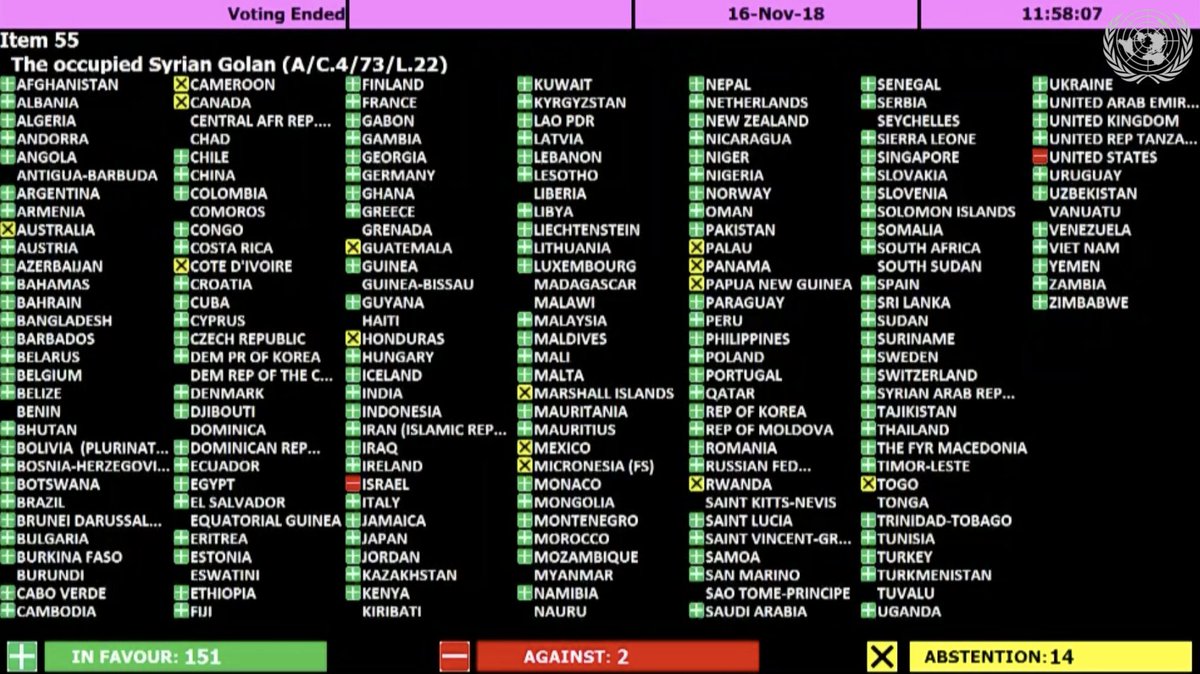
The resolution titled "Israeli practices affecting the human rights of the Palestinian people..." was adopted by a vote of 153 - 6 - 9.
Australia, Canada, Israel, Marshall Islands, Micronesia, and the U.S. voted 'No' https://t.co/1Ntpi7Vqab
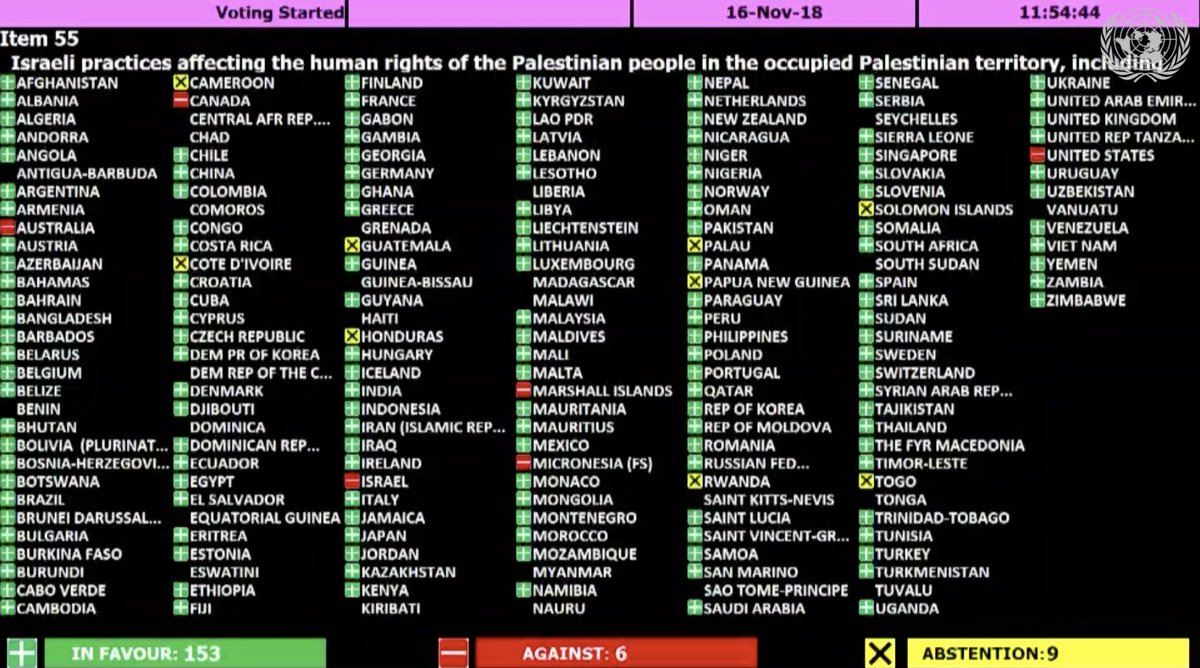
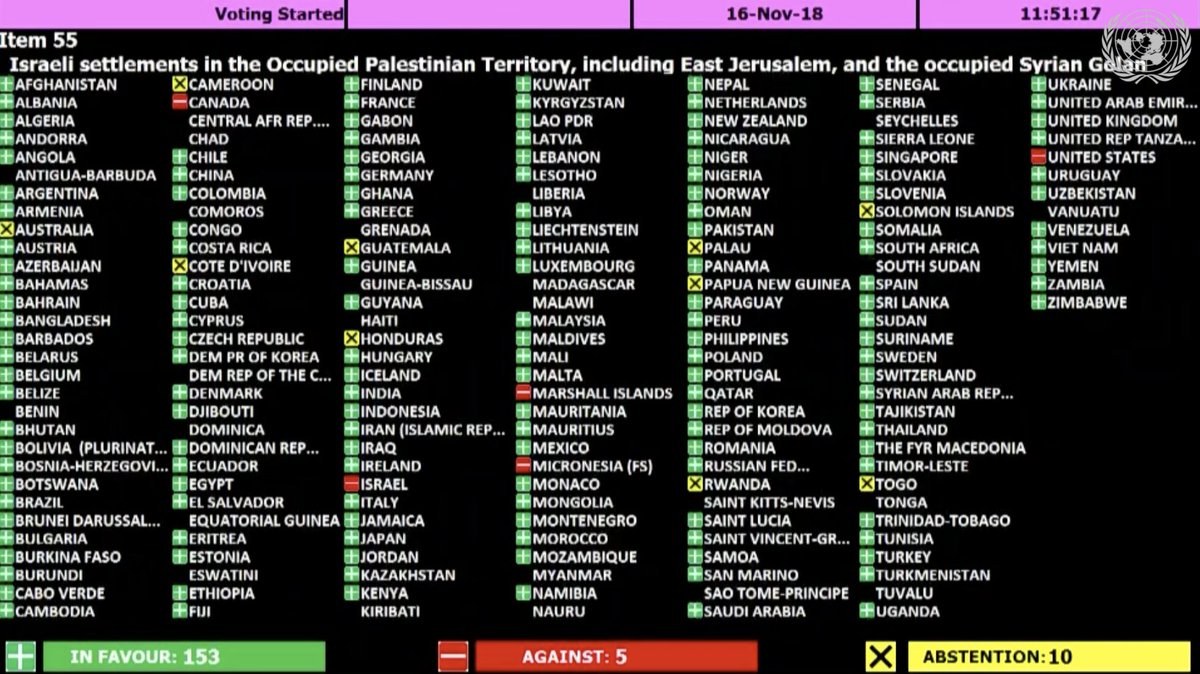
The resolution titled "Israeli settlements in the Occupied Palestinian Territory, including East Jerusalem, and the occupied Syrian Golan" was adopted by a vote of 153 – 5 – 10.
Canada, Israel, Marshall Islands, Micronesia, and the U.S. voted 'No'
https://t.co/REumYgyRuF
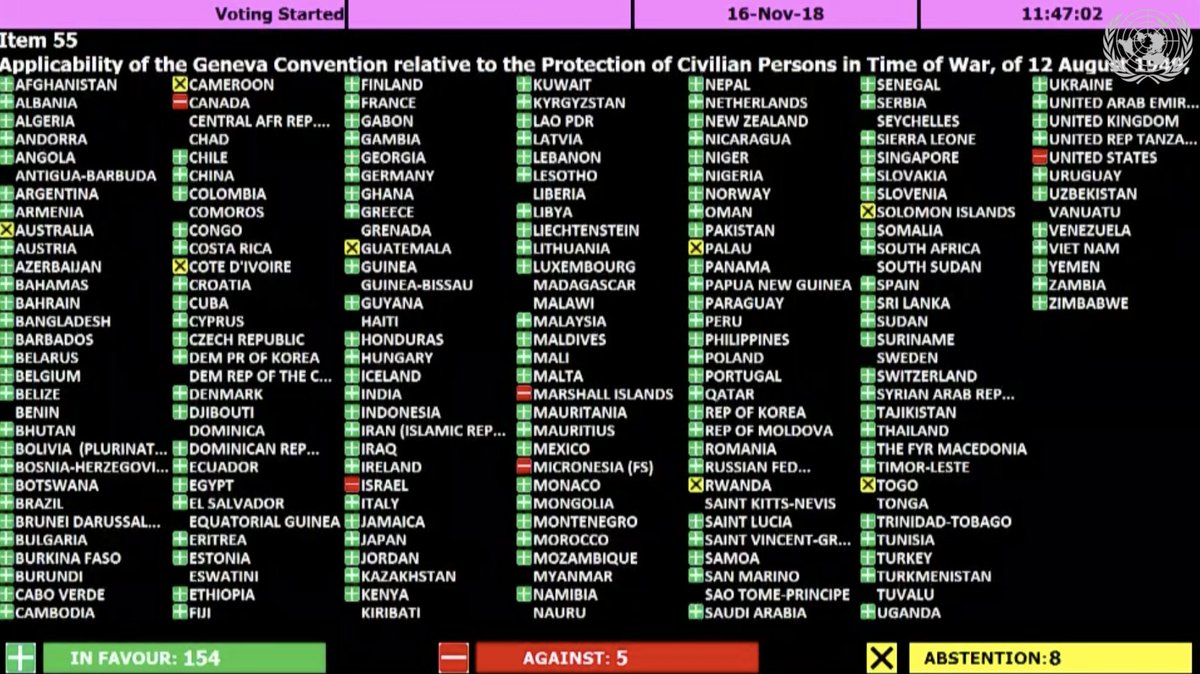
The resolution titled "Applicability of the Geneva Convention... to the
Occupied Palestinian Territory..." was adopted by a vote of 154 - 5 - 8.
Canada, Israel, Marshall Islands, Micronesia, and the U.S. voted 'No'
https://t.co/xDAeS9K1kW
View the resolutions and voting results here:
The resolution titled "The occupied Syrian Golan," which condemns Israel for "repressive measures" against Syrian citizens in the Golan Heights, was adopted by a vote of 151 - 2 - 14.
Israel and the U.S. voted 'No' https://t.co/HoO7oz0dwr
The resolution titled "Israeli practices affecting the human rights of the Palestinian people..." was adopted by a vote of 153 - 6 - 9.
Australia, Canada, Israel, Marshall Islands, Micronesia, and the U.S. voted 'No' https://t.co/1Ntpi7Vqab
The resolution titled "Israeli settlements in the Occupied Palestinian Territory, including East Jerusalem, and the occupied Syrian Golan" was adopted by a vote of 153 – 5 – 10.
Canada, Israel, Marshall Islands, Micronesia, and the U.S. voted 'No'
https://t.co/REumYgyRuF
The resolution titled "Applicability of the Geneva Convention... to the
Occupied Palestinian Territory..." was adopted by a vote of 154 - 5 - 8.
Canada, Israel, Marshall Islands, Micronesia, and the U.S. voted 'No'
https://t.co/xDAeS9K1kW




Imagine if Christians actually had to live according to their Bibles.
Imagine if Christians actually sacrificed themselves for the good of those they considered their enemies, with no thought of any recompense or reward, but only to honor the essential humanity of all people.
Imagine if Christians sold all their possessions and gave it to the poor.
Imagine if they relentlessly stood up for the widow, the orphan, and the foreigner.
Imagine if they worshipped a God whose response to political power was to reject it.
Or cancelled all debt owed them?
Imagine if the primary orientation of Christians was what others needed, not what they deserved.
Imagine Christians with no interest in protecting what they had.
Imagine Christians who made room for other beliefs, and honored the truths they found there.
Imagine Christians who saved their forgiveness and mercy for others, rather than saving it for themselves.
Whose empathy went first to the abused, not the abuser.
Who didn't see tax as theft; who didn't need to control distribution of public good to the deserving.
"If they start canceling these American presidents, they're gonna come after Bible characters next. Mark my words" -- Fox News "news side" host Bill Hemmer pic.twitter.com/qTPV0NERv8
— Aaron Rupar (@atrupar) February 19, 2021
Imagine if Christians actually sacrificed themselves for the good of those they considered their enemies, with no thought of any recompense or reward, but only to honor the essential humanity of all people.
Imagine if Christians sold all their possessions and gave it to the poor.
Imagine if they relentlessly stood up for the widow, the orphan, and the foreigner.
Imagine if they worshipped a God whose response to political power was to reject it.
Or cancelled all debt owed them?
Imagine if the primary orientation of Christians was what others needed, not what they deserved.
Imagine Christians with no interest in protecting what they had.
Imagine Christians who made room for other beliefs, and honored the truths they found there.
Imagine Christians who saved their forgiveness and mercy for others, rather than saving it for themselves.
Whose empathy went first to the abused, not the abuser.
Who didn't see tax as theft; who didn't need to control distribution of public good to the deserving.