https://t.co/Rv9XUGHv49
THREAD: Today, @courierjournal published Beyond Breonna, a series on systemic racism and how Louisville can end it.
It was spurred by the death of Breonna Taylor. But these issues have existed for generations. People are tired of the same
https://t.co/Rv9XUGHv49
We start with health because Black people are dying younger in Louisville - from homicides, chronic illnesses and now the coronavirus.
https://t.co/BGf0SpMrt8
And disparities in treatment have made Black patients mistrust the system.
https://t.co/BGf0SpMrt8
"I was always told, 'It's an act of God, these things happen.'"
https://t.co/BGf0SpMrt8
In Louisville, it still isn't, @HayesGardner reported.
https://t.co/JhaWtE6V8n
https://t.co/JhaWtE6V8n
In Louisville, just 36% of Black households own their home, while 70% of white households do.
https://t.co/BQ8RNJgqGh
Black home-ownership rates fell between 2000 and 2017. And Black people are still evicted at higher rates than white people - including Kwmisha Adams, a mother of four.
https://t.co/BQ8RNJgqGh
"What hurts me the most, it's not me that I have to think about, it's four kids. ... I'm already living in government assistance. How much lower can a person feel?"
https://t.co/BQ8RNJgqGh
This one is hard.
Kris Smith, who @HayesGardner featured, was shot and killed Friday as this series was awaiting publication.
https://t.co/qvIJO2OaIj
But he sat in jail for multiple years awaiting two trials on felony gun possession, eventually taking a plea.
“You get so tired of being in there, locked up, you’ll take damn near anything."
https://t.co/qvIJO2OaIj
https://t.co/qvIJO2OaIj
But as @HayesGardner shows with the story of William Isaac, the lack of opportunities sometimes leads people to commit crimes.
https://t.co/Q8MctcY2EI
“If you don’t have any hope, and you’re discouraged, then, I don’t know. You’re just gonna do things that you shouldn’t do," Isaac said.
https://t.co/Q8MctcY2EI
In 2020, 2.4% of Louisville businesses are Black-owned.
https://t.co/S3tpBVNt20
https://t.co/S3tpBVNt20
The coronavirus is deepening disparities, giving these issues even more urgency.
But Louisville isn't naive about how to solve them. People know what needs to be done.
The question is: Do we have the will?
https://t.co/oRs5f6IBPJ
People wanted to know how Louisville could prevent something similar from happening here.
5 years later, little has changed.
https://t.co/oRs5f6IBPJ
But community members say, in many cases, the obstacle isn't funding — it's a matter of priority and personal will.
https://t.co/oRs5f6IBPJ
https://t.co/oRs5f6IBPJ
Here are 50 potential solutions.
https://t.co/ND4jJI1Wb8
https://t.co/o10nF81t4c
More from Society

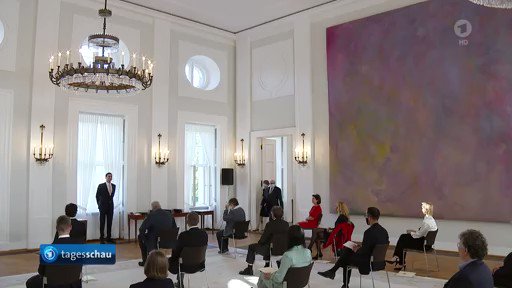
1/ One year of destroyed economies, social isolation & deep social splits calls for an anniversary ⬇️thread ⬇️ to celebrate the RT-qPCR manuscript by Christian Drosten (@c_drosten) & Victor Corman (@vmcorman), submitted on 21st Jan 2020 to @Eurosurveillanc. #UnbiasedScience
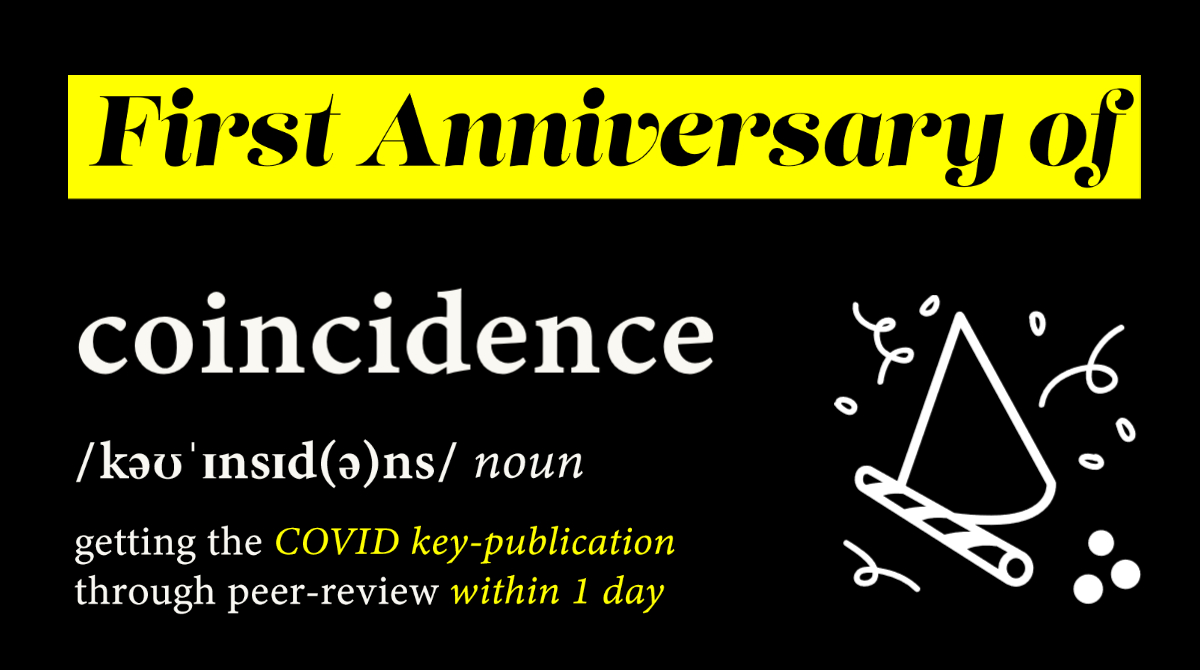
2/ Before this very publication, virologists were neither treated like superstars, nor were they considered icons or half-gods. In 2009, Drosten almost succeeded in installing the false premise virology could supersede holistic medical sciences as discussed in this thread.
3/ Drosten is a virologist. He neither has any background in epidemiology, nor has he ever worked in the civil service. He also doesn’t have a background in public health. Yet he and his colleagues affect our daily lives to the level of whom to meet up or how to flush the toilet.
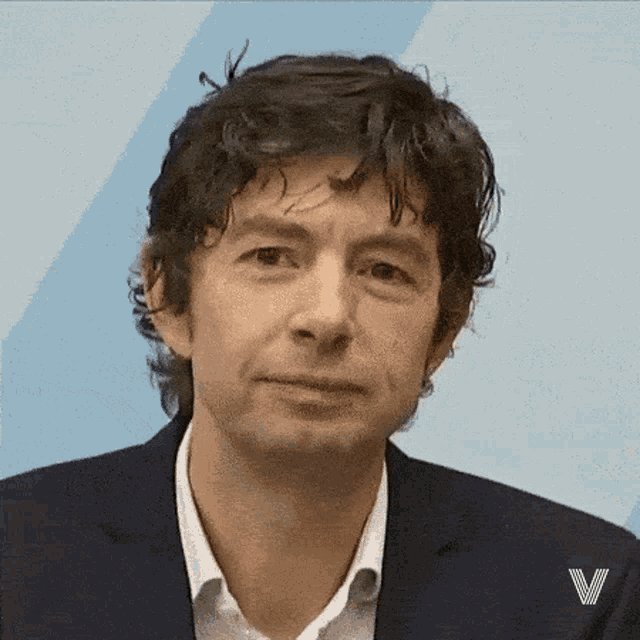
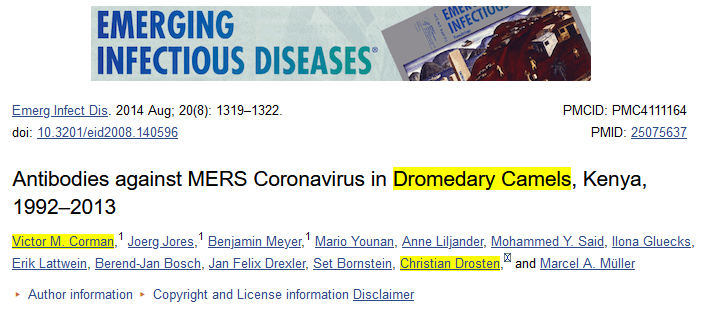
4/ Before January 2020, Drosten and Corman were common virologists at Charité Berlin, whenever they were not involved in economic implications (https://t.co/UTDwG8U7Du). Other than that, they looked at coronaviruses in dromedary calves in the Middle East or Africa. 😍 #cute
5/ Finally in Jan 2020, the published paper laid the theoretical grounds for the current pandemic, the RT-qPCR mass testing-religion, for which he was awarded his second German Federal Cross of Merit (he received the first one in 2005 for developing the SARS-CoV PCR test).
2/ Before this very publication, virologists were neither treated like superstars, nor were they considered icons or half-gods. In 2009, Drosten almost succeeded in installing the false premise virology could supersede holistic medical sciences as discussed in this thread.
3/ Drosten is a virologist. He neither has any background in epidemiology, nor has he ever worked in the civil service. He also doesn’t have a background in public health. Yet he and his colleagues affect our daily lives to the level of whom to meet up or how to flush the toilet.
4/ Before January 2020, Drosten and Corman were common virologists at Charité Berlin, whenever they were not involved in economic implications (https://t.co/UTDwG8U7Du). Other than that, they looked at coronaviruses in dromedary calves in the Middle East or Africa. 😍 #cute
5/ Finally in Jan 2020, the published paper laid the theoretical grounds for the current pandemic, the RT-qPCR mass testing-religion, for which he was awarded his second German Federal Cross of Merit (he received the first one in 2005 for developing the SARS-CoV PCR test).


You May Also Like




1/ Some initial thoughts on personal moats:
Like company moats, your personal moat should be a competitive advantage that is not only durable—it should also compound over time.
Characteristics of a personal moat below:
2/ Like a company moat, you want to build career capital while you sleep.
As Andrew Chen noted:
3/ You don’t want to build a competitive advantage that is fleeting or that will get commoditized
Things that might get commoditized over time (some longer than
4/ Before the arrival of recorded music, what used to be scarce was the actual music itself — required an in-person artist.
After recorded music, the music itself became abundant and what became scarce was curation, distribution, and self space.
5/ Similarly, in careers, what used to be (more) scarce were things like ideas, money, and exclusive relationships.
In the internet economy, what has become scarce are things like specific knowledge, rare & valuable skills, and great reputations.
Like company moats, your personal moat should be a competitive advantage that is not only durable—it should also compound over time.
Characteristics of a personal moat below:
I'm increasingly interested in the idea of "personal moats" in the context of careers.
— Erik Torenberg (@eriktorenberg) November 22, 2018
Moats should be:
- Hard to learn and hard to do (but perhaps easier for you)
- Skills that are rare and valuable
- Legible
- Compounding over time
- Unique to your own talents & interests https://t.co/bB3k1YcH5b
2/ Like a company moat, you want to build career capital while you sleep.
As Andrew Chen noted:
People talk about \u201cpassive income\u201d a lot but not about \u201cpassive social capital\u201d or \u201cpassive networking\u201d or \u201cpassive knowledge gaining\u201d but that\u2019s what you can architect if you have a thing and it grows over time without intensive constant effort to sustain it
— Andrew Chen (@andrewchen) November 22, 2018
3/ You don’t want to build a competitive advantage that is fleeting or that will get commoditized
Things that might get commoditized over time (some longer than
Things that look like moats but likely aren\u2019t or may fade:
— Erik Torenberg (@eriktorenberg) November 22, 2018
- Proprietary networks
- Being something other than one of the best at any tournament style-game
- Many "awards"
- Twitter followers or general reach without "respect"
- Anything that depends on information asymmetry https://t.co/abjxesVIh9
4/ Before the arrival of recorded music, what used to be scarce was the actual music itself — required an in-person artist.
After recorded music, the music itself became abundant and what became scarce was curation, distribution, and self space.
5/ Similarly, in careers, what used to be (more) scarce were things like ideas, money, and exclusive relationships.
In the internet economy, what has become scarce are things like specific knowledge, rare & valuable skills, and great reputations.