

well, the new york deadline is sunday so i am finally applying for health insurance today. (i wouldn't be able to use the insurance until february 1st anyway, so i put it off.) i played through demon's souls FOUR TIMES in the past month and i still don't understand this system

More from Society




Imagine if Christians actually had to live according to their Bibles.
Imagine if Christians actually sacrificed themselves for the good of those they considered their enemies, with no thought of any recompense or reward, but only to honor the essential humanity of all people.
Imagine if Christians sold all their possessions and gave it to the poor.
Imagine if they relentlessly stood up for the widow, the orphan, and the foreigner.
Imagine if they worshipped a God whose response to political power was to reject it.
Or cancelled all debt owed them?
Imagine if the primary orientation of Christians was what others needed, not what they deserved.
Imagine Christians with no interest in protecting what they had.
Imagine Christians who made room for other beliefs, and honored the truths they found there.
Imagine Christians who saved their forgiveness and mercy for others, rather than saving it for themselves.
Whose empathy went first to the abused, not the abuser.
Who didn't see tax as theft; who didn't need to control distribution of public good to the deserving.
"If they start canceling these American presidents, they're gonna come after Bible characters next. Mark my words" -- Fox News "news side" host Bill Hemmer pic.twitter.com/qTPV0NERv8
— Aaron Rupar (@atrupar) February 19, 2021
Imagine if Christians actually sacrificed themselves for the good of those they considered their enemies, with no thought of any recompense or reward, but only to honor the essential humanity of all people.
Imagine if Christians sold all their possessions and gave it to the poor.
Imagine if they relentlessly stood up for the widow, the orphan, and the foreigner.
Imagine if they worshipped a God whose response to political power was to reject it.
Or cancelled all debt owed them?
Imagine if the primary orientation of Christians was what others needed, not what they deserved.
Imagine Christians with no interest in protecting what they had.
Imagine Christians who made room for other beliefs, and honored the truths they found there.
Imagine Christians who saved their forgiveness and mercy for others, rather than saving it for themselves.
Whose empathy went first to the abused, not the abuser.
Who didn't see tax as theft; who didn't need to control distribution of public good to the deserving.
You May Also Like




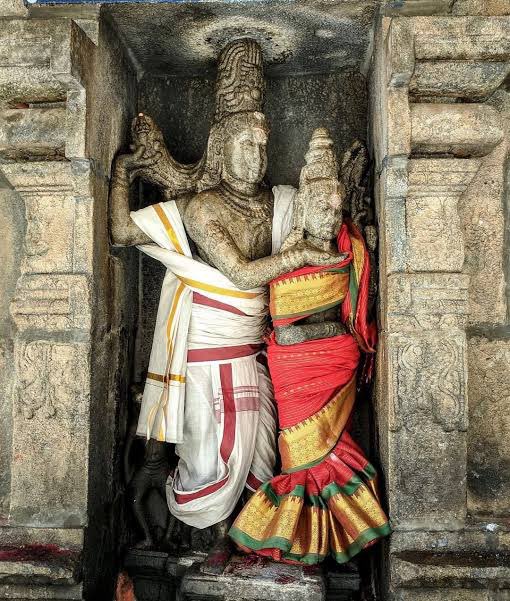


Margatha Natarajar murthi - Uthirakosamangai temple near Ramanathapuram,TN
#ArudraDarisanam
Unique Natarajar made of emerlad is abt 6 feet tall.
It is always covered with sandal paste.Only on Thriuvadhirai Star in month Margazhi-Nataraja can be worshipped without sandal paste.
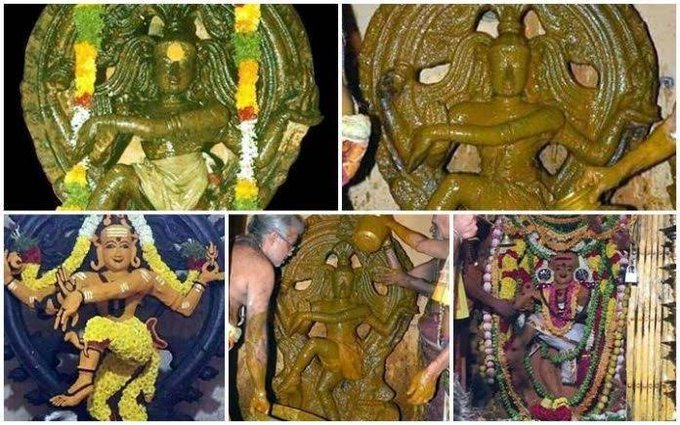
After removing the sandal paste,day long rituals & various abhishekam will be https://t.co/e1Ye8DrNWb day Maragatha Nataraja sannandhi will be closed after anointing the murthi with fresh sandal paste.Maragatha Natarajar is covered with sandal paste throughout the year
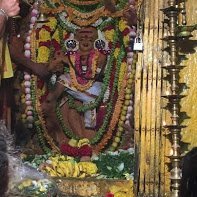
as Emerald has scientific property of its molecules getting disturbed when exposed to light/water/sound.This is an ancient Shiva temple considered to be 3000 years old -believed to be where Bhagwan Shiva gave Veda gyaana to Parvati Devi.This temple has some stunning sculptures.

#ArudraDarisanam
Unique Natarajar made of emerlad is abt 6 feet tall.
It is always covered with sandal paste.Only on Thriuvadhirai Star in month Margazhi-Nataraja can be worshipped without sandal paste.
After removing the sandal paste,day long rituals & various abhishekam will be https://t.co/e1Ye8DrNWb day Maragatha Nataraja sannandhi will be closed after anointing the murthi with fresh sandal paste.Maragatha Natarajar is covered with sandal paste throughout the year
as Emerald has scientific property of its molecules getting disturbed when exposed to light/water/sound.This is an ancient Shiva temple considered to be 3000 years old -believed to be where Bhagwan Shiva gave Veda gyaana to Parvati Devi.This temple has some stunning sculptures.


These 10 threads will teach you more than reading 100 books
Five billionaires share their top lessons on startups, life and entrepreneurship (1/10)
10 competitive advantages that will trump talent (2/10)
Some harsh truths you probably don’t want to hear (3/10)
10 significant lies you’re told about the world (4/10)
Five billionaires share their top lessons on startups, life and entrepreneurship (1/10)
I interviewed 5 billionaires this week
— GREG ISENBERG (@gregisenberg) January 23, 2021
I asked them to share their lessons learned on startups, life and entrepreneurship:
Here's what they told me:
10 competitive advantages that will trump talent (2/10)
To outperform, you need serious competitive advantages.
— Sahil Bloom (@SahilBloom) March 20, 2021
But contrary to what you have been told, most of them don't require talent.
10 competitive advantages that you can start developing today:
Some harsh truths you probably don’t want to hear (3/10)
I\u2019ve gotten a lot of bad advice in my career and I see even more of it here on Twitter.
— Nick Huber (@sweatystartup) January 3, 2021
Time for a stiff drink and some truth you probably dont want to hear.
\U0001f447\U0001f447
10 significant lies you’re told about the world (4/10)
THREAD: 10 significant lies you're told about the world.
— Julian Shapiro (@Julian) January 9, 2021
On startups, writing, and your career: