
Aged well as markets bottomed out before or on the day of first Fed rate hike.
This is Nifty's chart from 2004 to 2006. Back then also US interest rates had gone up. Markets had corrected well before Fed had hiked rates for first time in 2004, from then it hiked rates 17 times by 4.25% over next 2 yrs and yet market kept making new highs. @shivaji_1983 pic.twitter.com/EAFhske9EE
— Sandeep Kulkarni (@moneyworks4u_fa) February 11, 2022
More from Sandeep Kulkarni
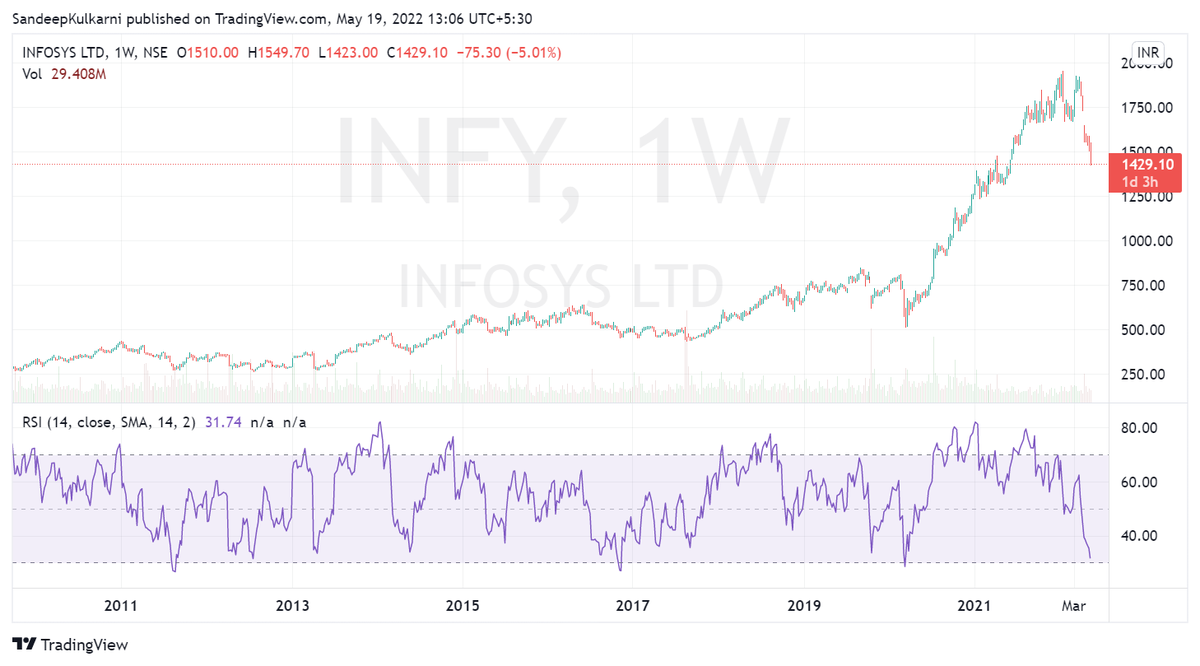
BTW Nifty Metal has inverse correlation with USDINR. https://t.co/X6cqVcYF3V
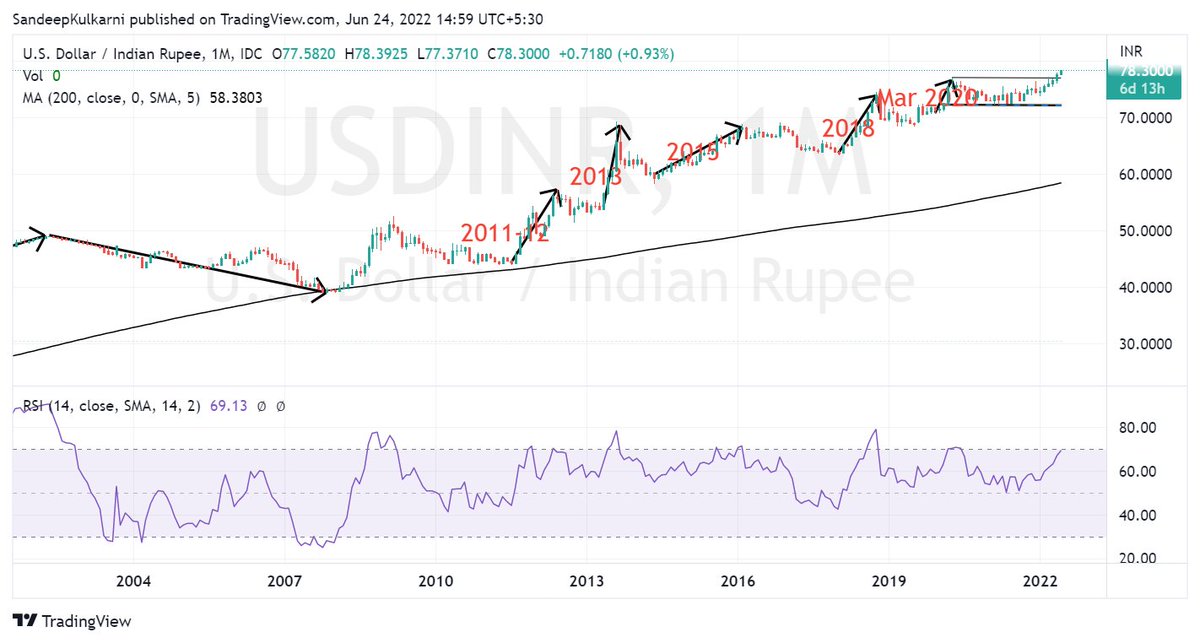
We know how our stock market has weathered the FII selling.
— Sandeep Kulkarni (@moneyworks4u_fa) June 10, 2022
But the equally big story is how Rupee has weathered $50bn+ outflows since Oct 2021. Hats off to RBI Governor Das & his team for having the vision of building huge reserves in his tenure. pic.twitter.com/CVuF9dM361

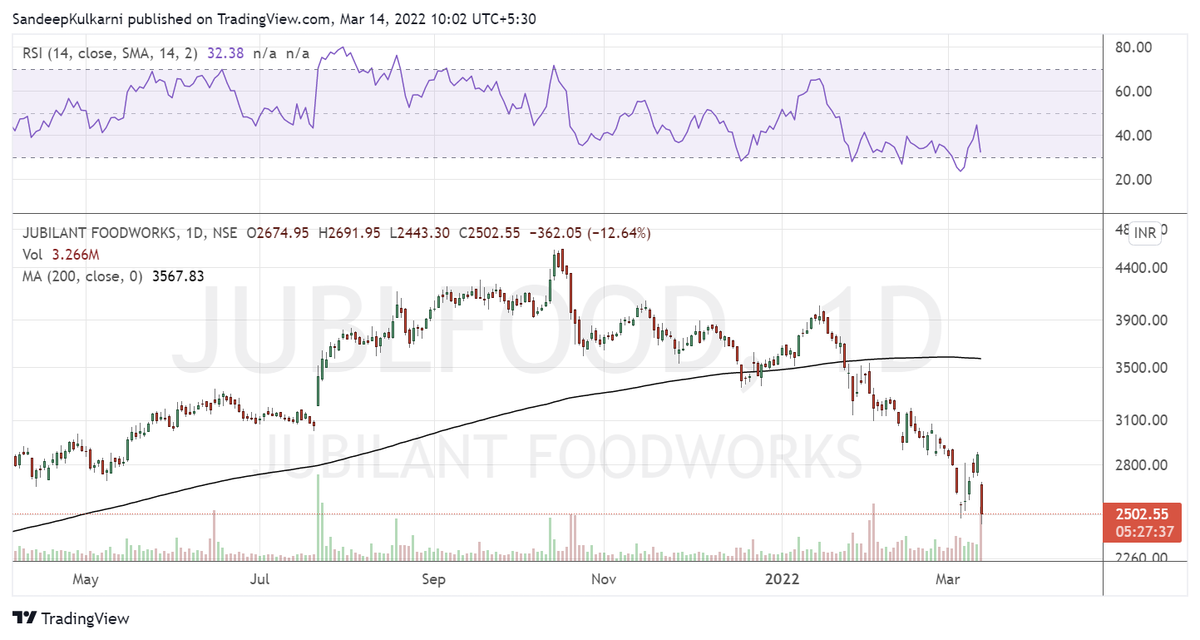
Infosys PEG ratio (1-year fwd PE/EPS growth) down to 1.4x from a peak of 2.7x as PE cut by 27% & EPS growth cut by 5% - trades at 23.3x PE for 11% FY23 growth. If this is a mid-cycle correction, its done BUT if this is the great valuation reset - more fall coming
— ThirdSide (@_ThirdSide_) May 25, 2022
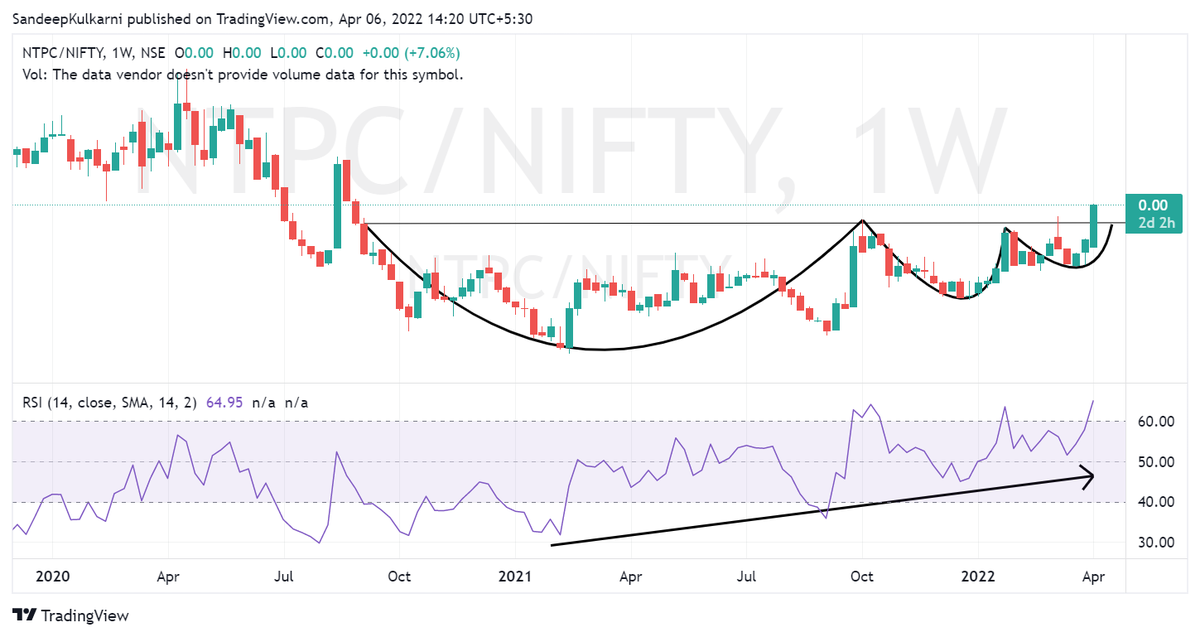
Place your bets pic.twitter.com/9ZlaLDcxPZ
More from Screeners


You May Also Like





As someone\u2019s who\u2019s read the book, this review strikes me as tremendously unfair. It mostly faults Adler for not writing the book the reviewer wishes he had! https://t.co/pqpt5Ziivj
— Teresa M. Bejan (@tmbejan) January 12, 2021
The meat of the criticism is that the history Adler gives is insufficiently critical. Adler describes a few figures who had a great influence on how the modern US university was formed. It's certainly critical: it focuses on the social Darwinism of these figures. 2/x
Other insinuations and suggestions in the review seem wildly off the mark, distorted, or inappropriate-- for example, that the book is clickbaity (it is scholarly) or conservative (hardly) or connected to the events at the Capitol (give me a break). 3/x
The core question: in what sense is classics inherently racist? Classics is old. On Adler's account, it begins in ancient Rome and is revived in the Renaissance. Slavery (Christiansen's primary concern) is also very old. Let's say classics is an education for slaveowners. 4/x
It's worth remembering that literacy itself is elite throughout most of this history. Literacy is, then, also the education of slaveowners. We can honor oral and musical traditions without denying that literacy is, generally, good. 5/x


