
Now the question is.. with so many stocks around, how one must filter and check? (2/12)
I have earlier shared some setups/strategies for Intraday. One of them was ORB (opening range breakout) setup.. but I still get DM about this. So here's a thread about how to find ORB stocks: (1/12)
Now the question is.. with so many stocks around, how one must filter and check? (2/12)
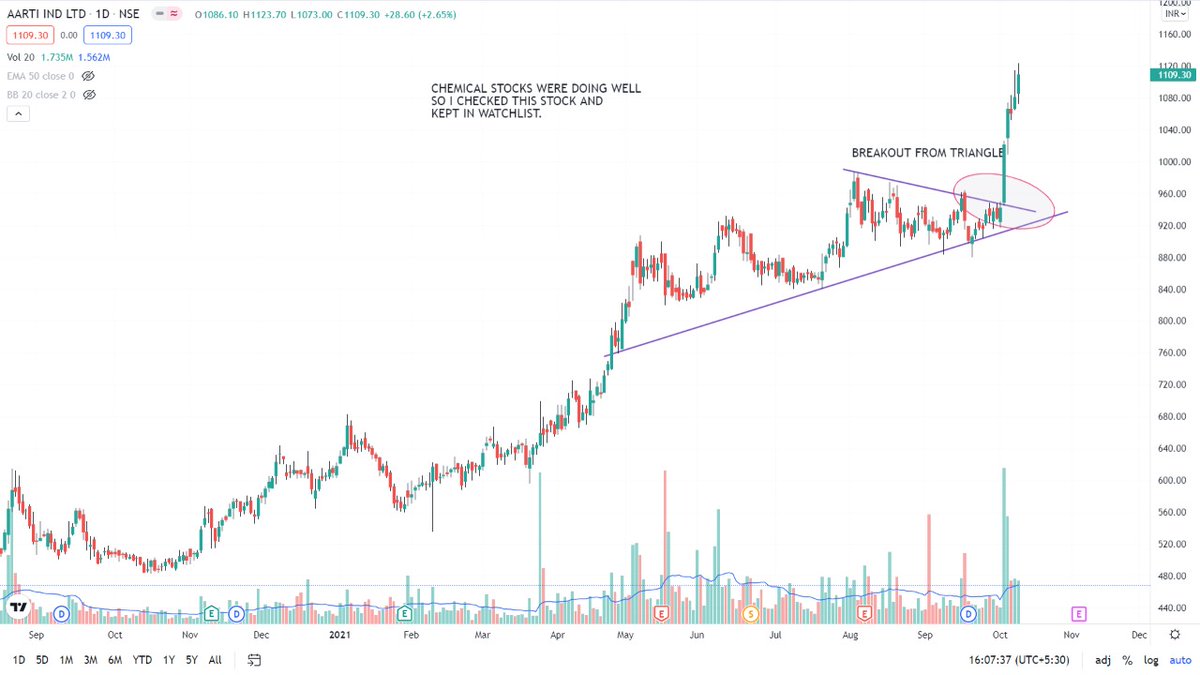
Find the sector or theme with good recent performance and keep its stocks in watchlist. I keep an alert for breakout price when I see a good chart. (3/12)
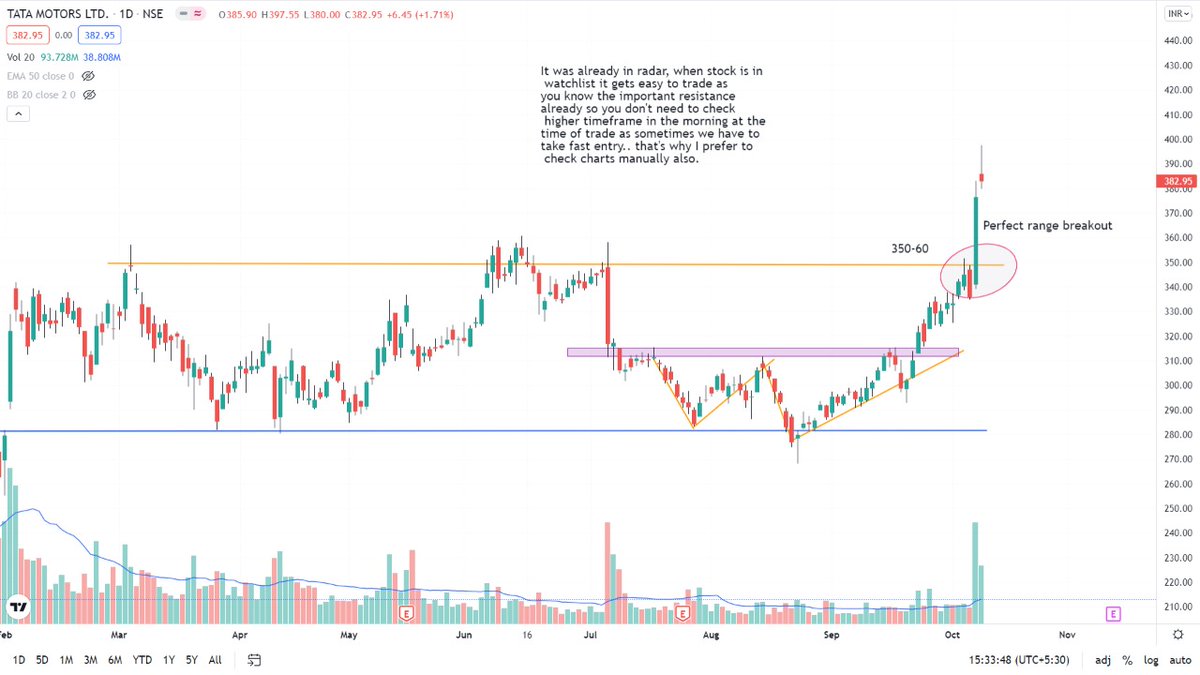
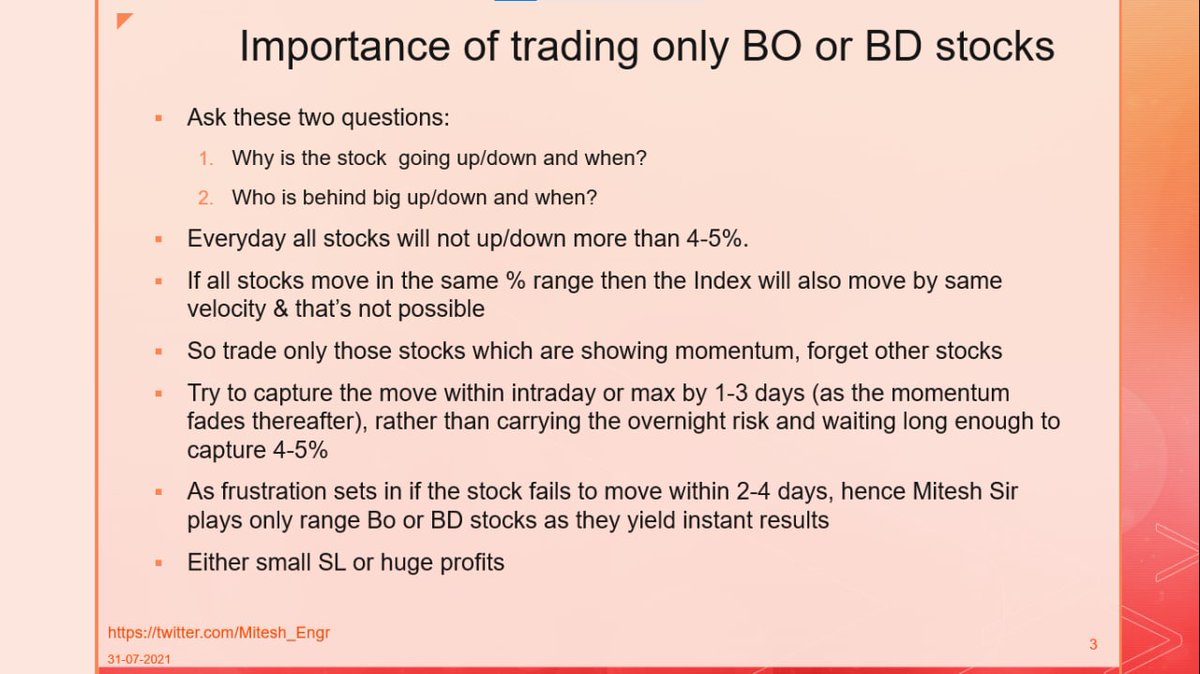
Not every stock gives a move of 7-8%. Look for stock that move 7-8% in one go when they give a breakout (Stocks unlike ITC that moves once in a year). (4/12)
IRCTC, Mindtree, Bajaj Twins, IEX, TataElxsi, Naukri, Coforge are some great examples. Rest you can observe and add.
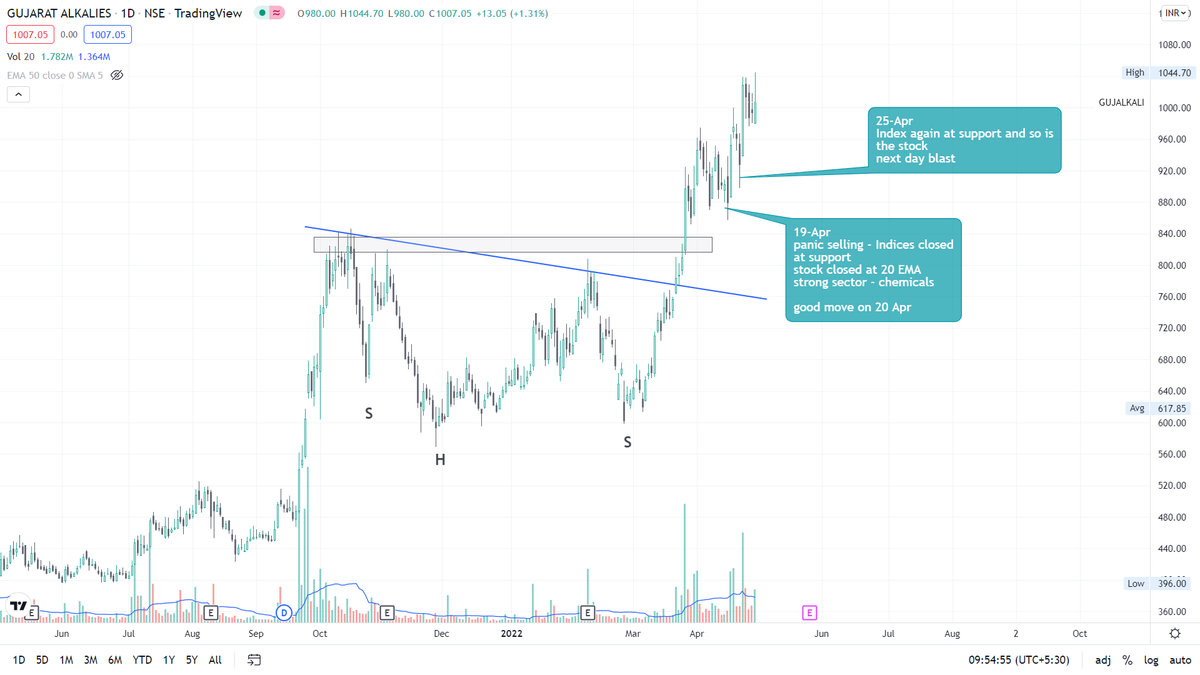
Recent examples 👇(5/12)
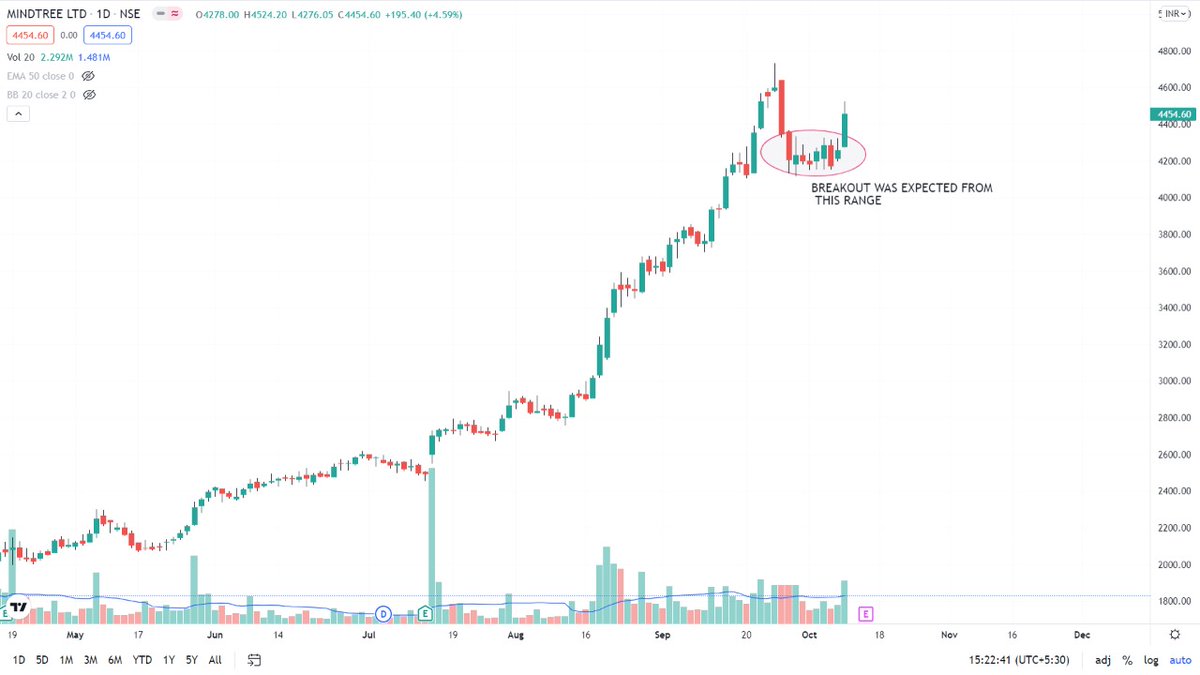
Observation is the key in trading. I don't use any screener but I don't research for hours either. I observe and keep my mind open. (7/12)
I developed these strategies based on my experiences. You can develop your own too. (8/12)
I observe the stock between 9:15 to 9:25 to check if it's giving any bullish candles. If I see the first 2 good bullish candles with volumes. (9/12)
Recent example of Aarti industry for more understanding. 👇(11/12)
https://t.co/VfTRAokAXw
https://t.co/6LIa458yJY all BO stock today pic.twitter.com/4K44i0k8ib
— itrade(DJ) (@ITRADE191) August 18, 2021
More from Sheetal Rijhwani
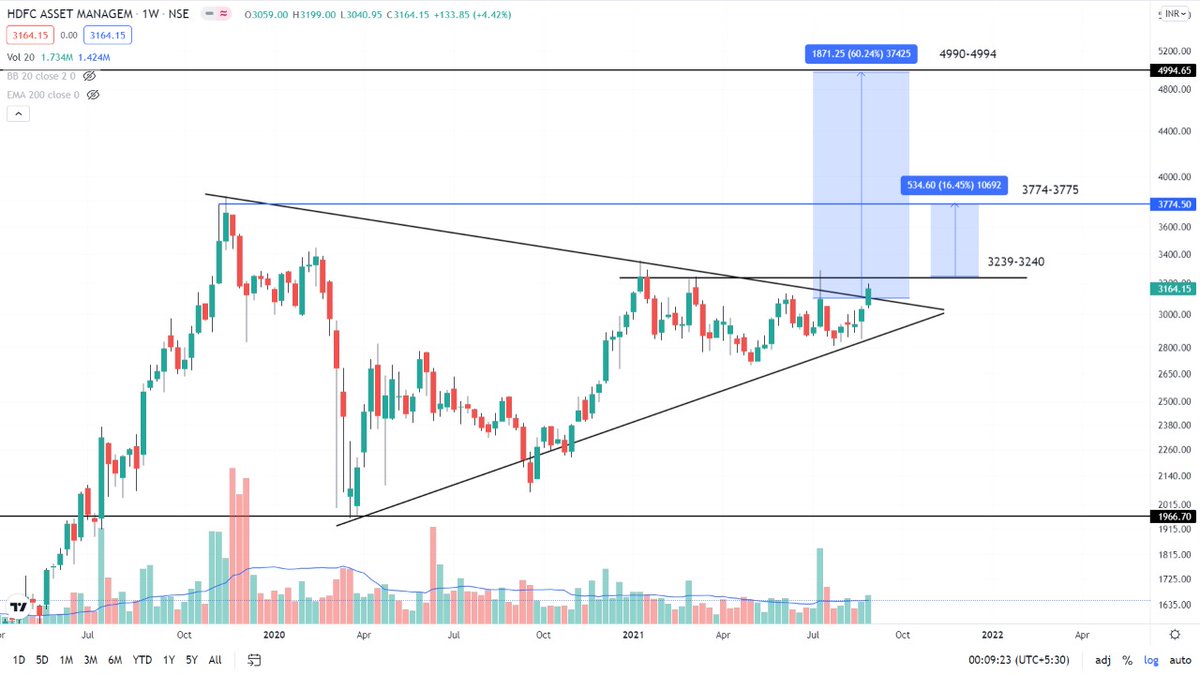
If you are new to F&O, you can start with Vertical Spreads (Debit and Credit spreads) instead of buying options in Stocks and Indices.
Here are some ways how you can do it, when you can do it and the right position sizing for doing it... 🧵 (1/25)
Traders who are trading in cash and want to explore options generally start with options buying without much knowledge. They buy OTM strikes and trade with wrong position sizing. With no idea about the perfect entry, they end up feeling that F&O is risky. (2/25)
After losses in F&O buying, this is how I approached it and it rewarded me pretty well in initial phase. I find this strategy easy to start things off. And then, you can explore other strategies too and find what works for you. (3/25)
Vertical spread is a directional, defined risk options trading strategy:
1. Bull call spread (Debit spread)
2. Bull put spread (Credit spread)
3. Bear call spread (Credit spread)
4. Bear put spread (Debit spread)
Read about these strategies in the below articles. (4/25)
https://t.co/KQvYOsu9kv
While going through these strategies, you must have thought you have to wait till expiry for profits/loss. (5/25)

More from Screeners





You May Also Like









A brief analysis and comparison of the CSS for Twitter's PWA vs Twitter's legacy desktop website. The difference is dramatic and I'll touch on some reasons why.
Legacy site *downloads* ~630 KB CSS per theme and writing direction.
6,769 rules
9,252 selectors
16.7k declarations
3,370 unique declarations
44 media queries
36 unique colors
50 unique background colors
46 unique font sizes
39 unique z-indices
https://t.co/qyl4Bt1i5x

PWA *incrementally generates* ~30 KB CSS that handles all themes and writing directions.
735 rules
740 selectors
757 declarations
730 unique declarations
0 media queries
11 unique colors
32 unique background colors
15 unique font sizes
7 unique z-indices
https://t.co/w7oNG5KUkJ

The legacy site's CSS is what happens when hundreds of people directly write CSS over many years. Specificity wars, redundancy, a house of cards that can't be fixed. The result is extremely inefficient and error-prone styling that punishes users and developers.
The PWA's CSS is generated on-demand by a JS framework that manages styles and outputs "atomic CSS". The framework can enforce strict constraints and perform optimisations, which is why the CSS is so much smaller and safer. Style conflicts and unbounded CSS growth are avoided.
Legacy site *downloads* ~630 KB CSS per theme and writing direction.
6,769 rules
9,252 selectors
16.7k declarations
3,370 unique declarations
44 media queries
36 unique colors
50 unique background colors
46 unique font sizes
39 unique z-indices
https://t.co/qyl4Bt1i5x
PWA *incrementally generates* ~30 KB CSS that handles all themes and writing directions.
735 rules
740 selectors
757 declarations
730 unique declarations
0 media queries
11 unique colors
32 unique background colors
15 unique font sizes
7 unique z-indices
https://t.co/w7oNG5KUkJ
The legacy site's CSS is what happens when hundreds of people directly write CSS over many years. Specificity wars, redundancy, a house of cards that can't be fixed. The result is extremely inefficient and error-prone styling that punishes users and developers.
The PWA's CSS is generated on-demand by a JS framework that manages styles and outputs "atomic CSS". The framework can enforce strict constraints and perform optimisations, which is why the CSS is so much smaller and safer. Style conflicts and unbounded CSS growth are avoided.