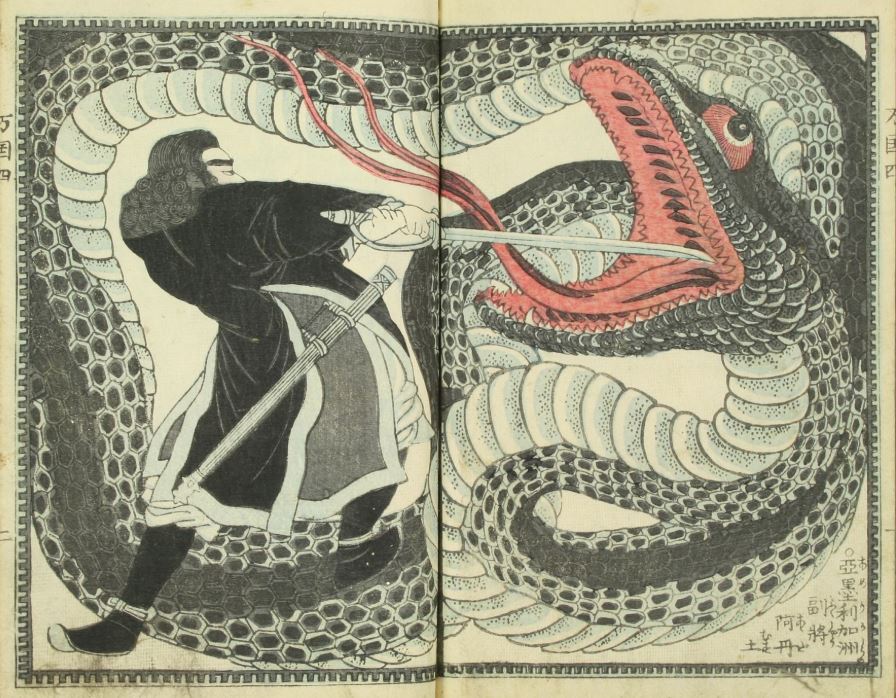
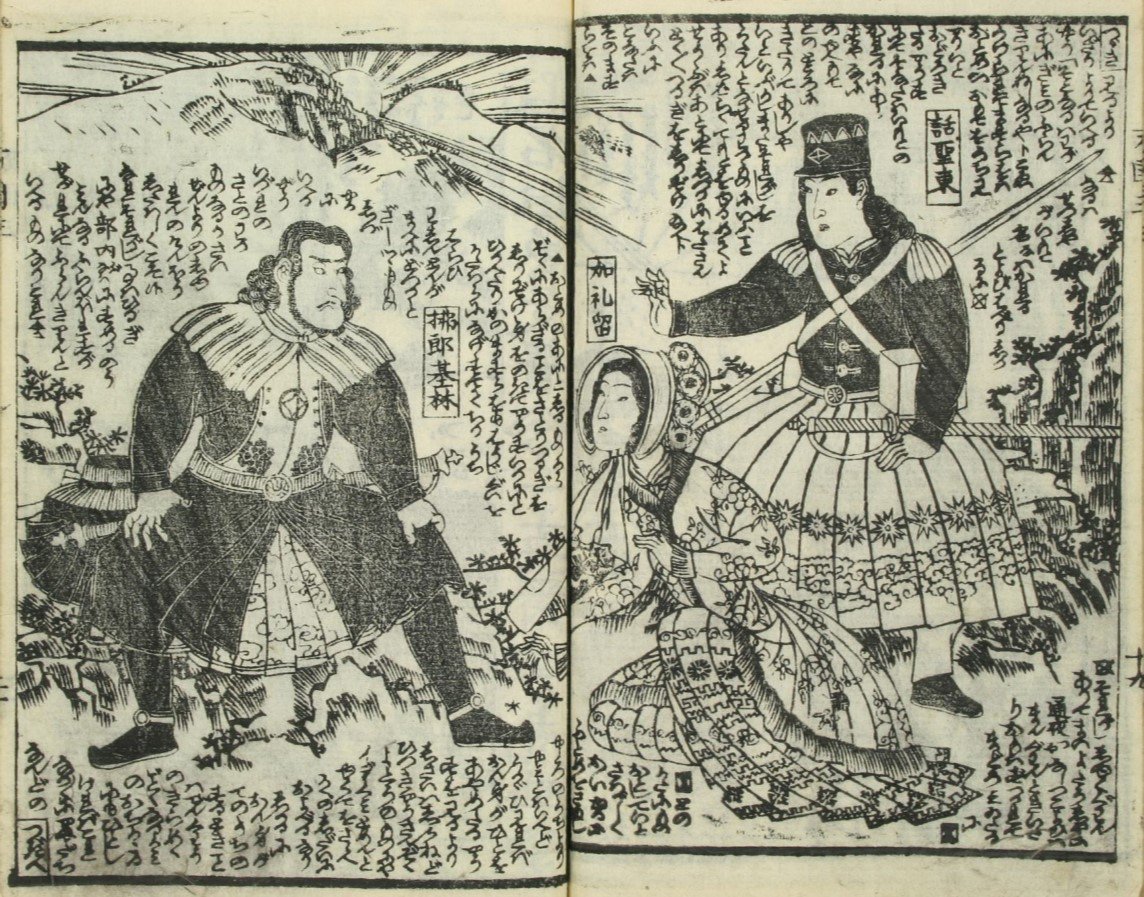
The Tathagata Buddha began to preach with his powerful voice, which began to resonate in the sky(2/n)
We all know that Rama, Lakshmana, Sita are mentioned in Buddhist Ramayana, but Ravana is not mentioned in Buddhist Ramayana. So is Ravana not in Buddhist belief?
Answer :: NO ,Ravan was known to BUDDHISTs and he is Mentioned in "LANKAVATARA SUTRA "
A Thread on BUDDHIST RAVAN https://t.co/k8bfsl1EOJ

Did you know?
— \U0001f1ee\U0001f1f3Sonal \U0001f1ee\U0001f1f3 (@Dharm_Sthapana) December 12, 2020
Lanka was originally owned by Kuber.
He was the dikpal of North Direction and King of Gandharva Lok.
When Daityas Mali, Sumali and Malyavant couldn't defeat him in battle, they sent their sister to Sage Vishrava who was father of Kuber. pic.twitter.com/9tEcyVGbXT
The Tathagata Buddha began to preach with his powerful voice, which began to resonate in the sky(2/n)
(3/n)
(5/n)
Then the Buddha performed a miracle that manifested many mountains around Lankanagari Many Ravan, many Buddha and people started appearing
More from Religion



MDZS is laden with buddhist references. As a South Asian person, and history buff, it is so interesting to see how Buddhism, which originated from India, migrated, flourished & changed in the context of China. Here's some research (🙏🏼 @starkjeon for CN insight + citations)
1. LWJ’s sword Bichen ‘is likely an abbreviation for the term 躲避红尘 (duǒ bì hóng chén), which can be translated as such: 躲避: shunning or hiding away from 红尘 (worldly affairs; which is a buddhist teaching.) (https://t.co/zF65W3roJe) (abbrev. TWX)
2. Sandu (三 毒), Jiang Cheng’s sword, refers to the three poisons (triviṣa) in Buddhism; desire (kāma-taṇhā), delusion (bhava-taṇhā) and hatred (vibhava-taṇhā).
These 3 poisons represent the roots of craving (tanha) and are the cause of Dukkha (suffering, pain) and thus result in rebirth.
Interesting that MXTX used this name for one of the characters who suffers, arguably, the worst of these three emotions.
3. The Qian kun purse “乾坤袋 (qián kūn dài) – can be called “Heaven and Earth” Pouch. In Buddhism, Maitreya (मैत्रेय) owns this to store items. It was believed that there was a mythical space inside the bag that could absorb the world.” (TWX)
1. LWJ’s sword Bichen ‘is likely an abbreviation for the term 躲避红尘 (duǒ bì hóng chén), which can be translated as such: 躲避: shunning or hiding away from 红尘 (worldly affairs; which is a buddhist teaching.) (https://t.co/zF65W3roJe) (abbrev. TWX)
2. Sandu (三 毒), Jiang Cheng’s sword, refers to the three poisons (triviṣa) in Buddhism; desire (kāma-taṇhā), delusion (bhava-taṇhā) and hatred (vibhava-taṇhā).
These 3 poisons represent the roots of craving (tanha) and are the cause of Dukkha (suffering, pain) and thus result in rebirth.
Interesting that MXTX used this name for one of the characters who suffers, arguably, the worst of these three emotions.
3. The Qian kun purse “乾坤袋 (qián kūn dài) – can be called “Heaven and Earth” Pouch. In Buddhism, Maitreya (मैत्रेय) owns this to store items. It was believed that there was a mythical space inside the bag that could absorb the world.” (TWX)