3) Antifragile: Life is chaotic. The best aren't broken by the chaos—they build structure to benefit from it.
10 fascinating traits of highly-successful people:
1) Enjoy Being Wrong: The most successful people legitimately enjoy being wrong. They’ve learned to embrace new information that forces you to change your viewpoint—these "software updates" improve upon the old.
(read on)
3) Antifragile: Life is chaotic. The best aren't broken by the chaos—they build structure to benefit from it.
5) Self-Awareness: The most successful people are hyper self-aware. They know their unique edge (and their weaknesses).
7) Focus on Questions, Not Answers: They ask great questions. It allows them to aggregate insights more effectively.
9) Impatient Long-Term Thinkers: Long-term thinking plus short-term impatience for action is the recipe for success.
What others would you add to the list?
Follow me @SahilBloom for more writing on life and growth. I’ll write a deeper dive on this in my newsletter. Join 115K others! https://t.co/32basvHOHZ
More from Sahil Bloom

But many of life’s most important truths appear contradictory on the surface.
THREAD: 15 powerful paradoxes (on growth, business, careers, and life):
Sprezzatura (“Studied Carelessness”)
You have to put in more effort to make something appear effortless.
Effortless, elegant performances are often the result of a large volume of effortful, gritty practice.
Simple is not simple.
Slow Down to Speed Up
Want to speed up? Try slowing down.
Slowing down gives you the time to be deliberate with your actions.
You can focus, gather energy, and deploy your resources more efficiently.
It allows you to focus on leverage and ROI.
Move slow to move fast.
Learn More to Know Less
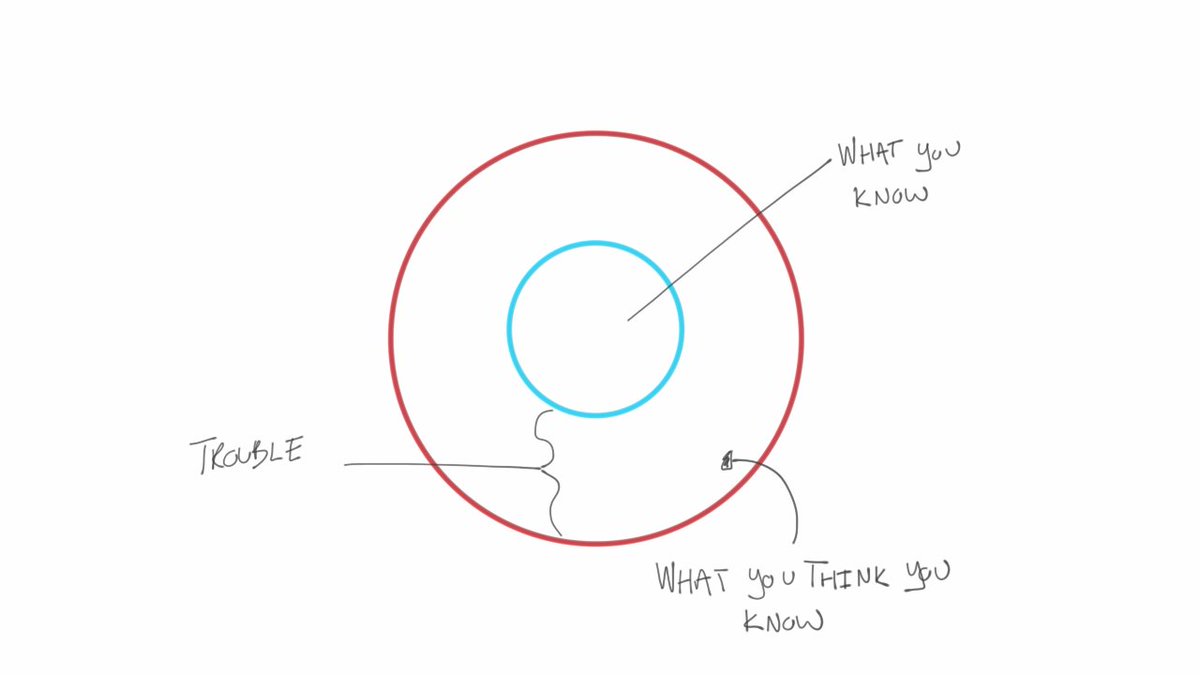
The wisdom paradox - the more you learn, the more you are exposed to the immense unknown.
This should be empowering, not frightening.
“The more I learn, the more I realize how much I don't know.” - Albert Einstein
Embrace lifelong learning.
Lifelong learning is a competitive advantage.
— Sahil Bloom (@SahilBloom) June 6, 2021
But contrary to what you\u2019ve been told, lifelong learners are built, not born.
THREAD: 20 lifelong learning habits you can start developing today.
Shrink to Grow
Growth is never linear.
In order to grow, sometimes you need to shrink.
Shedding deadweight may feel like a step back, but it is a necessity for long-term growth.
This principle applies to your career, startup, or life.
One step back for two steps forward.
How to Win (without talent or luck)
20+ principles compiled from the most impressive leaders and thinkers in the world.
How to Win (without talent or luck):
— Sahil Bloom (@SahilBloom) October 16, 2021
20 Ways to Stand Out in a Hiring Process (that don’t involve your resume)
You can stand out without fancy degrees or credentials—learn how.
The hiring process is ultra-competitive.
— Sahil Bloom (@SahilBloom) May 31, 2021
But you\u2019ve incorrectly been told that the only way to stand out is by having fancy degrees and credentials.
THREAD: 20 ways to stand out in a hiring process (that don\u2019t involve your resume):
Common Interview Questions (& how to nail them)
Interviews suck—proper preparation makes them suck slightly less.
The interview process is ultra-competitive.
— Sahil Bloom (@SahilBloom) August 7, 2021
But with proper preparation, it is possible to stand out.
THREAD: 20 common interview questions, what they really mean, and how to nail them:
How to Write Cold Emails (or DMs)
Because one lucky break can make all the difference…
One cold email can change your life.
— Sahil Bloom (@SahilBloom) October 24, 2021
Here's how to write a great one:
More from Principles
You May Also Like
This New York Times feature shows China with a Gini Index of less than 30, which would make it more equal than Canada, France, or the Netherlands. https://t.co/g3Sv6DZTDE
That's weird. Income inequality in China is legendary.
Let's check this number.
2/The New York Times cites the World Bank's recent report, "Fair Progress? Economic Mobility across Generations Around the World".
The report is available here:
3/The World Bank report has a graph in which it appears to show the same value for China's Gini - under 0.3.
The graph cites the World Development Indicators as its source for the income inequality data.
4/The World Development Indicators are available at the World Bank's website.
Here's the Gini index: https://t.co/MvylQzpX6A
It looks as if the latest estimate for China's Gini is 42.2.
That estimate is from 2012.
5/A Gini of 42.2 would put China in the same neighborhood as the U.S., whose Gini was estimated at 41 in 2013.
I can't find the <30 number anywhere. The only other estimate in the tables for China is from 2008, when it was estimated at 42.8.
Decoded his way of analysis/logics for everyone to easily understand.
Have covered:
1. Analysis of volatility, how to foresee/signs.
2. Workbook
3. When to sell options
4. Diff category of days
5. How movement of option prices tell us what will happen
1. Keeps following volatility super closely.
Makes 7-8 different strategies to give him a sense of what's going on.
Whichever gives highest profit he trades in.
I am quite different from your style. I follow the market's volatility very closely. I have mock positions in 7-8 different strategies which allows me to stay connected. Whichever gives best profit is usually the one i trade in.
— Sarang Sood (@SarangSood) August 13, 2019
2. Theta falls when market moves.
Falls where market is headed towards not on our original position.
Anilji most of the time these days Theta only falls when market moves. So the Theta actually falls where market has moved to, not where our position was in the first place. By shifting we can come close to capturing the Theta fall but not always.
— Sarang Sood (@SarangSood) June 24, 2019
3. If you're an options seller then sell only when volatility is dropping, there is a high probability of you making the right trade and getting profit as a result
He believes in a market operator, if market mover sells volatility Sarang Sir joins him.
This week has been great so far. The main aim is to be in the right side of the volatility, rest the market will reward.
— Sarang Sood (@SarangSood) July 3, 2019
4. Theta decay vs Fall in vega
Sell when Vega is falling rather than for theta decay. You won't be trapped and higher probability of making profit.
There is a difference between theta decay & fall in vega. Decay is certain but there is no guaranteed profit as delta moves can increase cost. Fall in vega on the other hand is backed by a powerful force that sells options and gives handsome returns. Our job is to identify them.
— Sarang Sood (@SarangSood) February 12, 2020