As President Trump prepares to speak near the White House, his loyalists are already gathering at the Capitol. Inside, Congress prepares for proceedings to certify the Electoral College vote. Putting these timelines together shows the urgency of the situation.
For weeks, Trump had urged his supporters to go to D.C. to stop the certification of election results. Several simultaneous rallies are planned, including the “wild rally” on the Capitol lawn, as this supporter-made map shows.
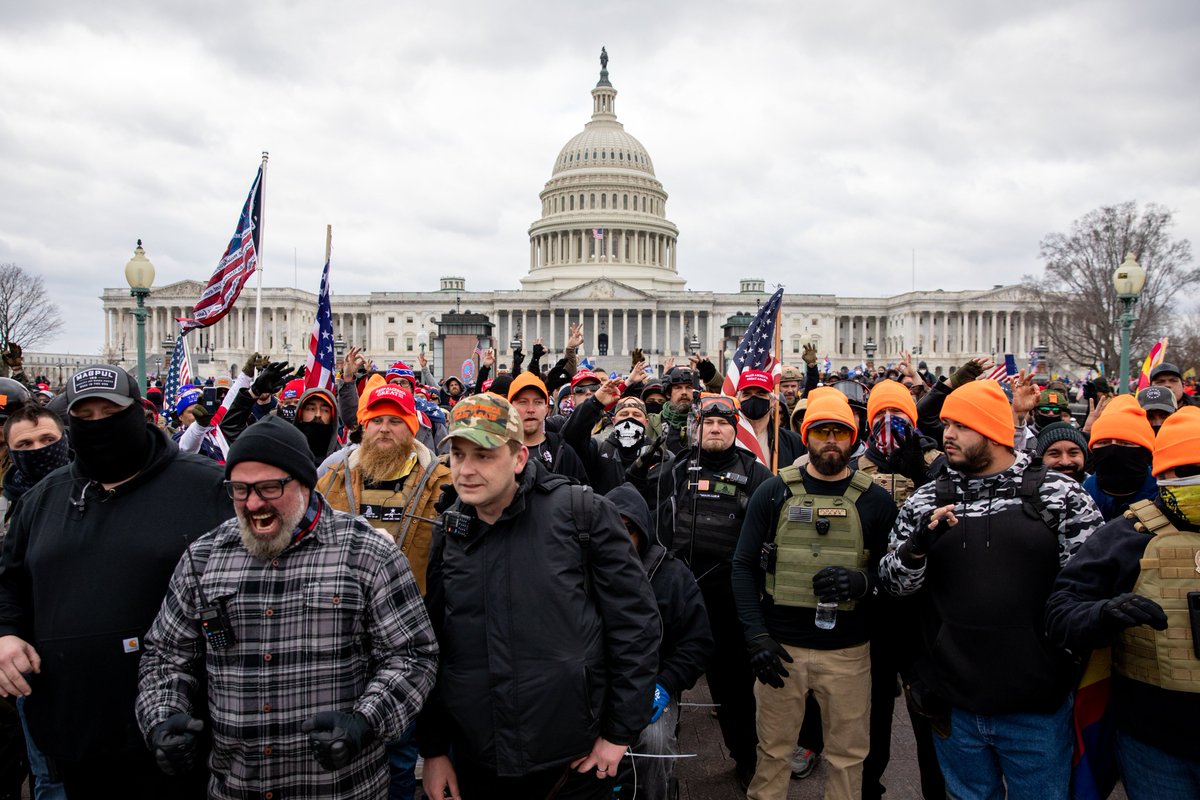
It’s 11:50 a.m. A group of Proud Boys is staging on the east side of Capitol, along with hundreds of Trump supporters. Photo credit: Amanda Andrade-Rhoades/For The Washington Post via Getty Images.
More than a mile away, at 11:52 a.m., Donald Trump Jr. films the president and his inner circle backstage before his father’s speech, marveling at the size of the crowd.
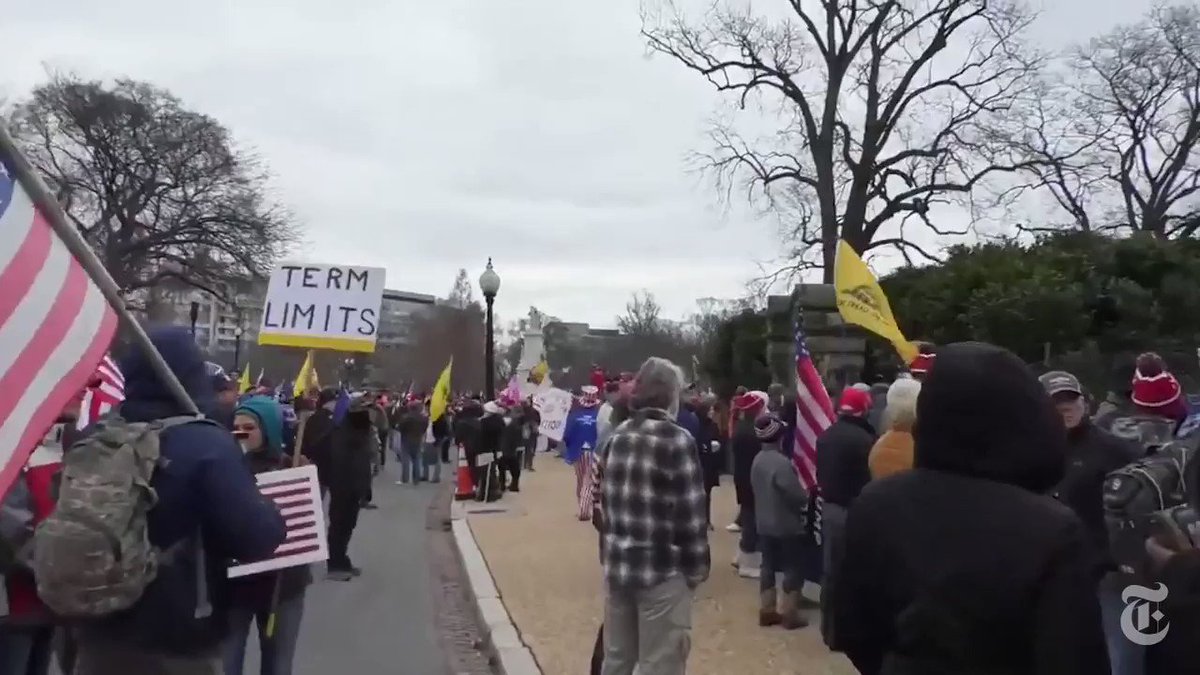
At 12:17 p.m., about 15 minutes into his speech, Trump calls on his supporters to walk to the Capitol. While his speech would go on for another hour, some of the president’s supporters already start walking toward the congressional building.
Here’s part of that crowd — walking from near the White House toward the Capitol as Trump’s speech continues — filmed by
@itsa_talia at 12:29 p.m.
At 12:47 p.m., Capitol Police respond to a report of a pipe bomb at the Republican National Committee building, just a block away from the congressional building. Another device is later discovered at the nearby Democratic National Committee.
Attendees from the Trump rally arrive along the west perimeter fence. The crowd of Trump supporters already gathered there becomes more agitated, as seen here in this
@StatusCoup livestream at 12:49 p.m.
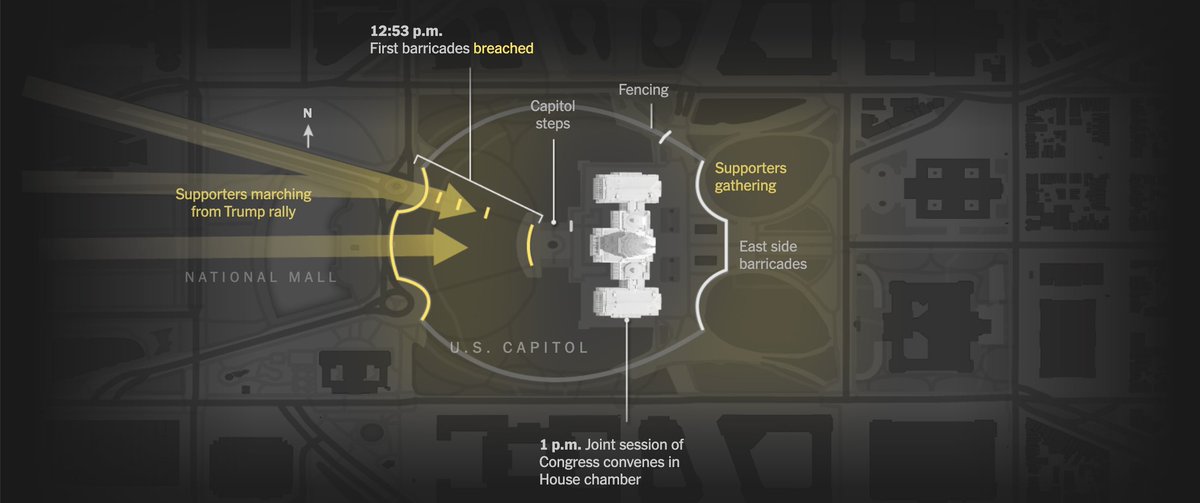
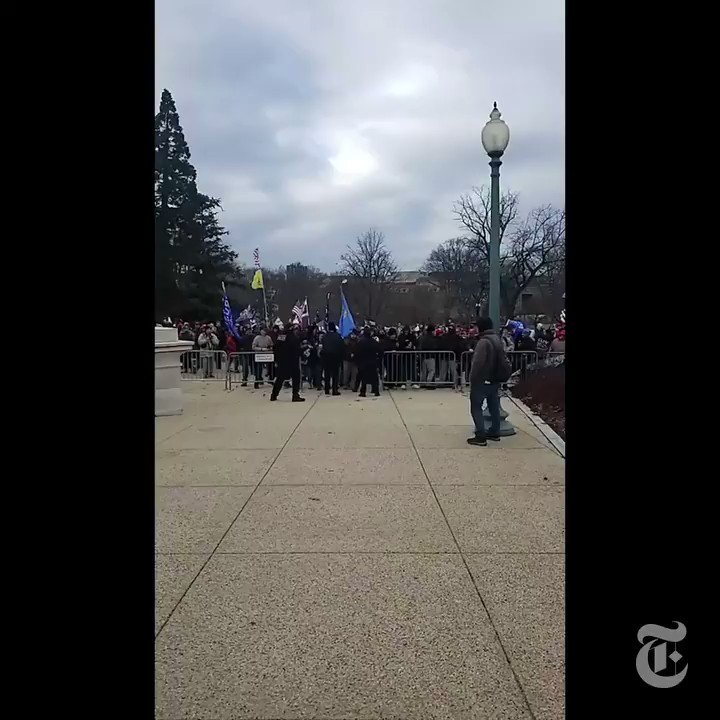
Four minutes later, at 12:53 p.m., some Trump supporters break through the Capitol’s outer barricade on the northwest side. This moment — 20 minutes before Trump’s speech ends — is captured simultaneously by
@ElijahSchaffer, @StatusCoup and
@ABQRAW.
The mob quickly breaks through three additional fences on the western lawns of the Capitol, forcing officers back onto the steps. We mapped that sequence here. Officers in riot gear arrive on the steps at 12:58 p.m.
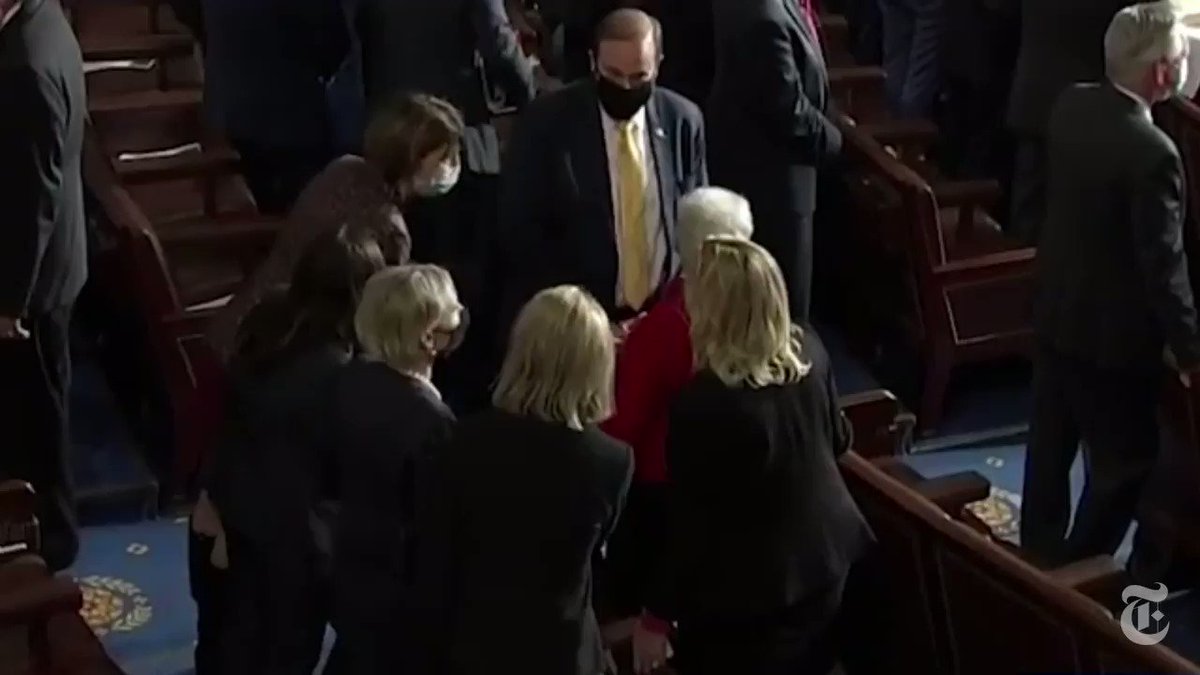
Seemingly unaware that a mob has reached the west Capitol steps, Speaker Nancy Pelosi begins the proceedings to certify the election results just minutes later, at 1:03 p.m. Outside, the chants begin: “Whose House? Our House!”
At 1:12 p.m. Trump’s speech ends with another call for his supporters to march on the Capitol. There, rioters continue to clash with officers, including Metropolitan Police who have now arrived on scene. The clashes will continue for another hour before the building is breached.
Inside the Capitol, there’s no indication that lawmakers know the extent of the violence outside. Here’s Senator Ted Cruz arguing that the Senate should not certify Arizona’s votes, as rioters who believe the same clash with the police outside.
At 1:49 p.m., nearly an hour after protesters breached the western perimeter and one minute after Sen. Cruz begins speaking, the Capitol Police chief makes a request for immediate assistance from the D.C. National Guard, a timeline released by the Pentagon shows.
Thus far, all of these violent confrontations have happened on the west side of the Capitol. But on the east side, where police presence is much smaller, another mob is about to reach the doors of the building.
A widely circulated video shows the police removing a barricade at the northeast corner of the building after violent confrontations between officers and the crowd. This is at 1:58 p.m.
Two minutes later, at 2 p.m., a YouTube livestream captures the exact moment a crowd also breaches the larger barricade on the east side. This is the last physical barrier protecting that side of the Capitol.
Back on the west side of the Capitol, at 2:10 p.m., rioters breach the final barricade at the top of the northwest stairs. They push past officers and rush toward a door and windows that lead into the Senate-side of the building.
At the same time, Senator Kyrsten Sinema of Arizona is urging her colleagues to “reject this meritless challenge and uphold the will of Arizona’s voters.” Rioters surround the building on both sides, but the debate in Congress continues uninterrupted.
It’s around 2:11 p.m. when the first rioters make their way into the Capitol building. Two minutes later, as some reach the east staircase leading to the Senate chamber, the Senate is called into recess and Senator James Lankford is warned of “protesters in the building.”
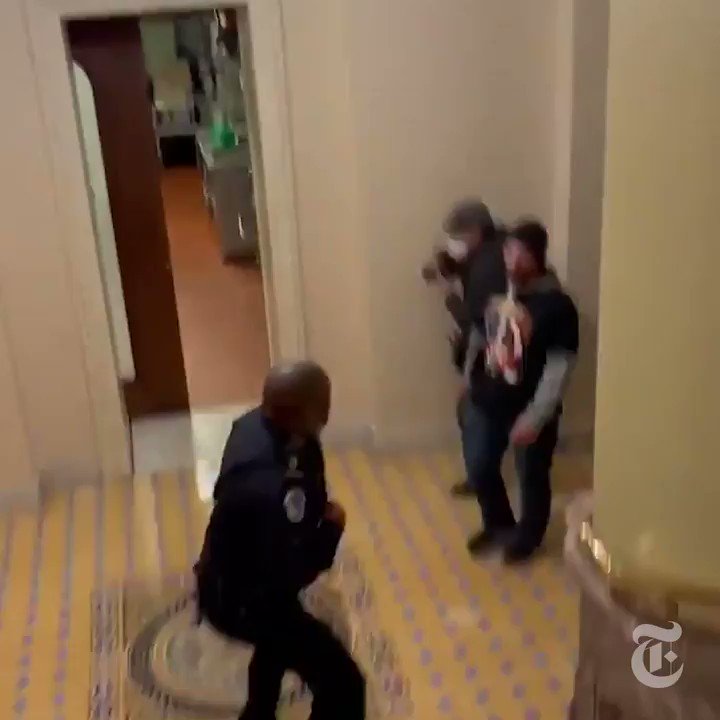
At 2:14 p.m., the rioters chase an officer to the top of the stairs, where entrances to the Senate chamber are in both directions. Video filmed by
@igorbobic shows the officer leading rioters one way, where backup arrives. The police inside the chamber are still locking doors.
Two minutes later, the mob stands off with the police in the hall, steps away from the entrance to the Senate chamber. It’s more than five minutes after the first rioters have broken into the building before the House also goes into recess. Photo credit: Win Mcnamee/Getty Images.
Outside the building, the crowd is growing as attendees from the president’s rally continue to stream in. Three hours will pass before the sergeant-at-arms declares the building secure.
https://t.co/HSsHQLiEpp
This was a collaborative effort between the
@nytimes Graphics desk and the Visual Investigations team:
@LaurenLeatherby, @arielle_designs, @singhvianjali, @trbrtc, @dwtkns, @simonelandon and
@bottidavid.
And made possible by contributions from
@_stella_cooper, @CoraEngelbrecht, @evanchill, @robinnyc7, @btdecker, @malachybrowne, @Poorpotatoface, @davehorn, @whitney_hurst, @Tina_Kelso, @aroyalbox, @archietse and
@scottreinhard.
Our team is continuing to investigate the siege of the Capitol. You can follow all Visual Investigations work here:
https://t.co/bc18NTp5wV