This year's polls would have been *way* worse than 2016 with a 2016 methodology
Some early theories on went went wrong with the pre-election polling this
This year's polls would have been *way* worse than 2016 with a 2016 methodology
Since 2016, pollsters got better at the adjustments, but the underlying sample got worse
In 2016, the polls *did* show Trump doing way better among those voters.
In 2020, they did not. And they were dead wrong.
Same story with seniors.
At this stage, it's really just speculation. We'll know more later--it's too early for an autopsy.
But here's some early speculation
He thinks it's the pandemic: Dems took it seriously, stayed home and started responding to polls more. GOP did not.
Remember those studies that said Biden does better in a COVID hotspot?
Well, Biden didn't do better in COVID hotspots.
So maybe... that just means the polls were biased by COVID
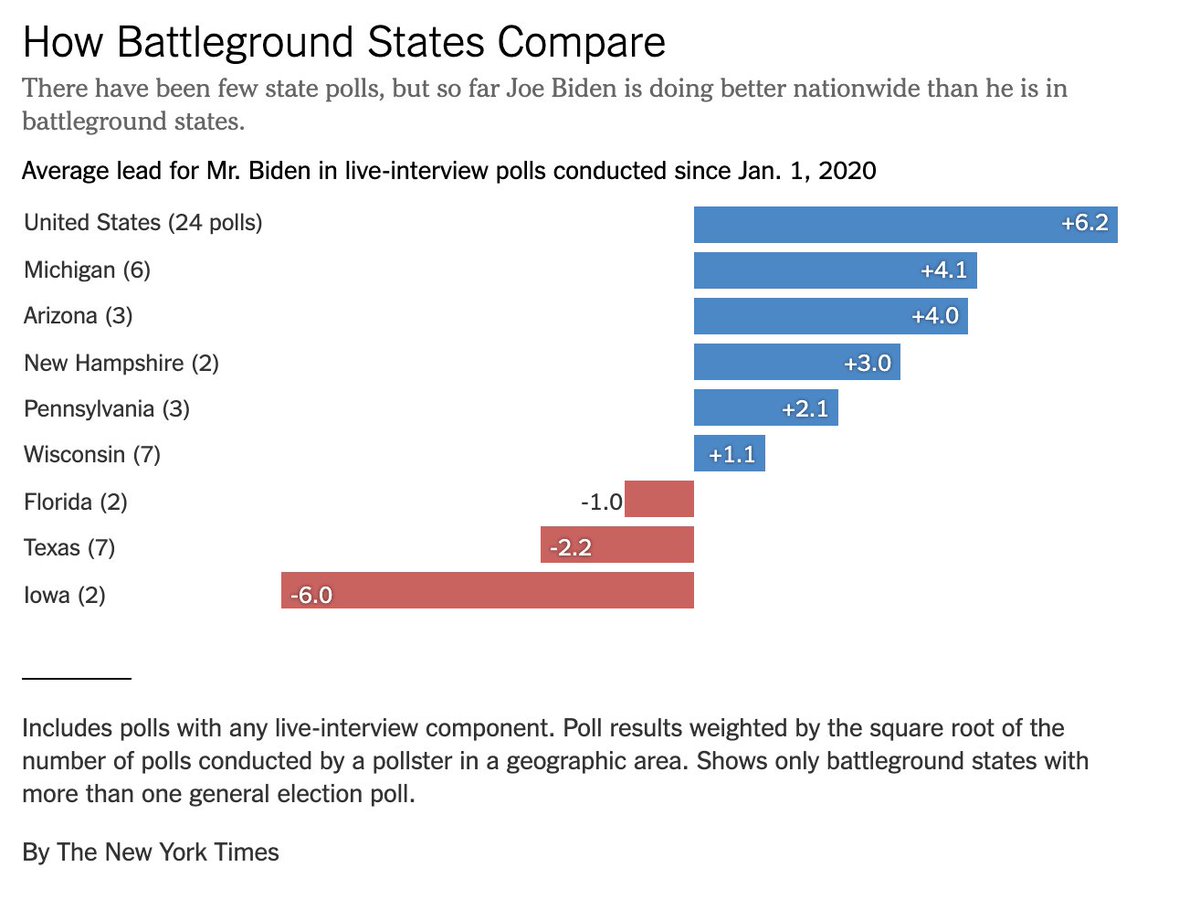
Our 10/19 battleground polls were... pretty accurate!
So were the state polls conducted from Jan-Mar 20.
Now, maybe these polls were just as bad--and Trump actually led big back then!
Or maybe... the bias started since then
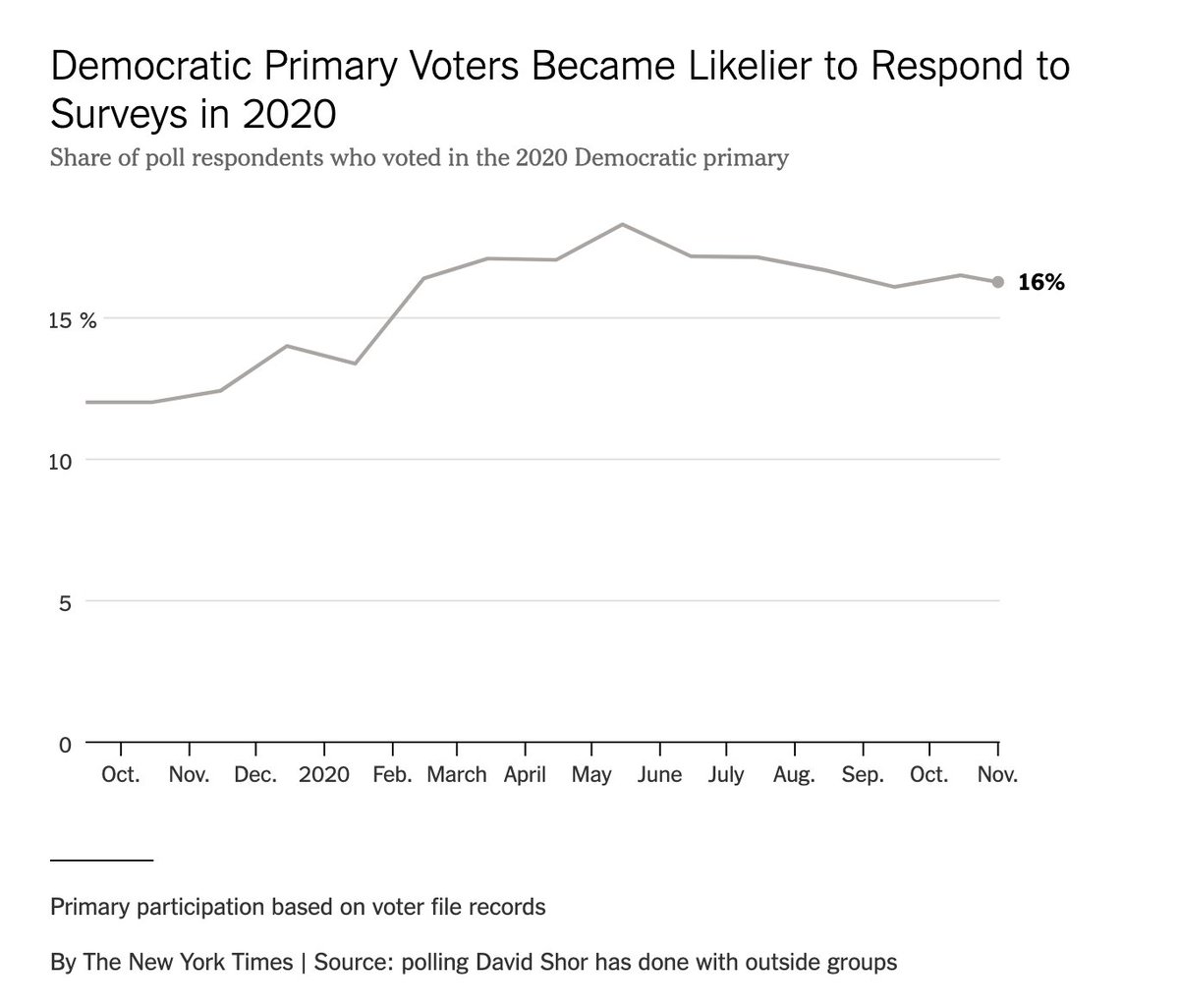
It's possible that four more years of Trump did four more years worth of damage to the credibility of media/polls, creating a 'hidden Trump' vote that didn't really exist in 2016
There were a lot of polls showing no LV/RV gap or even a D turnout edge. Not sure that will hold up with final data.
It certainly didn't hold up in FL, where we have great data already.
More from Nate Cohn
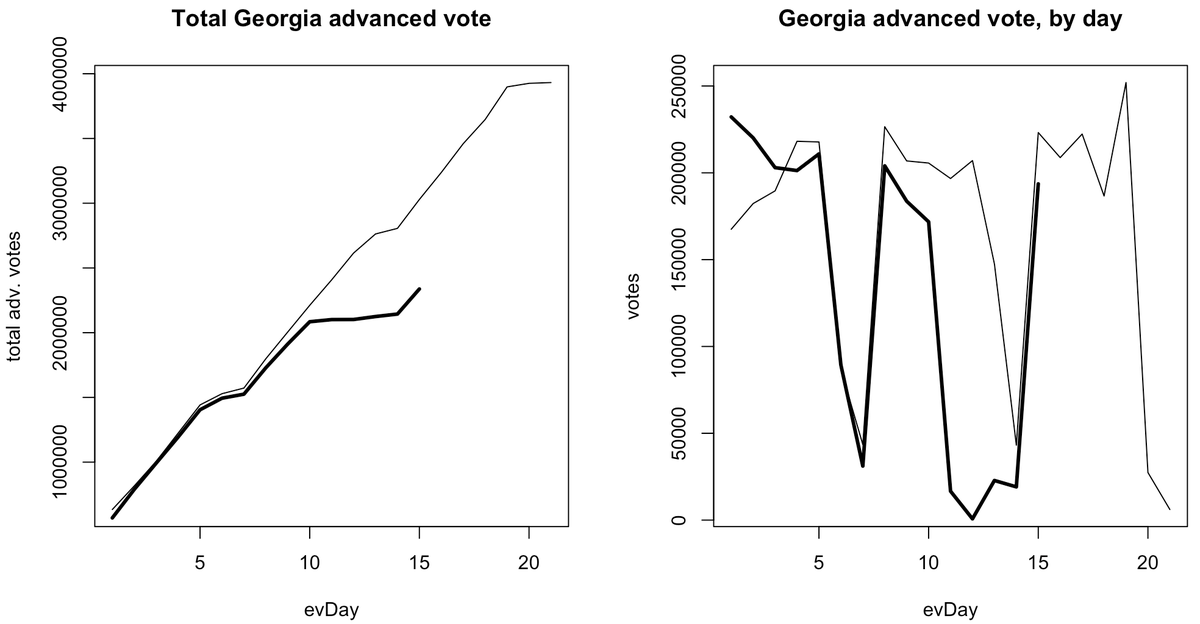
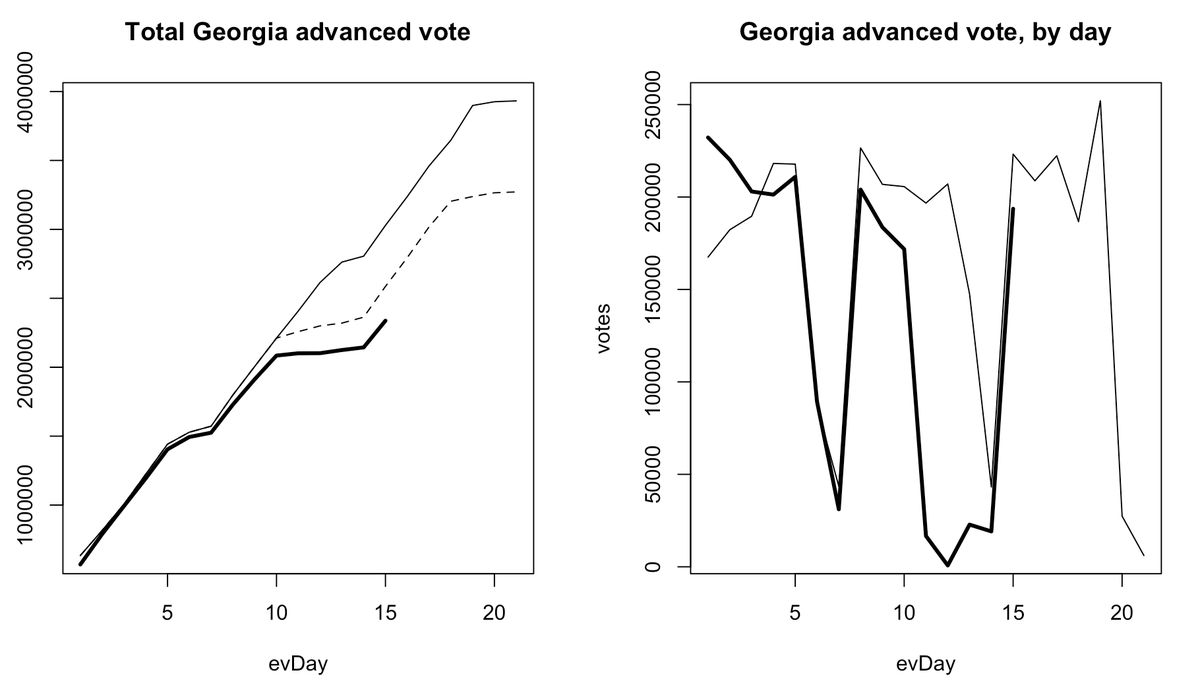
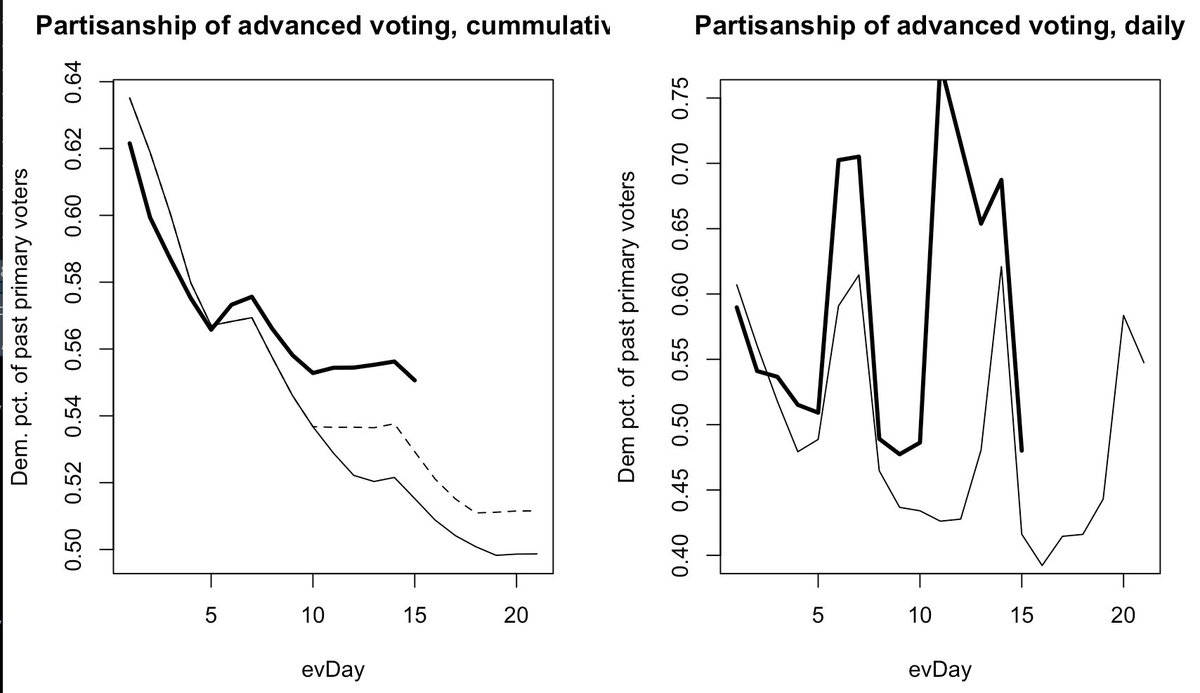
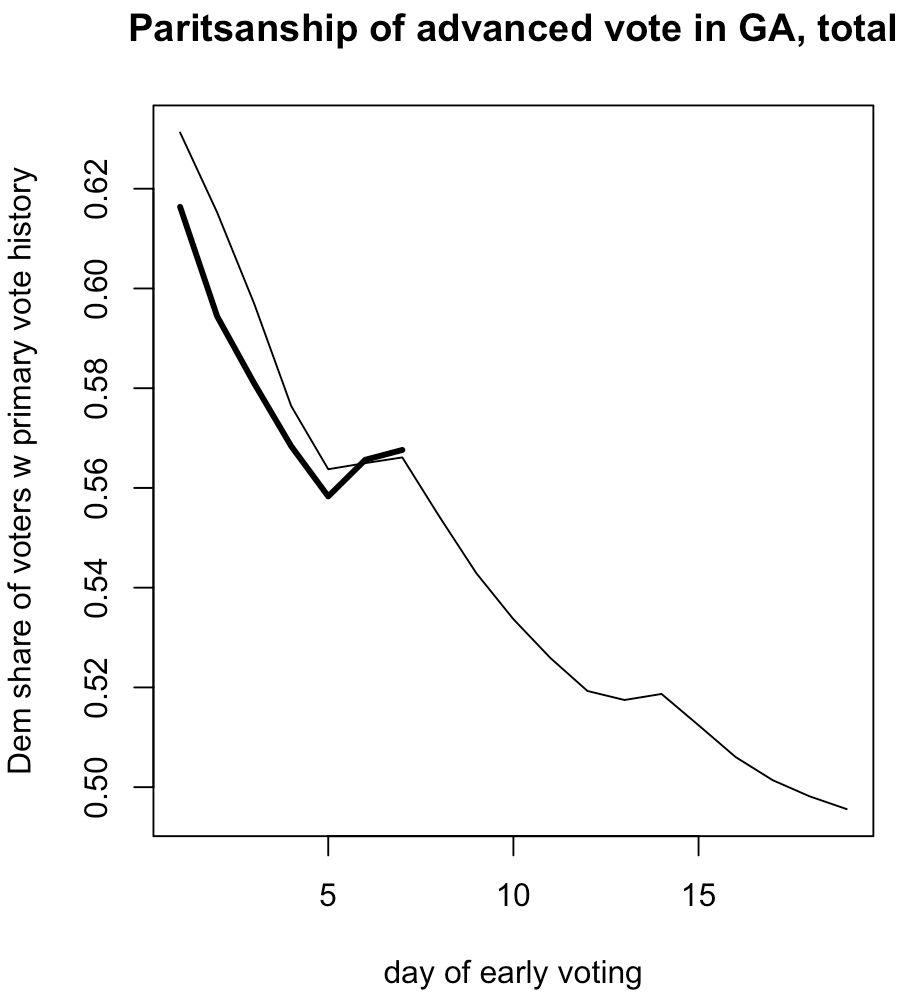
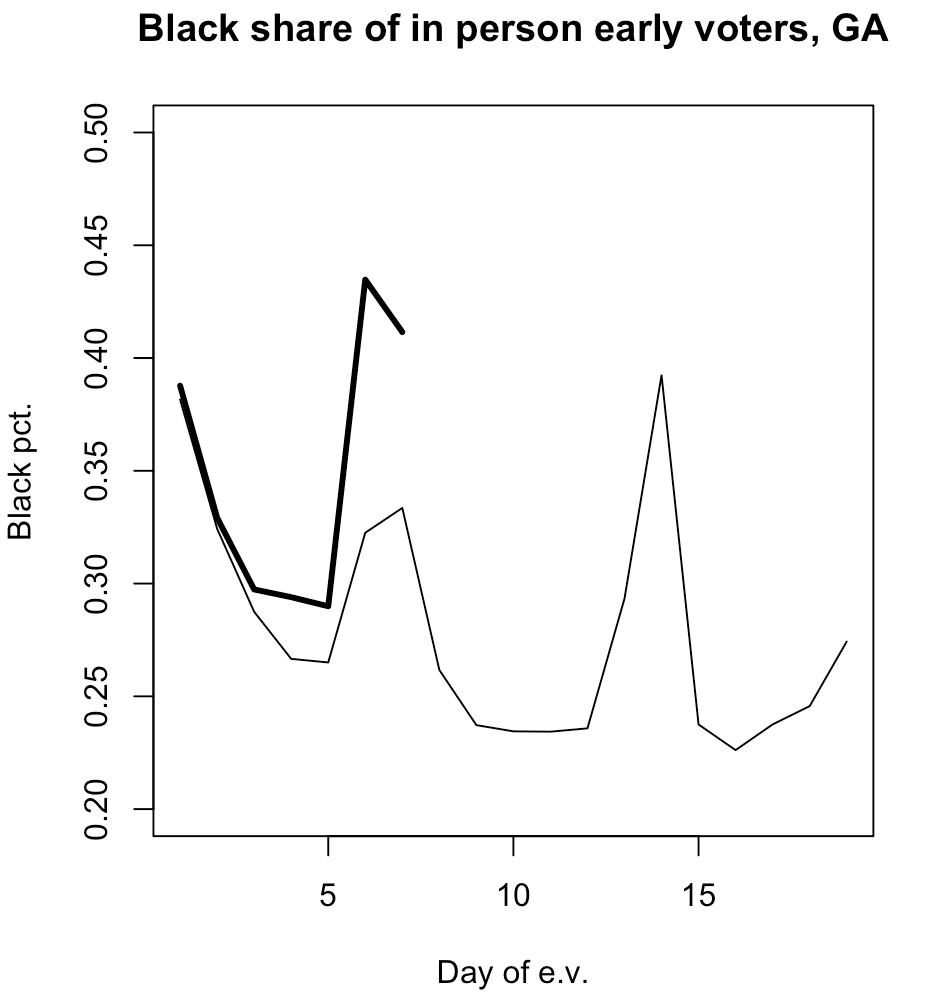
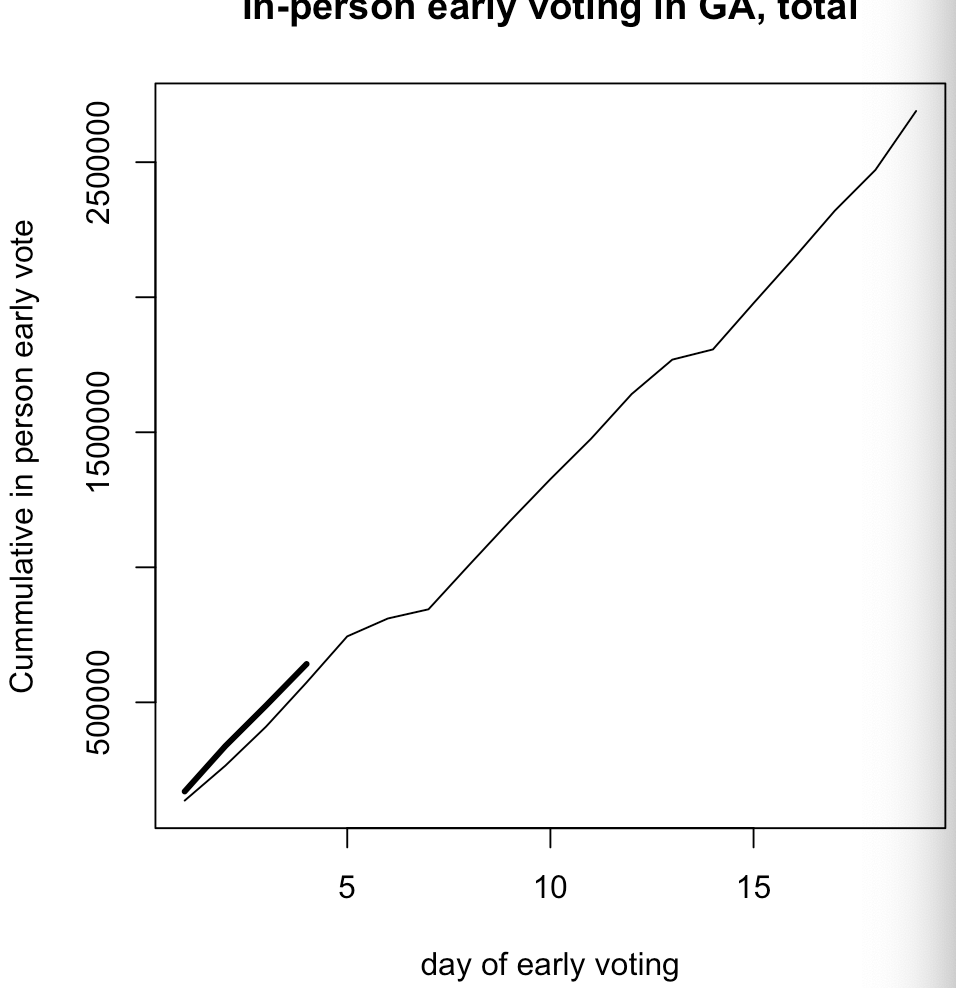
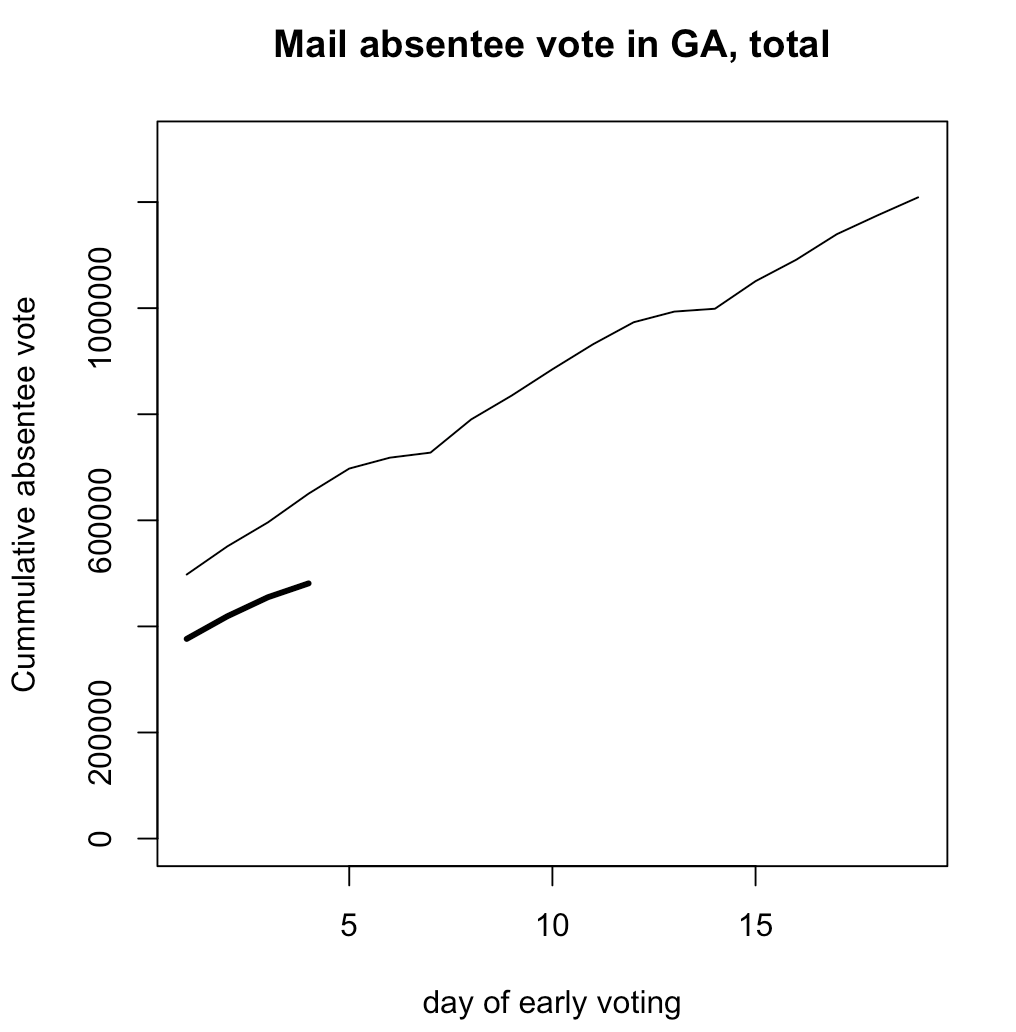
One question I keep getting about the Georgia early voting is about age: isn't the electorate older, and how much does it hurt the Democrats?
So far the answer is 'not really' and 'not at all.'
The first question is easy enough. As of today, youth turnout is basically keeping pace with the general, controlling for the slightly reduced opportunities to vote. This augurs for an unusually young
The second question is more interesting: are the Democrats hurt by lower youth turnout? So far the answer is no, and there are two reasons.
One reason: there's not a *huge* gen. gap. Maybe young voters are D+20 while >65 are R+15. You need a big gap for modest changes to matter.
The second reason is maybe more interesting: the young voters who have voted are just a lot more Democratic than the young voters who turned out at this stage of the general election
By party primary vote history, the 18-29 year olds who have voted so far are D 38, R 12. They were D 33, R 14 in the general at this stage.
So far the answer is 'not really' and 'not at all.'
The first question is easy enough. As of today, youth turnout is basically keeping pace with the general, controlling for the slightly reduced opportunities to vote. This augurs for an unusually young
it's not a very material difference pic.twitter.com/ygdD3hb8b7
— Nate Cohn (@Nate_Cohn) December 29, 2020
The second question is more interesting: are the Democrats hurt by lower youth turnout? So far the answer is no, and there are two reasons.
One reason: there's not a *huge* gen. gap. Maybe young voters are D+20 while >65 are R+15. You need a big gap for modest changes to matter.
The second reason is maybe more interesting: the young voters who have voted are just a lot more Democratic than the young voters who turned out at this stage of the general election
By party primary vote history, the 18-29 year olds who have voted so far are D 38, R 12. They were D 33, R 14 in the general at this stage.
More from Politics

So let's see a show of hands: how many of you even knew Huber was digging into the Clinton Foundation? While he was assisting Horowitz in his digging into the FISC/Steele Dossier/Fusion GPS/Perkins Coie/DNC/Hillary campaign stuff?
I'm sure Huber is coming to DC *only* to discuss Clinton Foundation things with Meadows and his committee.
He for certain, like, won't be huddling with Horowitz or that new guy, Whitaker while he's in town. That would NEVER HAPPEN. [wink wink wink!] 😉
I just spent a year and a half telling you they will SHOW YOU what they are REALLY DOING when they are READY.
Not before.
No matter how much whining is done about it.
I'm exhausted but it's worth it.
Now you know why they're f**king TERRIFIED of Whitaker, the closer tapped by Trump to come in late for the hysterical fireworks that will ensue soon.
Look who's suddenly fund raising for his legal defen- er, I mean, ha ha - his reelection campaign!
Breaking News: House GOP to hold investigative hearing into DOJ\u2019s handling of Clinton Foundation probe. Top prosecutor to be summoned. https://t.co/HogyXHHcvo
— John Solomon (@jsolomonReports) November 21, 2018
I'm sure Huber is coming to DC *only* to discuss Clinton Foundation things with Meadows and his committee.
He for certain, like, won't be huddling with Horowitz or that new guy, Whitaker while he's in town. That would NEVER HAPPEN. [wink wink wink!] 😉
I just spent a year and a half telling you they will SHOW YOU what they are REALLY DOING when they are READY.
Not before.
No matter how much whining is done about it.
I'm exhausted but it's worth it.
Now you know why they're f**king TERRIFIED of Whitaker, the closer tapped by Trump to come in late for the hysterical fireworks that will ensue soon.
Look who's suddenly fund raising for his legal defen- er, I mean, ha ha - his reelection campaign!
President Trump just attacked Adam on Twitter with his most profane insult yet. Will you chip in $5 to send Trump a message and show him you stand with Adam?
— Adam Schiff (@AdamSchiff) November 19, 2018


Ruben Verastigui is (allegedly) a horrifying pedo monster and has been on the digital teams for the @SenateGOP, National @GOP and the Trump campaign. I didn't want to talk about him, but I think it's important.
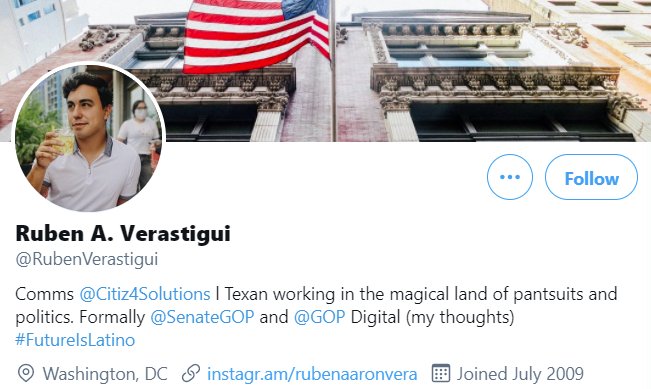
The allegations against RV are among the most horrifying I have read. It involves possessing and sharing images of rape of infants and plans to take action in the real world of that nature. I don't really recommend reading the details, but they are here.
These allegations were first brought to light by @jaredlholt who has an excellent thread. He warns people that they may want to avoid the end of the thread because it includes shots of the specific allegations. I make the same warning.
RV was a main stage speaker at the 2013 March For Life.
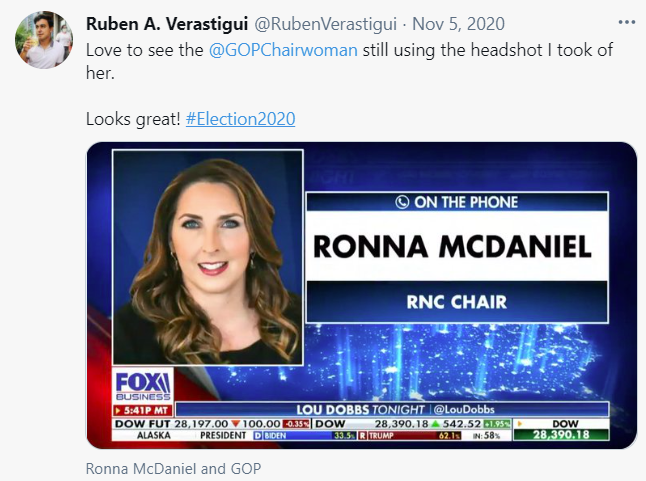
RV did a headshot for Ronna McDaniel, GOP Chairwoman
The allegations against RV are among the most horrifying I have read. It involves possessing and sharing images of rape of infants and plans to take action in the real world of that nature. I don't really recommend reading the details, but they are here.
These allegations were first brought to light by @jaredlholt who has an excellent thread. He warns people that they may want to avoid the end of the thread because it includes shots of the specific allegations. I make the same warning.
NEW: D.C. Police arrested Ruben Verastigui -- a former "senior digital strategist" for the Senate Republican Conference -- on charges of distribution of child pornography resulting from a time span that allegedly included his time at the SRC. How I confirmed ID in thread (1/?) pic.twitter.com/AcZ7c2sBKb
— Jared Holt (@jaredlholt) February 6, 2021
RV was a main stage speaker at the 2013 March For Life.
RV did a headshot for Ronna McDaniel, GOP Chairwoman