
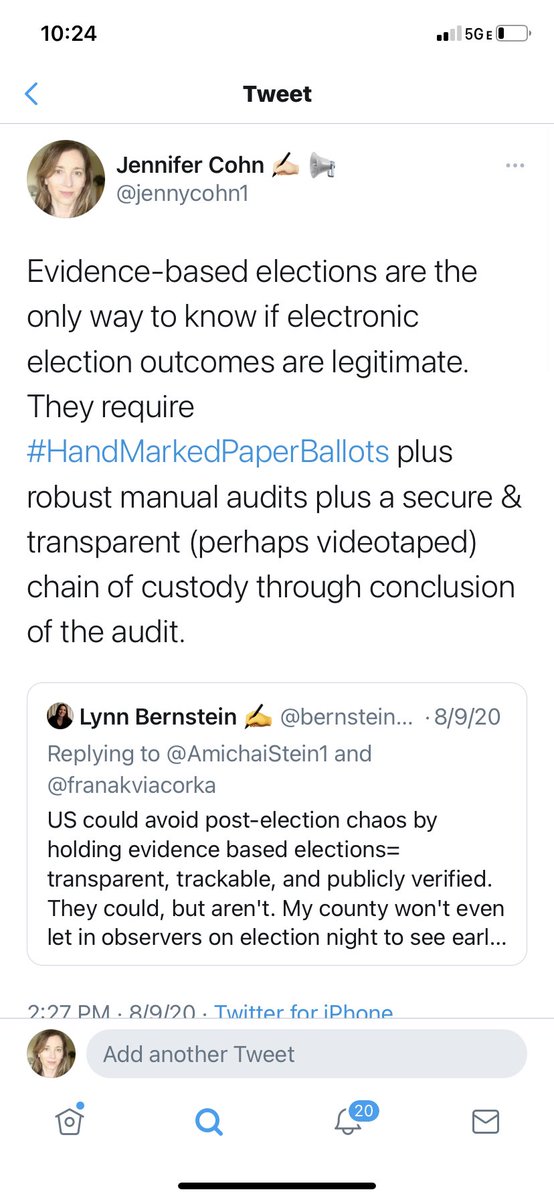
Warning. With remote access to e-poll books (yes, vendors have it & I’m told they pass around a url to watch), bad actors cld track in real time how many votes they need & where to alter election outcomes. This wld NOT work w/ vote by mail. 1/
7/https://t.co/CpRzENXPON
See also "Interface" by @nealstephenson for the possible outcomes of real-time access to polling data.
— Rob Chandhok (@robchandhok) November 10, 2020
More from Jennifer Cohn ✍🏻 📢
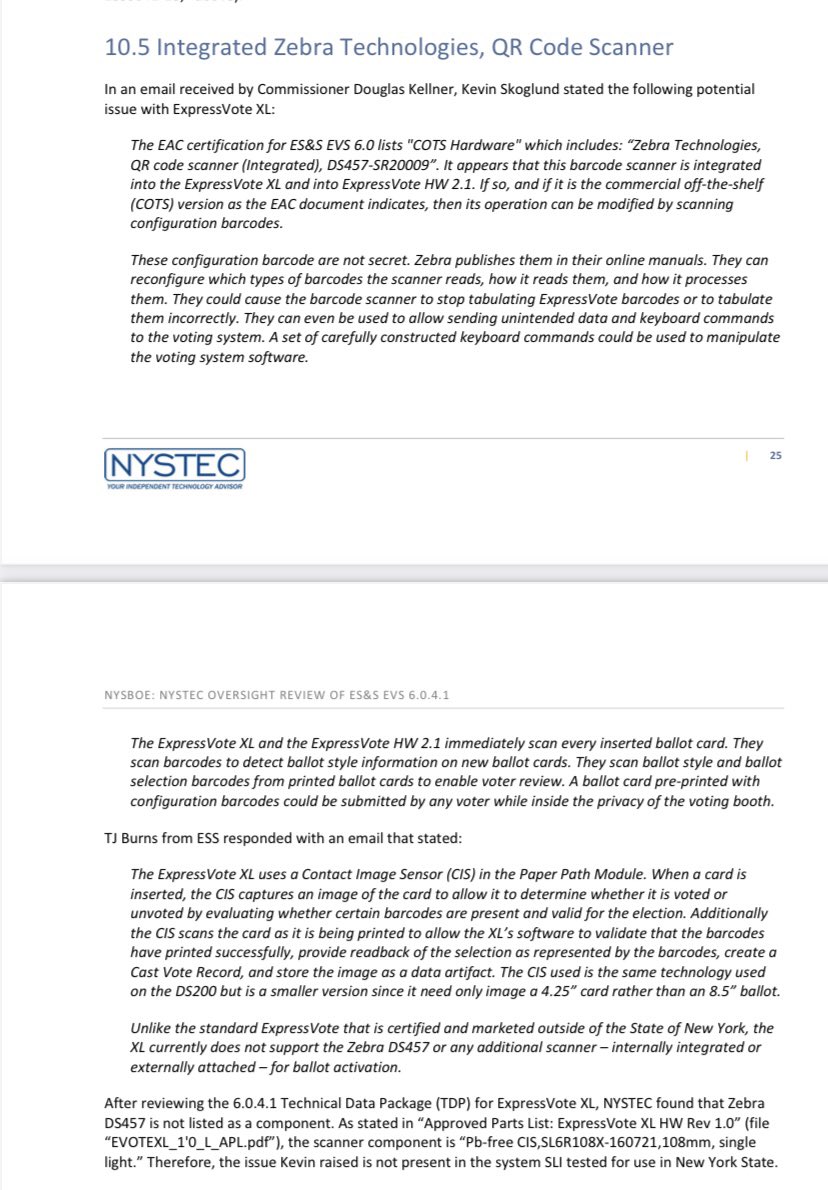
.@CharlieKirk11’s “Turning Point Action was listed as a participant in [the] ... rally, which preceded the attack on Capitol Hill. Prior to the rally, in a tweet he later deleted, Kirk said the group wld be involved w/ sending over 80 buses...” 1/
2/ “CNBC captured a screenshot of tweet before it was deleted.
Kirk recently said on his podcast that those from Turning Point got back on their buses & left following the conclusion of the rally.”
3/ Thread
4/ 😳
5/
2/ “CNBC captured a screenshot of tweet before it was deleted.
Kirk recently said on his podcast that those from Turning Point got back on their buses & left following the conclusion of the rally.”
3/ Thread
Here are some of the mainstream donor advised funds who contributed to Turning Point USA, a cosponsor of the protest that preceded the deadly attack on the Capitol.
— Eli Clifton (@EliClifton) January 11, 2021
They helped anonymize contributions for donors.
These numbers are just from each group's most recent tax filing.
4/ 😳
when you brought 80 buses of people to an insurrection and want your audience of republican millionaires to forget it pic.twitter.com/phnvCVzJw9
— John Whitehouse (@existentialfish) January 11, 2021
5/
How did 26-year-old Charlie Kirk go from living with his parents to a waterfront condo? Over a short period of time, his pay from the pro-Trump charity he co-founded rose to 300k. https://t.co/k9UO83awsi
— ProPublica (@propublica) January 13, 2021
This analogy is unfair. In 04, exit polls suggested Kerry had won, and the Bush administration itself had helped fund exit polls in Ukraine that year & supported a Ukrainian election re-do based in part based on the exit polls. In 2020, exit polls favored Biden, not Trump. 1/
2/ US State Dept commentary re the 2004 election in Ukraine and the discrepancy between the exit polls (which suggested a pro-West Yuschenko victory) and official results (which suggested a pro-Russia Yanukovych victory).
3/ The 2004 election in Ukraine was re-done and produced the opposite result, consistent with the exit polls.
4/ Exit polls in the US around the same time as Ukraine’s 2004 election suggested a solid Kerry victory. Voters had every reason to question why the Bush administration considered exit polls reliable in Ukraine but not in the US at the same time. https://t.co/SwUPeRnGtf
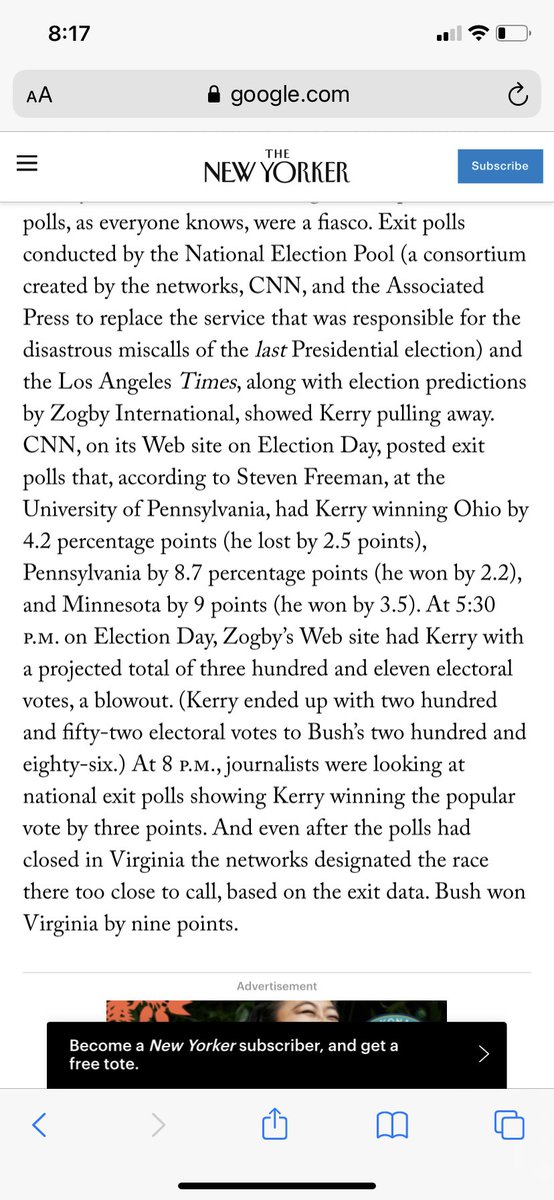
Discussion of Ohio 2004. 5/
In 2004, election truthers trotted out supposed statistical anomolies to try and "prove" Kerry won Ohio. It was bunk. Now some GOP folks are making similar arguments to claim Trump won the election. This is bunk too.
— Jonathan H. Adler (@jadler1969) November 28, 2020
2/ US State Dept commentary re the 2004 election in Ukraine and the discrepancy between the exit polls (which suggested a pro-West Yuschenko victory) and official results (which suggested a pro-Russia Yanukovych victory).
3/ The 2004 election in Ukraine was re-done and produced the opposite result, consistent with the exit polls.
4/ Exit polls in the US around the same time as Ukraine’s 2004 election suggested a solid Kerry victory. Voters had every reason to question why the Bush administration considered exit polls reliable in Ukraine but not in the US at the same time. https://t.co/SwUPeRnGtf
Discussion of Ohio 2004. 5/
More from Politics


My piece in the NY Times today: "the Trump administration is denying applications submitted to the United States Citizenship and Immigration Services at a rate 37 percent higher than the Obama administration did in 2016."
Based on this analysis: "Denials for immigration benefits—travel documents, work permits, green cards, worker petitions, etc.—increased 37 percent since FY 2016. On an absolute basis, FY 2018 will see more than about 155,000 more denials than FY 2016." https://t.co/Bl0naOO0sh
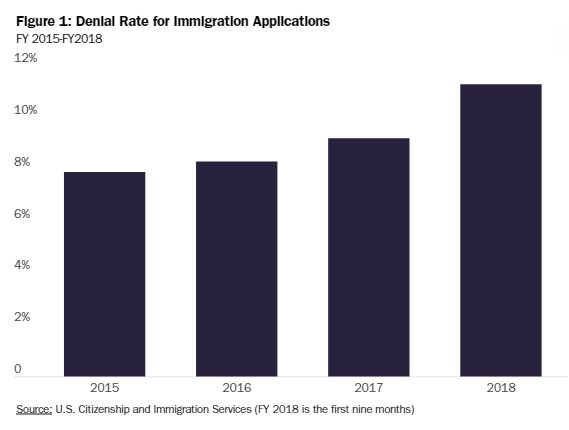
"This increase in denials cannot be credited to an overall rise in applications. In fact, the total number of applications so far this year is 2 percent lower than in 2016. It could be that the higher denial rate is also discouraging some people from applying at all.."
Thanks to @gsiskind for his insightful comments. The increase in denials, he said, is “significant enough to make one think that Congress must have passed legislation changing the requirements. But we know they have not.”
My conclusion:
Based on this analysis: "Denials for immigration benefits—travel documents, work permits, green cards, worker petitions, etc.—increased 37 percent since FY 2016. On an absolute basis, FY 2018 will see more than about 155,000 more denials than FY 2016." https://t.co/Bl0naOO0sh
"This increase in denials cannot be credited to an overall rise in applications. In fact, the total number of applications so far this year is 2 percent lower than in 2016. It could be that the higher denial rate is also discouraging some people from applying at all.."
Thanks to @gsiskind for his insightful comments. The increase in denials, he said, is “significant enough to make one think that Congress must have passed legislation changing the requirements. But we know they have not.”
My conclusion:


This idea - that elections should translate into policy - is not wrong at all. But political science can help explain why it's not working this way. There are three main explanations: 1. mandates are constructed, not automatic, 2. party asymmetry, 3. partisan conpetition 1/
First, party/policy mandates from elections are far from self-executing in our system. Work on mandates from Dahl to Ellis and Kirk on the history of the mandate to mine on its role in post-Nixon politics, to Peterson Grossback and Stimson all emphasize that this link is... 2/
Created deliberately and isn't always persuasive. Others have to convinced that the election meant a particular thing for it to work in a legislative context. I theorized in the immediate period of after the 2020 election that this was part of why Repubs signed on to ...3/
Trump's demonstrably false fraud nonsense - it derailed an emerging mandate news cycle. Winners of elections get what they get - institutional control - but can't expect much beyond that unless the perception of an election mandate takes hold. And it didn't. 4/
Let's turn to the legislation element of this. There's just an asymmetry in terms of passing a relief bill. Republicans are presumably less motivated to get some kind of deal passed. Democrats are more likely to want to do *something.* 5/
I\u2019m sorry it\u2019s just insane that Democrats are like, \u201cwe won everything and our opening position on relief is $1.9T\u201d and Republicans are like, \u201cwe lost and our opening position is $600B,\u201d and the media will be like, \u201cDemocrats say they want unity but reject this bipartisan deal.\u201d
— Meredith Shiner (@meredithshiner) January 31, 2021
First, party/policy mandates from elections are far from self-executing in our system. Work on mandates from Dahl to Ellis and Kirk on the history of the mandate to mine on its role in post-Nixon politics, to Peterson Grossback and Stimson all emphasize that this link is... 2/
Created deliberately and isn't always persuasive. Others have to convinced that the election meant a particular thing for it to work in a legislative context. I theorized in the immediate period of after the 2020 election that this was part of why Repubs signed on to ...3/
Trump's demonstrably false fraud nonsense - it derailed an emerging mandate news cycle. Winners of elections get what they get - institutional control - but can't expect much beyond that unless the perception of an election mandate takes hold. And it didn't. 4/
Let's turn to the legislation element of this. There's just an asymmetry in terms of passing a relief bill. Republicans are presumably less motivated to get some kind of deal passed. Democrats are more likely to want to do *something.* 5/
You May Also Like








THREAD PART 1.
On Sunday 21st June, 14 year old Noah Donohoe left his home to meet his friends at Cave Hill Belfast to study for school. #RememberMyNoah💙

He was on his black Apollo mountain bike, fully dressed, wearing a helmet and carrying a backpack containing his laptop and 2 books with his name on them. He also had his mobile phone with him.
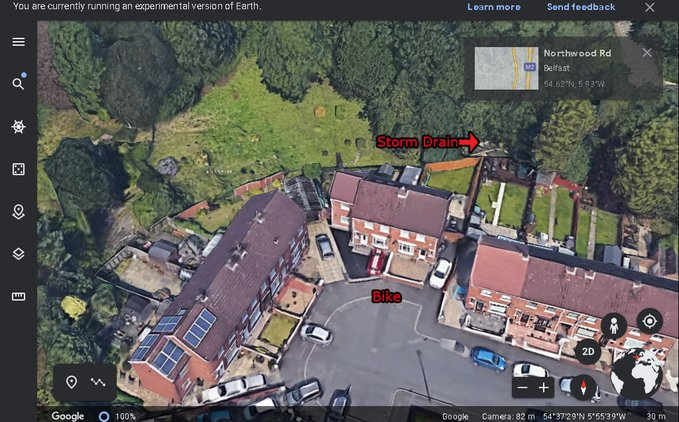
On the 27th of June. Noah's naked body was sadly discovered 950m inside a storm drain, between access points. This storm drain was accessible through an area completely unfamiliar to him, behind houses at Northwood Road. https://t.co/bpz3Rmc0wq
"Noah's body was found by specially trained police officers between two drain access points within a section of the tunnel running under the Translink access road," said Mr McCrisken."
Noah's bike was also found near a house, behind a car, in the same area. It had been there for more than 24 hours before a member of public who lived in the street said she read reports of a missing child and checked the bike and phoned the police.
On Sunday 21st June, 14 year old Noah Donohoe left his home to meet his friends at Cave Hill Belfast to study for school. #RememberMyNoah💙
He was on his black Apollo mountain bike, fully dressed, wearing a helmet and carrying a backpack containing his laptop and 2 books with his name on them. He also had his mobile phone with him.
On the 27th of June. Noah's naked body was sadly discovered 950m inside a storm drain, between access points. This storm drain was accessible through an area completely unfamiliar to him, behind houses at Northwood Road. https://t.co/bpz3Rmc0wq
"Noah's body was found by specially trained police officers between two drain access points within a section of the tunnel running under the Translink access road," said Mr McCrisken."
Noah's bike was also found near a house, behind a car, in the same area. It had been there for more than 24 hours before a member of public who lived in the street said she read reports of a missing child and checked the bike and phoned the police.