Funny, before the election I recall lefties muttering the caravan must have been a Trump setup because it made the open borders crowd look so bad. Why would the pro-migrant crowd engineer a crisis that played into Trump's hands? THIS is why. THESE are the "optics" they wanted.
Funny there are those who think these migrant caravans were a FANTASTIC idea that's going to take the immigration issue away from you.
— Brian Cates (@drawandstrike) November 26, 2018
Like several weeks watching a rampaging horde storm the fences & throw rocks at our border patrol agents & getting gassed = great optics!
More from John Hayward
Excellent analysis! One of our biggest problems is that people think "democracy," all by itself, is a sufficient check on power. I frankly don't understand how anyone can still believe that, but of course they probably won't be taught otherwise in school.
The disturbing flip side of thinking democracy is a magic talisman against tyranny is the belief that democracy sanctifies power - the essence of majoritarianism. "They can't be dictators if we can vote them out of office!" is one of the most dangerous ideas in the world.
The restraints placed on power are MORE important than the process of choosing who gets to wield it. You would be more free under a tightly restrained hereditary monarch than in a "democracy" with totalitarian centralized power.
The human race learned, fairly recently, that elected government is the approach most likely to maximize liberty and human rights, but where on Earth did we get the notion that it's perfect and sufficient all by itself? The world is full of tyrannies that hold elections.
"Democracy" would be the worst of all worlds - tyranny by mob rule, with the oppressors claiming their every fancy was fully and completely sanctified because they won a vote, and why should we let a stubborn minority thwart The Will of the People?
I wrote about how Mike Lee is right about "democracy" https://t.co/1dKUae4TUe
— David Harsanyi (@davidharsanyi) October 9, 2020
The disturbing flip side of thinking democracy is a magic talisman against tyranny is the belief that democracy sanctifies power - the essence of majoritarianism. "They can't be dictators if we can vote them out of office!" is one of the most dangerous ideas in the world.
The restraints placed on power are MORE important than the process of choosing who gets to wield it. You would be more free under a tightly restrained hereditary monarch than in a "democracy" with totalitarian centralized power.
The human race learned, fairly recently, that elected government is the approach most likely to maximize liberty and human rights, but where on Earth did we get the notion that it's perfect and sufficient all by itself? The world is full of tyrannies that hold elections.
"Democracy" would be the worst of all worlds - tyranny by mob rule, with the oppressors claiming their every fancy was fully and completely sanctified because they won a vote, and why should we let a stubborn minority thwart The Will of the People?
More from Politics


Trump is gonna let the Mueller investigation end all on it's own. It's obvious. All the hysteria of the past 2 weeks about his supposed impending firing of Mueller was a distraction. He was never going to fire Mueller and he's not going to
Mueller's officially end his investigation all on his own and he's gonna say he found no evidence of Trump campaign/Russian collusion during the 2016 election.
Democrats & DNC Media are going to LITERALLY have nothing coherent to say in response to that.
Mueller's team was 100% partisan.
That's why it's brilliant. NOBODY will be able to claim this team of partisan Democrats didn't go the EXTRA 20 MILES looking for ANY evidence they could find of Trump campaign/Russian collusion during the 2016 election
They looked high.
They looked low.
They looked underneath every rock, behind every tree, into every bush.
And they found...NOTHING.
Those saying Mueller will file obstruction charges against Trump: laughable.
What documents did Trump tell the Mueller team it couldn't have? What witnesses were withheld and never interviewed?
THERE WEREN'T ANY.
Mueller got full 100% cooperation as the record will show.
BREAKING: President Donald Trump has submitted his answers to questions from special counsel Robert Mueller
— Ryan Saavedra (@RealSaavedra) November 20, 2018
Mueller's officially end his investigation all on his own and he's gonna say he found no evidence of Trump campaign/Russian collusion during the 2016 election.
Democrats & DNC Media are going to LITERALLY have nothing coherent to say in response to that.
Mueller's team was 100% partisan.
That's why it's brilliant. NOBODY will be able to claim this team of partisan Democrats didn't go the EXTRA 20 MILES looking for ANY evidence they could find of Trump campaign/Russian collusion during the 2016 election
They looked high.
They looked low.
They looked underneath every rock, behind every tree, into every bush.
And they found...NOTHING.
Those saying Mueller will file obstruction charges against Trump: laughable.
What documents did Trump tell the Mueller team it couldn't have? What witnesses were withheld and never interviewed?
THERE WEREN'T ANY.
Mueller got full 100% cooperation as the record will show.

Ruben Verastigui is (allegedly) a horrifying pedo monster and has been on the digital teams for the @SenateGOP, National @GOP and the Trump campaign. I didn't want to talk about him, but I think it's important.
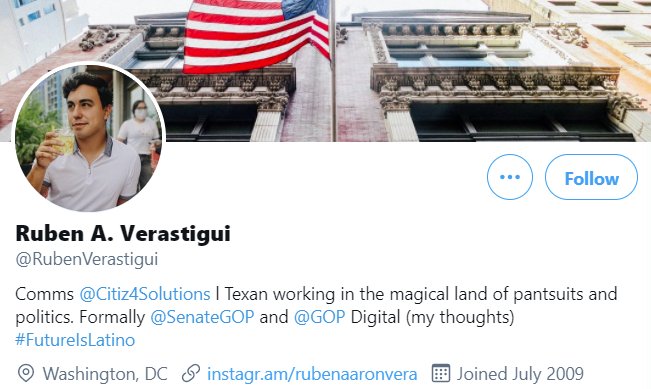
The allegations against RV are among the most horrifying I have read. It involves possessing and sharing images of rape of infants and plans to take action in the real world of that nature. I don't really recommend reading the details, but they are here.
These allegations were first brought to light by @jaredlholt who has an excellent thread. He warns people that they may want to avoid the end of the thread because it includes shots of the specific allegations. I make the same warning.
RV was a main stage speaker at the 2013 March For Life.
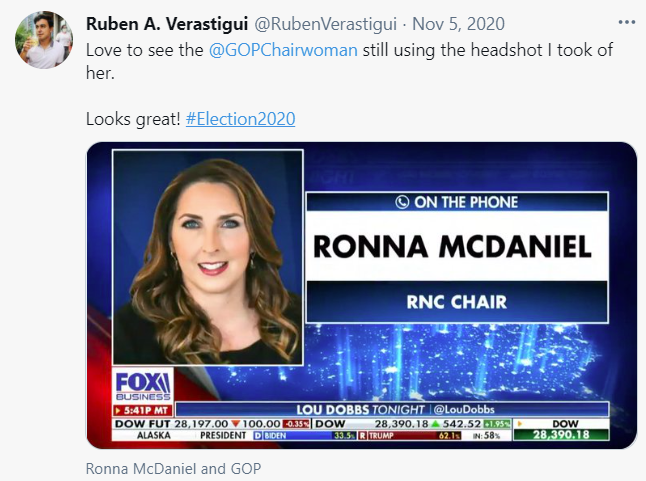
RV did a headshot for Ronna McDaniel, GOP Chairwoman
The allegations against RV are among the most horrifying I have read. It involves possessing and sharing images of rape of infants and plans to take action in the real world of that nature. I don't really recommend reading the details, but they are here.
These allegations were first brought to light by @jaredlholt who has an excellent thread. He warns people that they may want to avoid the end of the thread because it includes shots of the specific allegations. I make the same warning.
NEW: D.C. Police arrested Ruben Verastigui -- a former "senior digital strategist" for the Senate Republican Conference -- on charges of distribution of child pornography resulting from a time span that allegedly included his time at the SRC. How I confirmed ID in thread (1/?) pic.twitter.com/AcZ7c2sBKb
— Jared Holt (@jaredlholt) February 6, 2021
RV was a main stage speaker at the 2013 March For Life.
RV did a headshot for Ronna McDaniel, GOP Chairwoman