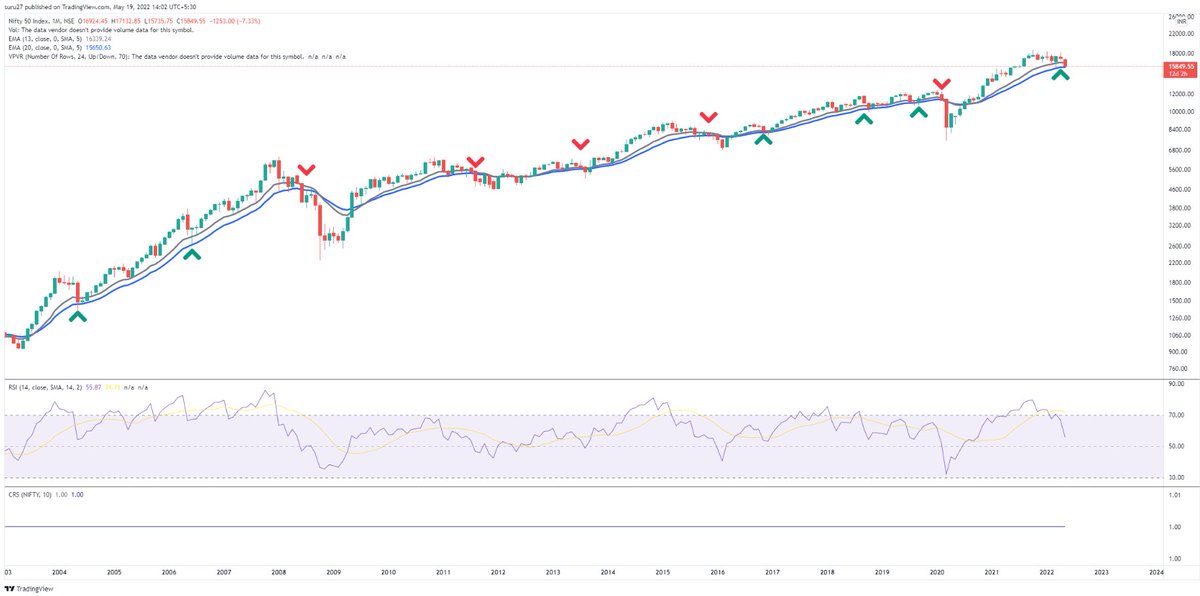
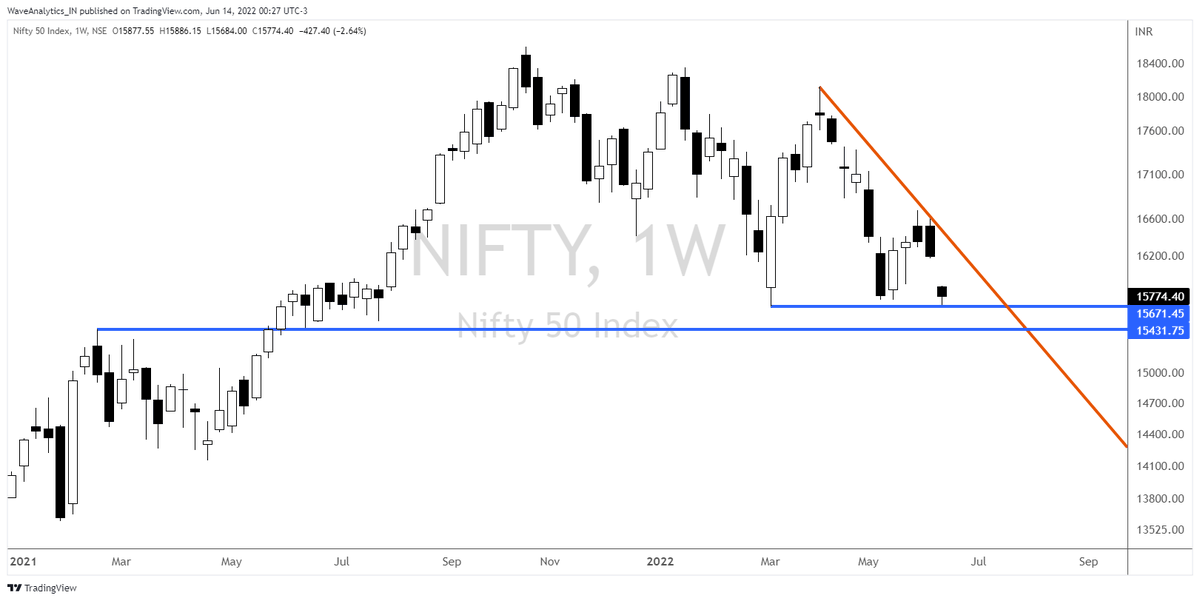
#NIFTY
15 Months to this post. No change in the larger projections.
Long Term Chart of the Year.#NIFTY - Wave 5 (Cycle Degree) Target Zone of 25000-34000 by 2024-2027.
— Piyush Chaudhry (@piyushchaudhry) December 19, 2020
Reassessment on a breach below Blue Trendline. A breach is not a necessary invalidation. Depends on internals.
The dashed path is for representative purpose only. #ElliottWave pic.twitter.com/1xVY4OSr5T
More from Piyush Chaudhry
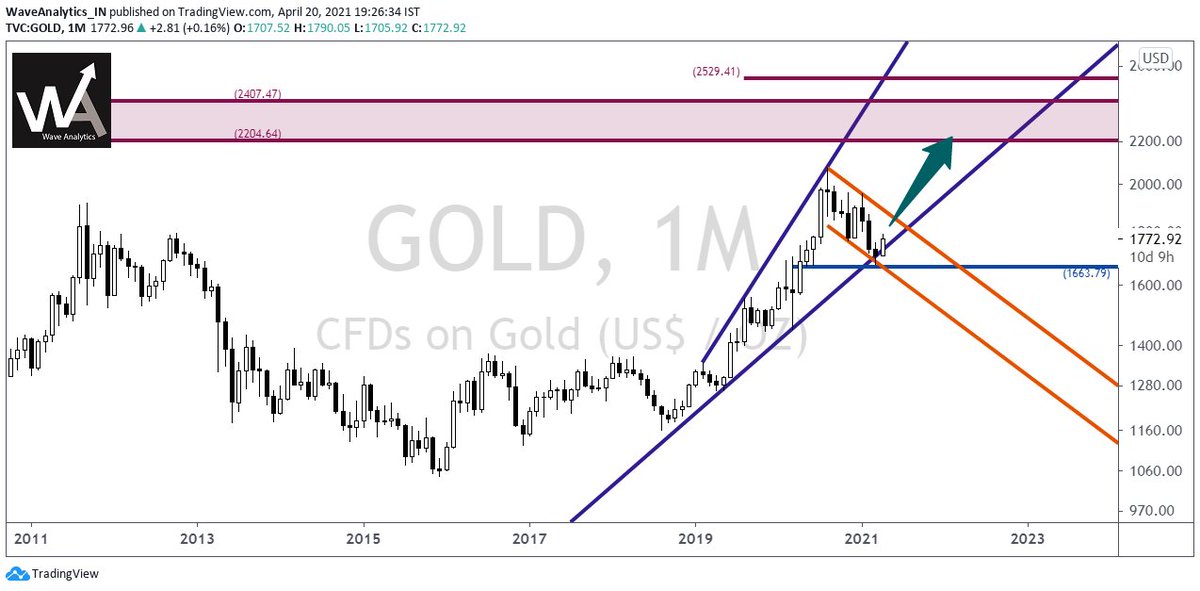

#APOLLOHOSP @ 2110 - Long Term Chart.
— Piyush Chaudhry (@piyushchaudhry) November 12, 2020
I see a fair possibility of the stock rising to 3500-5000 zone over next few years and an open possibility of the next zone of 5000-7500 as well.
Invalidation on break below Blue TL. pic.twitter.com/QJ5aY4eTT8
On the last two instances, when #Brent #CrudeOil crossed 90, NIFTY (in Blue - Left scale) underwent Correction both the times. This is the third such instance.
— Piyush Chaudhry (@piyushchaudhry) February 12, 2022
Below 90, NIFTY & Brent have had positive correlation, with 90 acting as an inflection point & causing the Divergence. pic.twitter.com/Q9dj8YFpuV
More from Niftylongterm


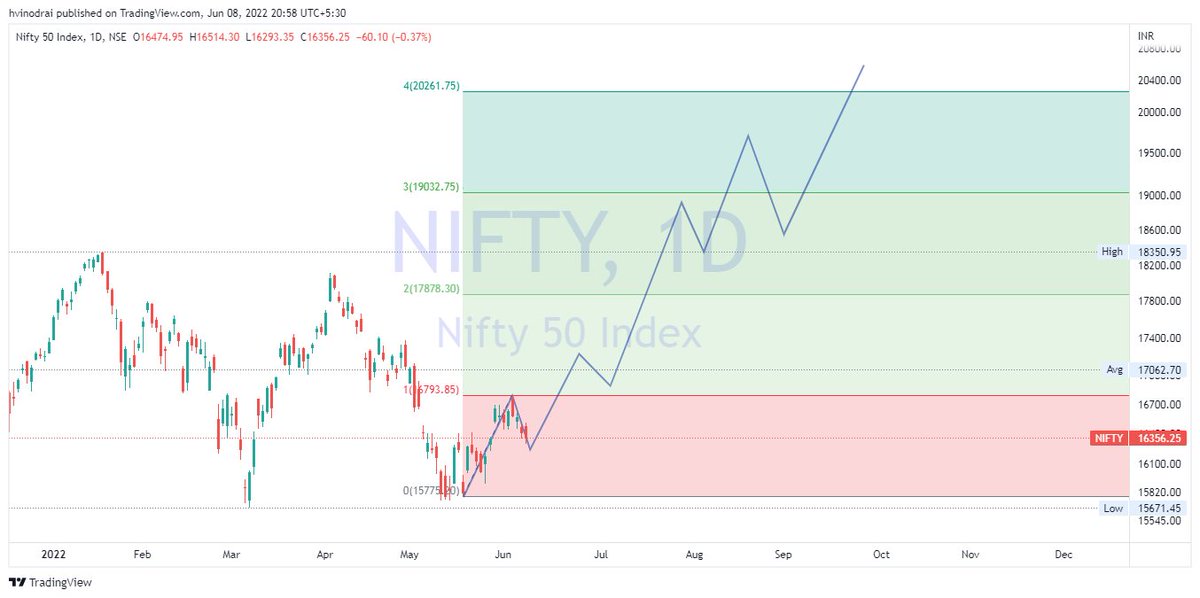

₹Nifty > #Nifty
Tight Bearish divergence on Nifty Weekly. Ready to snap back to Weekly 20 EMA? Current Weekly 20 EMA at 16864. Stay Cautious!
— Krunal Thakkar (@KrunallThakkar) October 22, 2021
\u20b9Nifty > #Nifty
Explanation for the alarm that sounded. Textbook short term top.
Clean technicals.
₹Nifty > #Nifty
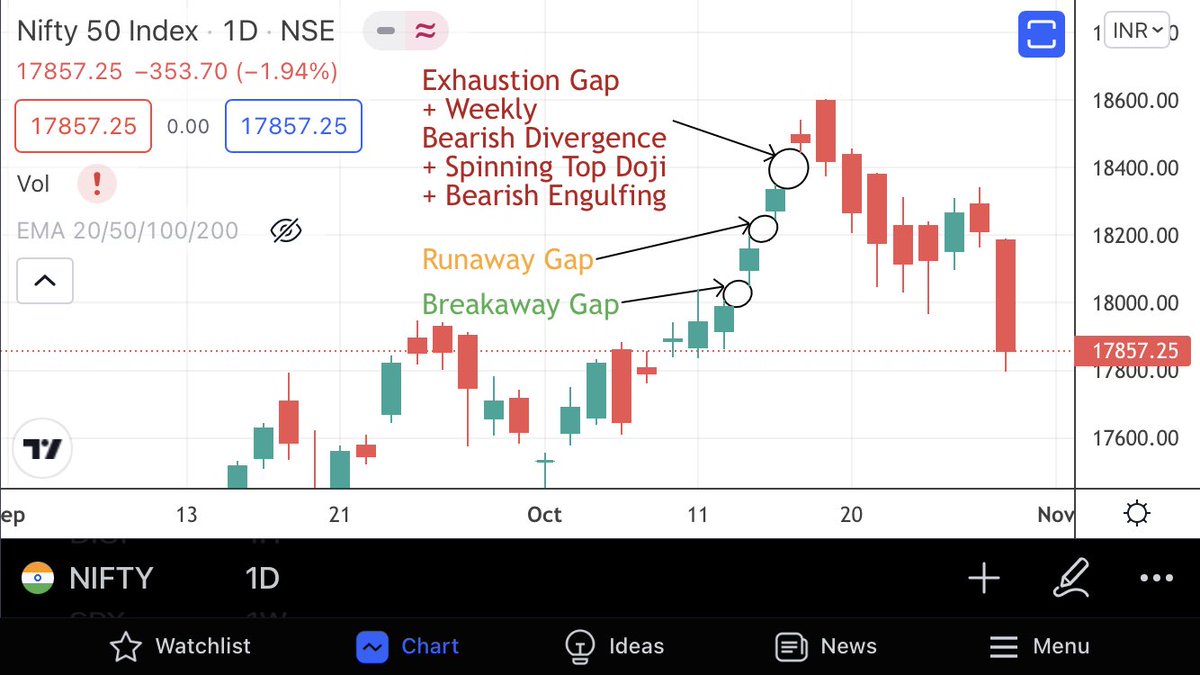
Is Nifty gunning for an ultimate double zig-zag shake out towards 17k which would coincide with weekly 20 EMA and 100 DEMA tag? Fair possibility. Only time will tell. Watch for the break of 50 DEMA and support zone.
₹Nifty > #Nifty
@piyushchaudhry
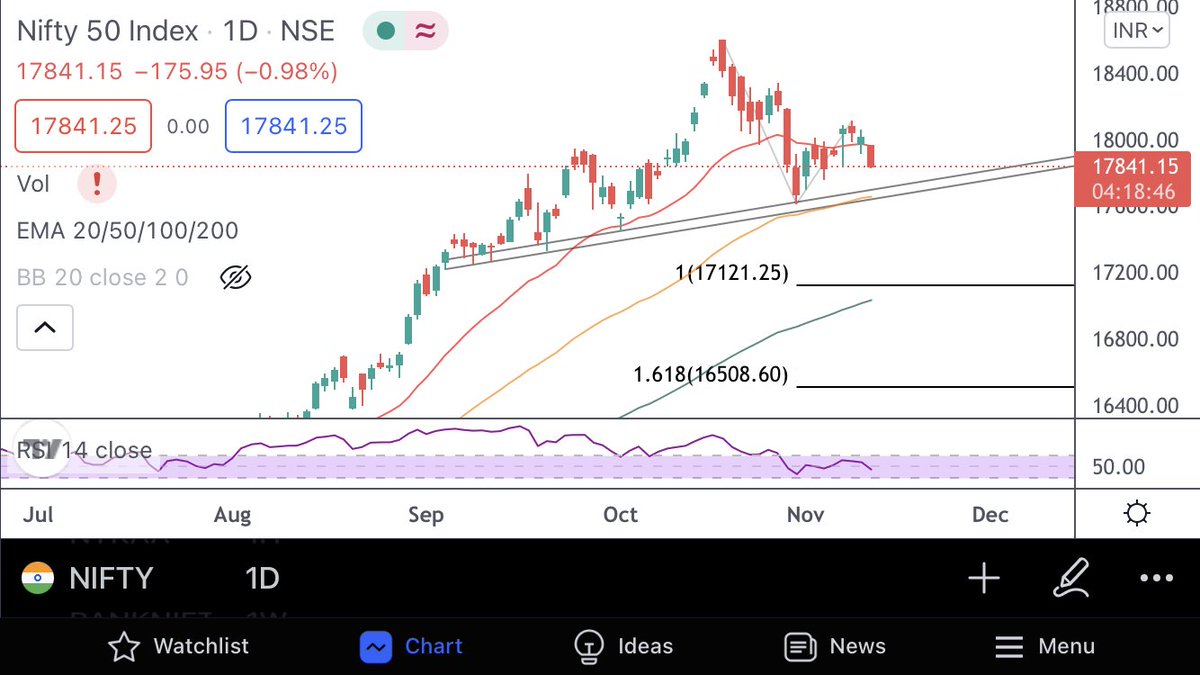
If Nifty breaks 50 DEMA and closes below 17700. 17220-17150-17000 possible. Worst case scenario is ~17000. Lot of confluence support in that range.
Do your DD.
₹Nifty > #Nifty
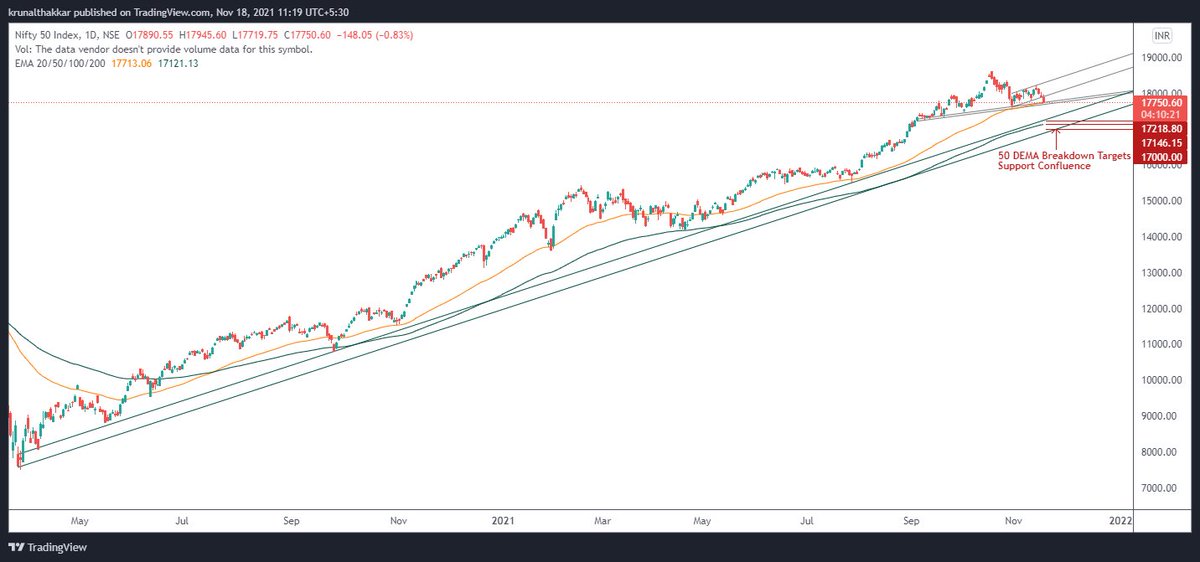
Nifty’s daily looks like ABC is done, but internals suggests that it still needs a final sell off to make a bottom for WXY. A bull trap towards 17735-17810 can’t be ruled out before the final sell off.
Just analysis, reserve the right to be wrong.
₹Nifty > #Nifty