
Thinking about the foolishness of God’s love vs the wisdom of humans.
“For God's foolishness is wiser than human wisdom, and God's weakness is stronger than human strength.” (1 Corinthians 1:25)
In the Bible we find many books including Job, Psalms, Proverbs, Ecclesiastes, and Song of Solomon.
Other human wisdom include mainstream “-isms.”
We call these healthy boundaries.
Jesus is our best example as He is a human.
He appears to us first as a helpless baby, dependent on his parents. He loves selflessly, to the point of his own humiliation among his peers.
Jesus’ love is the revelation and model of God’s love.
Not as an institution or government or set of principles or self preservative boundaries or RELIGION itself, but simply in response to Christ, who is revealed AS LOVE, as FOOLISH LOVE in everyday ordinary life.
My struggle is every humans’ struggle, not wisdom, but love.
My struggle is responding to hate and condemnation and humiliation by foolishly loving my abuser, my oppressor and my enemy.
Love is patient and kind.
Wisdom builds boundaries of self-preservation.
Love is not self-seeking and keeps no record of wrongs.
Wisdom is faith in the world.
Love is faith in the divine.
More from Life


Today is a day to celebrate love in our lives.
And here at ACLU-MA, we know that justice is a labor of love. Here are some of our favorite moments of love and justice in the last year, to brighten your #ValentinesDay.
💞👇💞
Almost exactly a year ago, our clients Hanz and Maudy were reunited after being separated by the cruel "Return to Mexico" policy.
And here at ACLU-MA, we know that justice is a labor of love. Here are some of our favorite moments of love and justice in the last year, to brighten your #ValentinesDay.
💞👇💞
Almost exactly a year ago, our clients Hanz and Maudy were reunited after being separated by the cruel "Return to Mexico" policy.
Yesterday, a family of asylum seekers were reunited. Hanz & his son were subjected to #MPP, a cruel policy that forced them into dangerous cities in northern Mexico. We sued on their behalf, allowing them to rejoin their family in Massachusetts. pic.twitter.com/Kce6MTpS9C
— ACLU Massachusetts (@ACLU_Mass) February 7, 2020

You May Also Like






“We don’t negotiate salaries” is a negotiation tactic.
Always. No, your company is not an exception.
A tactic I don’t appreciate at all because of how unfairly it penalizes low-leverage, junior employees, and those loyal enough not to question it, but that’s negotiation for you after all. Weaponized information asymmetry.
Listen to Aditya
And by the way, you should never be worried that an offer would be withdrawn if you politely negotiate.
I have seen this happen *extremely* rarely, mostly to women, and anyway is a giant red flag. It suggests you probably didn’t want to work there.
You wish there was no negotiating so it would all be more fair? I feel you, but it’s not happening.
Instead, negotiate hard, use your privilege, and then go and share numbers with your underrepresented and underpaid colleagues. […]
Always. No, your company is not an exception.
A tactic I don’t appreciate at all because of how unfairly it penalizes low-leverage, junior employees, and those loyal enough not to question it, but that’s negotiation for you after all. Weaponized information asymmetry.
Listen to Aditya
"we don't negotiate salaries" really means "we'd prefer to negotiate massive signing bonuses and equity grants, but we'll negotiate salary if you REALLY insist" https://t.co/80k7nWAMoK
— Aditya Mukerjee, the Otterrific \U0001f3f3\ufe0f\u200d\U0001f308 (@chimeracoder) December 4, 2018
And by the way, you should never be worried that an offer would be withdrawn if you politely negotiate.
I have seen this happen *extremely* rarely, mostly to women, and anyway is a giant red flag. It suggests you probably didn’t want to work there.
You wish there was no negotiating so it would all be more fair? I feel you, but it’s not happening.
Instead, negotiate hard, use your privilege, and then go and share numbers with your underrepresented and underpaid colleagues. […]

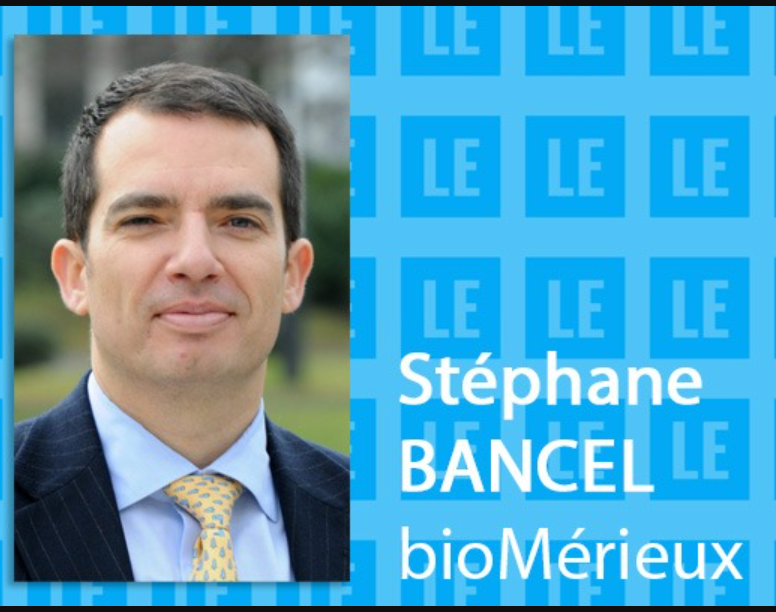
Moderna CEO Stephane Bancel was previously CEO of bioMerieux in France from 07-10.
Alain Merieux, who owns bioMerieux, was instrumental in the creation of the Wuhan Institute of Virology P4 Lab.
The same people who helped create the virus, also helped to create the vaccines...
Moderna partnered with French Pasteur Institute in 2015 to develop mRNA vaccine technology.
Pasteur Institute partnered with the Wuhan P4 Laboratory in 2017 along with the Merieux Foundation to study emerging viruses...
https://t.co/yFsHwrNYaK
https://t.co/9M5lydBKhM

Nobel prize winning scientist Luc Montagnier asserts that Sars-Cov-2 is man-made and originated from the Wuhan Institute of Virology.
Montagnier did extensive work with the Pasteur Institute in France which was partnered with the Wuhan P4.
Merieux Foundation & the Chinese government have worked together since 1965, and partnered to study emerging pathogens in Africa in 2015.
Their research included "PATHOGENS CARRIED BY BATS" that provoke respiratory diseases.
🚨🚨🚨
https://t.co/gVwpT0ssqI

Alain Merieux, who owns bioMerieux, was instrumental in the creation of the Wuhan Institute of Virology P4 Lab.
The same people who helped create the virus, also helped to create the vaccines...
Moderna partnered with French Pasteur Institute in 2015 to develop mRNA vaccine technology.
Pasteur Institute partnered with the Wuhan P4 Laboratory in 2017 along with the Merieux Foundation to study emerging viruses...
https://t.co/yFsHwrNYaK
https://t.co/9M5lydBKhM
Nobel prize winning scientist Luc Montagnier asserts that Sars-Cov-2 is man-made and originated from the Wuhan Institute of Virology.
Montagnier did extensive work with the Pasteur Institute in France which was partnered with the Wuhan P4.
Merieux Foundation & the Chinese government have worked together since 1965, and partnered to study emerging pathogens in Africa in 2015.
Their research included "PATHOGENS CARRIED BY BATS" that provoke respiratory diseases.
🚨🚨🚨
https://t.co/gVwpT0ssqI