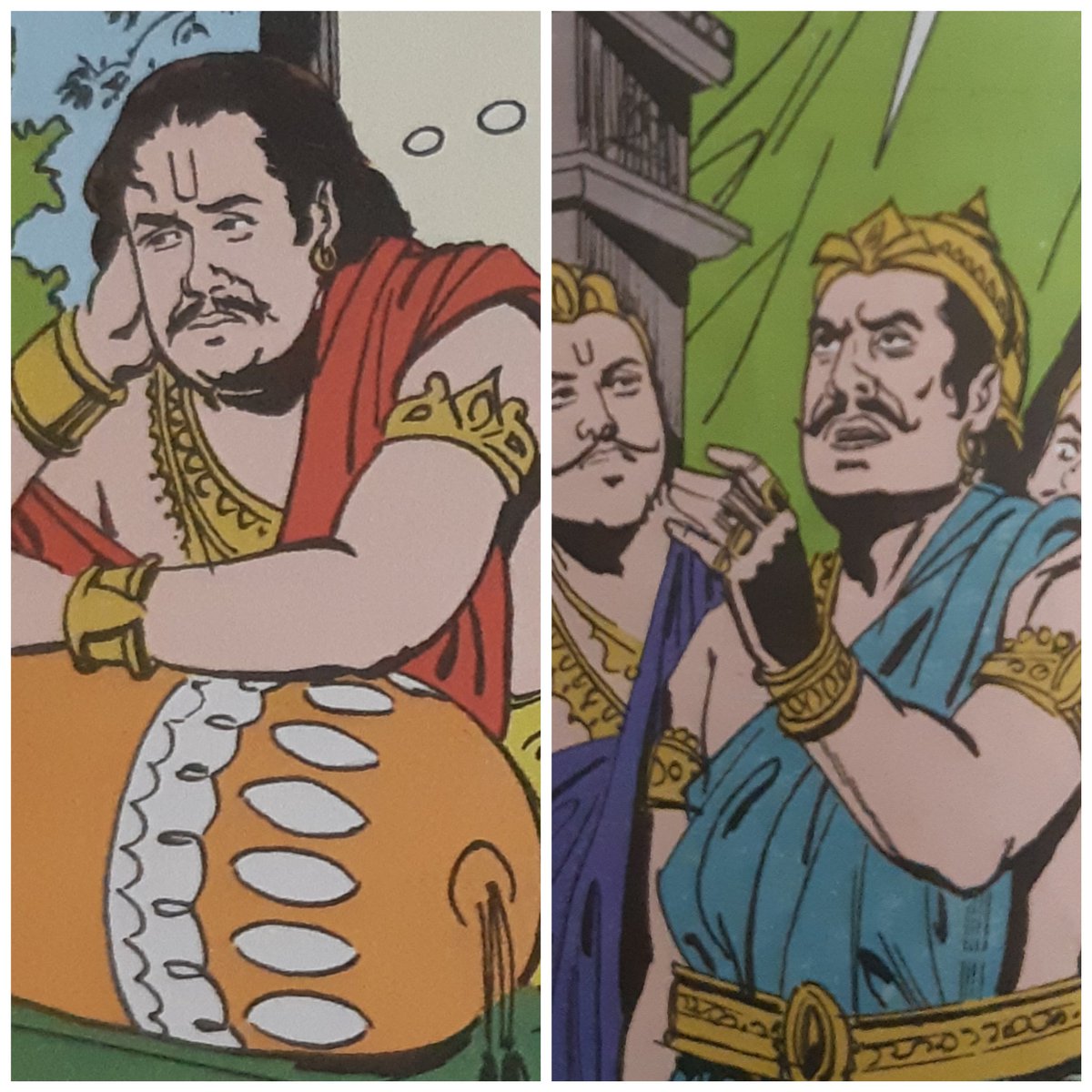
Her wise mother did not say anything but led her to the kitchen. She filled three pots with water and placed each on the stove. 2/n
This is not an original anecdote. But is thought provoking neverthless.
A young woman went to her mother, told her about her life and how things were so hard for her. She did not know how she was going to make it and wanted to give up. 1/n

Her wise mother did not say anything but led her to the kitchen. She filled three pots with water and placed each on the stove. 2/n
'Carrots, eggs, and coffee,' she replied.
Her mother asked her to feel the carrots. She did and noted that they were soft. The mother then asked the daughter to take an egg and break its shell. 5/n

Finally, the mother asked the daughter to sip the coffee. The daughter smiled as she tasted its rich aroma.
The daughter asked, 'What does this mean, mother?' 6/n
The carrot went in strong, hard, and unrelenting. However, after being subjected to the boiling water, it softened and became weak. 7/n
Are you the carrot that seems strong, but with pain and adversity you wilt, become soft and lose your strength? 11/n
More from Rajan Venkateswaran (സ്വാമി)


More from Life






You May Also Like

https://t.co/6cRR2B3jBE
Viruses and other pathogens are often studied as stand-alone entities, despite that, in nature, they mostly live in multispecies associations called biofilms—both externally and within the host.
https://t.co/FBfXhUrH5d

Microorganisms in biofilms are enclosed by an extracellular matrix that confers protection and improves survival. Previous studies have shown that viruses can secondarily colonize preexisting biofilms, and viral biofilms have also been described.

...we raise the perspective that CoVs can persistently infect bats due to their association with biofilm structures. This phenomenon potentially provides an optimal environment for nonpathogenic & well-adapted viruses to interact with the host, as well as for viral recombination.

Biofilms can also enhance virion viability in extracellular environments, such as on fomites and in aquatic sediments, allowing viral persistence and dissemination.

Viruses and other pathogens are often studied as stand-alone entities, despite that, in nature, they mostly live in multispecies associations called biofilms—both externally and within the host.
https://t.co/FBfXhUrH5d
Microorganisms in biofilms are enclosed by an extracellular matrix that confers protection and improves survival. Previous studies have shown that viruses can secondarily colonize preexisting biofilms, and viral biofilms have also been described.
...we raise the perspective that CoVs can persistently infect bats due to their association with biofilm structures. This phenomenon potentially provides an optimal environment for nonpathogenic & well-adapted viruses to interact with the host, as well as for viral recombination.
Biofilms can also enhance virion viability in extracellular environments, such as on fomites and in aquatic sediments, allowing viral persistence and dissemination.