I write about debt; couldn't resist the Strangelove reference 1/
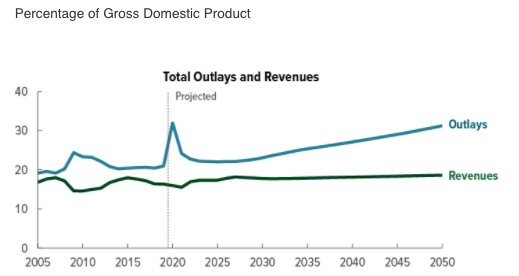
Now, many people will surely start waving around frightening-looking projections, like those of the CBO 2/ https://t.co/J2XjDKa90L
But while I respect CBO's integrity, those long-run debt projections are much more questionable than people probably realize. Realistic projections, I (and many sensible economists) argue, are much less alarming 3/
CBO projects a big rise in spending as % of GDP, and if you don't look under the hood you might well assume that this is driven by fundamentals, especially the aging population 4/
Actually, though, the biggest component is a huge assumed rise in interest costs 5/
And it's not mainly bc of rising debt: CBO projects debt/GDP doubling, but interest/GDP rising by a factor of 5. Why? 6/
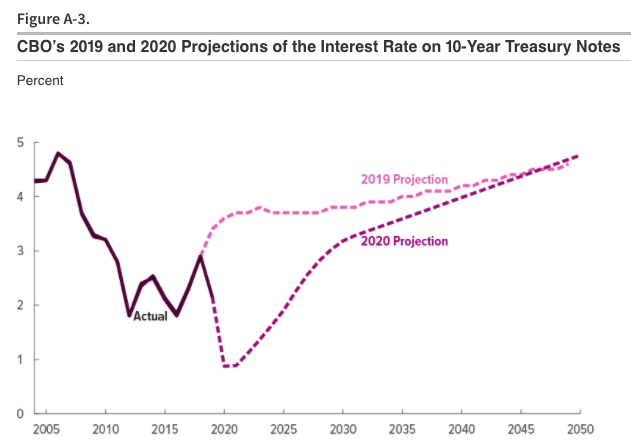
Well, it's all about interest rates, which CBO assumes will rise back to mid-2000s levels. Obviously this could be true — predictions are hard, especially about the future. But not clear why we should believe this 7/
Without the assumed rise in rates, projected deficits would be much lower, debt considerably lower, and real interest payments much lower than CBO projects. The long-run budget outlook wouldn't look especially scary 8/
As I see it, at this point alarming long-run projections involve an element of unintentional bait-and-switch. They look as if they're being driven by the unsustainability of entitlement programs, but they're actually reflecting dubious assumptions about interest rates 9/
Oh, and since someone will surely bring it up, none of this has anything to do with MMT; it's pure mainstream analysis, but reflecting the reality of low interest rates 10/

More from Life

You May Also Like

A THREAD ON @SarangSood

Decoded his way of analysis/logics for everyone to easily understand.

Have covered:
1. Analysis of volatility, how to foresee/signs.
2. Workbook
3. When to sell options
4. Diff category of days
5. How movement of option prices tell us what will happen

1. Keeps following volatility super closely.

Makes 7-8 different strategies to give him a sense of what's going on.

Whichever gives highest profit he trades in.


2. Theta falls when market moves.
Falls where market is headed towards not on our original position.


3. If you're an options seller then sell only when volatility is dropping, there is a high probability of you making the right trade and getting profit as a result

He believes in a market operator, if market mover sells volatility Sarang Sir joins him.


4. Theta decay vs Fall in vega

Sell when Vega is falling rather than for theta decay. You won't be trapped and higher probability of making profit.
So the cryptocurrency industry has basically two products, one which is relatively benign and doesn't have product market fit, and one which is malignant and does. The industry has a weird superposition of understanding this fact and (strategically?) not understanding it.


The benign product is sovereign programmable money, which is historically a niche interest of folks with a relatively clustered set of beliefs about the state, the literary merit of Snow Crash, and the utility of gold to the modern economy.

This product has narrow appeal and, accordingly, is worth about as much as everything else on a 486 sitting in someone's basement is worth.

The other product is investment scams, which have approximately the best product market fit of anything produced by humans. In no age, in no country, in no city, at no level of sophistication do people consistently say "Actually I would prefer not to get money for nothing."

This product needs the exchanges like they need oxygen, because the value of it is directly tied to having payment rails to move real currency into the ecosystem and some jurisdictional and regulatory legerdemain to stay one step ahead of the banhammer.