
Where were we: Boaz Barak proposed a “law of nature” that if there is a physical device that can make a certain computation C, then there is a quantum circuit that computes C. 1/11
@boazbaraktcs @quantum_aram @AspectStalence @RosenblumSerge
4/11
@boazbaraktcs @quantum_aram
11/11
More from Law







There is a now-relevant parallel here to the difference here between matters before a judge & matters before a jury. Judges are far more reluctant to strike testimony or evidence if they are the only recipients of it, with the theory being that they are really smart about ...
law stuff & will know what they can & can't consider. For instance, there is a long-held rule that a fact witness can't make legal arguments, only a lawyer. So what will happen in a motion for summary judgment, where the entire proceeding is on paper, will play out like this:
1) Defendant makes a motion for summary judgment. It includes a sworn declaration from some fact witness.
2) The declaration includes all sorts of legal arguments about why the defendant should win. Often the declaration includes arguments the brief didn't even make.
Defendants (especially DOJ-represented ones) often do this to get around the word or page-limits placed on briefs.
3) Plaintiff moves to strike the declaration for its inclusion of inadmissible legal arguments.
4) Judge denies the motion to strike, on the grounds that a ...
judge is a sophisticated consumer of evidence & can choose what to consider & what to ignore, unlike a jury.
The legal fiction behind this impeachment exception is that Senators are also smart enough to know what to listen to & what to ignore. Now, that may not be ACCURATE, ...
To the extent that precedents matter in this trial, when hearsay has been challenged in past trials, it's been admitted if it's probative. And it's been noted that senators aren't *regular* jurors, but rather people of learning who can figure on their own how to weigh evidence.
— Ira Goldman \U0001f986\U0001f986\U0001f986 (@KDbyProxy) January 24, 2020
law stuff & will know what they can & can't consider. For instance, there is a long-held rule that a fact witness can't make legal arguments, only a lawyer. So what will happen in a motion for summary judgment, where the entire proceeding is on paper, will play out like this:
1) Defendant makes a motion for summary judgment. It includes a sworn declaration from some fact witness.
2) The declaration includes all sorts of legal arguments about why the defendant should win. Often the declaration includes arguments the brief didn't even make.
Defendants (especially DOJ-represented ones) often do this to get around the word or page-limits placed on briefs.
3) Plaintiff moves to strike the declaration for its inclusion of inadmissible legal arguments.
4) Judge denies the motion to strike, on the grounds that a ...
judge is a sophisticated consumer of evidence & can choose what to consider & what to ignore, unlike a jury.
The legal fiction behind this impeachment exception is that Senators are also smart enough to know what to listen to & what to ignore. Now, that may not be ACCURATE, ...
You May Also Like








My top 10 tweets of the year
A thread 👇
https://t.co/xj4js6shhy
https://t.co/b81zoW6u1d
https://t.co/1147it02zs
https://t.co/A7XCU5fC2m
A thread 👇
https://t.co/xj4js6shhy
Entrepreneur\u2019s mind.
— James Clear (@JamesClear) August 22, 2020
Athlete\u2019s body.
Artist\u2019s soul.
https://t.co/b81zoW6u1d
When you choose who to follow on Twitter, you are choosing your future thoughts.
— James Clear (@JamesClear) October 3, 2020
https://t.co/1147it02zs
Working on a problem reduces the fear of it.
— James Clear (@JamesClear) August 30, 2020
It\u2019s hard to fear a problem when you are making progress on it\u2014even if progress is imperfect and slow.
Action relieves anxiety.
https://t.co/A7XCU5fC2m
We often avoid taking action because we think "I need to learn more," but the best way to learn is often by taking action.
— James Clear (@JamesClear) September 23, 2020

Moderna CEO Stephane Bancel was previously CEO of bioMerieux in France from 07-10.
Alain Merieux, who owns bioMerieux, was instrumental in the creation of the Wuhan Institute of Virology P4 Lab.
The same people who helped create the virus, also helped to create the vaccines...
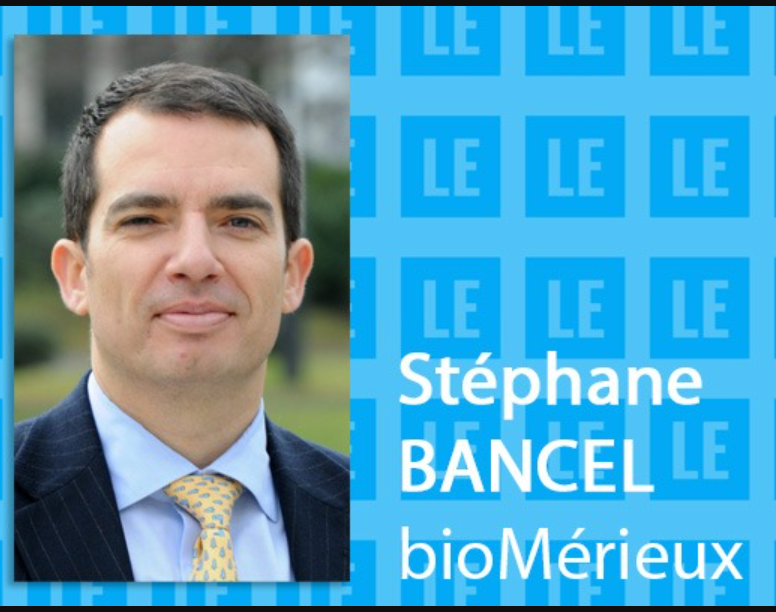
Moderna partnered with French Pasteur Institute in 2015 to develop mRNA vaccine technology.
Pasteur Institute partnered with the Wuhan P4 Laboratory in 2017 along with the Merieux Foundation to study emerging viruses...
https://t.co/yFsHwrNYaK
https://t.co/9M5lydBKhM

Nobel prize winning scientist Luc Montagnier asserts that Sars-Cov-2 is man-made and originated from the Wuhan Institute of Virology.
Montagnier did extensive work with the Pasteur Institute in France which was partnered with the Wuhan P4.
Merieux Foundation & the Chinese government have worked together since 1965, and partnered to study emerging pathogens in Africa in 2015.
Their research included "PATHOGENS CARRIED BY BATS" that provoke respiratory diseases.
🚨🚨🚨
https://t.co/gVwpT0ssqI

Alain Merieux, who owns bioMerieux, was instrumental in the creation of the Wuhan Institute of Virology P4 Lab.
The same people who helped create the virus, also helped to create the vaccines...
Moderna partnered with French Pasteur Institute in 2015 to develop mRNA vaccine technology.
Pasteur Institute partnered with the Wuhan P4 Laboratory in 2017 along with the Merieux Foundation to study emerging viruses...
https://t.co/yFsHwrNYaK
https://t.co/9M5lydBKhM
Nobel prize winning scientist Luc Montagnier asserts that Sars-Cov-2 is man-made and originated from the Wuhan Institute of Virology.
Montagnier did extensive work with the Pasteur Institute in France which was partnered with the Wuhan P4.
Merieux Foundation & the Chinese government have worked together since 1965, and partnered to study emerging pathogens in Africa in 2015.
Their research included "PATHOGENS CARRIED BY BATS" that provoke respiratory diseases.
🚨🚨🚨
https://t.co/gVwpT0ssqI
