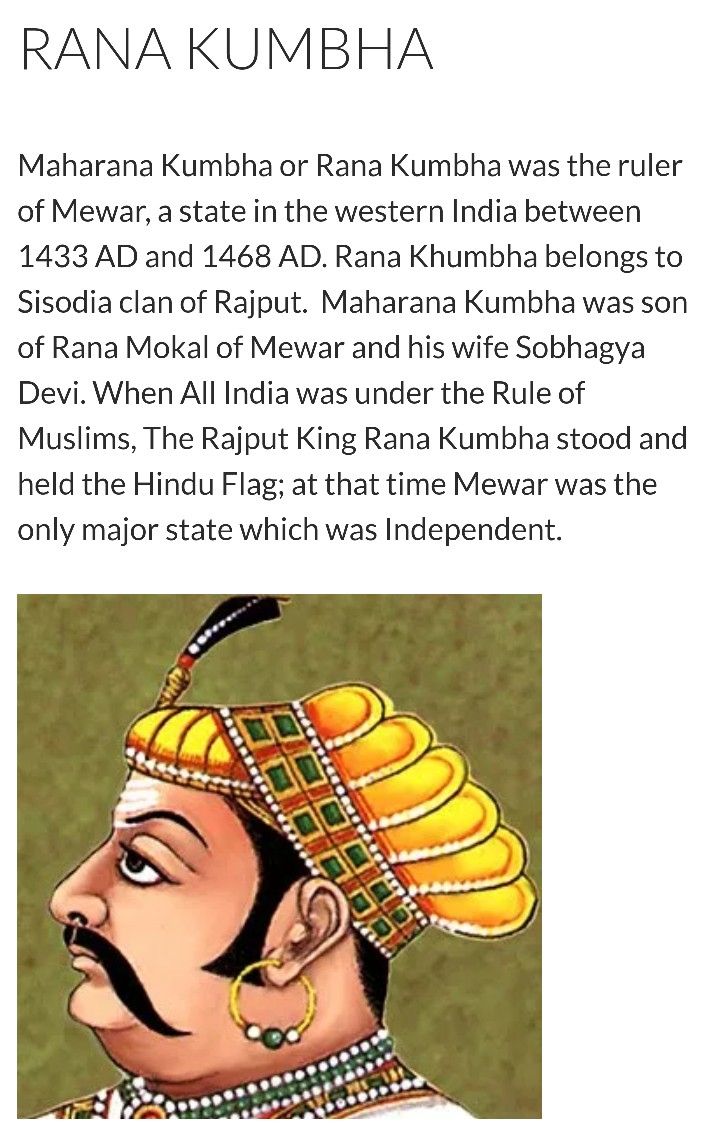
#BombayHighCourt begins hearing the plea of Sunaina Holey accused of making objectionable statements against Maharastra Chief Minister Uddhav Thackeray and Cabinet Minister Aaditya Thackeray.
@SunainaHoley
@OfficeofUT
@AUThackeray
@CMOMaharashtra
@MumbaiPolice
Chandrachud: in the present case there is no public disorder caused by the objected tweets.
Chandrachud: She is a consultant, advises companies. She is an MBA graduate.
I understood when you milords asked me the question. She is not a leader of any opposition party, or any other political organisation.
Chandrachud: Milords her twitter bio space mentions that she is a follower of RSS, and some otber things, but that does not mean she is a leader.
There could be many interpretations of a verse written by a poet.
https://t.co/VBdiWPh7A7
The fact that he had apologised meant that he was guilty of usung a derogatory term for a Sufi saint.
Chandrachud: Merely advocating an opinion is not inciting the public.
Court asks him to continue tomorrow as there is a meeting now.
More from Bar & Bench



More from Law


This thread will debunk "the judges didn't look at evidence" nonsense that has been going around.
Over and over again, judges have gone out of their way to listen to the evidence and dismantle it, enjoy the carnage!
1/
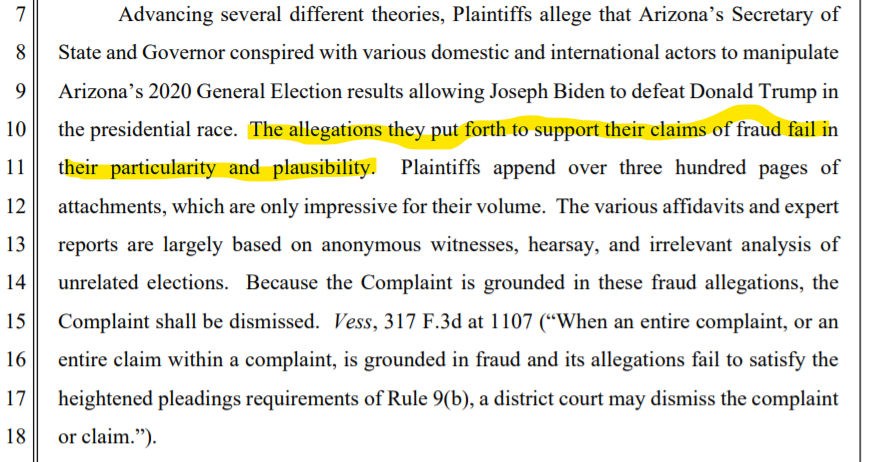
Bowyer v. Ducey (Sidney Powell's case in Arizona)
"Plaintiffs have not moved the
needle for their fraud theory from conceivable to plausible"
This is a great opinion to start with. The Judge completely dismantles the nonsense brought before her.
2/
https://t.co/F2vllUhM2G
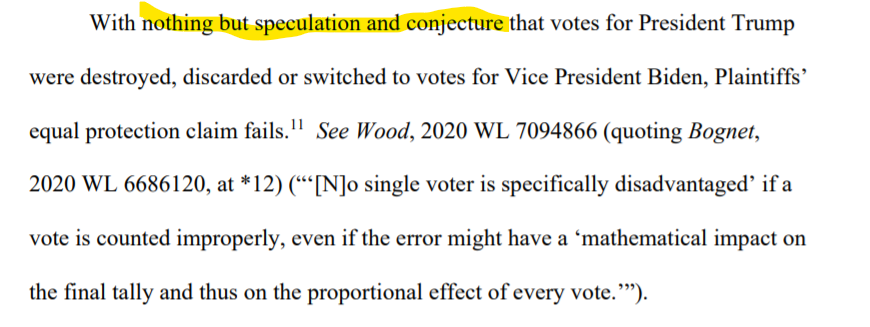
King vs. Whitmer (Michigan, Sidney Powell case)
"Nothing but speculation and conjecture"
This is a good one to show people who think affidavits are good evidence. Notice how the affidavits don't actually say they saw fraud happen in Detroit.
3/
https://t.co/NZAtqivWkL
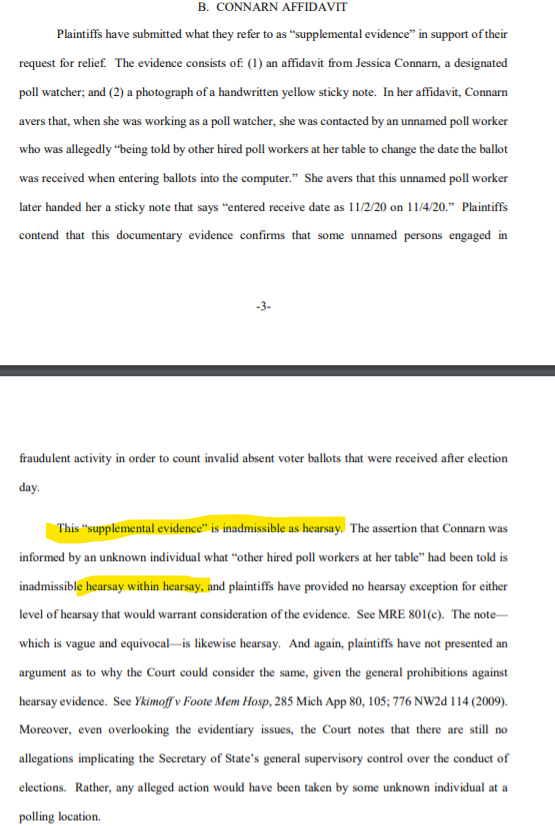
Trump v. Benson (Michigan)
"hearsay within hearsay"
Another good one to show people who think affidavits are absolute proof.
4/
https://t.co/17GeGhImHF
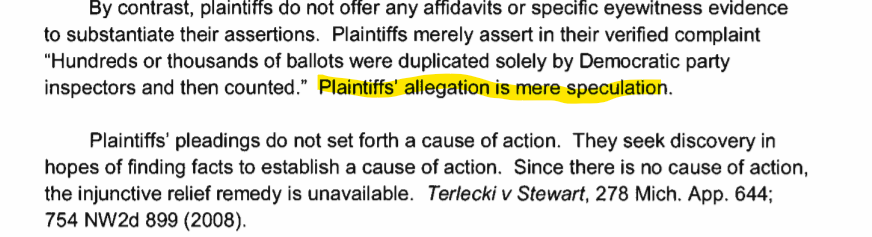
Stoddard v. City Election Commission (Michigan)
"mere speculation"
/5
https://t.co/ekqYEqiIL9
Over and over again, judges have gone out of their way to listen to the evidence and dismantle it, enjoy the carnage!
1/
Bowyer v. Ducey (Sidney Powell's case in Arizona)
"Plaintiffs have not moved the
needle for their fraud theory from conceivable to plausible"
This is a great opinion to start with. The Judge completely dismantles the nonsense brought before her.
2/
https://t.co/F2vllUhM2G
King vs. Whitmer (Michigan, Sidney Powell case)
"Nothing but speculation and conjecture"
This is a good one to show people who think affidavits are good evidence. Notice how the affidavits don't actually say they saw fraud happen in Detroit.
3/
https://t.co/NZAtqivWkL
Trump v. Benson (Michigan)
"hearsay within hearsay"
Another good one to show people who think affidavits are absolute proof.
4/
https://t.co/17GeGhImHF
Stoddard v. City Election Commission (Michigan)
"mere speculation"
/5
https://t.co/ekqYEqiIL9


Today the superior court will hear oral arguments in Midtown Citizens Coalition v. Municipality of Anchorage. "MCC" is an unofficial group that opposes the recall of Assembly member Felix Rivera. The question is whether the Muni properly certified the recall petition. #aklaw
Before posting the MCC v. MOA briefs, it's worth noting that the legal arguments made by Rivera's supporters parallel those made by Dunleavy in Recall Dunleavy v. State. Both Rivera and Dunleavy argued that their recall petitions should have been denied by election officials.
So let's play a game called "Who Argued It." Guess which politician, Rivera or Dunleavy, made the following arguments in court:
1. "The grounds for recall stated in the petition are insufficient as a matter of law, and therefore the petition should have been rejected."
2. "Even under Alaska’s liberal recall standards, courts have not hesitated to find petitions legally insufficient when those petitions did not contain sufficient factual allegations of unlawful activity to state sufficient grounds for recall.”
3. "The allegations must be sufficiently particular to allow the official a meaningful opportunity to respond . . . . [and] ensure that voters have the information they need to vote."
Oral argument in scheduled for January 21 at 3 pm in this case & will be telephonic. To listen, call 1-800-768-2983, code: 2640561#. Alternate phone numbers if the toll-free number gives you trouble: 1-907-206-2349 or 1-913-904-9867 or 1-212-231-3884.
— Alaska Court System (@AlaskaCourt) January 20, 2021
Before posting the MCC v. MOA briefs, it's worth noting that the legal arguments made by Rivera's supporters parallel those made by Dunleavy in Recall Dunleavy v. State. Both Rivera and Dunleavy argued that their recall petitions should have been denied by election officials.
So let's play a game called "Who Argued It." Guess which politician, Rivera or Dunleavy, made the following arguments in court:
1. "The grounds for recall stated in the petition are insufficient as a matter of law, and therefore the petition should have been rejected."
2. "Even under Alaska’s liberal recall standards, courts have not hesitated to find petitions legally insufficient when those petitions did not contain sufficient factual allegations of unlawful activity to state sufficient grounds for recall.”
3. "The allegations must be sufficiently particular to allow the official a meaningful opportunity to respond . . . . [and] ensure that voters have the information they need to vote."