2/
It took decades after the passage of America's landmark antitrust laws - the Sherman Act and the Clayton Act - for trustbusting to occur in earnest, and what spurred the action wasn't mere corporate bullying, not just price hikes and labor abuses.
1/
2/
3/
4/
Hoover was beholden to plutes, had a cabinet full of them, turned over the nation's treasury to a sociopathic monster called Andrew Mellon whose stated ambition was to own all the world's aluminum.
5/
6/
7/
8/
9/
10/
11/
12/
13/
14/
15/
https://t.co/1Tqq9DMh6d
16/
Last July, the Epleys bought the house Warren rents from a Citibank exec called Brandt Portugal.
17/
18/
Warren continued sending rent checks to the Epleys, but they claimed the certified letters never arrived - so they served him with eviction papers.
19/
20/
On the one hand, this is a spicy story about small town politics, but on the other, it's a tale of how money becomes power becomes corruption.
21/
22/
23/
The Epleys are why Reagan and Bork were wrong: wealth concentration was never solely (or even primarily) an economic matter.
It's always been political.
eof/
https://t.co/GbAqYGdMSZ
More from Cory Doctorow #BLM




Today's Twitter threads (a Twitter thread).
Inside: Planet Money on HP's myriad ripoffs; Strength in numbers; and more!
Archived at: https://t.co/esjoT3u5Gr
#Pluralistic
1/
On Feb 22, I'm delivering a keynote address for the NISO Plus conference, "The day of the comet: what trustbusting means for digital manipulation."
https://t.co/Z84xicXhGg
2/

Planet Money on HP's myriad ripoffs: Ink-stained wretches of the world, unite!
https://t.co/k5ASdVUrC2
3/
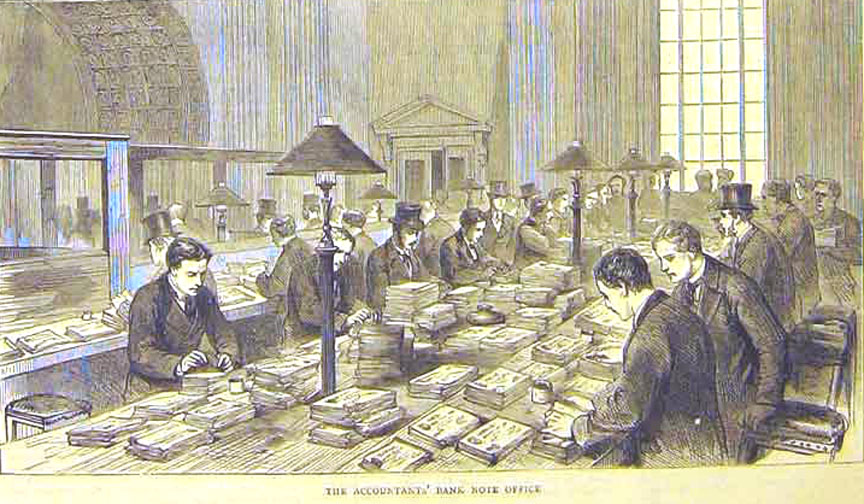
Strength in numbers: The crisis in accounting.
https://t.co/DjfAfHWpNN
4/
#15yrsago Bad Samaritan family won’t return found expensive camera https://t.co/Rn9E5R1gtV
#10yrsago What does Libyan revolution mean for https://t.co/Jz28qHVhrV? https://t.co/dN1e4MxU4r
5/
Inside: Planet Money on HP's myriad ripoffs; Strength in numbers; and more!
Archived at: https://t.co/esjoT3u5Gr
#Pluralistic
1/
On Feb 22, I'm delivering a keynote address for the NISO Plus conference, "The day of the comet: what trustbusting means for digital manipulation."
https://t.co/Z84xicXhGg
2/
Planet Money on HP's myriad ripoffs: Ink-stained wretches of the world, unite!
https://t.co/k5ASdVUrC2
3/
Back in November, I published an article for @EFF about @HP's latest printer-ink ripoff: after offering its customers a free-ink-for-life plan, it unilaterally switched them all to a $1/month-for-life plan.https://t.co/bsc73xPSuo
— Cory Doctorow #BLM (@doctorow) February 18, 2021
1/ pic.twitter.com/tagduPupA5
Strength in numbers: The crisis in accounting.
https://t.co/DjfAfHWpNN
4/
Accountancy is more likely to be mocked than celebrated (or condemned), but accountants, far more than poets, are the unacknowledged legislators of the world.
— Cory Doctorow #BLM (@doctorow) February 18, 2021
1/ pic.twitter.com/FaNQc66gQN
#15yrsago Bad Samaritan family won’t return found expensive camera https://t.co/Rn9E5R1gtV
#10yrsago What does Libyan revolution mean for https://t.co/Jz28qHVhrV? https://t.co/dN1e4MxU4r
5/
Today's Twitter threads (a Twitter thread).
Inside: Criti-Hype; Right to Repair is back for 2021; The free market and rent-seeking; and more!
Archived at: https://t.co/pXnzoWKJn2
#Pluralistic
1/

Criti-Hype: Tech bros will settle for "evil genius."
https://t.co/OyiM1vUS8Y
2/

Right to Repair is back for 2021: Will Apple sabotage this one too?
https://t.co/3gcyEZQWfk
3/

The free market and rent-seeking: Unauthorized bread and poor doors.
https://t.co/7Ob6AdmkDz
4/
#10yrsago Diane Duane’s crowdfunded publishing experiment finally concludes https://t.co/qsRnZxiL8b
#10yrsago Inside Sukey, the anti-kettling mobile app https://t.co/puGNKw5XgF
5/
Inside: Criti-Hype; Right to Repair is back for 2021; The free market and rent-seeking; and more!
Archived at: https://t.co/pXnzoWKJn2
#Pluralistic
1/
Criti-Hype: Tech bros will settle for "evil genius."
https://t.co/OyiM1vUS8Y
2/
There's a Yom Kippur joke I love: the rabbi and the richest man in town are praying, "Oh Lord, I am nothing, I am nothing!"
— Cory Doctorow #BLM (@doctorow) February 2, 2021
The synagogue's janitor sees them and joins in: "I am nothing!"
The richest man says to the rabbi: "Look who thinks he's nothing."
1/ pic.twitter.com/kHFKcNAnC4
Right to Repair is back for 2021: Will Apple sabotage this one too?
https://t.co/3gcyEZQWfk
3/
2018 was almost the year we won the #RightToRepair.
— Cory Doctorow #BLM (@doctorow) February 2, 2021
Instead, 2018 turned out to be the year we lost #R2R: 20 bills defeated in 20 state houses, and it was mostly @apple's fault.
1/ pic.twitter.com/oDYM17e22b
The free market and rent-seeking: Unauthorized bread and poor doors.
https://t.co/7Ob6AdmkDz
4/
When you hear the phrase "free market," you probably think of "a market that is free from regulation" but that's the opposite of the phrase's original meaning!
— Cory Doctorow #BLM (@doctorow) February 2, 2021
1/ pic.twitter.com/QNAuJhMNWI
#10yrsago Diane Duane’s crowdfunded publishing experiment finally concludes https://t.co/qsRnZxiL8b
#10yrsago Inside Sukey, the anti-kettling mobile app https://t.co/puGNKw5XgF
5/
More from Law


1/ After a good night's sleep, I have a few thoughts on the impending Ripple lawsuit.
Less schadenfreude, more "what now?" https://t.co/a0oTwblBHB
2/ First of all, the USG is going to lose.
I don't even need to read the complaint. They might force a settlement, but they're outclassed on legal.
Remember Ripple engaged former SEC Chair Mary Jo White in a civil matter in 2018. A hint of their
3/ Second, the USG should lose.
The SEC restrictions on non-accredited investors; the ridiculous Howey test; 80 year old securities law like the "40 Act" all need to die in fire. They are un-American and completely outdated.
I hope Ripple wins. (WUT?)
4/ Third, it's incumbent upon industry to self-police and hold the moral high ground.
I give certain individuals A's and others F's, but as a whole, the most powerful people and companies generally take a Swiss neutrality stance on assets.
So we're effectively in this together.
5/ We're "in this together" to draw lines of regulatory demarcation.
XRP as a "security" further hurts the U.S. businesses while global comps will continue to make these markets.
XRP as a security also means other assets will meet the same fate. At least Ripple has $ to fight.
Less schadenfreude, more "what now?" https://t.co/a0oTwblBHB
BREAKING: The @SEC_News intends to sue @ripple over its sale of XRP, alleging the cryptocurrency is an unregistered security according to @bgarlinghouse.@nikhileshde reportshttps://t.co/7Z3KSWk7dn
— CoinDesk (@CoinDesk) December 22, 2020
2/ First of all, the USG is going to lose.
I don't even need to read the complaint. They might force a settlement, but they're outclassed on legal.
Remember Ripple engaged former SEC Chair Mary Jo White in a civil matter in 2018. A hint of their
3/ Second, the USG should lose.
The SEC restrictions on non-accredited investors; the ridiculous Howey test; 80 year old securities law like the "40 Act" all need to die in fire. They are un-American and completely outdated.
I hope Ripple wins. (WUT?)
4/ Third, it's incumbent upon industry to self-police and hold the moral high ground.
I give certain individuals A's and others F's, but as a whole, the most powerful people and companies generally take a Swiss neutrality stance on assets.
So we're effectively in this together.
5/ We're "in this together" to draw lines of regulatory demarcation.
XRP as a "security" further hurts the U.S. businesses while global comps will continue to make these markets.
XRP as a security also means other assets will meet the same fate. At least Ripple has $ to fight.



You May Also Like




A THREAD ON @SarangSood
Decoded his way of analysis/logics for everyone to easily understand.
Have covered:
1. Analysis of volatility, how to foresee/signs.
2. Workbook
3. When to sell options
4. Diff category of days
5. How movement of option prices tell us what will happen
1. Keeps following volatility super closely.
Makes 7-8 different strategies to give him a sense of what's going on.
Whichever gives highest profit he trades in.
2. Theta falls when market moves.
Falls where market is headed towards not on our original position.
3. If you're an options seller then sell only when volatility is dropping, there is a high probability of you making the right trade and getting profit as a result
He believes in a market operator, if market mover sells volatility Sarang Sir joins him.
4. Theta decay vs Fall in vega
Sell when Vega is falling rather than for theta decay. You won't be trapped and higher probability of making profit.
Decoded his way of analysis/logics for everyone to easily understand.
Have covered:
1. Analysis of volatility, how to foresee/signs.
2. Workbook
3. When to sell options
4. Diff category of days
5. How movement of option prices tell us what will happen
1. Keeps following volatility super closely.
Makes 7-8 different strategies to give him a sense of what's going on.
Whichever gives highest profit he trades in.
I am quite different from your style. I follow the market's volatility very closely. I have mock positions in 7-8 different strategies which allows me to stay connected. Whichever gives best profit is usually the one i trade in.
— Sarang Sood (@SarangSood) August 13, 2019
2. Theta falls when market moves.
Falls where market is headed towards not on our original position.
Anilji most of the time these days Theta only falls when market moves. So the Theta actually falls where market has moved to, not where our position was in the first place. By shifting we can come close to capturing the Theta fall but not always.
— Sarang Sood (@SarangSood) June 24, 2019
3. If you're an options seller then sell only when volatility is dropping, there is a high probability of you making the right trade and getting profit as a result
He believes in a market operator, if market mover sells volatility Sarang Sir joins him.
This week has been great so far. The main aim is to be in the right side of the volatility, rest the market will reward.
— Sarang Sood (@SarangSood) July 3, 2019
4. Theta decay vs Fall in vega
Sell when Vega is falling rather than for theta decay. You won't be trapped and higher probability of making profit.
There is a difference between theta decay & fall in vega. Decay is certain but there is no guaranteed profit as delta moves can increase cost. Fall in vega on the other hand is backed by a powerful force that sells options and gives handsome returns. Our job is to identify them.
— Sarang Sood (@SarangSood) February 12, 2020