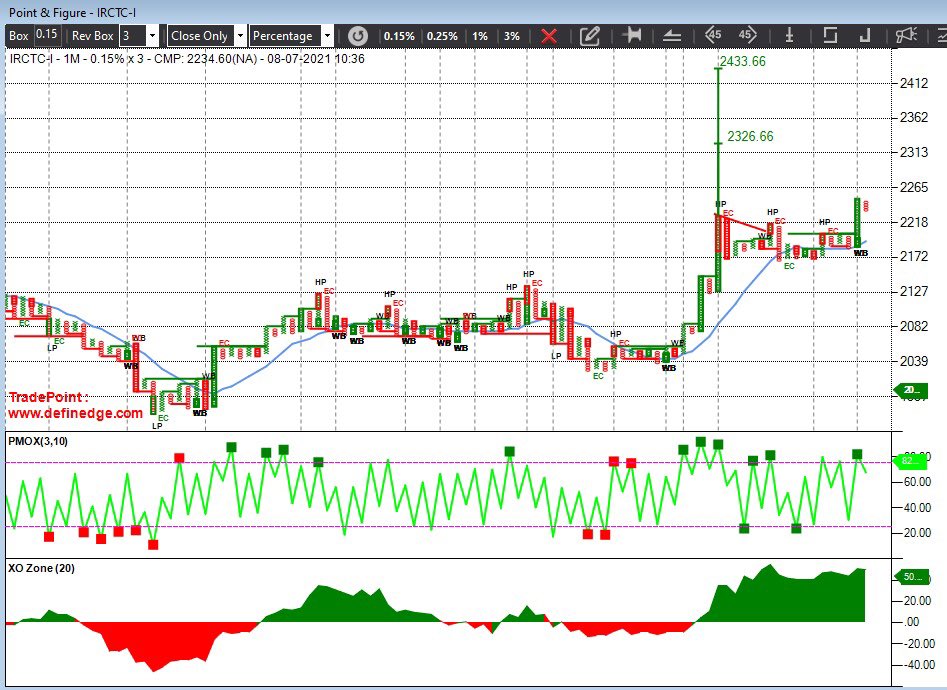
#IRCTC futures on short term charts , looks like welcoming the new railway minister 🙂
Charts on 0.15% and 0.25%
More from DTBhat
Conditions -
1) EMA 8 below ema 34 and falling
2) bar close below prev 5 bars
3) RSI below 30
4) volume above prev 5 bars
5) ADX above 30
6) +DMI below -DMI
All conditions should be true
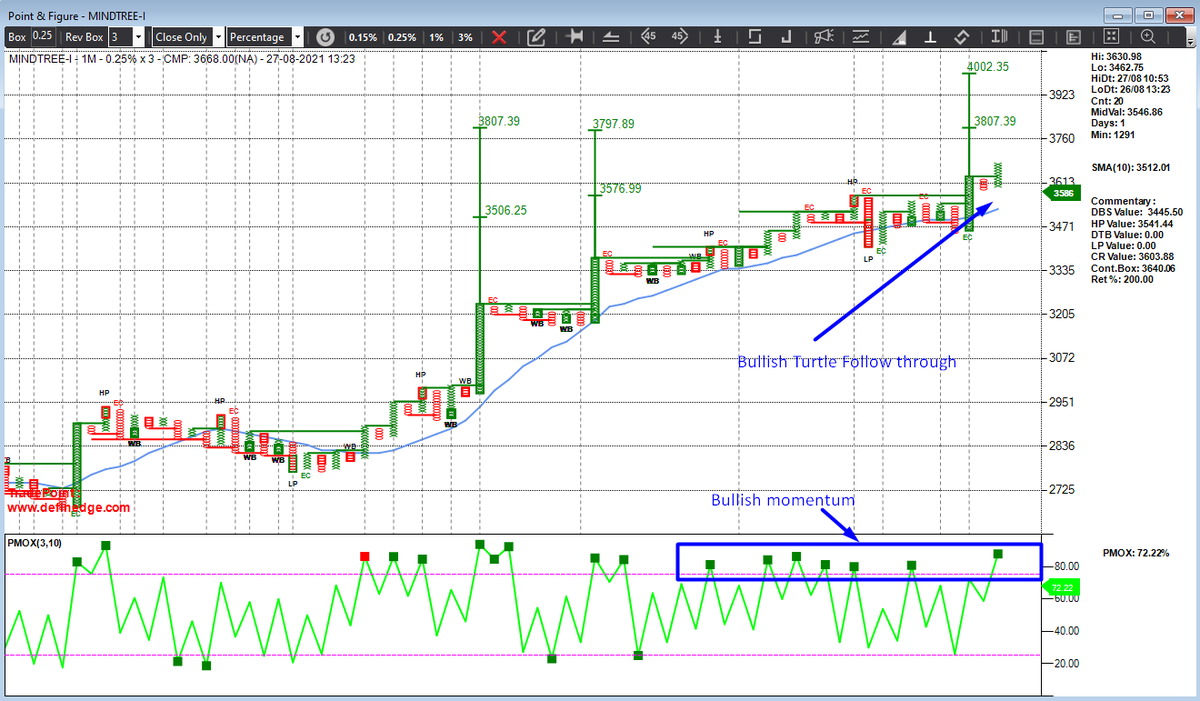
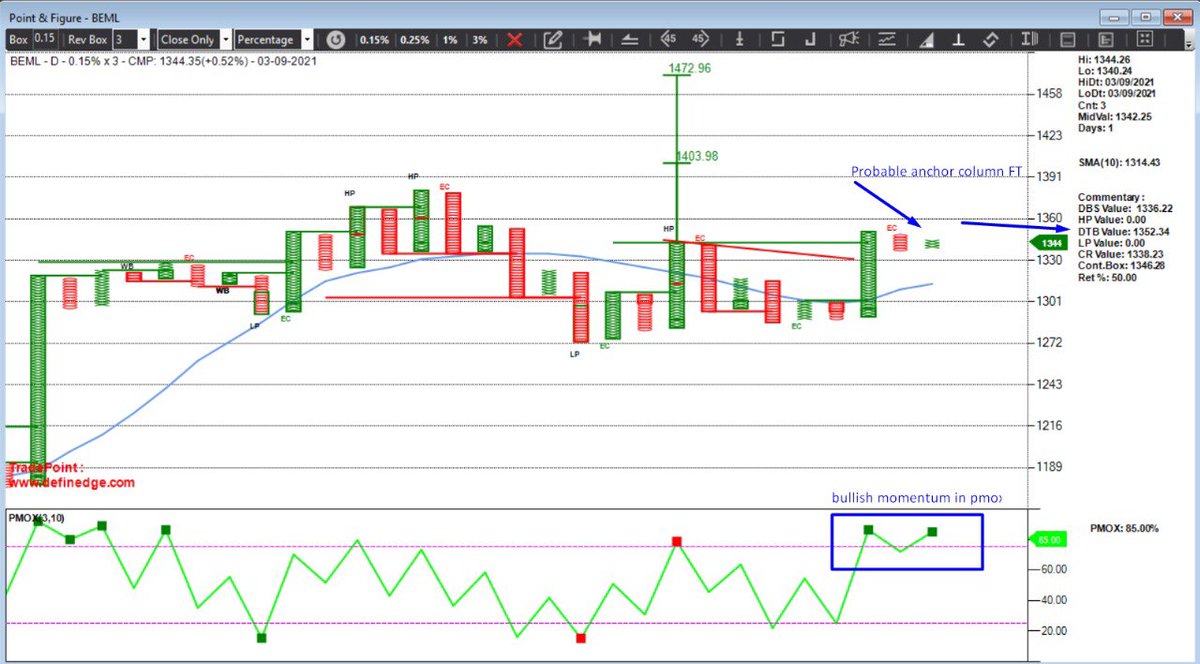
The thread explains my momentum scanner and how to build it in #TradePoint software. @Definedge
— DTBhat (@dtbhat) August 29, 2021
Conditions :
1)EMA 8 above EMA 34 and rising
2)Candle close above previous 5 candle high
3) RSI above 60
4) Volume above previous 5 candles
5) ADX above 30
1/n

In options strategy brought the wings inside and locked more profits https://t.co/wIPMUofhm6
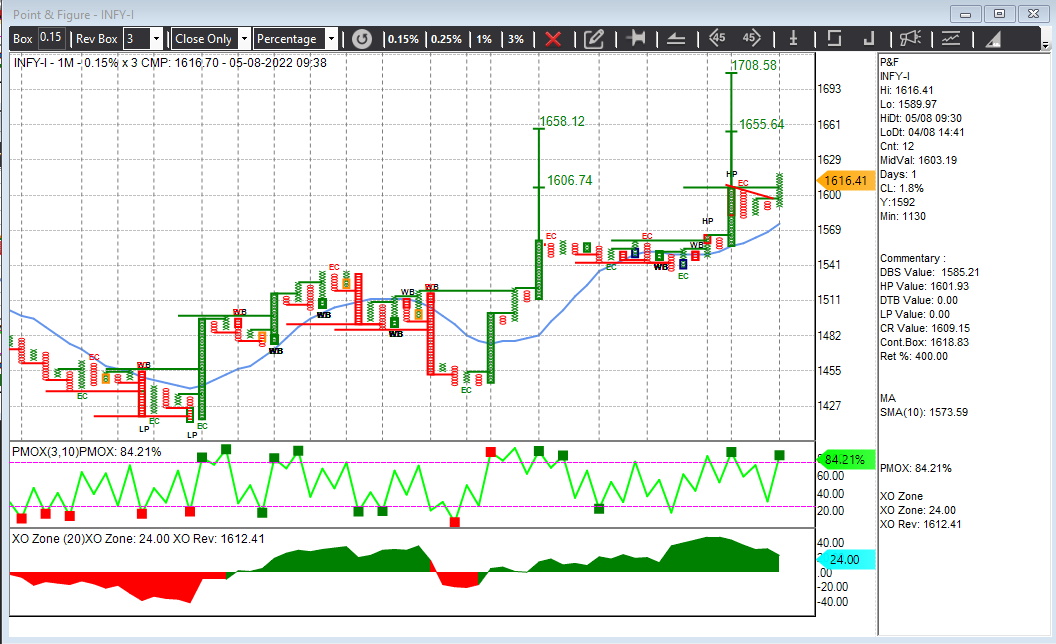
#Infy futures crossed 1600
— DTBhat (@dtbhat) August 4, 2022
Booked half in 1600CE in Call Debit Spread and converted to a butterfly https://t.co/NZdSOC4wrd pic.twitter.com/p8FgBaAyhC
More from Irctc

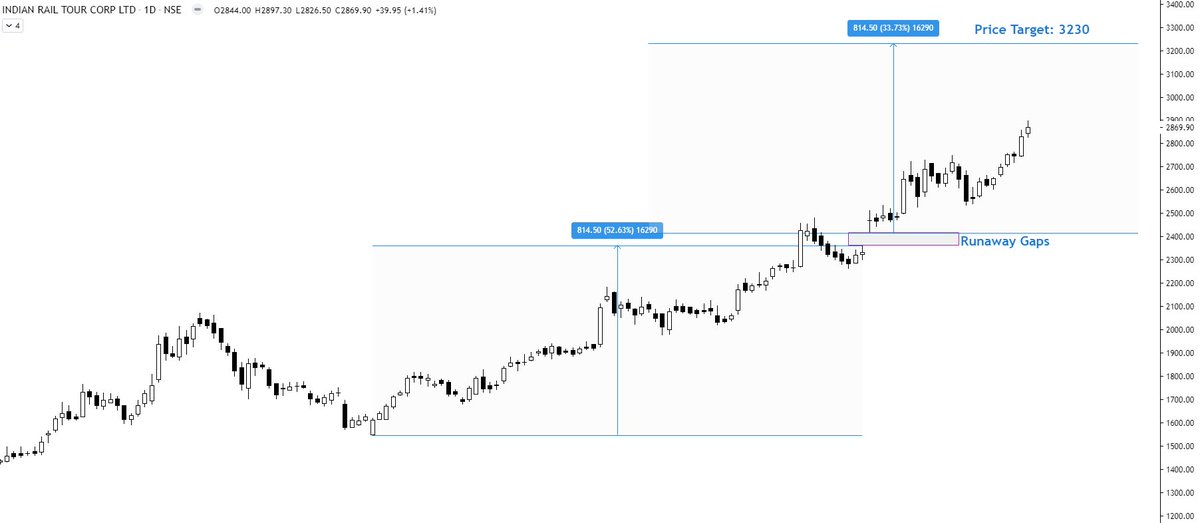
Runaway Gaps are traded like flag & pennant patterns. The price move before the gap is projected upwards for the price target. Here the target comes out to be 3230. https://t.co/QuKrekfHG3
IRCTC - A perfect pullback on low volumes after a high volume breakout. Low-risk setup. Weak below 2015 pic.twitter.com/jSHBlEhkE0
— The_Chartist \U0001f4c8 (@nison_steve) June 9, 2021


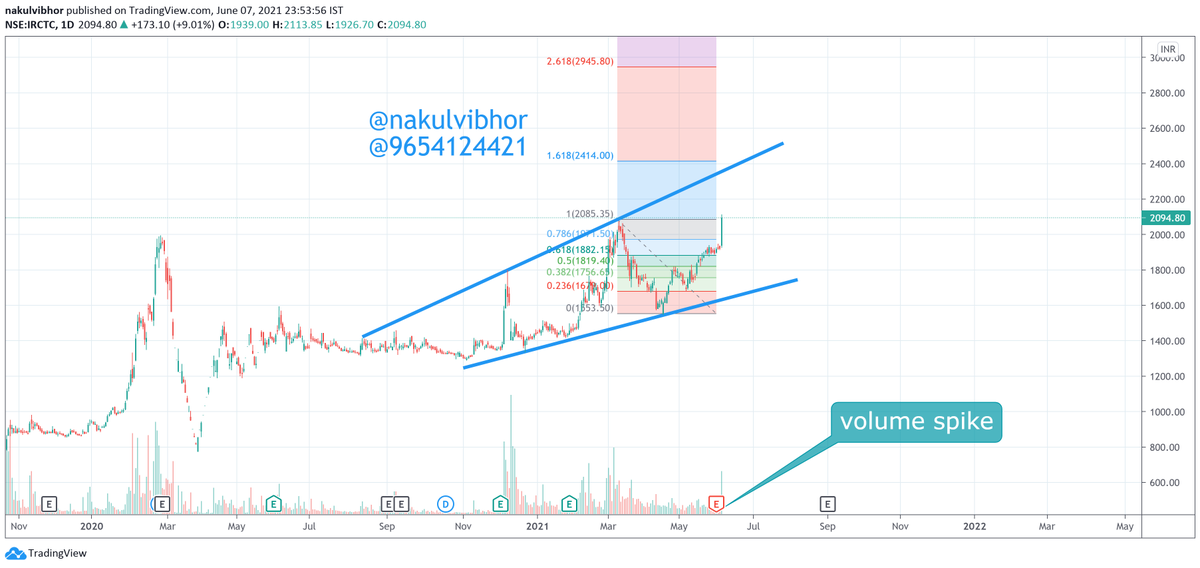
Another fresh breakout making HH-HL
volume spike seen today
Unlock process started which will help irctc to have upcoming good quarter results
Hits 2100+
Keep holding
2300-2500 short term targets
4992 long term target
Monopoly company https://t.co/mlIErwRuP5
Irctc
— Vibhor Varshney (@nakulvibhor) June 7, 2021
Another fresh breakout
Unlock process started in Mumbai - Delhi - up and few other states will help irctc to have upcoming good quarter results
Hits 2100+
Keep holding
2300-2500 short term targets
4992 long term target
Monopoly company
One can add now as well
\U0001f44d\U0001f44d https://t.co/O5M3hj8Mhk
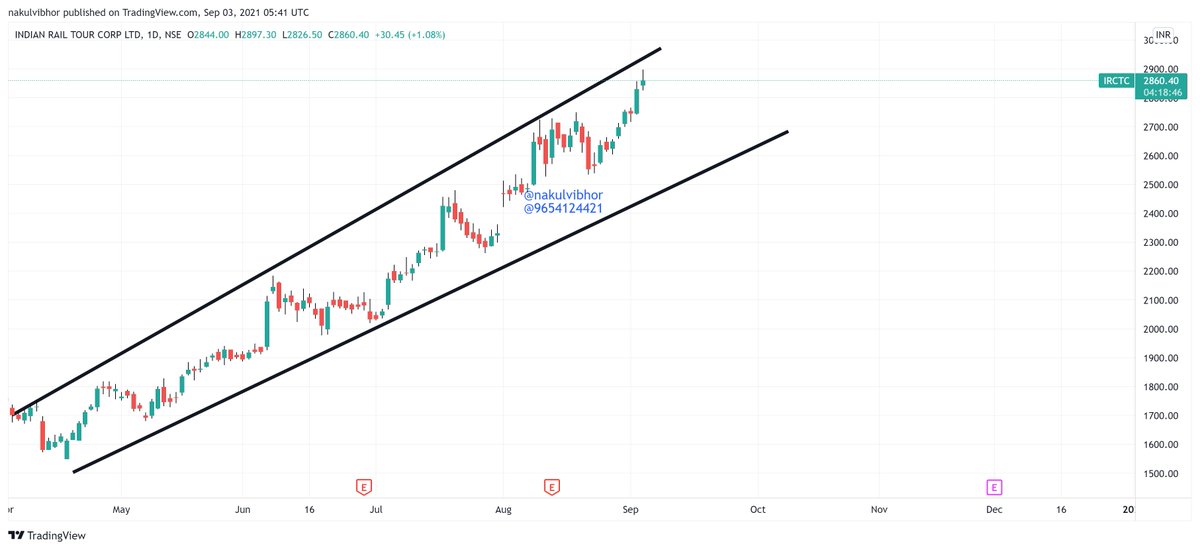
approching upper trendine , might took a small pause or need to break resistance with good volumes
target was 2900 , made high 2897 , with just 3 points short.
booking some positions as reached near resistance , will add near supportive trendline,
holding rest for 3600 https://t.co/2H0myGPgu5
Itctc
— Vibhor Varshney (@nakulvibhor) September 2, 2021
Entered 2800 \u2705
Heading towards 2900 target
Then 3600
Holding personally in folio \U0001f44d https://t.co/jd2OOQTSLs


You May Also Like

A thread 👇
https://t.co/xj4js6shhy
Entrepreneur\u2019s mind.
— James Clear (@JamesClear) August 22, 2020
Athlete\u2019s body.
Artist\u2019s soul.
https://t.co/b81zoW6u1d
When you choose who to follow on Twitter, you are choosing your future thoughts.
— James Clear (@JamesClear) October 3, 2020
https://t.co/1147it02zs
Working on a problem reduces the fear of it.
— James Clear (@JamesClear) August 30, 2020
It\u2019s hard to fear a problem when you are making progress on it\u2014even if progress is imperfect and slow.
Action relieves anxiety.
https://t.co/A7XCU5fC2m
We often avoid taking action because we think "I need to learn more," but the best way to learn is often by taking action.
— James Clear (@JamesClear) September 23, 2020