Conducting study on how we would have done if we would have bought every valid #IPOBase breakout since 2017. This will help us in finding the success rate of IPO bases and also in identification of the characteristics of a high probability setup. While I wish to publish (1/n)
To achieve consistent success in trading, it is essential for us to reduce subjectivity in trading though we can't eliminate it completely. So, am following (3/n)
Setup Rules
1) Sign of demand for the IPO- should list at premium. Will prefer if we have few days of buying post listing.
2) Should form left side high of the base within first 5 weeks of trading.
3) Depth - preferably 20% to 30% (4/n)
5) Breakout on heavy volume.
Trade Management Rules-
1) Standard entry will be at the breakout of the left side high of the base into new high ground. (5/n)
3) Will hold for 8 weeks without unnecessary interruption if the stock sustains above our pivot for 3 weeks post breakout. Will exit if initial SL is taken out. (6/n)
05) Will scale out if stock is exhibits severe warning signs & signs of weakness. Here, I will exit the (7/n)
6) As IPO bases have huge potential, we will take only decisive exits by selling into weakness - decisive break below 50 day EMA will be ultimate exit signal (8/n)
While we are supposed to see the action on weekly first, but here we will miss our first IPO base in the stock, if we will not see it on daily. Stock made its left side high on the 2nd day of trading, and formed 8.5% deep base (10/n)
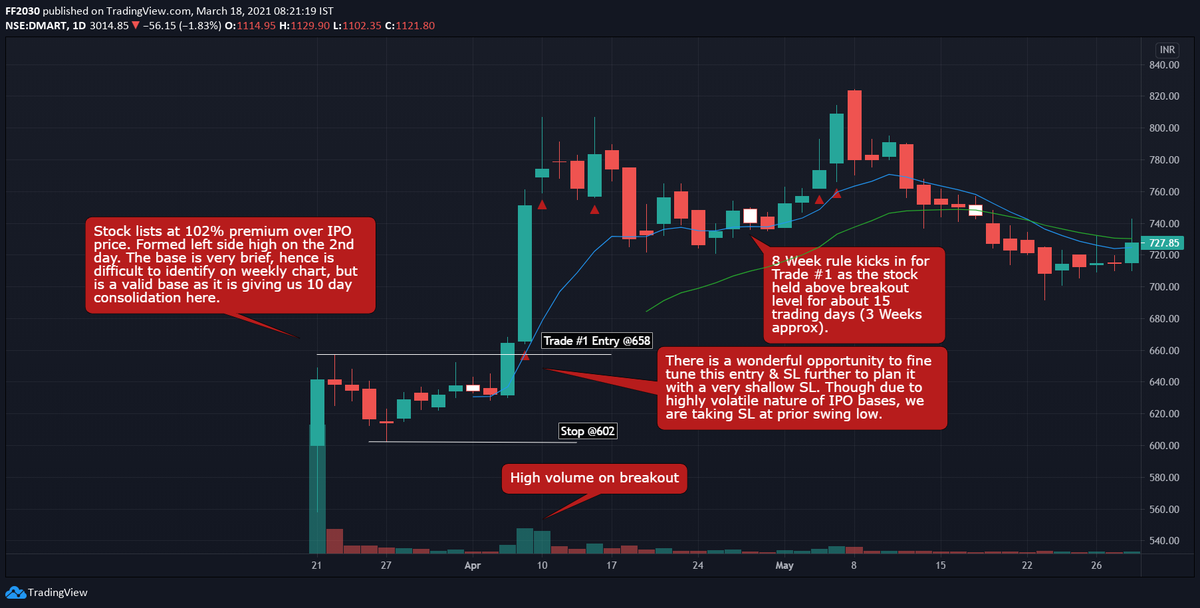
Meanwhile, the stock forms the second base of IPO family. The setup looks promising, with a depth of (12/n)
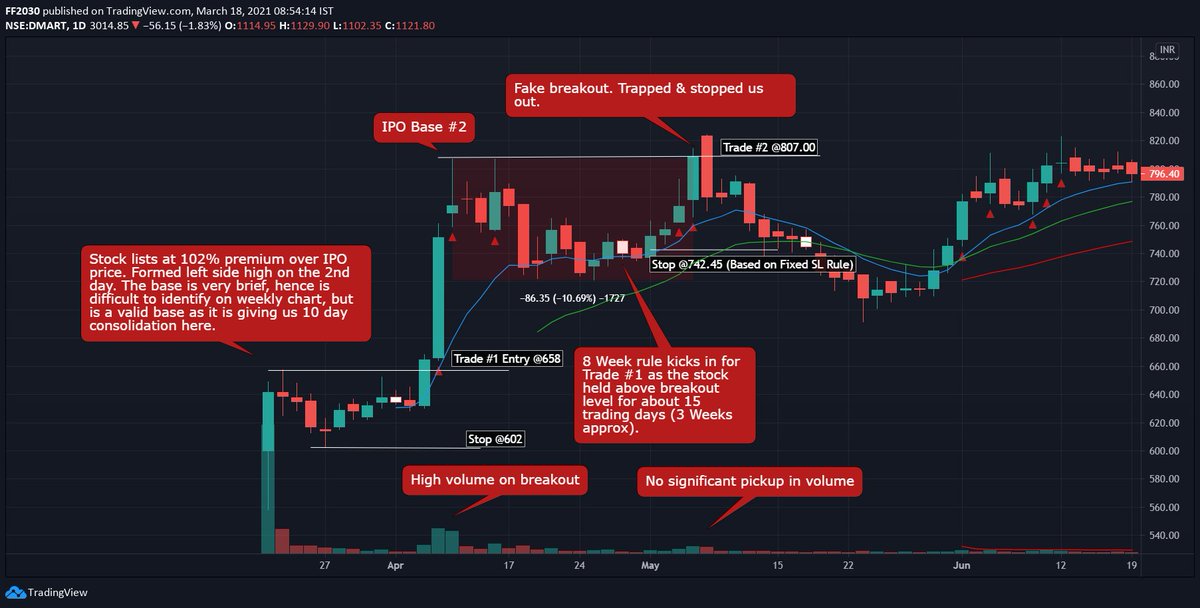
Stock gave us entry on 5th May, 2017, but immediately came back to undercut our SL in only 6 days. We will accept the loss of 1R and close our trade. Our first entry is intact, as it is under 8 week hold (14/n)
The stock falls below 20 DEMA but refused to fall more despite having no support below. I take this as a sign of strength as the stock is not exhibiting weakness even in adverse situation. Instead it tightened below 20 day line & starts resetting (15/n)
Meanwhile, the 8th week concluded on the week ending on 22nd May for our first entry. The stock is acting well, hence will trail with 50 day EMA. (16/n)
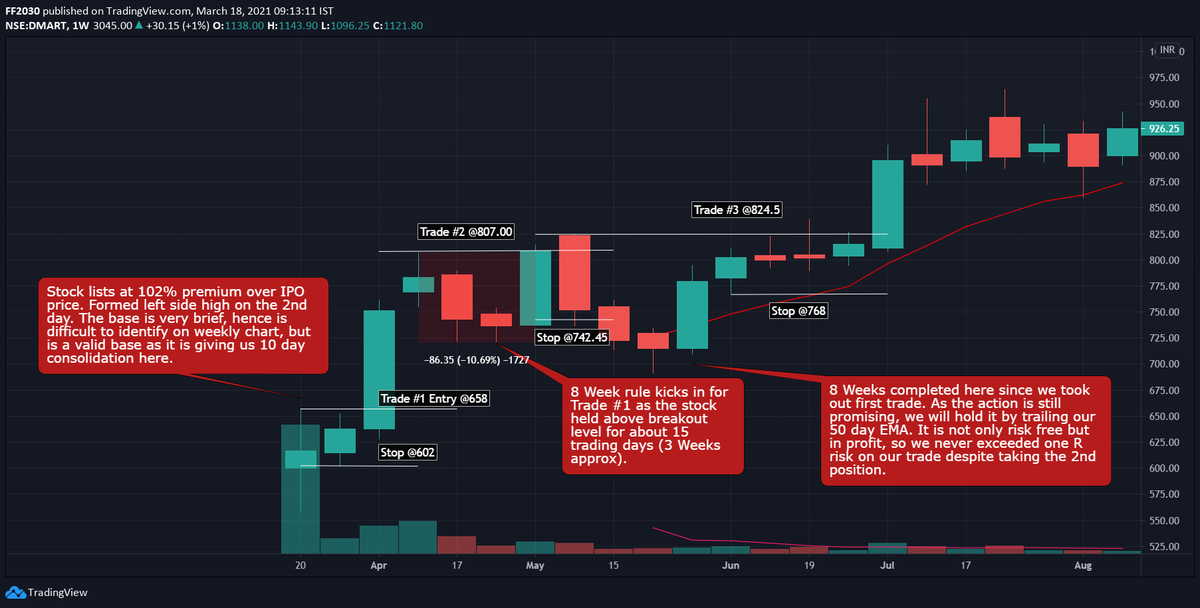
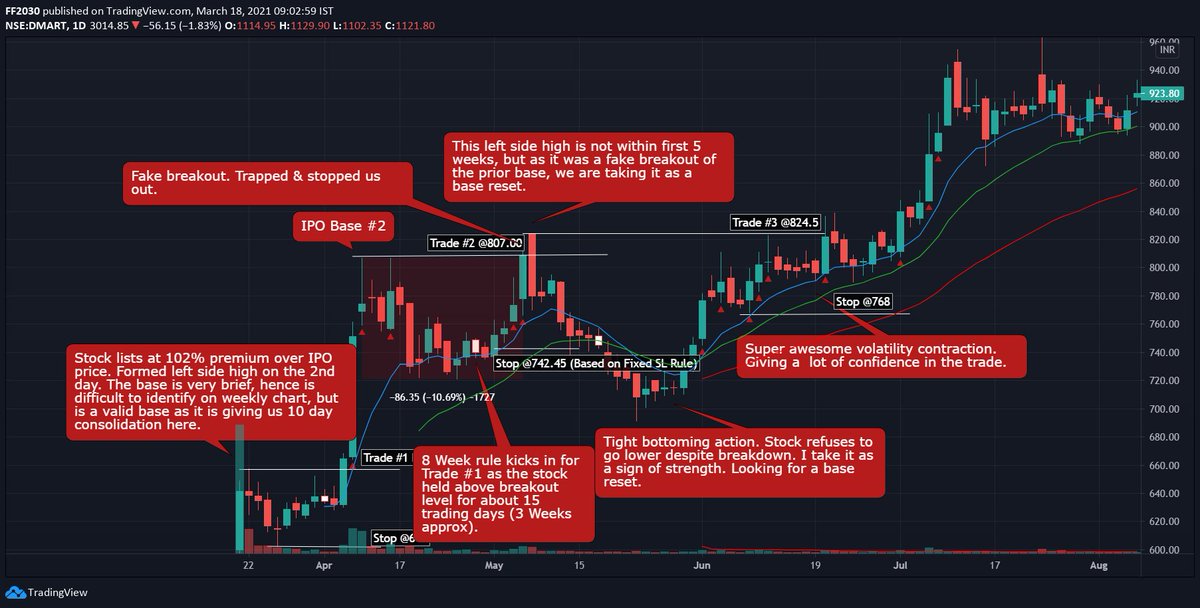
Stock comfortably sustained above the entry for 3 weeks post breakout, triggering 8 week hold rule for IPO bases for our 2nd position.
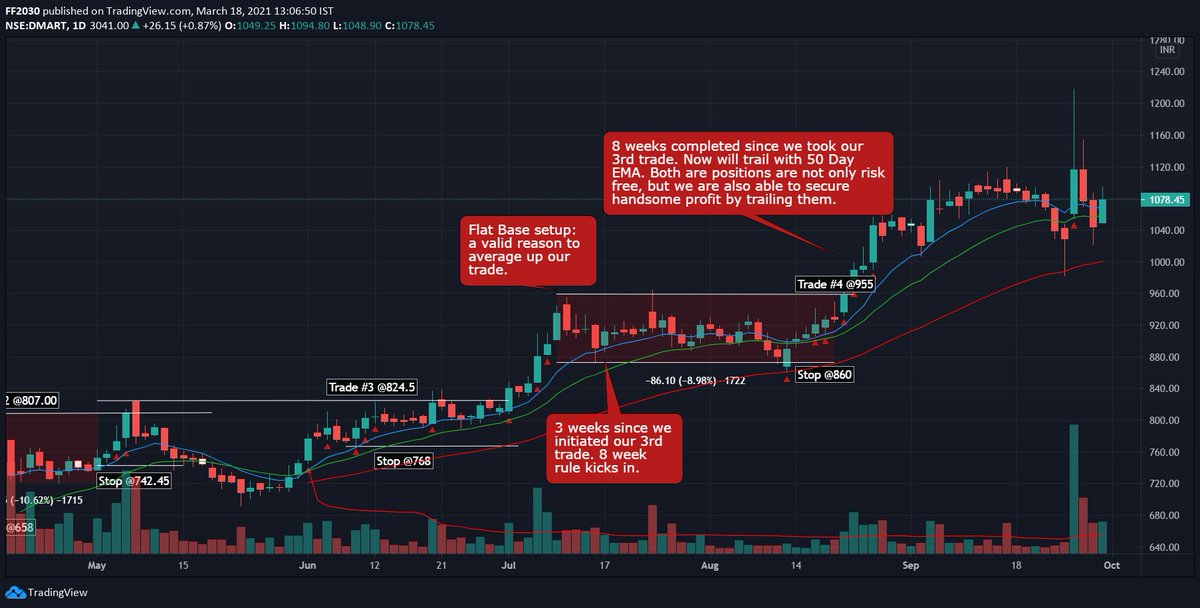
It is also important to keep in mind that we are in a very (19/n)
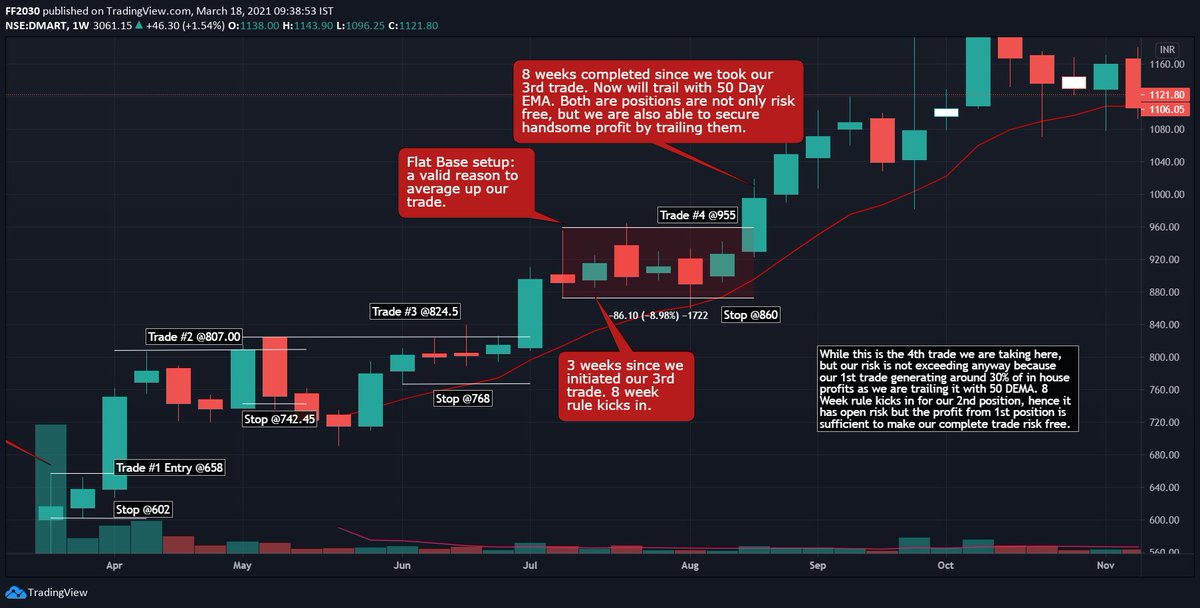
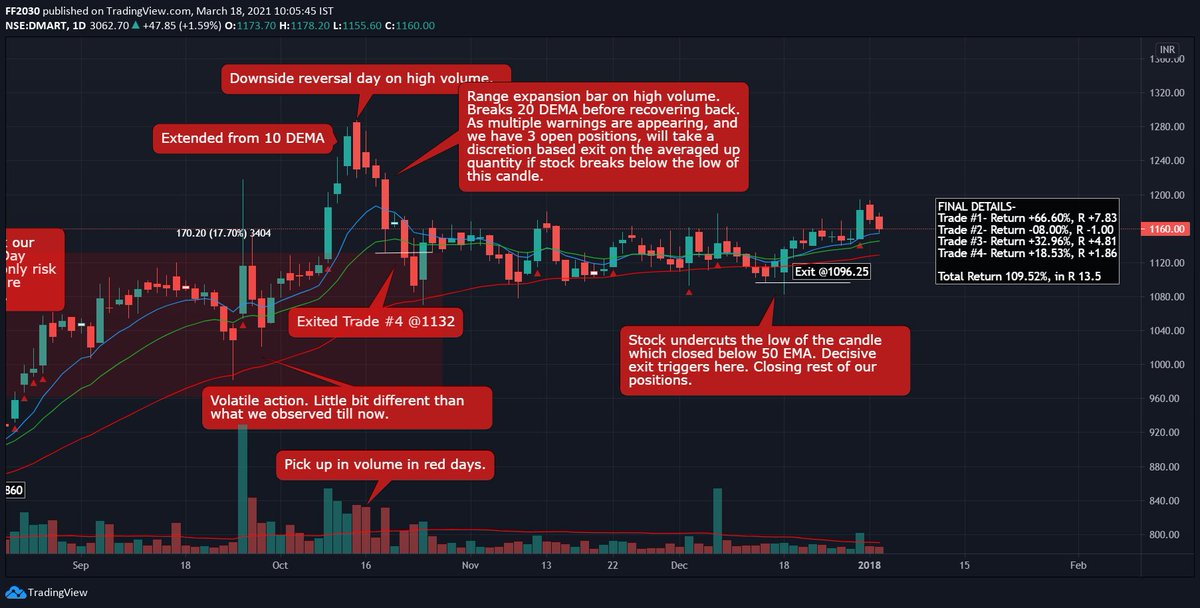
There is no reason to deny this opportunity. Our trade triggered on 22nd August, 2017 at ₹955 with the SL below the low of the base at ₹860. This is little deep, around 10%.
Our second open position too came out of the 8 week hold in the week (21/n)
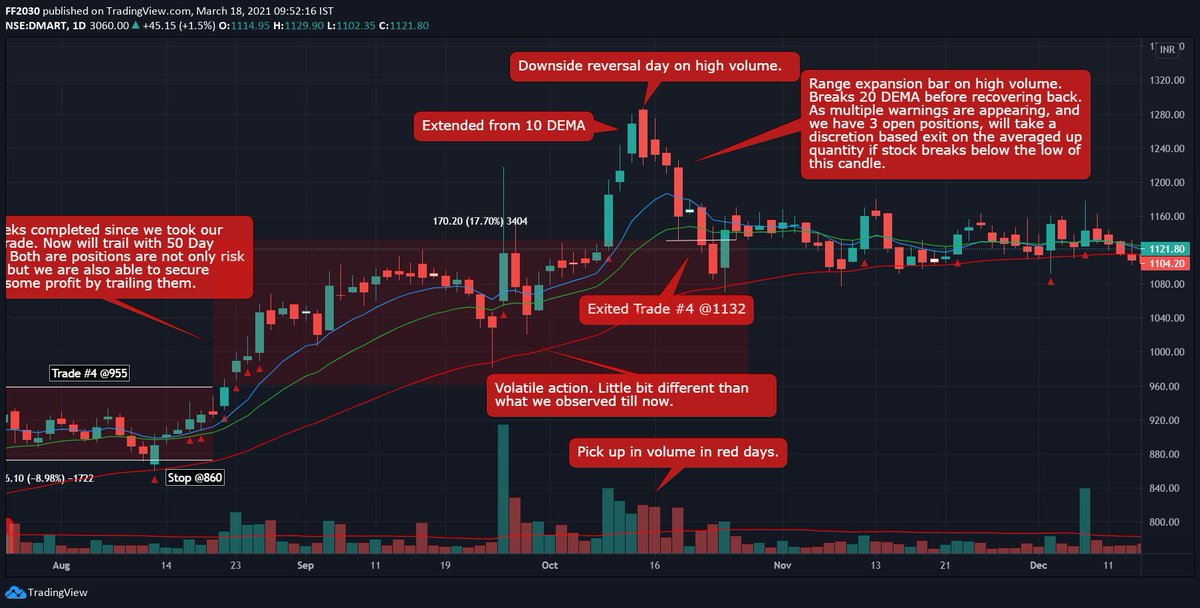
The stock gave small shakeout at 50 EMA on (22/n)
But the action become little volatile, made a rapid run above 10 EMA, look extended & also the volume on red bars increased. Due to multiple warnings we should consider scaling out a (23/n)
You May Also Like




@franciscodeasis https://t.co/OuQaBRFPu7
Unfortunately the "This work includes the identification of viral sequences in bat samples, and has resulted in the isolation of three bat SARS-related coronaviruses that are now used as reagents to test therapeutics and vaccines." were BEFORE the

chimeric infectious clone grants were there.https://t.co/DAArwFkz6v is in 2017, Rs4231.
https://t.co/UgXygDjYbW is in 2016, RsSHC014 and RsWIV16.
https://t.co/krO69CsJ94 is in 2013, RsWIV1. notice that this is before the beginning of the project
starting in 2016. Also remember that they told about only 3 isolates/live viruses. RsSHC014 is a live infectious clone that is just as alive as those other "Isolates".
P.D. somehow is able to use funds that he have yet recieved yet, and send results and sequences from late 2019 back in time into 2015,2013 and 2016!
https://t.co/4wC7k1Lh54 Ref 3: Why ALL your pangolin samples were PCR negative? to avoid deep sequencing and accidentally reveal Paguma Larvata and Oryctolagus Cuniculus?
Unfortunately the "This work includes the identification of viral sequences in bat samples, and has resulted in the isolation of three bat SARS-related coronaviruses that are now used as reagents to test therapeutics and vaccines." were BEFORE the
chimeric infectious clone grants were there.https://t.co/DAArwFkz6v is in 2017, Rs4231.
https://t.co/UgXygDjYbW is in 2016, RsSHC014 and RsWIV16.
https://t.co/krO69CsJ94 is in 2013, RsWIV1. notice that this is before the beginning of the project
starting in 2016. Also remember that they told about only 3 isolates/live viruses. RsSHC014 is a live infectious clone that is just as alive as those other "Isolates".
P.D. somehow is able to use funds that he have yet recieved yet, and send results and sequences from late 2019 back in time into 2015,2013 and 2016!
https://t.co/4wC7k1Lh54 Ref 3: Why ALL your pangolin samples were PCR negative? to avoid deep sequencing and accidentally reveal Paguma Larvata and Oryctolagus Cuniculus?