Honeybee historians - track changes in the UK floral landscape over the last 65 years, showing key changes in nectar resources. New paper in @CommsBio by the Science Team @walesbotanic @Zwickynova @abigailjayne26





More from History


Joshua Hawley, Missouri's Junior Senator, is an autocrat in waiting.
His arrogance and ambition prohibit any allegiance to morality or character.
Thus far, his plan to seize the presidency has fallen into place.
An explanation in photographs.
🧵
Joshua grew up in the next town over from mine, in Lexington, Missouri. A a teenager he wrote a column for the local paper, where he perfected his political condescension.
2/
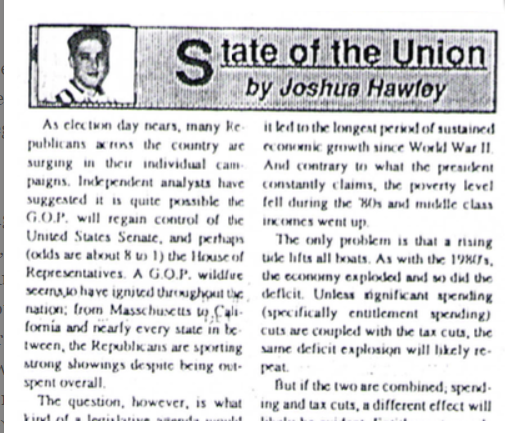
By the time he reached high-school, however, he attended an elite private high-school 60 miles away in Kansas City.
This is a piece of his history he works to erase as he builds up his counterfeit image as a rural farm boy from a small town who grew up farming.
3/

After graduating from Rockhurst High School, he attended Stanford University where he wrote for the Stanford Review--a libertarian publication founded by Peter Thiel..
4/
(Full Link: https://t.co/zixs1HazLk)
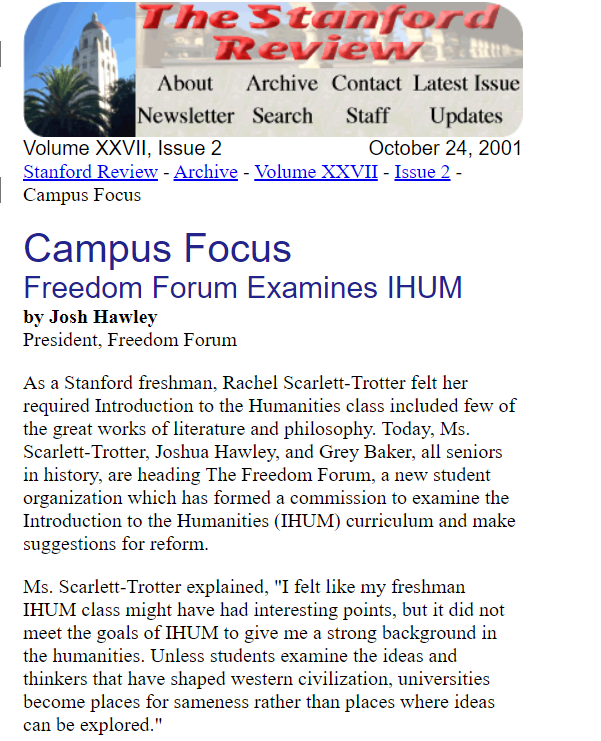
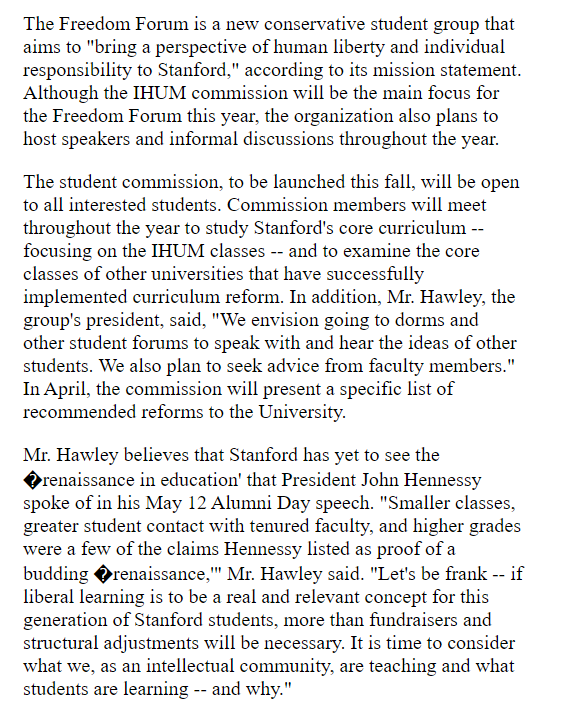
Hawley's writing during his early 20s reveals that he wished for the curriculum at Stanford and other "liberal institutions" to change and to incorporate more conservative moral values.
This led him to create the "Freedom Forum."
5/
His arrogance and ambition prohibit any allegiance to morality or character.
Thus far, his plan to seize the presidency has fallen into place.
An explanation in photographs.
🧵
Joshua grew up in the next town over from mine, in Lexington, Missouri. A a teenager he wrote a column for the local paper, where he perfected his political condescension.
2/
By the time he reached high-school, however, he attended an elite private high-school 60 miles away in Kansas City.
This is a piece of his history he works to erase as he builds up his counterfeit image as a rural farm boy from a small town who grew up farming.
3/
After graduating from Rockhurst High School, he attended Stanford University where he wrote for the Stanford Review--a libertarian publication founded by Peter Thiel..
4/
(Full Link: https://t.co/zixs1HazLk)
Hawley's writing during his early 20s reveals that he wished for the curriculum at Stanford and other "liberal institutions" to change and to incorporate more conservative moral values.
This led him to create the "Freedom Forum."
5/


Rush Catalog
Emotion Detector (1985, Power Windows)
https://t.co/3U3Ol6tMHU
#RushFamily
@RushFamTourneys
What's your grade of this song?
https://t.co/3U3Ol6Lo6u
Lyrics:
When we lift the covers from our feelings
We expose our insecure spots
Trust is just as rare as devotion —
Forgive us our cynical thoughts
If we need too much attention —
Not content with being cool
We must throw ourselves wide open
And start acting like a fool
If we need too much approval
Then the cuts can seem too cruel
Right to the heart of the matter
Right to the beautiful part
Illusions are painfully shattered
Right where discovery starts
In the secret wells of emotion
Buried deep in our hearts
It’s true that love can change us
But never quite enough
Sometimes we are too tender
Sometimes we’re too tough
If we get too much attention
It gets hard to overrule
So often fragile power turns
To scorn and ridicule
Sometimes our big splashes
Are just ripples in the pool
Emotion Detector (1985, Power Windows)
https://t.co/3U3Ol6tMHU
#RushFamily
@RushFamTourneys
What's your grade of this song?
https://t.co/3U3Ol6Lo6u
Lyrics:
When we lift the covers from our feelings
We expose our insecure spots
Trust is just as rare as devotion —
Forgive us our cynical thoughts
If we need too much attention —
Not content with being cool
We must throw ourselves wide open
And start acting like a fool
If we need too much approval
Then the cuts can seem too cruel
Right to the heart of the matter
Right to the beautiful part
Illusions are painfully shattered
Right where discovery starts
In the secret wells of emotion
Buried deep in our hearts
It’s true that love can change us
But never quite enough
Sometimes we are too tender
Sometimes we’re too tough
If we get too much attention
It gets hard to overrule
So often fragile power turns
To scorn and ridicule
Sometimes our big splashes
Are just ripples in the pool