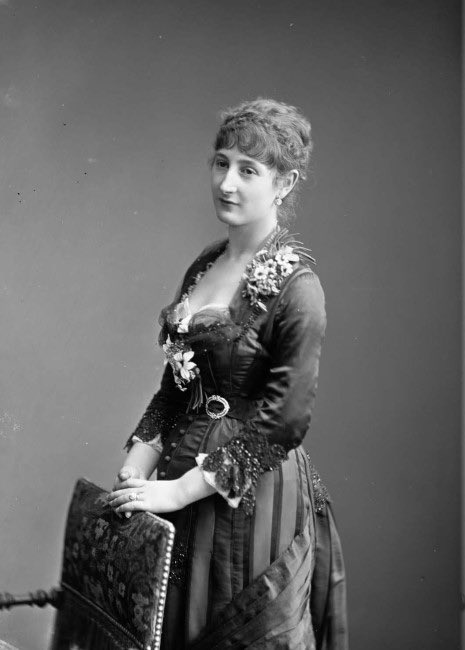
The sitter was the socialite Virginie Amélie Avegno Gautreau, wife of the French banker Pierre Gautreau.
Gautreau was an American expatriate, known in Paris as a ‘professional beauty’, meaning she used her looks to advance her social status - which she did exceptionally well
Her husband was much older than she was and very wealthy. Paris was awash with rumours about her multiple infidelities, but the social elite clamoured to be around her, nonetheless.
Artists were particularly fascinated by her. The painter Edward Simmons once wrote that he ‘could not stop stalking her as one does a deer.’
John Singer Sargent was an ambitious American artist who made his name with his work in portraiture. He was desperate to paint Gautreau, believing a painting of her would make his name.
He wrote to a friend, ‘I have a great desire to paint her portrait & have reason to think she would allow it & is waiting for someone to propose this homage to her beauty. If you are 'bien avec elle' & will see her in Paris, you might tell her I am a man of prodigious talent.’
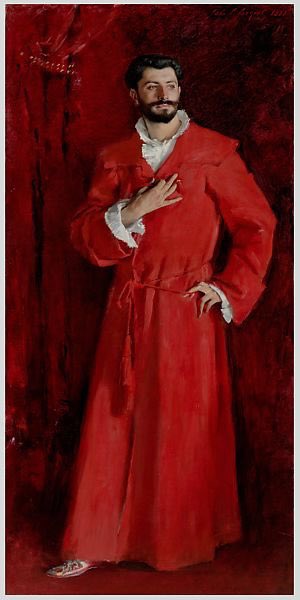
It’s thought that Sargent was introduced to Gautreau by Dr Samuel-Jean Pozzi, a pioneer in the field of modern gynaecology. Sargent had painted Pozzi’s portrait in 1881.
This is the portrait. With its lush red, velvet drapes & Pozzi robbed in red, ornate loungewear, it’s erm, subtle. (Also total #HistoricalHottie).
It was rumoured that Pozzi had been rustling Gautreau’s drapes for quite some time & this was how Sargent made her acquaintance
Eventually, Gautreau agreed to be painted but she was not an easy subject. She made Sargent wait for months until she was summering at her estate in Brittany. She was often bored, restless, and hated sitting still. (Yes, the position of the mouth & chair rim are unfortunate)
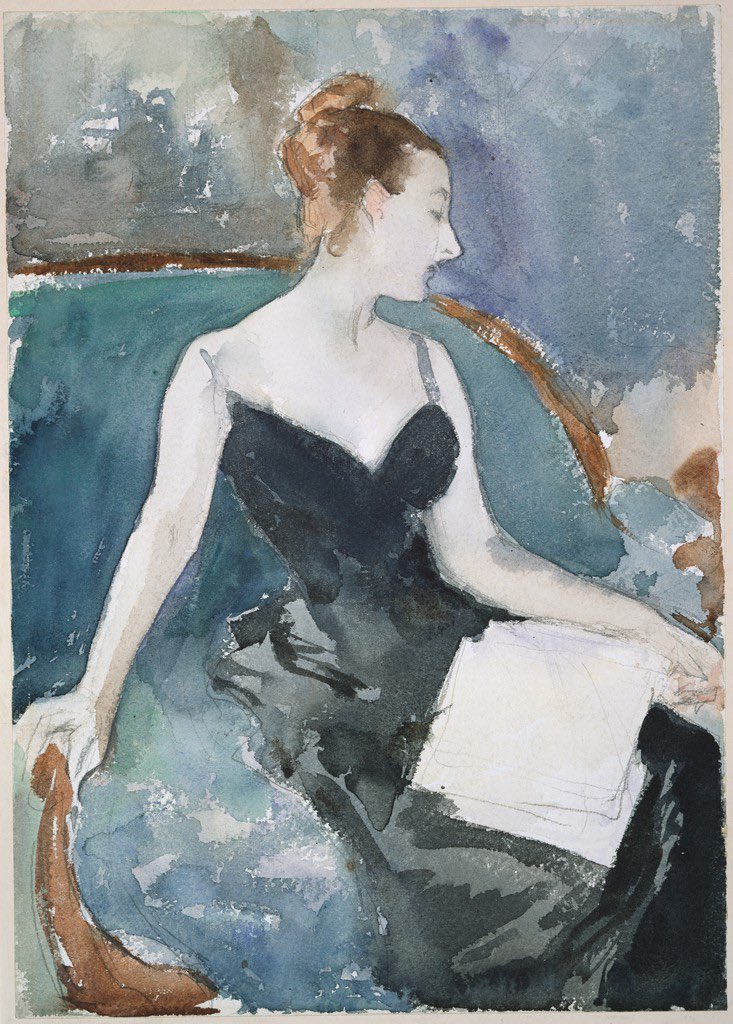
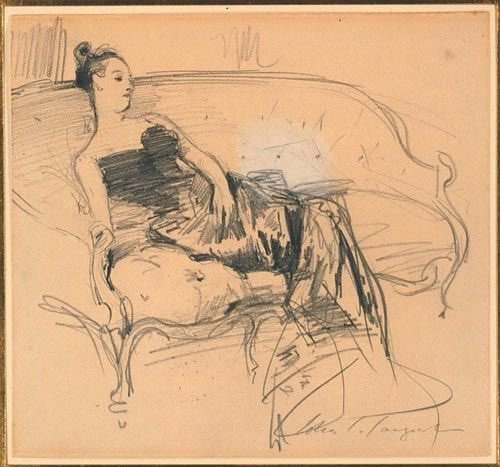
She took after for numerous social engagements when she was supposed to be sitting for Sargent. Her frustration with the whole process is best captured in this sketch Sargent did.
He wrote to Vernon Lee, “Your letter has just reached me, still in this country house struggling with the unpaintable beauty and hopeless laziness of Mme. Gautreau.”
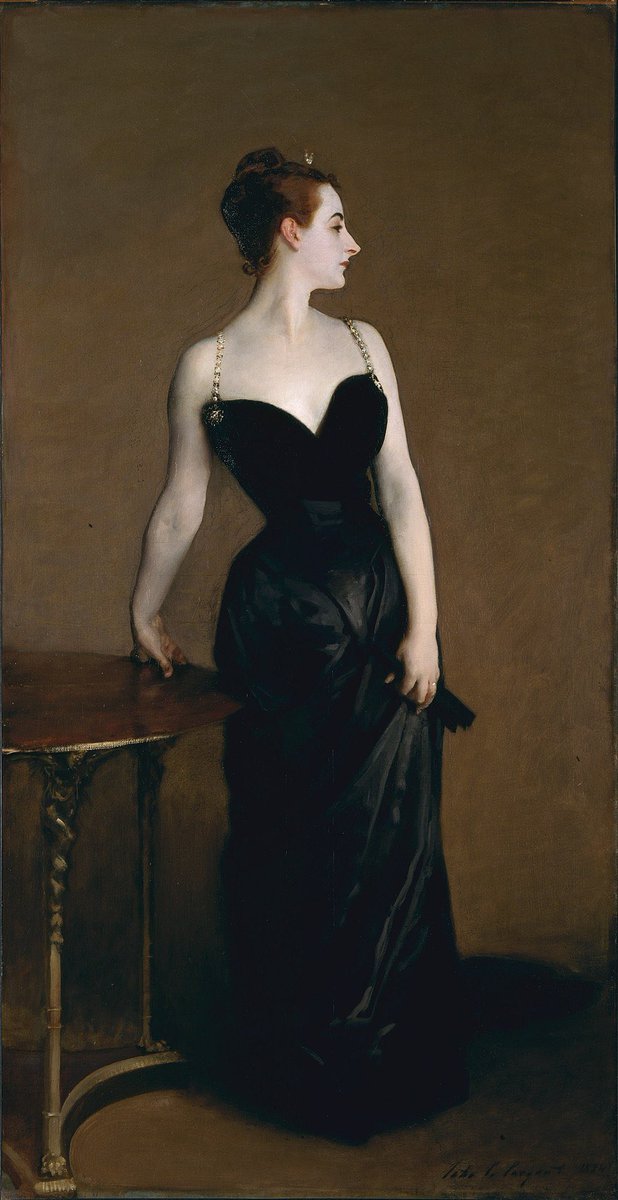
Eventually, he finished his work and it was exhibited at the 1884 Salon, under the title “Portrait of Mme**” - and the critics absolutely hated it.
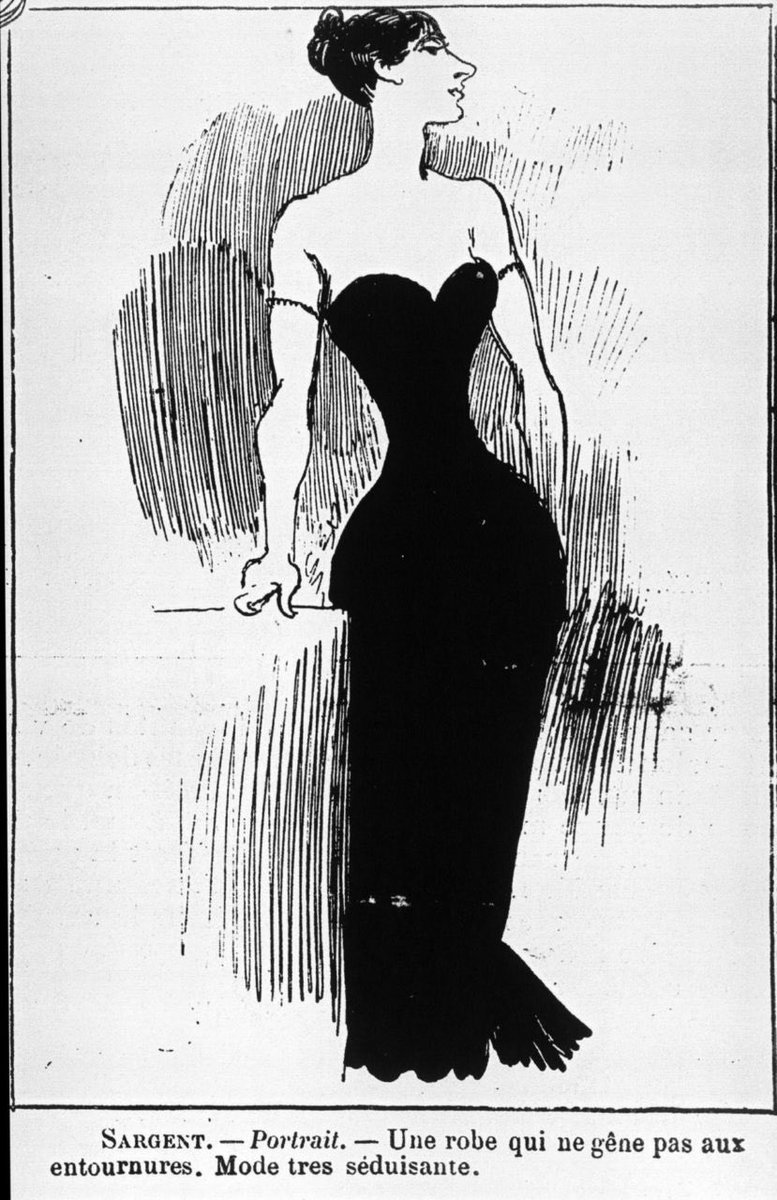
HATED IT. They hated the oddly pale skin, they hated the pose, and they especially hated the strapless, cleavage plunging dress, that, according to one critic, looked as if “One more struggle and the lady will be free". In a review of the 1884 Salon, the Times reported...
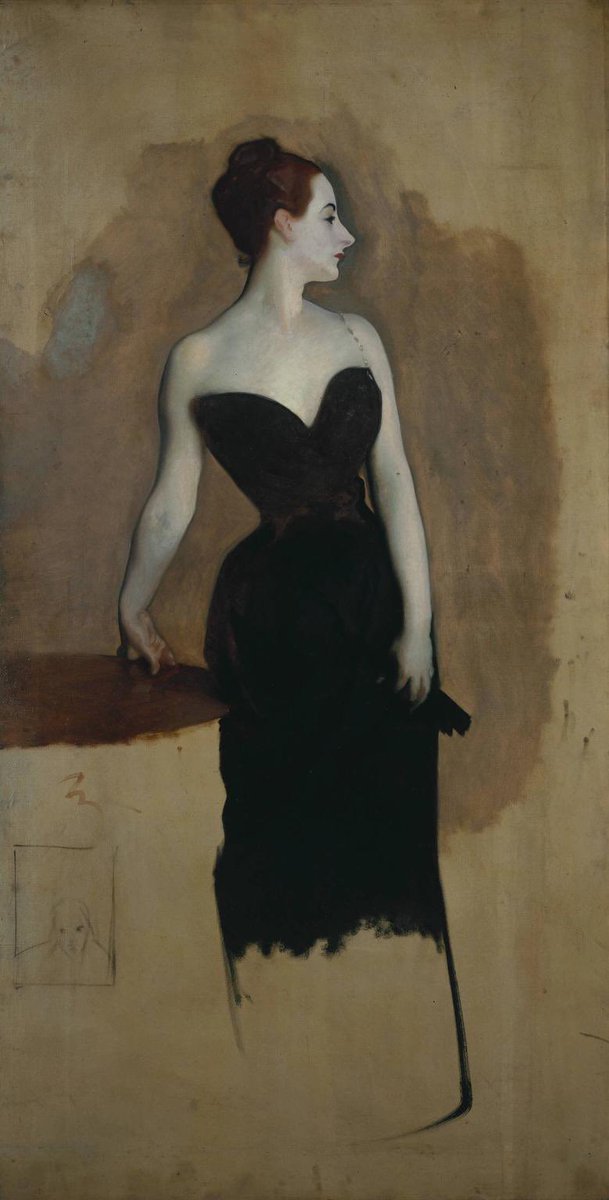
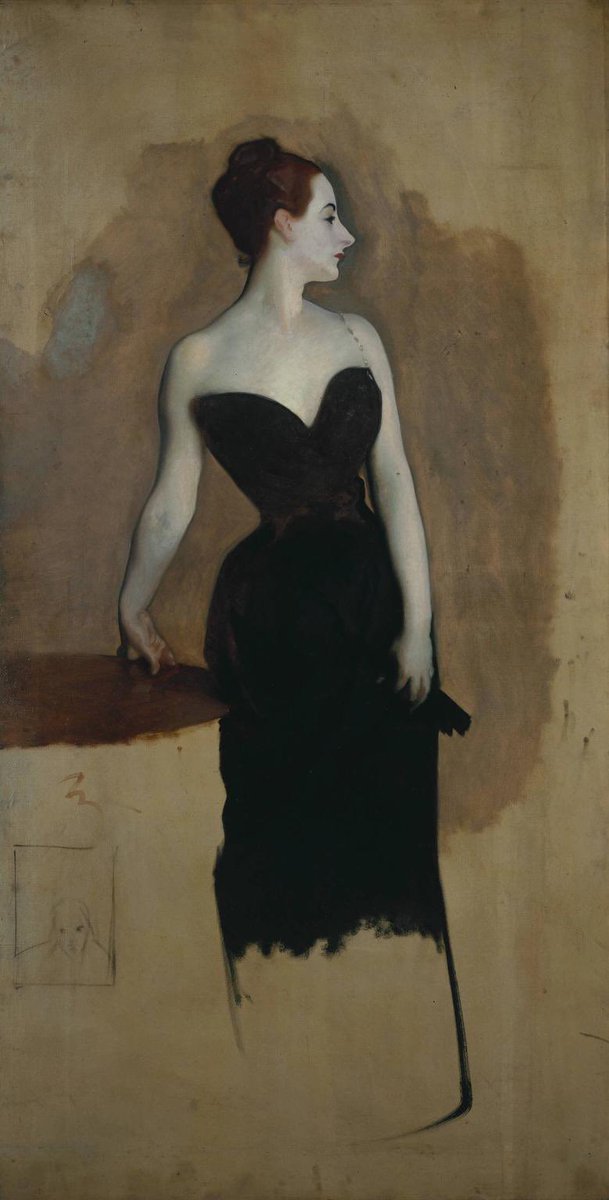
The original painting showed the subject with the dress straps off her shoulders (seen in this sketch.) This was repainted by Sargent following the outcry.
One French critic wrote that if one stood before the portrait during its exhibition in the Salon, one "would hear every curseword in the French language." This 1884 caricature by Albert Robida was titled “Le Salon Comique.”
Sargent was surprised by the reaction, writing he had painted her ‘exactly as she was dressed, that nothing could be said of the canvas worse than had been said in print of her appearance’.
But that was the issue. Gautreau already had a reputation as being an adulteress & sexually promiscuous. Sargent’s work seemed to put all of that on display & revel in it.
Gautreau’s mother demanded the painting was withdrawn, saying ‘All Paris is making fun of my daughter... She is ruined. My people will be forced to defend themselves. She’ll die of chagrin.’
Gautreau wrote to a friend, ‘I will try to get over the sadness which for several days has overwhelmed me and which makes me depressed enough to die.’ She never really did bounce back from the scandal and retreated from public life for several years