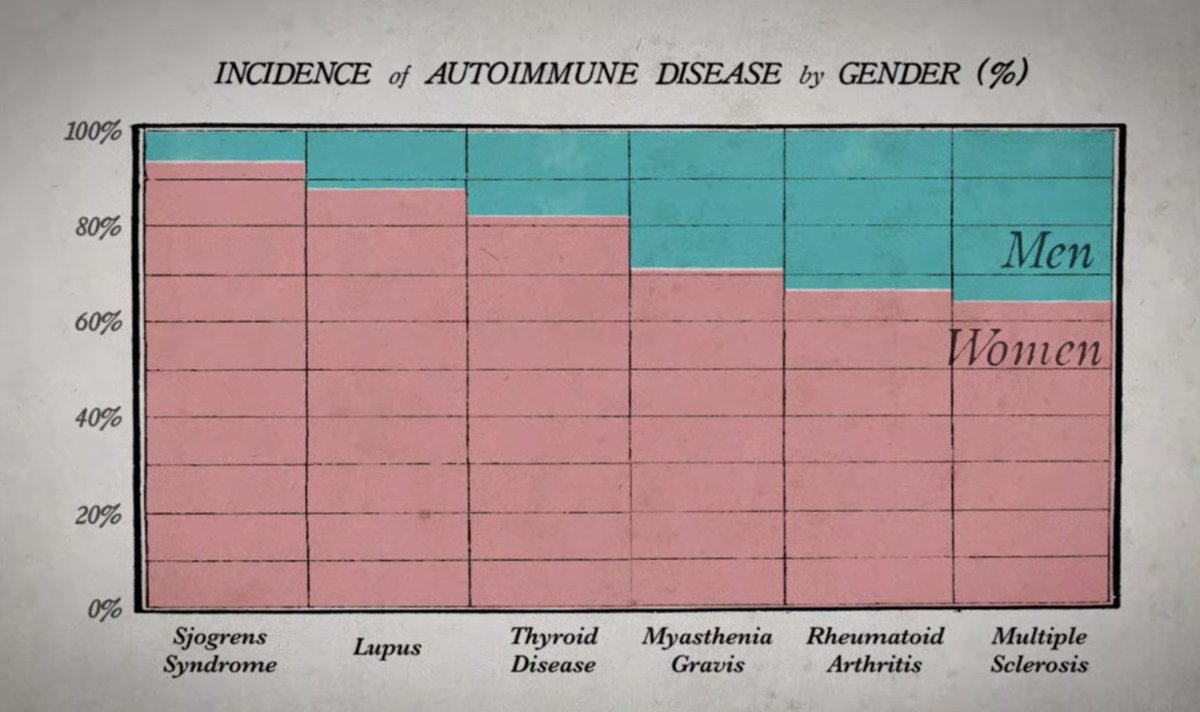
THREAD: Women and "Unexplained" Diseases
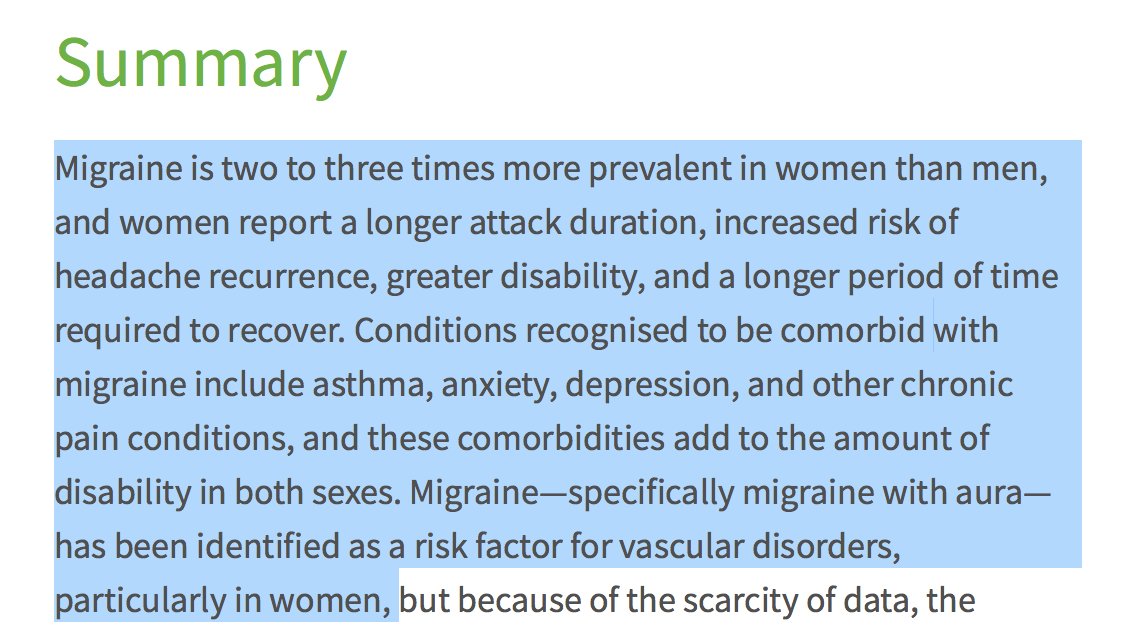
It's interesting that even a condition as common as #Migraine is still not well understood.
Significant overlap with many other conditions mostly impacting women that are also "not well understood" is present.
https://t.co/EhrnxfItsm https://t.co/R7QUKrZvhR
cc: @jenbrea @ahandvanish @AthenaAkrami @Dr2NisreenAlwan @MBVanElzakker
https://t.co/ITrLBkc3uE
If you work on #longCOVID and say \u201cI\u2019m not an #MECFS expert, I don\u2019t know anything about it, it\u2019s not my job to know about ME or \u2019fatigue\u2019\u201d then you really, REALLY need to learn about ME. This is what MANY infections can do, not just SARS2. pic.twitter.com/zke0MqwrEd
— Jennifer Brea\U0001f992 (@jenbrea) January 14, 2021
Example stats ME/CFS:
https://t.co/GKQqqtWTI7
In ME/CFS is about 80/20 female/male. Before puberty, gender ratio is 50/50. Many anecdotal reports of trans people who take hormones: F to M improve, M to F experience worsening symptoms. Female preponderance is found in both sporadic cases and historically, in outbreaks.
— Jennifer Brea\U0001f992 (@jenbrea) January 12, 2021
Majority of patients with PNES are women, outnumbering men by a ratio of 3:1. Female sex preponderance occurs after puberty & usually before the age of 55
Lack of data does not equal lack of EXISTENCE of a problem, it equals lack of UNDERSTANDING of the problem.
And this problem is immense.
https://t.co/TnF2j4dKs3
Like this tweet if:
— Dr. Jessica Taylor (@DrJessTaylor) January 13, 2021
- You are a woman
- You have ever been ignored, gaslit, accused of exaggerating or told its all in your head by a doctor when you sought help for a medical problem
I just wanna see something.
My optimistic hope is that the enormous amounts of funding for #COVID19 open doors to understanding pathophysiology of previously neglected diseases particularly in women.
But our scientific ignorance should not be wielded to blame & further abuse patients.
Our lack of understanding is not their failure but ours.
https://t.co/LwN8qc0Q4a
Well, it would be so much easier if we didn\u2019t continuously \u201ccarve diagnoses out of the psychosomatic wastebasket\u201d as Maya Dusenbury so eloquently wrote in her book Doing Harm. So I will continue to rant about it. Wont make the medical profession happy, but time to face reality... pic.twitter.com/iFJudV9BLX
— GinaMcGalliard \U0001f9dc\U0001f3fb\u200d\u2640\ufe0f\U0001f315\U0001f339 (@GinaMcGalliard) January 12, 2021
There are more specific, more scientific, and less offensive terminology we can use for women's bodies.
@VirusesImmunity @angie_rasmussen @DocElovitz
To read more of my Threads, please check out: https://t.co/UMdZvE2tDj
More from Health

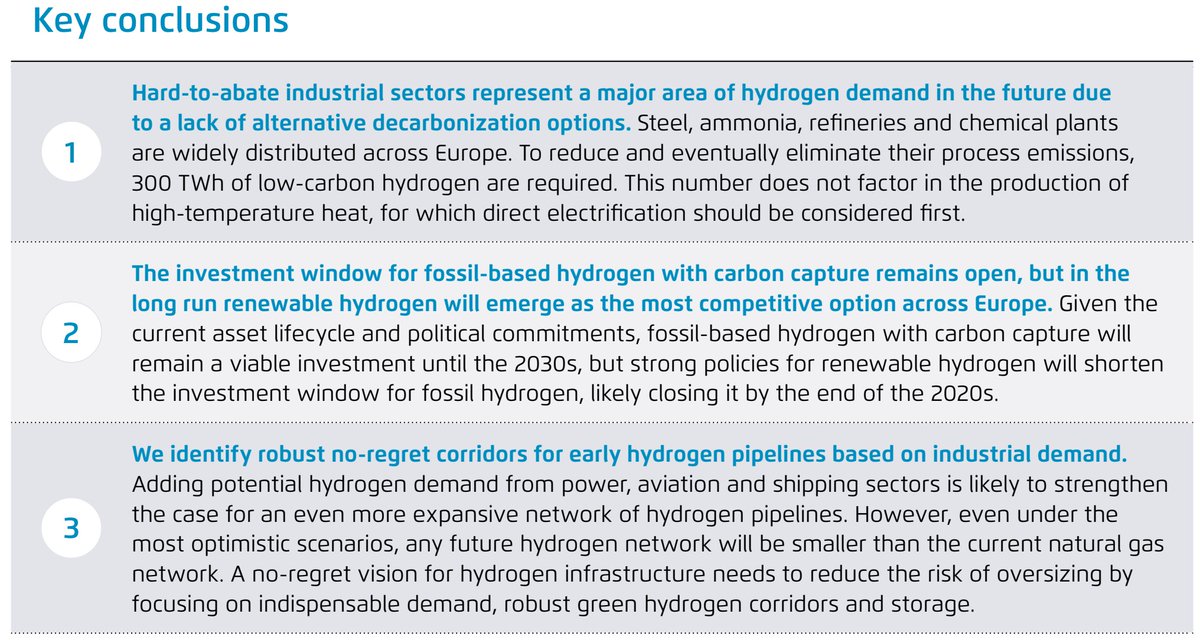
No-regret #hydrogen:
Charting early steps for H₂ infrastructure in Europe.
👉Summary of conclusions of a new study by @AgoraEW @AFRY_global @Ma_Deutsch @gnievchenko (1/17)
https://t.co/YA50FA57Em
The idea behind this study is that future hydrogen demand is highly uncertain and we don’t want to spend tens of billions of euros to repurpose a network which won’t be needed. For instance, hydrogen in ground transport is a hotly debated topic https://t.co/RlnqDYVzpr (2/17)
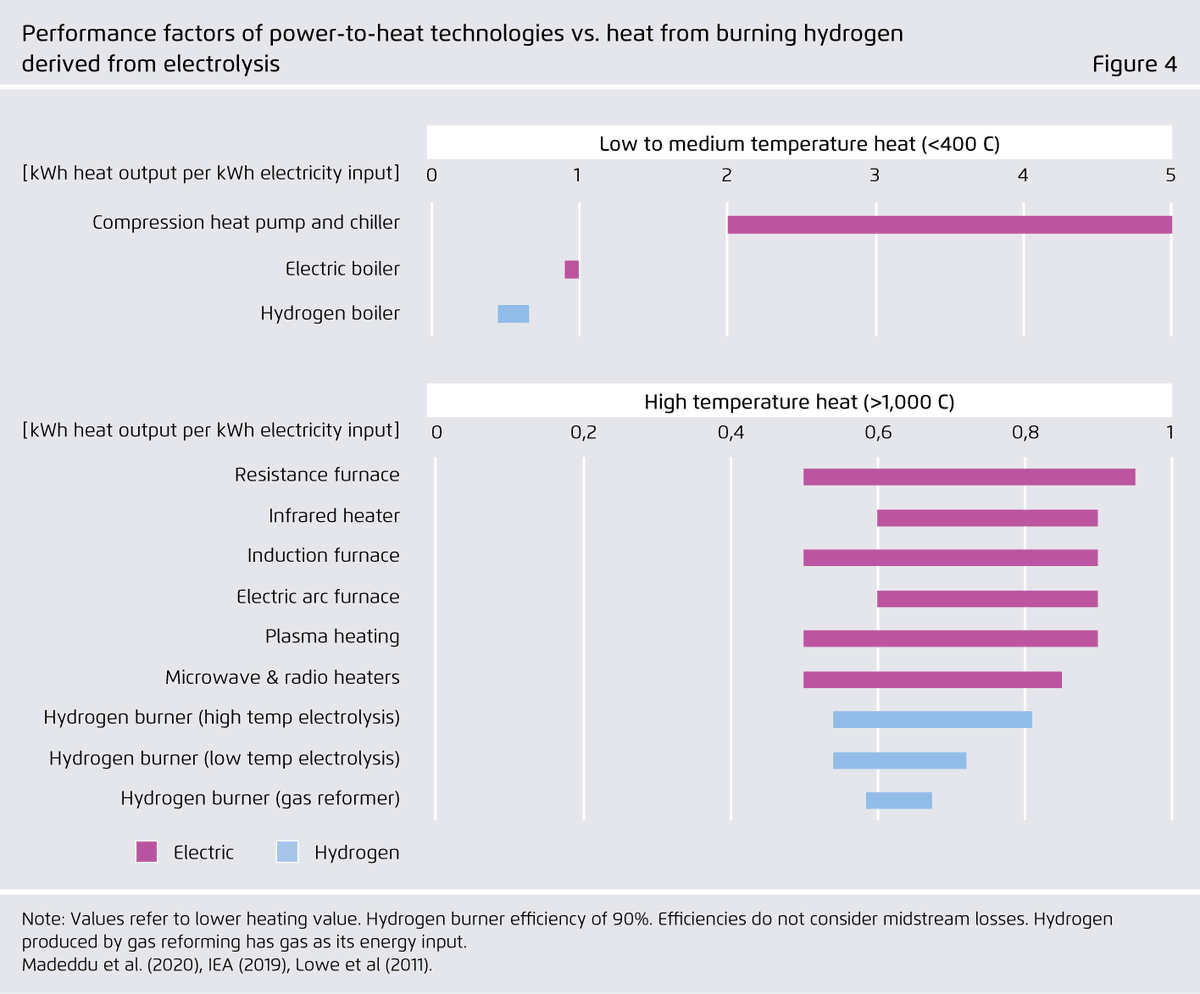
Similar things can be said about heat. 40% of today’s industrial natural gas use in the EU goes to heat below 100°C and therefore is within range of electric heat pumps – whose performance factors far exceed 100%. (3/17)

Even for higher temperatures, a range of power-to-heat (PtH) options can be more energy-efficient than hydrogen and should be considered first. Available PtH technologies can cover all temperature levels needed in industrial production (e.g. electric arc furnace: 3500°C). (4/17)
In our view, hydrogen use for feedstock and chemical reactions is the only inescapable source of industrial hydrogen demand in Europe that does not lend itself to electrification. Examples include ammonia, steel, and petrochemical industries. (5/17)
Charting early steps for H₂ infrastructure in Europe.
👉Summary of conclusions of a new study by @AgoraEW @AFRY_global @Ma_Deutsch @gnievchenko (1/17)
https://t.co/YA50FA57Em
The idea behind this study is that future hydrogen demand is highly uncertain and we don’t want to spend tens of billions of euros to repurpose a network which won’t be needed. For instance, hydrogen in ground transport is a hotly debated topic https://t.co/RlnqDYVzpr (2/17)
Similar things can be said about heat. 40% of today’s industrial natural gas use in the EU goes to heat below 100°C and therefore is within range of electric heat pumps – whose performance factors far exceed 100%. (3/17)
Even for higher temperatures, a range of power-to-heat (PtH) options can be more energy-efficient than hydrogen and should be considered first. Available PtH technologies can cover all temperature levels needed in industrial production (e.g. electric arc furnace: 3500°C). (4/17)
In our view, hydrogen use for feedstock and chemical reactions is the only inescapable source of industrial hydrogen demand in Europe that does not lend itself to electrification. Examples include ammonia, steel, and petrochemical industries. (5/17)


Before we get too far into 2021, I thought I’d write a thread recapping some of the research that came out of my lab in 2020. Most of this work was led by my talented team of graduate students, Kerrianne Morrison, @kmdebrabander, and @DesiRJones.
Back in January, a news story was published about Kerrianne’s study showing improved social interaction outcomes for autistic adults when paired with another autistic partner.
A detailed thread about the study and a link to the paper can be found here (feel free to DM me your email address if you’d like a copy of the full paper for this study or any of our studies):
Another paper published early in 2020 (it appeared a few months earlier online) showed that traditional standalone tasks of social cognition are less predictive of functional and social skills among autistic adults than commonly assumed in autism research.
Next, @kmdebrabander led and published an innovative study about how well autistic and non-autistic adults can predict their own cognitive and social cognitive performance.
Back in January, a news story was published about Kerrianne’s study showing improved social interaction outcomes for autistic adults when paired with another autistic partner.
A detailed thread about the study and a link to the paper can be found here (feel free to DM me your email address if you’d like a copy of the full paper for this study or any of our studies):
In our new paper out today, autistic adults held a \u201cget to know you\u201d conversation with an unfamiliar autistic or typically-developing (TD) person. We were curious: would social interaction outcomes differ when their partner was also autistic? THREAD https://t.co/4koqUKV9G1
— Noah Sasson (@Noahsasson) December 11, 2019
Another paper published early in 2020 (it appeared a few months earlier online) showed that traditional standalone tasks of social cognition are less predictive of functional and social skills among autistic adults than commonly assumed in autism research.
How well does social cognition predict functional and social skills in autism? Our new paper attempts to answer this question. This thread summarizes why we conducted the study, what we found, and why I think it\u2019s important. https://t.co/KB1nIpK0M2
— Noah Sasson (@Noahsasson) August 16, 2019
Next, @kmdebrabander led and published an innovative study about how well autistic and non-autistic adults can predict their own cognitive and social cognitive performance.
New by @kmdebrabander and our lab: Autistic adults don\u2019t differ from non-autistic adults in the accuracy of their self-assessment on general cognitive tasks but are less accurate on social cognitive tasks. This however was unrelated to social functioning https://t.co/0MrqMKKO0r
— Noah Sasson (@Noahsasson) September 20, 2020


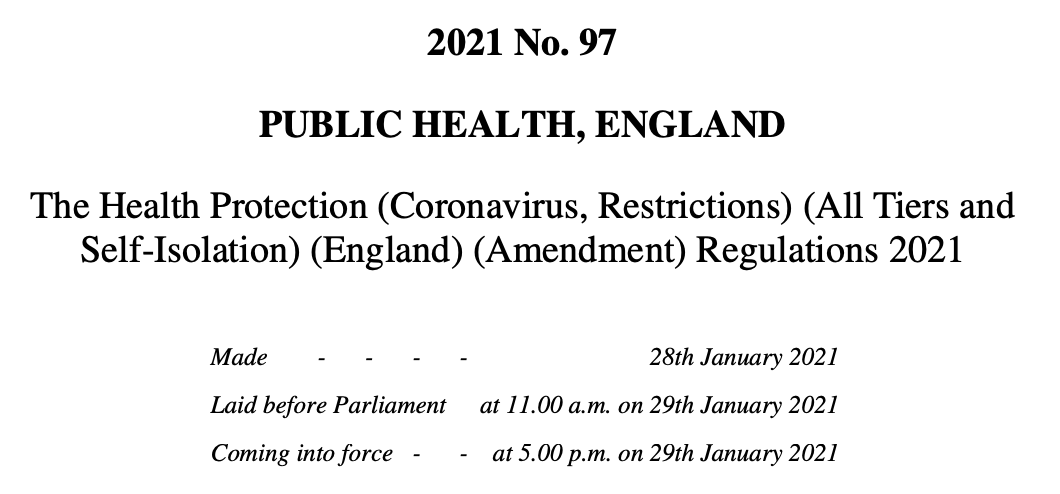
🚨Important changes to lockdown/self-isolation regulations from 5pm
The Health Protection (Coronavirus, Restrictions) (All Tiers and Self-Isolation) (England) (Amendment) Regulations 2021
£800 'house party' FPN & police can now access track & trace data
https://t.co/k9XCpVsXhC
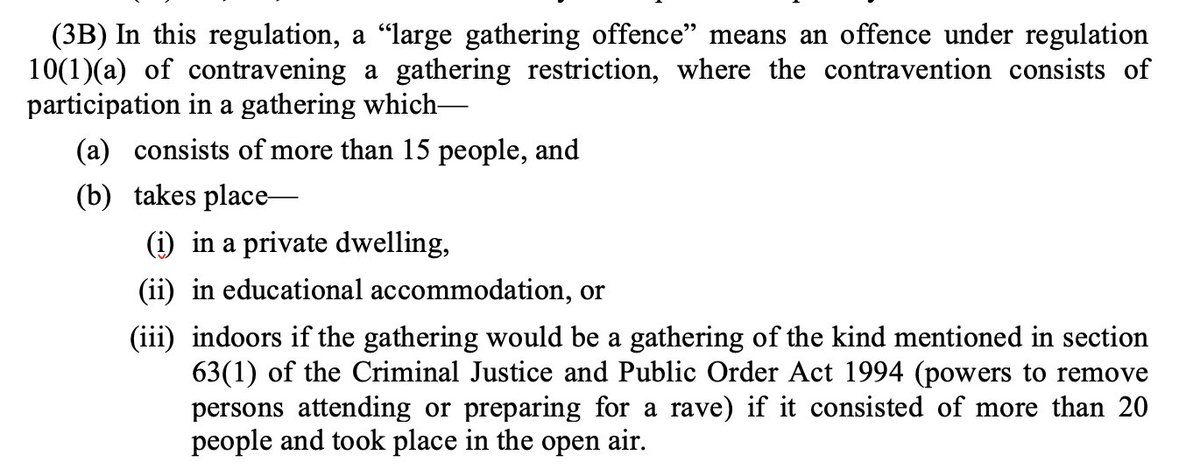
“Large gathering offence”
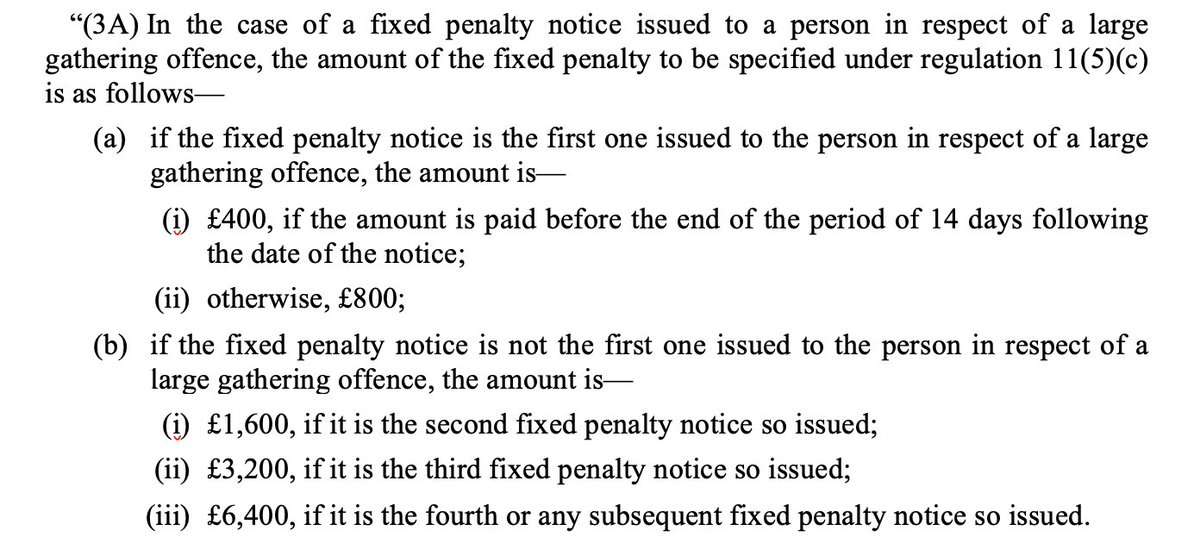
As trailed by Home Secretary last week there is now a fixed penalty notice of £800 (or £400 if you pay within 14 days) for participating in an gathering of over 15 people in a private residence
Fixed Penalty Notices double for each subsequent “large gathering offence” up to £6,400
Compare:
- Ordinary fixed penalty notice is £200 or £100 if paid in 14 days
- Holding or being involved in the holding of a gathering of over 30 people is £10,000
Second big change:
Since September has been a legal requirement to sell-isolate if you test positive/notified by Track & Trace of exposure to someone else who tested positive
Police can now be given access to NHS Track & Trace data if for the purpose of enforcement/prosecution
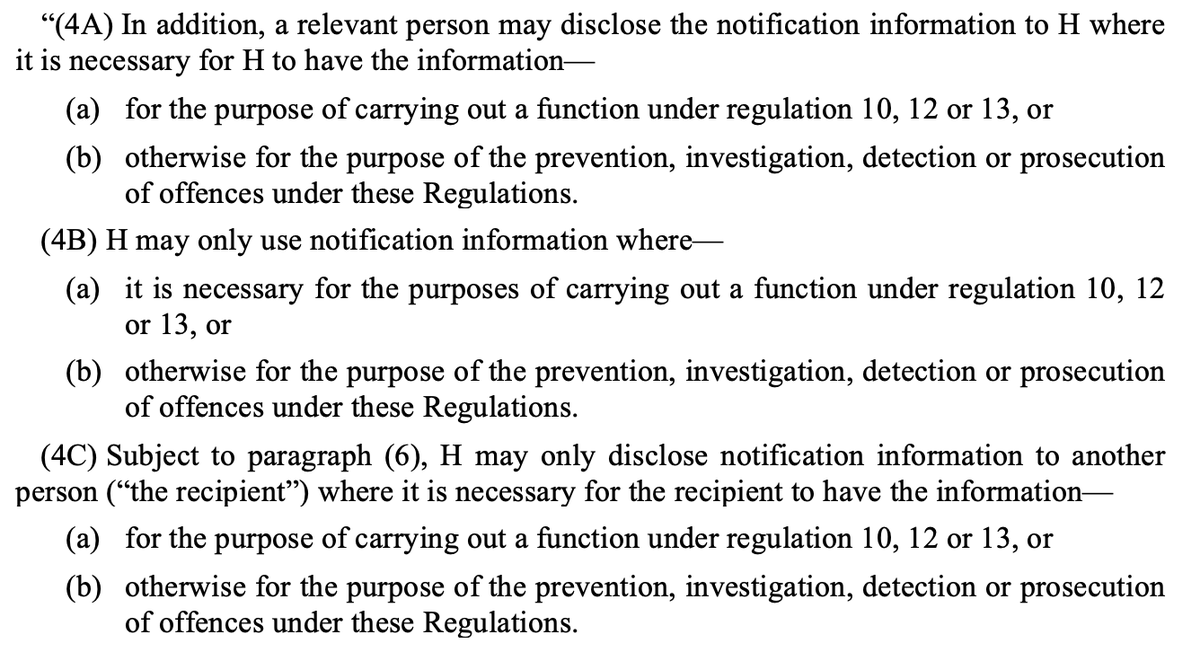
This will make it easier for police to enforce people breaking self-isolation rules. Currently there has been practically no enforcement.
Data says only a small proportion of people meant to be self-isolating are fully doing so.
The Health Protection (Coronavirus, Restrictions) (All Tiers and Self-Isolation) (England) (Amendment) Regulations 2021
£800 'house party' FPN & police can now access track & trace data
https://t.co/k9XCpVsXhC
“Large gathering offence”
As trailed by Home Secretary last week there is now a fixed penalty notice of £800 (or £400 if you pay within 14 days) for participating in an gathering of over 15 people in a private residence
Fixed Penalty Notices double for each subsequent “large gathering offence” up to £6,400
Compare:
- Ordinary fixed penalty notice is £200 or £100 if paid in 14 days
- Holding or being involved in the holding of a gathering of over 30 people is £10,000
Second big change:
Since September has been a legal requirement to sell-isolate if you test positive/notified by Track & Trace of exposure to someone else who tested positive
Police can now be given access to NHS Track & Trace data if for the purpose of enforcement/prosecution
This will make it easier for police to enforce people breaking self-isolation rules. Currently there has been practically no enforcement.
Data says only a small proportion of people meant to be self-isolating are fully doing so.
Very important that obvious failures with Track and Trace and self-isolation (study late last year said 18% of people complying https://t.co/dhJUZ7Pm0l) are not painted as an enforcement issue. Plainly not. Would just pass buck to police who have almost no capacity to enforce https://t.co/Eb4Kl5Ze0E
— Adam Wagner (@AdamWagner1) January 25, 2021