#HDFCBANK https://t.co/jQcxQZ3K1b
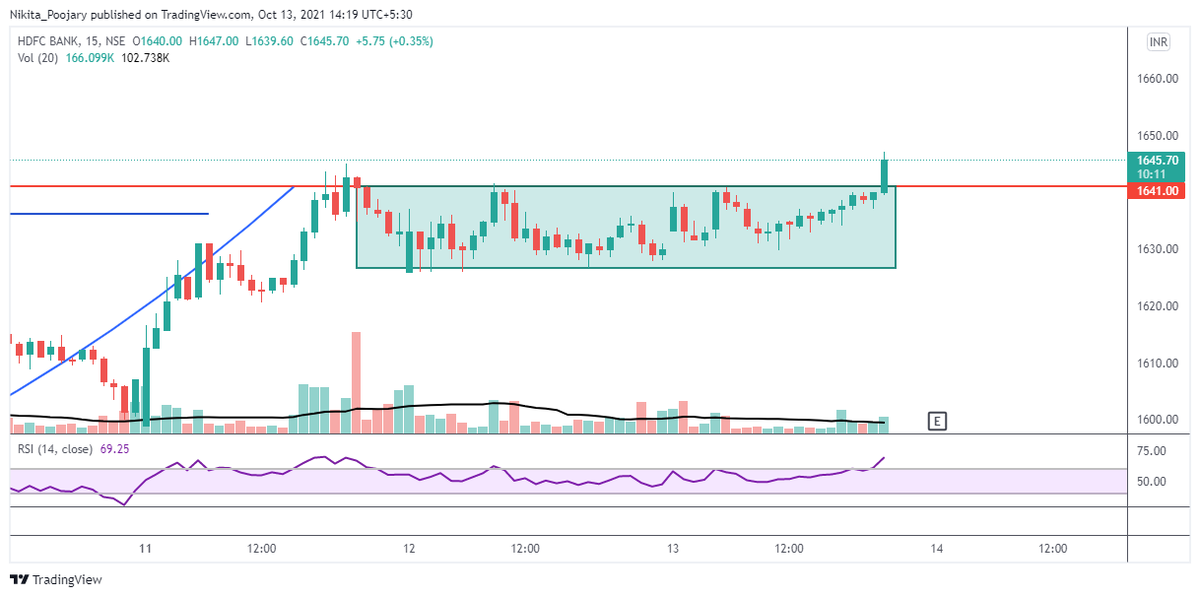
#HDFCBANK
— Nikita Poojary (@niki_poojary) October 13, 2021
15min TF rectangle formation pic.twitter.com/vgb7DFRYrJ
More from Nikita Poojary
I have recd a lot of queries on exactly which video did Subasish Pani taught this set up..
Folks you can check his y'days video
Although, I have learnt this extended move set up from @iManasArora 🙌
Do follow him & check his timeline for such set ups!
I shorted the ATM CE's which Subasish Pani does, and hence I mentioned strike selection inspired by Mr. Pani!
Folks you can check his y'days video
Although, I have learnt this extended move set up from @iManasArora 🙌
Do follow him & check his timeline for such set ups!
#BANKNIFTY
— Nikita Poojary (@niki_poojary) November 30, 2021
90degree upmove qualifies for abnormality, be cautious \U0001f6a8 pic.twitter.com/uyFCMpGOuR
I shorted the ATM CE's which Subasish Pani does, and hence I mentioned strike selection inspired by Mr. Pani!






More from Hdfcbank







You May Also Like

https://t.co/6cRR2B3jBE
Viruses and other pathogens are often studied as stand-alone entities, despite that, in nature, they mostly live in multispecies associations called biofilms—both externally and within the host.
https://t.co/FBfXhUrH5d

Microorganisms in biofilms are enclosed by an extracellular matrix that confers protection and improves survival. Previous studies have shown that viruses can secondarily colonize preexisting biofilms, and viral biofilms have also been described.

...we raise the perspective that CoVs can persistently infect bats due to their association with biofilm structures. This phenomenon potentially provides an optimal environment for nonpathogenic & well-adapted viruses to interact with the host, as well as for viral recombination.

Biofilms can also enhance virion viability in extracellular environments, such as on fomites and in aquatic sediments, allowing viral persistence and dissemination.

Viruses and other pathogens are often studied as stand-alone entities, despite that, in nature, they mostly live in multispecies associations called biofilms—both externally and within the host.
https://t.co/FBfXhUrH5d
Microorganisms in biofilms are enclosed by an extracellular matrix that confers protection and improves survival. Previous studies have shown that viruses can secondarily colonize preexisting biofilms, and viral biofilms have also been described.
...we raise the perspective that CoVs can persistently infect bats due to their association with biofilm structures. This phenomenon potentially provides an optimal environment for nonpathogenic & well-adapted viruses to interact with the host, as well as for viral recombination.
Biofilms can also enhance virion viability in extracellular environments, such as on fomites and in aquatic sediments, allowing viral persistence and dissemination.