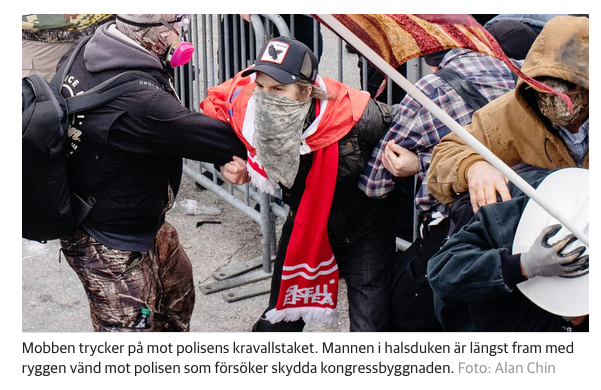
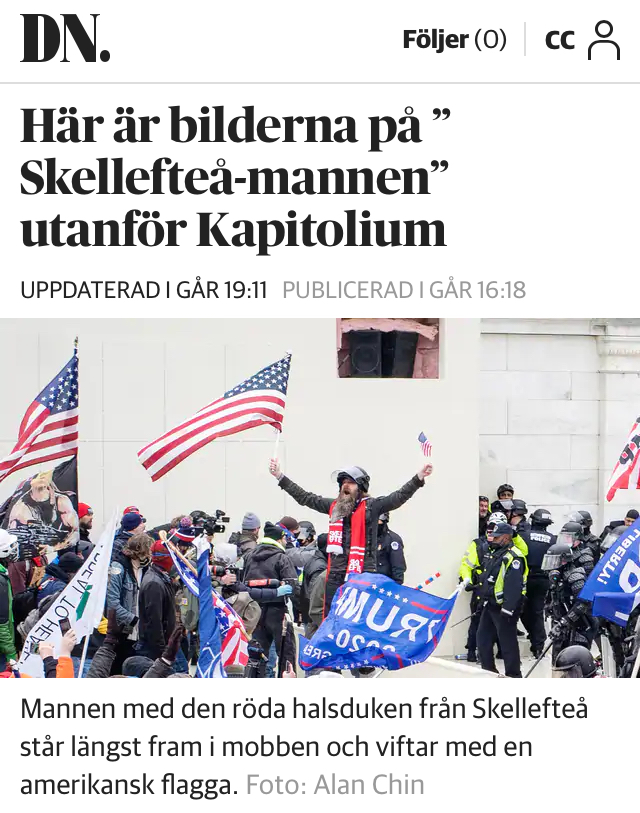
"As MAGA World’s hopes for an election redo have slipped away, an equally improbable idea has begun to percolate among Donald Trump’s most bitterly disappointed followers: secession." 12/21/20 h/t @AlexandraChalup 1/
More from Jennifer Cohn ✍🏻 📢
2/ “CNBC captured a screenshot of tweet before it was deleted.
Kirk recently said on his podcast that those from Turning Point got back on their buses & left following the conclusion of the rally.”
3/ Thread
Here are some of the mainstream donor advised funds who contributed to Turning Point USA, a cosponsor of the protest that preceded the deadly attack on the Capitol.
— Eli Clifton (@EliClifton) January 11, 2021
They helped anonymize contributions for donors.
These numbers are just from each group's most recent tax filing.
4/ 😳
when you brought 80 buses of people to an insurrection and want your audience of republican millionaires to forget it pic.twitter.com/phnvCVzJw9
— John Whitehouse (@existentialfish) January 11, 2021
5/
How did 26-year-old Charlie Kirk go from living with his parents to a waterfront condo? Over a short period of time, his pay from the pro-Trump charity he co-founded rose to 300k. https://t.co/k9UO83awsi
— ProPublica (@propublica) January 13, 2021
Very good that Rep Raskin is showing the long, consistent history of Trump instigating violence. This context is necessary. They should extend documentation to Trump's advisors -- like Roger Stone calling for a "bloodbath" since 2016 if Trump loses an election #ImpeachmentTrial
— Sarah Kendzior (@sarahkendzior) February 11, 2021
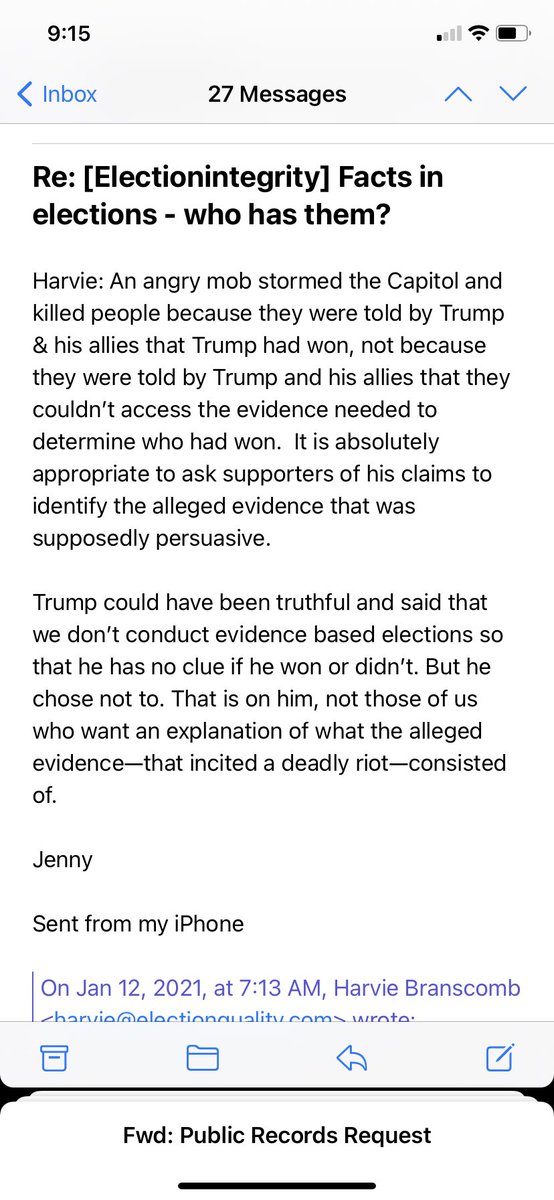
Even HR1 did not require that jurisdictions give all voters the option to mark their ballots by hand AT THE POLLS. The House has not even warned the public about the dangers of new touchscreen ballot marking devices. Pls do that NOW. TY.
— Jennifer Cohn \u270d\U0001f3fb \U0001f4e2 (@jennycohn1) April 24, 2019
Expert Report: https://t.co/I2EWvFIQEH pic.twitter.com/euekDq65mr
I have not looked at other aspects of HR1. It addresses more than election security. The #SAFEAct shld be the starting point for election security reform in my opinion. 2/
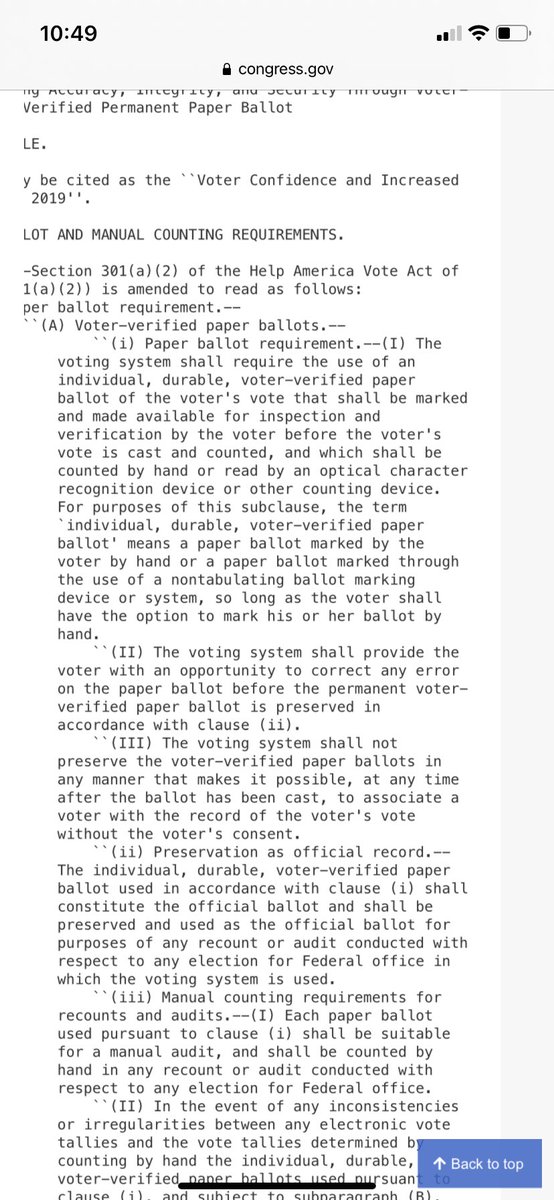
HR1 requires that all voters have the option to mark their ballots by hand. But it does not specify that, for jurisdictions with in person voting, the hand marked (pen & paper) option must be available for in person voting (vs it only being an option w/ vote by mail). 3/
HR1 may still be a good start. But it does not go nearly far enough on election security. Here are my suggestions for election security. Maybe these could be addressed in a later bill, but we shld keep them on our radar. 4/ https://t.co/mNdHrvwHcN
The key section is 1502. IMO, it shld add the following. “For jurisdictions that offer in person voting, the option to mark a paper ballot by hand must be offered at the in-person polling location; giving this option only for vote by mail won’t suffice for such jurisdictions.” 5/
More from Government
1) Margin of Democrat victory in Nov 2020 election
or
2) % infected through Sep 1, 2020
Can you guess which plot is which?
The left plot is based on the % infected through Sep 1, 2020. You can see that there is very little correlation with the % infected since Sep 1.
However, there is a *strong* correlation when using the margin of Biden's victory (right).
Infections % from https://t.co/WcXlfxv3Ah.
This is the strongest single variable I've seen in being able to explain the severity of this most recent wave in each state.
Not past infections / existing immunity, population density, racial makeup, latitude / weather / humidity, etc.
But political lean.
One can argue that states that lean Democrat are more likely to implement restrictions/mandates.
This is valid, so we test this by using the Government Stringency Index made by @UniofOxford.
We also see a correlation, but it's weaker (R^2=0.36 vs 0.50).
https://t.co/BxBBKwW6ta
To avoid look-ahead bias/confounding variables, here is the same analysis but using 2016 margin of victory as the predictor. Similar results.
This basically says that 2016 election results is a better predictor of the severity of the fall wave than intervention levels in 2020!
You May Also Like
Like company moats, your personal moat should be a competitive advantage that is not only durable—it should also compound over time.
Characteristics of a personal moat below:
I'm increasingly interested in the idea of "personal moats" in the context of careers.
— Erik Torenberg (@eriktorenberg) November 22, 2018
Moats should be:
- Hard to learn and hard to do (but perhaps easier for you)
- Skills that are rare and valuable
- Legible
- Compounding over time
- Unique to your own talents & interests https://t.co/bB3k1YcH5b
2/ Like a company moat, you want to build career capital while you sleep.
As Andrew Chen noted:
People talk about \u201cpassive income\u201d a lot but not about \u201cpassive social capital\u201d or \u201cpassive networking\u201d or \u201cpassive knowledge gaining\u201d but that\u2019s what you can architect if you have a thing and it grows over time without intensive constant effort to sustain it
— Andrew Chen (@andrewchen) November 22, 2018
3/ You don’t want to build a competitive advantage that is fleeting or that will get commoditized
Things that might get commoditized over time (some longer than
Things that look like moats but likely aren\u2019t or may fade:
— Erik Torenberg (@eriktorenberg) November 22, 2018
- Proprietary networks
- Being something other than one of the best at any tournament style-game
- Many "awards"
- Twitter followers or general reach without "respect"
- Anything that depends on information asymmetry https://t.co/abjxesVIh9
4/ Before the arrival of recorded music, what used to be scarce was the actual music itself — required an in-person artist.
After recorded music, the music itself became abundant and what became scarce was curation, distribution, and self space.
5/ Similarly, in careers, what used to be (more) scarce were things like ideas, money, and exclusive relationships.
In the internet economy, what has become scarce are things like specific knowledge, rare & valuable skills, and great reputations.
- Forget what you don't have, make your strength bold
- Pick one work experience and explain what you did in detail w/ bullet points
- Write it towards the role you apply
- Give social proof
/thread
"But I got no work experience..."
Make a open source lib, make a small side project for yourself, do freelance work, ask friends to work with them, no friends? Find friends on Github, and Twitter.
Bonus points:
- Show you care about the company: I used the company's brand font and gradient for in the resume for my name and "Thank You" note.
- Don't list 15 things and libraries you worked with, pick the most related ones to the role you're applying.
-🙅♂️"copy cover letter"
"I got no firends, no work"
One practical way is to reach out to conferences and offer to make their website for free. But make sure to do it good. You'll get:
- a project for portfolio
- new friends
- work experience
- learnt new stuff
- new thing for Twitter bio
If you don't even have the skills yet, why not try your chance for @LambdaSchool? No? @freeCodeCamp. Still not? Pick something from here and learn https://t.co/7NPS1zbLTi
You'll feel very overwhelmed, no escape, just acknowledge it and keep pushing.