https://t.co/xOVI3Vb6sT
Heads up. @INTERPOL_HQ @FBI @anticorruption @UNDPGAIN @AntiCorruptIntl @OCCRP @cafreeland @KingSalman @JoeBiden @JustinTrudeau @HRWcanada @TaxJusticeNet @FairTaxCanada @GA4TJ @antonioguterres @UNODC
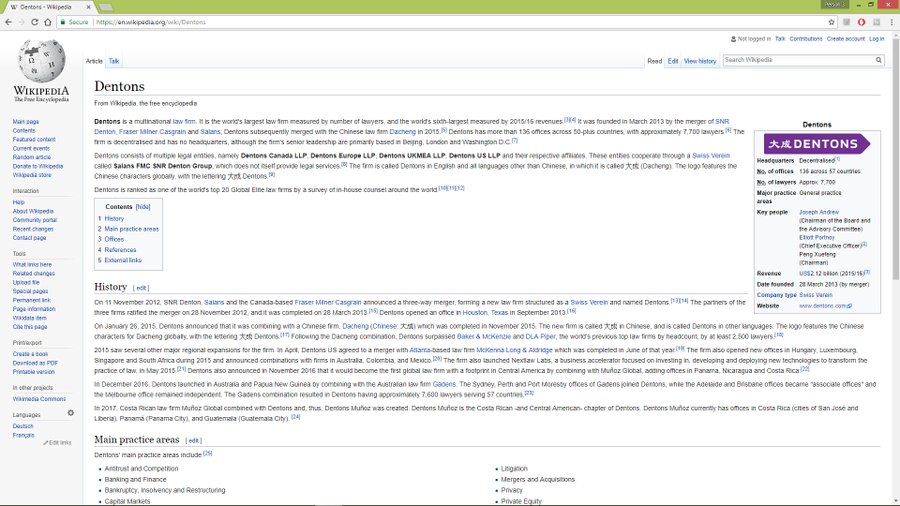
"David Thomson\xa0& family" now have a net worth of\xa0$39.8B, according to the newly-updated Forbes billionare list, up from $31.6B in April of 2020, when the list was last updated.https://t.co/xOVI3Vb6sT
— Louisette Lanteigne \U0001f30e\u270c\ufe0f\u2696\ufe0f\u2665\ufe0f (@lulex) January 7, 2021
https://t.co/xOVI3Vb6sT
https://t.co/MsbAIf6tUc
https://t.co/oLBr6jmf4Y

https://t.co/fec9GIBDpj


More from Louisette Lanteigne 🌎✌️⚖️♥️




More from Government

The Government is making the same mistakes as it did in the first wave. Except with knowledge.
A thread.
The Government's strategy at the beginning of the pandemic was to 'cocoon' the vulnerable (e.g. those in care homes). This was a 'herd immunity' strategy. This interview is from
This strategy failed. It is impossible to 'cocoon' the vulnerable, as Covid is passed from younger people to older, more vulnerable people.
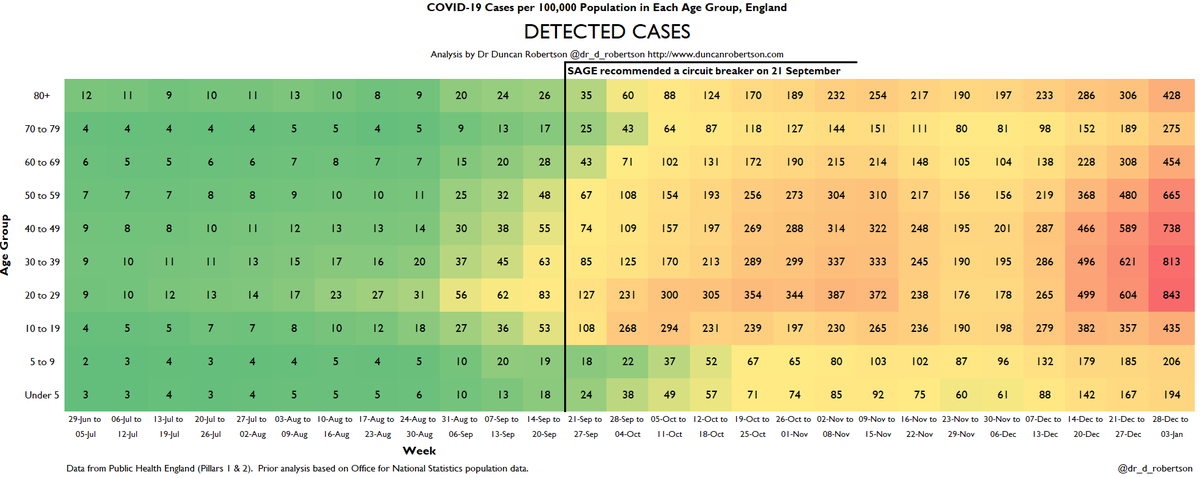
We can see this playing out through heatmaps. e.g. these heatmaps from the second
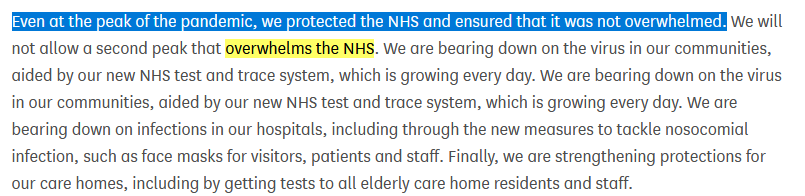
The Government then decided to change its strategy to 'preventing a second wave that overwhelms the NHS'. This was announced on 8 June in Parliament.
This is not the same as 'preventing a second wave'.
https://t.co/DPWiJbCKRm
The Academy of Medical Scientists published a report on 14 July 'Preparing for a Challenging Winter' commissioned by the Chief Scientific Adviser that set out what needed to be done in order to prevent a catastrophe over the winter
A thread.
The Government's strategy at the beginning of the pandemic was to 'cocoon' the vulnerable (e.g. those in care homes). This was a 'herd immunity' strategy. This interview is from
Government #coronavirus science advisor Dr David Halpern tells me of plans to \u2018cocoon\u2019 vulnerable groups. pic.twitter.com/dhECJNbmnI
— Mark Easton (@BBCMarkEaston) March 11, 2020
This strategy failed. It is impossible to 'cocoon' the vulnerable, as Covid is passed from younger people to older, more vulnerable people.
We can see this playing out through heatmaps. e.g. these heatmaps from the second
Here are the heatmaps for Covid detected cases, positivity, hospitalizations, and ICU admissions. This is for the week to 3 January 2021.
— Dr Duncan Robertson (@Dr_D_Robertson) January 7, 2021
I have marked a line on 21 September, when SAGE recommended a circuit breaker, so you can see how the situation has deteriorated since then. pic.twitter.com/SEEVgUVK4j
The Government then decided to change its strategy to 'preventing a second wave that overwhelms the NHS'. This was announced on 8 June in Parliament.
This is not the same as 'preventing a second wave'.
https://t.co/DPWiJbCKRm
The Academy of Medical Scientists published a report on 14 July 'Preparing for a Challenging Winter' commissioned by the Chief Scientific Adviser that set out what needed to be done in order to prevent a catastrophe over the winter
One thing civil servants learn is to write things down. Here is @acadmedsci's 14 July report commissioned by @uksciencechief. For the record.
— Dr Duncan Robertson (@Dr_D_Robertson) September 17, 2020

1 of 19) A number of tweets were posted by @LLinWood beginning late last night and into the morning. There are a total of 19. This thread has compiled all.
{“Shots fired across the bow”}
{Warning to traitors}
{Light will reveal the evil plans}
{You were warned traitors}
{“Shots fired across the bow”}
{Warning to traitors}
{Light will reveal the evil plans}
{You were warned traitors}
As background to tweets I am about to post, you should read this article carefully. I ask that you read each of my tweets carefully & decide if the information conveyed demands that Patriots rise up so that every lie will be revealed.@realDonaldTrumphttps://t.co/9KIX4DEtha
— Lin Wood (@LLinWood) January 4, 2021




NEW: the Georgia House Special Committee on Election Integrity is meeting at 3 this afternoon and just added HB 531 - a 48 page omnibus elections bill that proposes a *lot* of changes. #gapol
Here's the text:
First, it would ban county elections offices from receiving outside funding to run elections.
This, after CTCL and Schwarzenegger gave money to both D and R counties in 2020 to help with pandemic.
(although I wonder if the county gov't could take the grant, then disburse?)

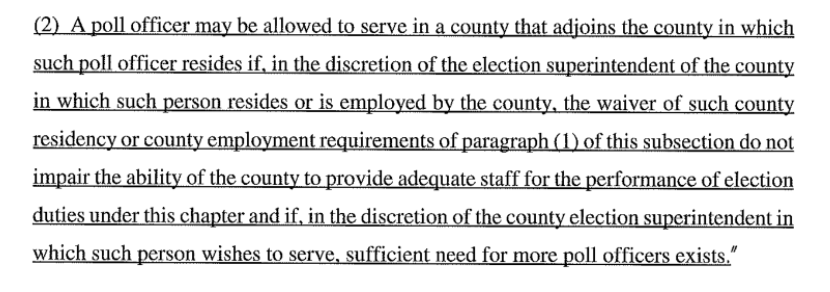
Next, it outlines ways that poll workers can serve adjacent counties (currently, you can only work in your county of residence)
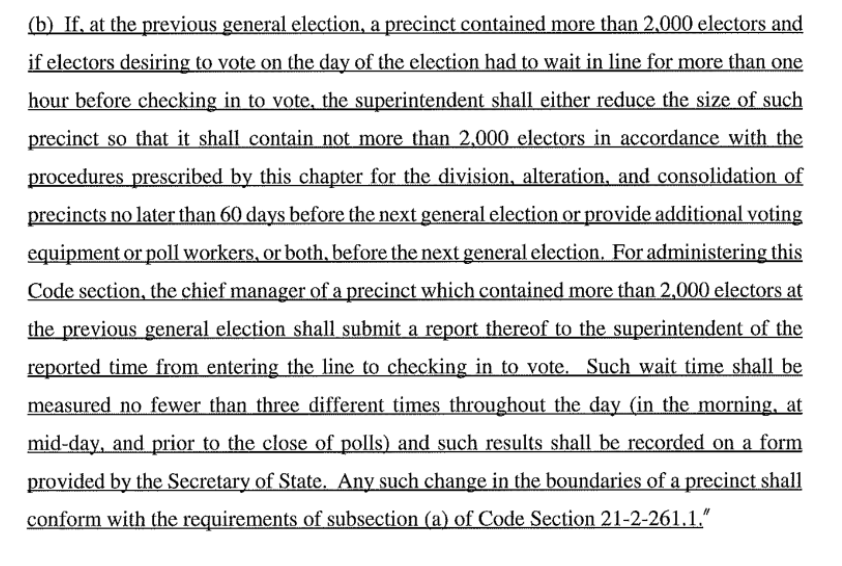
This section mirrors an SOS-backed bill from 2020 that would require more machines, more poll workers or splitting up precincts if a 2,000+ person precinct has lines of more than an hour.
More on that proposal: https://t.co/7BfIcrI81q
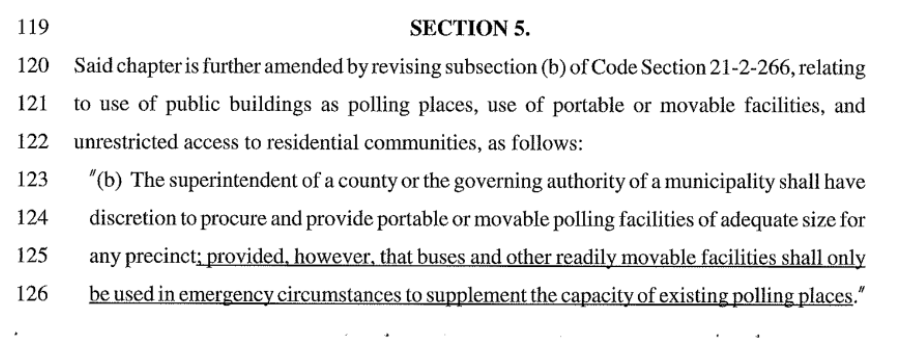
This is an anti-Fulton County mobile voting bus section
(although I still believe that it's using the wrong code section since the busses are for *early* voting and fall under 21-2-382)
Here's the text:
First, it would ban county elections offices from receiving outside funding to run elections.
This, after CTCL and Schwarzenegger gave money to both D and R counties in 2020 to help with pandemic.
(although I wonder if the county gov't could take the grant, then disburse?)
Next, it outlines ways that poll workers can serve adjacent counties (currently, you can only work in your county of residence)
This section mirrors an SOS-backed bill from 2020 that would require more machines, more poll workers or splitting up precincts if a 2,000+ person precinct has lines of more than an hour.
More on that proposal: https://t.co/7BfIcrI81q
This is an anti-Fulton County mobile voting bus section
(although I still believe that it's using the wrong code section since the busses are for *early* voting and fall under 21-2-382)
You May Also Like


1/ Some initial thoughts on personal moats:
Like company moats, your personal moat should be a competitive advantage that is not only durable—it should also compound over time.
Characteristics of a personal moat below:
2/ Like a company moat, you want to build career capital while you sleep.
As Andrew Chen noted:
3/ You don’t want to build a competitive advantage that is fleeting or that will get commoditized
Things that might get commoditized over time (some longer than
4/ Before the arrival of recorded music, what used to be scarce was the actual music itself — required an in-person artist.
After recorded music, the music itself became abundant and what became scarce was curation, distribution, and self space.
5/ Similarly, in careers, what used to be (more) scarce were things like ideas, money, and exclusive relationships.
In the internet economy, what has become scarce are things like specific knowledge, rare & valuable skills, and great reputations.
Like company moats, your personal moat should be a competitive advantage that is not only durable—it should also compound over time.
Characteristics of a personal moat below:
I'm increasingly interested in the idea of "personal moats" in the context of careers.
— Erik Torenberg (@eriktorenberg) November 22, 2018
Moats should be:
- Hard to learn and hard to do (but perhaps easier for you)
- Skills that are rare and valuable
- Legible
- Compounding over time
- Unique to your own talents & interests https://t.co/bB3k1YcH5b
2/ Like a company moat, you want to build career capital while you sleep.
As Andrew Chen noted:
People talk about \u201cpassive income\u201d a lot but not about \u201cpassive social capital\u201d or \u201cpassive networking\u201d or \u201cpassive knowledge gaining\u201d but that\u2019s what you can architect if you have a thing and it grows over time without intensive constant effort to sustain it
— Andrew Chen (@andrewchen) November 22, 2018
3/ You don’t want to build a competitive advantage that is fleeting or that will get commoditized
Things that might get commoditized over time (some longer than
Things that look like moats but likely aren\u2019t or may fade:
— Erik Torenberg (@eriktorenberg) November 22, 2018
- Proprietary networks
- Being something other than one of the best at any tournament style-game
- Many "awards"
- Twitter followers or general reach without "respect"
- Anything that depends on information asymmetry https://t.co/abjxesVIh9
4/ Before the arrival of recorded music, what used to be scarce was the actual music itself — required an in-person artist.
After recorded music, the music itself became abundant and what became scarce was curation, distribution, and self space.
5/ Similarly, in careers, what used to be (more) scarce were things like ideas, money, and exclusive relationships.
In the internet economy, what has become scarce are things like specific knowledge, rare & valuable skills, and great reputations.